Introduction
Online course marketplaces are digital platforms where instructors, universities, creators, and organizations publish courses for learners worldwide. These platforms provide hosting, payment processing, student management, certifications, marketing tools, and content delivery systems, making it easier for educators to monetize expertise and for learners to access skills training from anywhere.
The online learning industry continues to grow rapidly as individuals and organizations increasingly prioritize upskilling, AI education, remote learning, and career-focused training. Modern course marketplaces now include AI-powered learning recommendations, interactive assessments, collaborative learning communities, mobile learning, and enterprise workforce development features.
Online course platforms are widely used for professional certifications, coding education, business skills, creative learning, academic courses, and technical training. Many platforms also support creator monetization and scalable digital education businesses.
Real-world use cases include:
- Professional skill development
- Technical certification training
- Creator-led online businesses
- University and academic learning
- Corporate workforce upskilling
- Coding and AI education
- Creative and hobby-based learning
Key buyer evaluation criteria include:
- Course quality and instructor credibility
- Marketplace audience size
- Revenue sharing and monetization
- Mobile and device compatibility
- Learning management capabilities
- Certifications and assessments
- Community and collaboration features
- AI-powered recommendations
- Enterprise learning support
- Pricing flexibility and scalability
Best for: Students, professionals, educators, training organizations, content creators, enterprises, universities, and businesses building online education programs.
Not ideal for: Organizations requiring highly customized internal-only LMS environments, institutions needing fully offline training systems, or businesses wanting total control over proprietary learning infrastructure.
Key Trends in Online Course Marketplaces
- AI-powered personalized learning recommendations are becoming standard across platforms.
- Creator-focused monetization tools are expanding rapidly.
- Corporate workforce upskilling programs are driving enterprise adoption.
- Mobile-first learning experiences are becoming increasingly important.
- Short-form and microlearning courses are gaining popularity.
- Interactive projects and hands-on labs are improving learner engagement.
- AI and data science courses are dominating enrollment growth.
- Hybrid certification pathways combining universities and industry credentials are expanding.
- Community-driven learning ecosystems are becoming major differentiators.
- Multi-instructor marketplace models are increasingly supporting niche education businesses.
How We Selected These Tools Methodology
The marketplaces in this list were selected using education and platform-focused evaluation criteria:
- Global market adoption and popularity
- Course catalog quality and diversity
- Monetization and creator support
- Student engagement features
- Enterprise and academic adoption
- Platform scalability and reliability
- Mobile and cross-device compatibility
- Integration ecosystem maturity
- Community and collaboration capabilities
- Support quality and learning resources
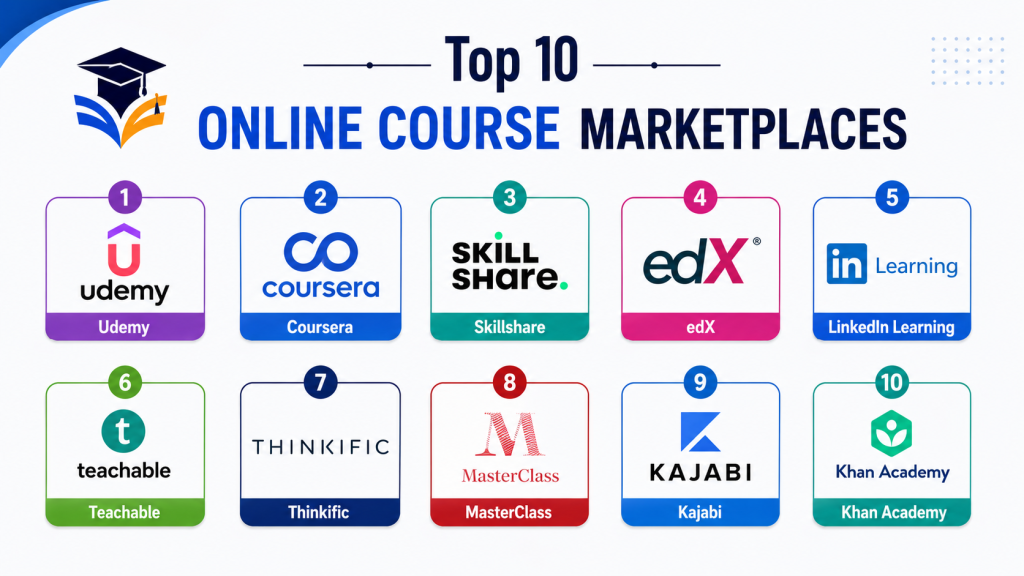
Top 10 Online Course Marketplaces
1- Udemy
Short description: Udemy is one of the world’s largest online course marketplaces, offering hundreds of thousands of courses across business, technology, design, marketing, and personal development topics. It is widely used by both learners and independent instructors.
Key Features
- Massive global course marketplace
- Instructor publishing platform
- Lifetime course access
- Mobile learning support
- Course ratings and reviews
- Business and technical training
- Multi-language course availability
Pros
- Huge course selection
- Strong creator monetization opportunities
- Affordable learning options
- Good mobile accessibility
Cons
- Course quality can vary
- Heavy marketplace competition
- Revenue sharing limitations
- Limited academic accreditation
Platforms / Deployment
Web / Android / iOS / Cloud
Security & Compliance
Authentication support, payment security compatibility, cloud-based user management.
Integrations & Ecosystem
Udemy integrates with business learning and online education ecosystems.
- Udemy Business
- Mobile learning systems
- Enterprise training workflows
- Cloud learning environments
- Payment systems
- Learning analytics tools
- Workforce training programs
Support & Community
Massive global learning ecosystem with extensive instructor and student communities.
2- Coursera
Short description: Coursera is a leading online learning marketplace partnering with universities and enterprises to provide professional certificates, degree programs, and career-focused courses across technology, business, and AI education.
Key Features
- University-backed courses
- Professional certifications
- Guided projects
- AI and technical training
- Degree pathways
- Enterprise workforce learning
- Skill assessments
Pros
- Strong academic credibility
- High-quality certifications
- Excellent AI and technology content
- Strong enterprise adoption
Cons
- Premium certificates can be expensive
- Subscription costs may accumulate
- Some courses less interactive
- Course completion rates vary
Platforms / Deployment
Web / Android / iOS / Cloud
Security & Compliance
Authentication support, enterprise security compatibility, cloud-based account management.
Integrations & Ecosystem
Coursera integrates with enterprise learning and academic ecosystems.
- Google certifications
- IBM learning programs
- Enterprise workforce platforms
- University systems
- Cloud learning environments
- AI education pathways
- Mobile learning tools
Support & Community
Strong academic and enterprise ecosystem with extensive professional learning resources.
3- Skillshare
Short description: Skillshare is a creator-focused online learning marketplace specializing in creative skills, design, writing, photography, marketing, and entrepreneurship courses with community-driven learning experiences.
Key Features
- Creative skills marketplace
- Community-based learning
- Project-driven education
- Subscription-based access
- Creator monetization
- Mobile learning support
- Interactive class projects
Pros
- Strong creative learning focus
- Good community engagement
- Affordable subscription model
- Excellent for creative professionals
Cons
- Limited academic certifications
- Less technical depth than some competitors
- Premium access required
- Smaller enterprise learning ecosystem
Platforms / Deployment
Web / Android / iOS / Cloud
Security & Compliance
Authentication support and payment security compatibility.
Integrations & Ecosystem
Skillshare integrates with creator and creative learning ecosystems.
- Creative communities
- Mobile learning workflows
- Design education systems
- Content creator platforms
- Subscription learning environments
- Online creator businesses
- Project-based learning systems
Support & Community
Large creative learning community with active instructor engagement.
4- edX
Short description: edX is a university-focused online learning platform offering academic courses, professional certificates, and degree programs from leading institutions and global organizations.
Key Features
- University-backed learning
- Professional certification programs
- Degree pathways
- Technical and STEM education
- Self-paced learning
- Enterprise learning support
- Academic assessments
Pros
- Strong academic credibility
- High-quality STEM education
- Good professional certifications
- Broad university partnerships
Cons
- Some certifications expensive
- Less creator-focused monetization
- Course completion requires discipline
- Smaller casual learning ecosystem
Platforms / Deployment
Web / Android / iOS / Cloud
Security & Compliance
Authentication compatibility, enterprise learning security support, cloud account management.
Integrations & Ecosystem
edX integrates with universities and enterprise learning environments.
- Universities
- Professional certification systems
- Enterprise workforce learning
- STEM education programs
- Cloud learning systems
- Mobile learning tools
- Technical education ecosystems
Support & Community
Strong academic ecosystem with global educational institution participation.
5- LinkedIn Learning
Short description: LinkedIn Learning is a professional development platform focused on business, technology, leadership, productivity, and career-oriented learning integrated with LinkedIn’s professional networking ecosystem.
Key Features
- Professional skills training
- Career-focused learning paths
- LinkedIn profile integration
- Business and leadership courses
- AI-powered recommendations
- Enterprise learning support
- Skill assessments
Pros
- Strong professional networking integration
- Excellent career-focused learning
- Good enterprise workforce training
- High-quality business content
Cons
- Subscription required
- Less academic depth than universities
- Limited creator monetization
- Smaller creative course ecosystem
Platforms / Deployment
Web / Android / iOS / Cloud
Security & Compliance
Authentication support, enterprise account security compatibility, cloud learning management.
Integrations & Ecosystem
LinkedIn Learning integrates with workforce and professional development ecosystems.
- LinkedIn profiles
- Enterprise HR systems
- Workforce development tools
- Microsoft ecosystems
- Professional networking systems
- Corporate learning environments
- Business productivity platforms
Support & Community
Strong enterprise and professional development ecosystem.
6- Teachable
Short description: Teachable is an online course creation and marketplace platform designed for creators, coaches, and educators to build branded online schools and monetize digital learning businesses.
Key Features
- Course hosting platform
- Creator monetization tools
- Website customization
- Payment processing
- Student management
- Marketing integrations
- Digital product sales
Pros
- Strong creator business tools
- Flexible monetization options
- Good branding capabilities
- Easy course publishing workflows
Cons
- Premium pricing for advanced features
- Requires creator marketing effort
- Smaller marketplace discovery than major platforms
- Transaction fees on some plans
Platforms / Deployment
Web / Cloud
Security & Compliance
Authentication support, payment security compatibility, cloud infrastructure security.
Integrations & Ecosystem
Teachable integrates with creator and online business ecosystems.
- Email marketing systems
- Payment gateways
- Analytics tools
- Creator websites
- Membership platforms
- CRM systems
- Digital product businesses
Support & Community
Strong creator-focused ecosystem with extensive onboarding resources.
7- Thinkific
Short description: Thinkific is a course creation and learning commerce platform designed for creators, educators, and businesses building scalable online education programs.
Key Features
- Online course creation
- Website builder
- Student management
- Subscription learning models
- Analytics and reporting
- Community learning features
- Monetization workflows
Pros
- Strong creator flexibility
- Good customization options
- Scalable online schools
- Useful business analytics
Cons
- Marketplace discovery smaller than large marketplaces
- Some advanced tools require higher plans
- Learning curve for customization
- Creator marketing responsibility
Platforms / Deployment
Web / Cloud
Security & Compliance
Authentication support, cloud security compatibility, payment processing security.
Integrations & Ecosystem
Thinkific integrates with creator and online learning ecosystems.
- Payment gateways
- Email marketing tools
- CRM systems
- Analytics platforms
- Community learning systems
- Membership tools
- Online business platforms
Support & Community
Strong creator ecosystem with growing online business adoption.
8- MasterClass
Short description: MasterClass is a premium online learning marketplace focused on celebrity-led and expert-led education across business, cooking, writing, film, sports, and lifestyle learning.
Key Features
- Celebrity-led courses
- High-production learning content
- Lifestyle and creative education
- Subscription-based learning
- Mobile streaming support
- Downloadable resources
- Premium video learning experiences
Pros
- Excellent production quality
- Unique instructor lineup
- Highly engaging content
- Strong entertainment value
Cons
- Limited technical depth
- Less interactive learning
- Premium subscription pricing
- Limited certification pathways
Platforms / Deployment
Web / Android / iOS / TV Apps
Security & Compliance
Authentication support and payment security compatibility.
Integrations & Ecosystem
MasterClass integrates with premium content and streaming ecosystems.
- Mobile streaming devices
- Smart TVs
- Subscription learning systems
- Creative learning environments
- Lifestyle education platforms
- Streaming ecosystems
- Digital entertainment systems
Support & Community
Strong consumer learning ecosystem with premium content positioning.
9- Kajabi
Short description: Kajabi is an all-in-one creator platform combining course hosting, memberships, marketing automation, and digital business management for online educators and creators.
Key Features
- Course creation tools
- Marketing automation
- Membership communities
- Website hosting
- Sales funnels
- Email campaigns
- Creator monetization support
Pros
- Strong business automation tools
- Excellent creator monetization
- Good all-in-one workflow
- Flexible digital product support
Cons
- Premium pricing
- Smaller built-in marketplace audience
- Advanced workflows may require training
- Less academic-focused learning ecosystem
Platforms / Deployment
Web / Cloud
Security & Compliance
Authentication compatibility, payment security support, cloud infrastructure security.
Integrations & Ecosystem
Kajabi integrates with creator economy and digital business ecosystems.
- Email marketing systems
- Payment gateways
- CRM platforms
- Membership communities
- Analytics systems
- Creator websites
- Digital product businesses
Support & Community
Strong creator-focused ecosystem with extensive business education resources.
10- Khan Academy
Short description: Khan Academy is a free online learning platform focused on accessible education across mathematics, science, computing, economics, and academic subjects for students worldwide.
Key Features
- Free educational content
- Academic learning pathways
- Interactive exercises
- Progress tracking
- K-12 education support
- STEM learning resources
- Mobile accessibility
Pros
- Completely free learning
- Excellent academic accessibility
- Strong STEM education content
- Global educational reach
Cons
- Limited creator monetization
- Less advanced professional certifications
- Smaller enterprise learning ecosystem
- Limited premium collaboration features
Platforms / Deployment
Web / Android / iOS / Cloud
Security & Compliance
Authentication compatibility and educational cloud security support.
Integrations & Ecosystem
Khan Academy integrates with academic and classroom learning systems.
- School classrooms
- STEM learning programs
- Mobile education platforms
- Academic learning environments
- Educational dashboards
- Classroom devices
- Online learning workflows
Support & Community
Massive global educational ecosystem with strong nonprofit education mission.
Comparison Table Top 10
| Tool Name | Best For | Platforms Supported | Deployment | Standout Feature | Public Rating |
|---|---|---|---|---|---|
| Udemy | Massive course variety | Web / Mobile | Cloud | Huge marketplace catalog | N/A |
| Coursera | Professional certifications | Web / Mobile | Cloud | University partnerships | N/A |
| Skillshare | Creative learning | Web / Mobile | Cloud | Community-based projects | N/A |
| edX | Academic learning | Web / Mobile | Cloud | University degree pathways | N/A |
| LinkedIn Learning | Career development | Web / Mobile | Cloud | LinkedIn integration | N/A |
| Teachable | Creator monetization | Web | Cloud | Branded online schools | N/A |
| Thinkific | Online course businesses | Web | Cloud | Scalable creator tools | N/A |
| MasterClass | Premium lifestyle learning | Web / Mobile / TV | Cloud | Celebrity-led education | N/A |
| Kajabi | Digital education businesses | Web | Cloud | Marketing automation | N/A |
| Khan Academy | Free academic learning | Web / Mobile | Cloud | Free STEM education | N/A |
Evaluation & Scoring of Online Course Marketplaces
| Tool Name | Core 25% | Ease 15% | Integrations 15% | Security 10% | Performance 10% | Support 10% | Value 15% | Weighted Total |
|---|---|---|---|---|---|---|---|---|
| Udemy | 9.4 | 9.0 | 8.8 | 8.2 | 9.1 | 8.8 | 9.4 | 9.1 |
| Coursera | 9.5 | 8.7 | 8.9 | 8.6 | 9.2 | 9.0 | 8.5 | 9.0 |
| Skillshare | 8.8 | 9.1 | 8.0 | 7.9 | 8.7 | 8.5 | 8.9 | 8.6 |
| edX | 9.2 | 8.4 | 8.5 | 8.5 | 9.0 | 8.8 | 8.3 | 8.7 |
| LinkedIn Learning | 9.0 | 8.9 | 9.0 | 8.6 | 8.9 | 8.7 | 8.2 | 8.8 |
| Teachable | 8.9 | 8.6 | 8.7 | 8.3 | 8.7 | 8.5 | 8.4 | 8.6 |
| Thinkific | 8.8 | 8.5 | 8.8 | 8.2 | 8.7 | 8.4 | 8.5 | 8.6 |
| MasterClass | 8.5 | 9.2 | 7.8 | 8.0 | 8.8 | 8.3 | 8.1 | 8.4 |
| Kajabi | 8.9 | 8.2 | 8.9 | 8.4 | 8.7 | 8.4 | 7.9 | 8.5 |
| Khan Academy | 8.7 | 9.3 | 7.9 | 8.0 | 8.6 | 8.8 | 9.8 | 8.8 |
These scores are comparative and intended to help learners, educators, and businesses evaluate online course marketplaces based on usability, scalability, monetization capabilities, learning quality, and ecosystem maturity. Higher scores do not necessarily mean one platform is universally better because different marketplaces focus on different audiences and business models. Some platforms specialize in academic credentials and workforce training, while others prioritize creator monetization, creative learning, or free education access. Buyers should evaluate learning goals, monetization needs, and long-term scalability before selecting a platform.
Which Online Course Marketplace Is Right for You?
Solo / Freelancer
Independent learners and creators often benefit from affordable and accessible platforms. Udemy, Skillshare, and Khan Academy are strong choices for flexible learning and low-cost education.
SMB
Small businesses and creator-led education brands usually prioritize monetization and scalability. Teachable, Thinkific, and Kajabi provide strong creator business and online school management capabilities.
Mid-Market
Mid-sized organizations often require collaborative learning, workforce upskilling, and broader course ecosystems. LinkedIn Learning and Coursera are strong options for professional development and career-focused education.
Enterprise
Large enterprises and universities typically prioritize governance, certifications, scalability, and workforce analytics. Coursera, edX, and LinkedIn Learning are commonly strong enterprise-grade choices.
Budget vs Premium
Free and low-cost platforms are excellent for broad accessibility, while premium creator-focused ecosystems provide stronger branding, automation, and monetization capabilities.
Feature Depth vs Ease of Use
Marketplace-first platforms simplify learner discovery and accessibility, while creator-focused systems offer deeper customization and online business control.
Integrations & Scalability
Organizations using CRM, HR, or workforce learning systems should prioritize platforms with strong analytics, automation, and cloud integrations.
Security & Compliance Needs
Educational institutions and enterprises should evaluate authentication controls, payment security, cloud deployment protections, and administrative governance capabilities before deployment.
Frequently Asked Questions FAQs
1. What are online course marketplaces?
Online course marketplaces are digital platforms where instructors and organizations publish educational content for learners worldwide through hosted learning environments.
2. Why are online learning platforms growing rapidly?
Online learning platforms provide flexible, affordable, and accessible education for professional development, certifications, and skill-building across industries.
3. Which platform is best for professional certifications?
Coursera and edX are commonly strong choices for professional certifications and university-backed learning programs.
4. Which platform is best for creators selling courses?
Teachable, Thinkific, and Kajabi are widely used for creator-led online education businesses and branded learning experiences.
5. Are free online learning platforms effective?
Yes, platforms like Khan Academy and Code.org provide highly effective educational content and broad accessibility for learners worldwide.
6. What are common challenges with online course marketplaces?
Common challenges include varying course quality, marketplace competition, learner retention, subscription costs, and content discoverability.
7. Which integrations matter most for enterprises?
Important integrations include HR systems, CRM platforms, learning management systems, analytics tools, collaboration systems, and workforce training platforms.
8. Are online certificates recognized by employers?
Recognition varies depending on the platform, institution, and course provider. University-backed and industry-certified programs often carry stronger professional value.
9. Can online course marketplaces support enterprise workforce training?
Yes, many platforms now provide enterprise learning, workforce upskilling, analytics, and certification management capabilities.
10. Which online course marketplace is best for creative learning?
Skillshare and MasterClass are commonly strong choices for creative skills, design, writing, photography, and lifestyle-focused education.
Conclusion
Online course marketplaces have transformed global education by making professional skills training, academic learning, and creator-led education more accessible than ever before. These platforms support everything from AI and technical certifications to creative learning and enterprise workforce development, helping learners and organizations adapt to rapidly changing digital economies. The right marketplace depends on learning goals, monetization requirements, technical depth, and organizational scale. Some platforms focus heavily on academic credibility and workforce certifications, while others prioritize creator businesses, creative learning, or free educational accessibility. Marketplace-first ecosystems simplify course discovery and learner reach, while creator-focused platforms provide stronger branding and monetization flexibility. The most effective strategy is to shortlist a few platforms aligned with your education or business goals, test their learning experience and integrations, validate scalability and pricing models, and evaluate long-term engagement before committing to large-scale adoption.