Introduction
Workforce marketplace platforms are digital ecosystems that connect organizations with internal employees, freelancers, contractors, gig workers, and specialized talent for projects, assignments, temporary work, and long-term workforce needs. These platforms combine talent discovery, workforce management, AI-powered matching, compliance workflows, collaboration tools, and analytics into centralized systems that help businesses optimize workforce utilization and talent mobility.
Modern workforce marketplaces have evolved far beyond simple hiring portals. Organizations now use these systems for internal talent mobility, gig workforce coordination, contractor management, skills-based staffing, and enterprise workforce planning. AI-driven skills intelligence, project matching, workforce analytics, and automated onboarding are becoming critical features as companies increasingly adopt hybrid and remote-first operating models.
Real-world use cases include:
- Internal talent marketplaces
- Enterprise gig workforce management
- Freelancer and contractor operations
- Skills-based project staffing
- Remote workforce coordination
- Shift and frontline workforce management
- Global talent sourcing and deployment
Key buyer evaluation criteria include:
- AI-powered talent matching
- Workforce compliance automation
- Internal mobility capabilities
- Collaboration and project management
- Analytics and workforce intelligence
- Integration ecosystem maturity
- Global workforce support
- Security and governance controls
- Scalability across departments
- Automation and workflow flexibility
Best for: Enterprises, HR teams, staffing firms, remote-first organizations, workforce operations teams, consulting companies, and businesses managing distributed or hybrid workforces.
Not ideal for: Small businesses with limited workforce complexity, organizations managing only a few contractors manually, or teams needing only lightweight hiring workflows.
Key Trends in Workforce Marketplace Platforms
- AI-powered skills intelligence is becoming central to workforce planning.
- Internal talent marketplaces are replacing traditional workforce allocation methods.
- Skills-based hiring and workforce mobility are growing rapidly.
- Remote and hybrid workforce orchestration continues expanding globally.
- Workforce analytics and predictive staffing tools are becoming more sophisticated.
- Global contractor compliance automation is increasingly important.
- Enterprise gig workforce ecosystems are scaling across industries.
- Marketplace-driven internal project staffing is reducing external hiring needs.
- Workforce automation and self-service talent mobility are improving employee engagement.
- Integrated collaboration and productivity ecosystems are becoming competitive differentiators.
How We Selected These Tools Methodology
The platforms in this list were selected using workforce operations and talent marketplace-focused evaluation criteria:
- Enterprise workforce management capabilities
- Internal and external talent marketplace functionality
- AI-driven talent matching quality
- Compliance and workforce governance support
- Integration ecosystem maturity
- Collaboration and project workflow management
- Analytics and workforce intelligence features
- Global workforce scalability
- Security and administrative controls
- Market adoption and operational reliability
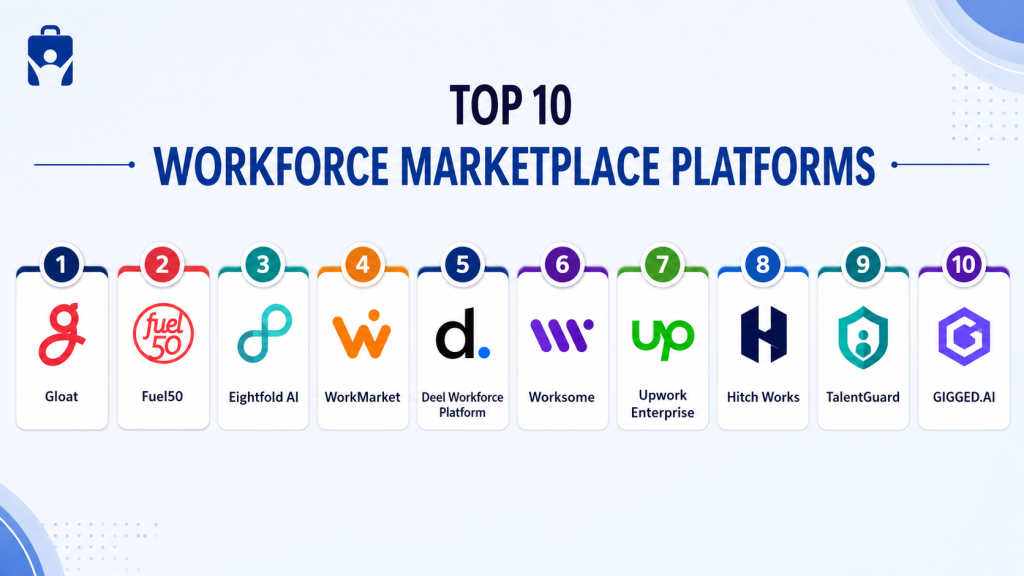
Top 10 Workforce Marketplace Platforms
1- Gloat
Short description: Gloat is an AI-powered internal talent marketplace platform designed to help enterprises optimize workforce mobility, skills intelligence, project staffing, and employee career development through dynamic talent matching workflows.
Key Features
- AI-powered skills intelligence
- Internal talent mobility
- Project and gig matching
- Career path recommendations
- Workforce analytics
- Employee development workflows
- Skills inventory management
Pros
- Strong internal talent marketplace capabilities
- Excellent AI-driven workforce matching
- Good employee mobility support
- Enterprise-grade scalability
Cons
- Premium enterprise pricing
- Complex enterprise deployment workflows
- Smaller SMB accessibility
- Requires workforce data maturity
Platforms / Deployment
Web / Cloud
Security & Compliance
Authentication support, RBAC compatibility, enterprise governance workflows, audit support.
Integrations & Ecosystem
Gloat integrates with enterprise HR and workforce ecosystems.
- Workday
- SAP SuccessFactors
- Oracle HCM
- HR analytics systems
- Learning platforms
- Collaboration tools
- Workforce intelligence environments
Support & Community
Strong enterprise HR ecosystem with workforce transformation expertise.
2- Fuel50
Short description: Fuel50 is an internal talent marketplace and workforce intelligence platform focused on employee mobility, career pathing, workforce planning, and skills-based talent deployment.
Key Features
- AI-powered talent marketplace
- Career pathing workflows
- Workforce skills mapping
- Internal mobility management
- Employee engagement tools
- Workforce analytics
- Succession planning support
Pros
- Excellent workforce intelligence tools
- Strong career development workflows
- Good internal mobility visibility
- Enterprise workforce optimization support
Cons
- Premium enterprise focus
- Smaller external freelance ecosystem
- Advanced implementation complexity
- Learning curve for HR teams
Platforms / Deployment
Web / Cloud
Security & Compliance
Authentication support, workforce governance compatibility, RBAC support.
Integrations & Ecosystem
Fuel50 integrates with workforce and talent development ecosystems.
- HRIS systems
- Learning management platforms
- Employee engagement tools
- Workforce analytics systems
- Collaboration environments
- Career development platforms
- Enterprise productivity systems
Support & Community
Strong HR and workforce development ecosystem with enterprise adoption.
3- Eightfold AI
Short description: Eightfold AI is an AI-powered talent intelligence and workforce marketplace platform designed for enterprise hiring, workforce planning, skills matching, and internal mobility operations.
Key Features
- AI talent intelligence
- Skills-based workforce matching
- Internal mobility workflows
- Workforce analytics
- Career development recommendations
- Talent acquisition support
- Workforce planning automation
Pros
- Advanced AI-powered workforce intelligence
- Strong enterprise hiring capabilities
- Good skills analytics workflows
- Scalable workforce management
Cons
- Enterprise-oriented pricing
- Complex onboarding workflows
- Requires quality workforce data
- Advanced setup may require consulting support
Platforms / Deployment
Web / Cloud
Security & Compliance
Authentication support, RBAC compatibility, enterprise governance workflows, encrypted workforce data management.
Integrations & Ecosystem
Eightfold AI integrates with enterprise workforce and HR ecosystems.
- Workday
- SAP SuccessFactors
- Oracle HCM
- ATS platforms
- Learning systems
- Workforce analytics environments
- Talent acquisition systems
Support & Community
Large enterprise talent intelligence ecosystem with AI workforce expertise.
4- WorkMarket
Short description: WorkMarket is a freelance and contractor workforce marketplace platform that helps enterprises manage independent workers, assignments, onboarding, payments, and workforce operations.
Key Features
- Freelancer workforce management
- Contractor onboarding
- Assignment management
- Workforce payments
- Credential verification
- Mobile workforce workflows
- Workforce analytics
Pros
- Strong contractor operations management
- Good assignment workflows
- Enterprise workforce visibility
- Flexible freelancer coordination
Cons
- Premium enterprise orientation
- Smaller internal mobility capabilities
- Complex workforce administration
- Requires workforce governance processes
Platforms / Deployment
Web / Android / iOS / Cloud
Security & Compliance
Authentication support, compliance workflows, workforce governance compatibility, audit logging support.
Integrations & Ecosystem
WorkMarket integrates with enterprise workforce and operations ecosystems.
- HR systems
- Procurement platforms
- Payment gateways
- Workforce analytics systems
- Field operations tools
- ERP systems
- Collaboration platforms
Support & Community
Established freelance workforce ecosystem with enterprise contractor expertise.
5- Deel Workforce Platform
Short description: Deel Workforce Platform helps organizations manage global contractors, freelancers, and distributed teams through payroll, compliance, workforce operations, and international talent workflows.
Key Features
- Global workforce management
- Contractor onboarding
- Multi-country compliance
- Payroll and invoicing automation
- Workforce analytics
- Contract management
- International payment support
Pros
- Excellent global workforce support
- Strong compliance automation
- Scalable remote workforce workflows
- User-friendly onboarding experience
Cons
- Enterprise pricing complexity
- Advanced analytics still evolving
- Project collaboration tools limited
- Custom workflow configuration required
Platforms / Deployment
Web / Android / iOS / Cloud
Security & Compliance
Authentication support, encrypted payment workflows, compliance automation support, RBAC compatibility.
Integrations & Ecosystem
Deel integrates with workforce and HR ecosystems.
- HRIS platforms
- Payroll systems
- ERP tools
- Accounting software
- Collaboration systems
- Procurement workflows
- Workforce analytics environments
Support & Community
Strong global workforce ecosystem with growing enterprise adoption.
6- Worksome
Short description: Worksome is a workforce marketplace and freelancer management platform focused on enterprise contractor sourcing, onboarding, compliance, and workforce coordination.
Key Features
- Talent marketplace workflows
- Freelancer sourcing
- Contract automation
- Compliance management
- Workforce analytics
- Payment management
- Talent pool administration
Pros
- Strong freelancer sourcing support
- Good workforce visibility
- Efficient onboarding workflows
- Enterprise-friendly operations
Cons
- Smaller marketplace ecosystem
- Premium enterprise pricing
- Advanced analytics require configuration
- Limited SMB accessibility
Platforms / Deployment
Web / Cloud
Security & Compliance
Authentication compatibility, workforce governance support, secure payment workflows.
Integrations & Ecosystem
Worksome integrates with enterprise contractor ecosystems.
- Procurement systems
- HR workflows
- Financial platforms
- Collaboration tools
- Workforce analytics
- Talent management systems
- Contract management environments
Support & Community
Growing workforce marketplace ecosystem with enterprise procurement focus.
7- Upwork Enterprise
Short description: Upwork Enterprise is a workforce marketplace platform that enables enterprises to source, manage, collaborate with, and pay freelancers and distributed talent globally.
Key Features
- Enterprise freelance sourcing
- Workforce collaboration tools
- Secure contractor payments
- Compliance workflows
- AI-powered talent recommendations
- Team hiring management
- Workforce reporting
Pros
- Massive global talent network
- Strong enterprise hiring workflows
- Good collaboration capabilities
- Scalable workforce management
Cons
- Marketplace competition challenges
- Platform fees can increase costs
- Talent quality varies across categories
- Enterprise onboarding complexity
Platforms / Deployment
Web / Android / iOS / Cloud
Security & Compliance
Authentication compatibility, encrypted payments, RBAC workflows, enterprise governance support.
Integrations & Ecosystem
Upwork Enterprise integrates with enterprise workforce ecosystems.
- HR systems
- Collaboration tools
- Payment systems
- Procurement workflows
- Workforce analytics platforms
- Project management systems
- Remote work environments
Support & Community
Massive freelance workforce ecosystem with enterprise workforce support.
8- Hitch Works
Short description: Hitch Works is a workforce intelligence and internal talent marketplace platform focused on skills-based workforce planning, internal mobility, and AI-driven staffing optimization.
Key Features
- Skills-based workforce planning
- Internal project staffing
- Workforce forecasting
- AI talent matching
- Resource optimization
- Skills analytics
- Workforce visibility dashboards
Pros
- Strong workforce forecasting capabilities
- Good skills intelligence support
- Enterprise workforce optimization
- Internal staffing visibility
Cons
- Smaller ecosystem visibility
- Enterprise-focused deployment complexity
- Advanced workforce maturity required
- Premium pricing structure
Platforms / Deployment
Web / Cloud
Security & Compliance
Authentication support, workforce governance workflows, RBAC compatibility.
Integrations & Ecosystem
Hitch Works integrates with workforce and enterprise planning ecosystems.
- HRIS platforms
- ERP systems
- Workforce analytics tools
- Collaboration systems
- Skills management environments
- Resource planning systems
- Learning platforms
Support & Community
Growing workforce intelligence ecosystem with enterprise focus.
9- TalentGuard
Short description: TalentGuard is a workforce marketplace and talent intelligence platform designed for career mobility, workforce planning, employee engagement, and enterprise skills management.
Key Features
- Internal talent marketplace
- Career mobility workflows
- Workforce skills intelligence
- Succession planning
- Employee engagement support
- Workforce analytics
- Learning recommendations
Pros
- Strong employee mobility support
- Good workforce development tools
- Enterprise-ready talent intelligence
- Effective skills visibility workflows
Cons
- Premium enterprise positioning
- Smaller external contractor ecosystem
- Advanced implementation requirements
- Learning curve for HR teams
Platforms / Deployment
Web / Cloud
Security & Compliance
Authentication support, enterprise workforce governance compatibility, RBAC support.
Integrations & Ecosystem
TalentGuard integrates with HR and workforce development ecosystems.
- HRIS platforms
- Learning systems
- Workforce analytics environments
- Employee engagement tools
- Collaboration systems
- Talent management platforms
- Enterprise productivity suites
Support & Community
Strong HR and talent intelligence ecosystem with enterprise workforce expertise.
10- GIGGED.AI
Short description: GIGGED.AI is an AI-powered workforce intelligence and talent marketplace platform focused on internal mobility, project staffing, skills management, and workforce optimization.
Key Features
- AI workforce intelligence
- Skills-based project matching
- Internal talent marketplace
- Workforce analytics
- Career mobility support
- Workforce planning
- Opportunity recommendation systems
Pros
- Strong AI-driven workforce matching
- Good internal talent visibility
- Flexible workforce optimization
- Enterprise mobility support
Cons
- Smaller global ecosystem
- Enterprise-focused pricing
- Advanced implementation requirements
- Limited SMB market presence
Platforms / Deployment
Web / Cloud
Security & Compliance
Authentication support, SSO compatibility, workforce governance workflows, enterprise data security support.
Integrations & Ecosystem
GIGGED.AI integrates with workforce intelligence and enterprise productivity ecosystems.
- Microsoft ecosystems
- HR systems
- Collaboration platforms
- Workforce analytics tools
- Talent management systems
- Enterprise planning environments
- Skills intelligence workflows
Support & Community
Growing workforce intelligence ecosystem with enterprise digital transformation focus.
Comparison Table Top 10
| Tool Name | Best For | Platforms Supported | Deployment | Standout Feature | Public Rating |
|---|---|---|---|---|---|
| Gloat | Internal talent mobility | Web | Cloud | AI workforce matching | N/A |
| Fuel50 | Career pathing | Web | Cloud | Workforce intelligence | N/A |
| Eightfold AI | Talent intelligence | Web | Cloud | AI skills analytics | N/A |
| WorkMarket | Contractor workforce management | Web / Mobile | Cloud | Assignment management | N/A |
| Deel Workforce Platform | Global workforce operations | Web / Mobile | Cloud | International compliance | N/A |
| Worksome | Enterprise contractor sourcing | Web | Cloud | Freelancer sourcing workflows | N/A |
| Upwork Enterprise | Enterprise freelance hiring | Web / Mobile | Cloud | Global talent network | N/A |
| Hitch Works | Workforce forecasting | Web | Cloud | Skills-based staffing | N/A |
| TalentGuard | Talent mobility | Web | Cloud | Career development workflows | N/A |
| GIGGED.AI | Workforce intelligence | Web | Cloud | AI project matching | N/A |
Evaluation & Scoring of Workforce Marketplace Platforms
| Tool Name | Core 25% | Ease 15% | Integrations 15% | Security 10% | Performance 10% | Support 10% | Value 15% | Weighted Total |
|---|---|---|---|---|---|---|---|---|
| Gloat | 9.4 | 8.5 | 8.9 | 8.8 | 9.1 | 8.8 | 8.1 | 8.8 |
| Fuel50 | 9.1 | 8.4 | 8.6 | 8.7 | 8.9 | 8.7 | 8.2 | 8.6 |
| Eightfold AI | 9.5 | 8.2 | 9.2 | 9.0 | 9.2 | 8.9 | 7.9 | 8.9 |
| WorkMarket | 8.9 | 8.3 | 8.7 | 8.8 | 8.9 | 8.5 | 8.2 | 8.6 |
| Deel Workforce Platform | 9.3 | 8.8 | 9.0 | 9.0 | 9.1 | 8.8 | 8.1 | 8.9 |
| Worksome | 8.8 | 8.4 | 8.5 | 8.5 | 8.7 | 8.4 | 8.3 | 8.5 |
| Upwork Enterprise | 9.0 | 8.5 | 9.0 | 8.7 | 9.0 | 8.8 | 8.0 | 8.7 |
| Hitch Works | 8.9 | 8.1 | 8.5 | 8.7 | 8.8 | 8.4 | 8.1 | 8.5 |
| TalentGuard | 8.8 | 8.3 | 8.6 | 8.7 | 8.7 | 8.5 | 8.2 | 8.5 |
| GIGGED.AI | 8.7 | 8.2 | 8.4 | 8.6 | 8.7 | 8.3 | 8.3 | 8.4 |
These scores are comparative and intended to help organizations evaluate workforce marketplace platforms based on workforce intelligence, talent mobility, integrations, scalability, governance, and operational flexibility. Higher scores do not necessarily mean one platform is universally better because different systems focus on different workforce strategies. Some platforms specialize heavily in internal mobility and skills intelligence, while others focus on contractor management, freelance operations, or global workforce coordination. Buyers should evaluate workforce complexity, talent mobility goals, compliance requirements, and operational scale before selecting a platform.
Which Workforce Marketplace Platform Is Right for You?
Solo / Freelancer
Independent professionals and small contractor networks often benefit from platforms with flexible onboarding and simple workforce coordination. Upwork Enterprise and Deel can support smaller distributed workforce operations effectively.
SMB
Small and mid-sized businesses usually prioritize usability, workforce visibility, and contractor coordination. Worksome and WorkMarket provide balanced workforce marketplace functionality.
Mid-Market
Mid-sized organizations often require stronger internal mobility, workforce intelligence, and skills management workflows. Fuel50 and TalentGuard are suitable for growing workforce ecosystems.
Enterprise
Large enterprises typically prioritize AI-driven workforce intelligence, governance, scalability, and internal talent mobility. Gloat, Eightfold AI, Deel Workforce Platform, and Hitch Works are strong enterprise-grade options.
Budget vs Premium
Lightweight workforce coordination systems provide affordable workforce operations support, while enterprise workforce intelligence platforms offer stronger analytics, AI matching, and governance capabilities.
Feature Depth vs Ease of Use
Simplified workforce platforms improve adoption and onboarding speed, while enterprise workforce marketplaces provide deeper talent intelligence and workforce planning capabilities.
Integrations & Scalability
Organizations using HRIS systems, ERP platforms, collaboration tools, procurement environments, and workforce analytics systems should prioritize platforms with mature integration ecosystems.
Security & Compliance Needs
Businesses managing distributed workforces should evaluate SSO support, RBAC workflows, audit logging, workforce governance, and compliance automation carefully before deployment.
Frequently Asked Questions FAQs
1. What is a Workforce Marketplace Platform?
A Workforce Marketplace Platform is a digital system that connects organizations with internal employees, contractors, freelancers, and external talent for projects, assignments, and workforce operations.
2. Why are Workforce Marketplace Platforms growing rapidly?
Remote work, skills-based hiring, workforce flexibility, and AI-driven talent intelligence are driving rapid adoption of workforce marketplace platforms globally.
3. Which platform is best for internal talent mobility?
Gloat, Fuel50, and TalentGuard are commonly strong choices for internal mobility and workforce development workflows.
4. Which Workforce Marketplace Platform is best for enterprise operations?
Eightfold AI, Deel Workforce Platform, Gloat, and WorkMarket are widely used for enterprise-scale workforce operations.
5. What features matter most in workforce marketplace systems?
Important features include AI talent matching, workforce analytics, compliance automation, onboarding workflows, integrations, collaboration tools, and skills intelligence.
6. Are Workforce Marketplace Platforms suitable for remote workforces?
Yes, most modern workforce marketplace systems are designed specifically for remote, hybrid, and distributed workforce coordination.
7. Which integrations matter most for enterprises?
Important integrations include HRIS systems, ERP platforms, collaboration tools, payroll systems, workforce analytics environments, and procurement platforms.
8. How do these platforms help with workforce optimization?
These systems improve talent visibility, reduce hiring delays, optimize workforce utilization, automate staffing workflows, and improve internal mobility.
9. Can Workforce Marketplace Platforms manage contractors and freelancers?
Yes, many platforms support contractor onboarding, payments, compliance workflows, freelancer sourcing, and distributed workforce coordination.
10. What is the future of workforce marketplaces?
AI-driven skills intelligence, workforce automation, predictive staffing, internal mobility, and integrated workforce ecosystems are expected to shape the future of workforce marketplace platforms.
Conclusion
Workforce marketplace platforms are transforming how organizations source, deploy, manage, and optimize talent across increasingly flexible and distributed work environments. These systems help enterprises improve workforce visibility, internal mobility, contractor coordination, and skills-based staffing while reducing operational inefficiencies and improving workforce agility. The right workforce marketplace platform depends on organizational complexity, talent strategy, compliance requirements, and operational scale. Some platforms focus heavily on internal mobility and workforce intelligence, while others specialize in contractor operations, global workforce coordination, or enterprise freelance management. Lightweight workforce coordination systems work well for growing organizations and distributed teams, while enterprise-grade workforce marketplaces provide deeper AI-powered skills intelligence, governance, analytics, and workforce planning capabilities. The most effective strategy is to shortlist a few platforms aligned with your workforce transformation goals, test talent matching and onboarding workflows, validate integrations and governance controls, and evaluate long-term scalability before deploying across departments and global workforce operations.