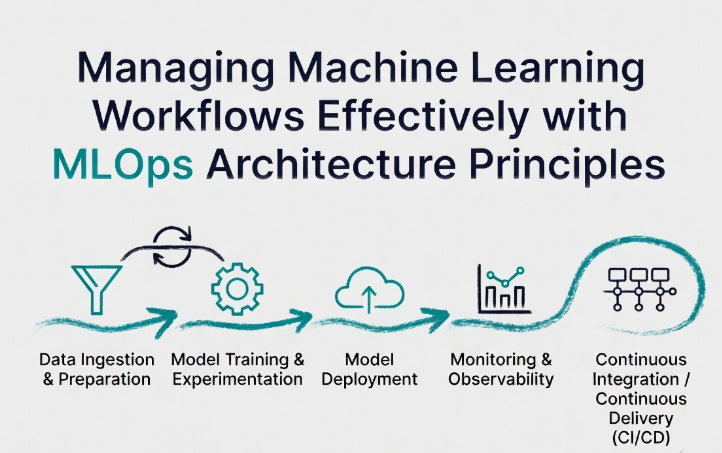
Introduction
The bridge between machine learning and operational excellence is built through the discipline of MLOps. As organizations move from experimental AI models to large-scale production, the need for a structured approach becomes undeniable. A seamless workflow is required to ensure that models are not only accurate but also scalable, reproducible, and easily maintained. This guide is crafted to explore the path toward mastering these skills through a specialized certification.
The complexity of managing machine learning lifecycles is often underestimated. While traditional software follows a predictable path, machine learning introduces the challenge of data drift and model decay. These hurdles are cleared when a systematic framework is applied. By following a dedicated learning path, technical professionals can transition from standard automation to the sophisticated world of AI-driven operations.
What is a Certified MLOps Architect?
The role of a Certified MLOps Architect is centered on the design and management of automated machine learning pipelines. It is a position that sits at the intersection of data science, software engineering, and platform operations. A deep understanding of how models are built, deployed, and monitored is maintained by these professionals. They are responsible for ensuring that the transition from a data scientist’s notebook to a production environment is handled without friction.
A Certified MLOps Architect is expected to possess a holistic view of the entire AI ecosystem. This includes the orchestration of data, the automation of model training, and the continuous monitoring of performance in real-world scenarios. It is not just about writing code; it is about building a resilient architecture that supports the evolving needs of a business.
Why MLOps Architecture Matters?
The gap between model creation and business value is often wide. Many models are developed but never reach the production stage due to technical silos. This gap is closed by the implementation of MLOps practices. Efficiency is significantly increased when repetitive tasks like data validation and model testing are automated.
Furthermore, the reliability of AI systems is enhanced when a structured architecture is in place. Errors are caught earlier in the cycle, and the time required to update models is reduced. In a market where speed and accuracy are vital, having a certified expert to guide these processes is seen as a major competitive advantage.
Why Certified MLOps Architect Certifications are Important
Validation of expertise is provided through formal certification. In a crowded job market, a clear signal of proficiency is needed by employers. The following points highlight the necessity of these credentials:
- Standardized Knowledge: A uniform understanding of industry best practices is ensured through the curriculum.
- Career Advancement: New opportunities in leadership and specialized technical roles are unlocked for certified professionals.
- Risk Mitigation: The likelihood of production failures is decreased when certified architects manage the deployment pipelines.
- Global Recognition: Professional credibility is boosted on a global scale when recognized programs are completed.
Why Choose AIOps School?
A focus on practical, industry-aligned learning is maintained by AIOps School. The curriculum is developed by experts who understand the nuances of modern cloud environments and AI requirements. Hands-on experience is prioritized, ensuring that theoretical concepts are immediately applied to real-world scenarios. Comprehensive support is provided throughout the learning journey, making it a preferred choice for professionals looking to upgrade their skills efficiently.
Certification Deep-Dive: Certified MLOps Architect
What is this certification?
The Certified MLOps Architect program is a comprehensive credential designed for individuals who wish to master the architecture of machine learning operations. It covers the end-to-end lifecycle of ML models within a production environment.
Who should take this certification?
This path is ideal for Software Engineers, DevOps Engineers, and Data Scientists who want to bridge the gap between development and operations. It is also highly recommended for Engineering Managers who oversee AI initiatives.
Certification Overview Table
| Track | Level | Who it’s for | Prerequisites | Skills Covered | Recommended Order |
| MLOps Foundations | Associate | Beginners | Basic Python | ML Basics, Pipeline concepts | 1 |
| MLOps Practitioner | Professional | DevOps Engineers | CI/CD knowledge | Automation, Containerization | 2 |
| MLOps Architect | Expert | Lead Engineers | Platform Exp. | System Design, Orchestration | 3 |
| AI Infrastructure | Expert | Cloud Architects | Cloud Admin | Resource scaling, GPUs | 4 |
| MLOps Security | Professional | Security Engineers | Cyber Security | Model Privacy, Secure APIs | 5 |
Skills you will gain
- Automation of machine learning workflows.
- Management of model versioning and data lineage.
- Implementation of continuous monitoring for AI performance.
- Scaling of infrastructure using Kubernetes and cloud-native tools.
- Optimization of resource usage for cost-effective AI operations.
Real-world projects you should be able to do
- The construction of a fully automated CI/CD pipeline for a deep learning model.
- The implementation of an auto-scaling inference service on a Kubernetes cluster.
- The design of a centralized model registry for an enterprise-level team.
- The setup of a drift detection system that triggers automatic retraining.
Preparation plan
7–14 days plan
Focus is placed on understanding the MLOps lifecycle and core terminology. Basic tools like Docker and Git are reviewed. The official curriculum is scanned for key concepts.
30 days plan
Hands-on labs are completed. Simple pipelines are built using open-source tools. The focus is shifted toward understanding model deployment and container orchestration.
60 days plan
Advanced topics like monitoring and security are studied. Full-scale projects are built from scratch. Mock exams are taken to ensure readiness for the certification.
Common mistakes to avoid
- Ignoring the importance of data quality before automation.
- Overcomplicating the architecture for small-scale models.
- Neglecting continuous monitoring after the model is deployed.
- Focusing only on tools rather than the underlying principles.
Best next certification after this
- Same track: Advanced AI Infrastructure Specialist.
- Cross-track: Certified DataOps Professional.
- Leadership / management: AI Strategy and Governance Lead.
Choose Your Learning Path
DevOps Path
This path is best for professionals with a strong background in traditional software automation. The focus is placed on extending CI/CD practices to handle machine learning artifacts.
DevSecOps Path
Best for those concerned with model security. The learning is centered on integrating security scans and data privacy checks into the ML pipeline.
Site Reliability Engineering (SRE) Path
Designed for experts in system uptime. The focus is on the observability and reliability of machine learning models in production.
AIOps / MLOps Path
This is the core path for those wanting to specialize in AI operations. Comprehensive knowledge of both AI and infrastructure is developed.
DataOps Path
Ideal for data engineers. The emphasis is placed on the automation of data delivery and quality management for ML models.
FinOps Path
Best for those managing cloud budgets. The learning covers the optimization of high-cost AI resources to ensure maximum return on investment.
Role → Recommended Certifications Mapping
| Role | Recommended Certification | Key Benefit |
| DevOps Engineer | MLOps Practitioner | Seamless transition to AI projects. |
| SRE | AIOps Specialist | Enhanced monitoring capabilities. |
| Platform Engineer | MLOps Architect | Expertise in AI system design. |
| Cloud Engineer | AI Infrastructure Expert | Better resource management. |
| Security Engineer | MLOps Security Specialist | Protection of sensitive AI assets. |
| Data Engineer | Certified DataOps Professional | Automated data pipeline mastery. |
| FinOps Practitioner | Cloud Cost Optimizer | Reduced waste in AI spending. |
| Engineering Manager | AI Strategy Lead | Strategic oversight of AI teams. |
Next Certifications to Take
One same-track certification
The Advanced AI Infrastructure Specialist certification is recommended. Deep technical knowledge of GPU management and low-latency serving is provided in this program.
One cross-track certification
The Certified DataOps Professional course should be considered. A better understanding of how data reaches the ML models is gained through this certification.
One leadership-focused certification
The AI Strategy and Governance Lead program is ideal. Skills required to manage teams and ensure ethical AI usage are developed here.
Training & Certification Support Institutions
DevOpsSchool
Comprehensive training programs are offered by DevOpsSchool. A strong emphasis is placed on practical skills and industry-recognized certifications. Learners are guided through complex technical topics with ease.
Cotocus
Specialized consulting and training services are provided by Cotocus. Real-world implementation scenarios are used to help professionals master modern technical stacks.
ScmGalaxy
A wealth of resources and community support is provided by ScmGalaxy. It serves as a hub for professionals to stay updated on the latest trends in automation and configuration management.
BestDevOps
Focused training for modern engineering roles is delivered by BestDevOps. Practical labs and expert mentorship are used to ensure student success.
devsecopsschool.com
A specialized focus on security within the DevOps lifecycle is maintained here. Training is designed to help engineers build secure and resilient automated systems.
sreschool.com
Expertise in site reliability engineering is developed through this institution. The curriculum is centered on maintaining high availability and performance in complex environments.
aiopsschool.com
Dedicated training for the future of AI-driven operations is provided by aiopsschool.com. It is the primary destination for MLOps and AIOps certifications.
dataopsschool.com
The automation of data management is the core focus here. Learners are taught how to build reliable and efficient data pipelines for modern enterprises.
finopsschool.com
Financial management in the cloud is taught by this institution. Professionals learn how to balance performance with cost efficiency in large-scale cloud environments.
Frequently Asked Questions (FAQs)
1. What is the difficulty level of the Certified MLOps Architect exam?
The exam is considered to be of a high difficulty level, requiring a strong grasp of both machine learning and cloud infrastructure.
2. How much time is required to prepare for this certification?
Approximately 60 days of consistent study is usually required for a professional with a technical background.
3. Are there any prerequisites for taking the architect-level exam?
A basic understanding of Python and cloud computing is recommended, though prior MLOps associate certifications are helpful.
4. What is the recommended sequence for MLOps certifications?
One should start with the MLOps Associate level, move to the Practitioner level, and finally attempt the Architect level.
5. How much career value does this certification add?
Significant value is added, often resulting in higher salary brackets and access to senior-level roles in AI-driven companies.
6. Which job roles are most suited for this certification?
Senior DevOps Engineers, Platform Engineers, and Lead Data Scientists are the most suited roles.
7. Can a beginner in IT take this certification?
It is not recommended for absolute beginners; some prior experience in software development or operations is necessary.
8. Does the certification cover multi-cloud strategies?
Yes, the architecture principles taught are applicable across AWS, Azure, and Google Cloud.
9. Is hands-on experience included in the training?
Practical labs are a core part of the recommended training programs provided by AIOps School.
10. How often should the certification be renewed?
Renewal is typically required every two to three years to ensure knowledge remains current with technology changes.
11. Are there many job openings for MLOps Architects?
The demand for these roles is growing rapidly as more companies adopt AI at scale.
12. Is the exam conducted online or at a center?
The exam is typically offered through an online proctored environment for global accessibility.
Additional FAQs: Certified MLOps Architect
1. What makes the Certified MLOps Architect unique?
A specific focus on the structural design of AI systems is what sets this certification apart from general data science courses.
2. How are the real-world projects evaluated?
Projects are designed to simulate actual production environments, ensuring that the skills learned are immediately useful.
3. Is knowledge of Kubernetes mandatory for this certification?
A working knowledge of Kubernetes is highly beneficial, as it is the industry standard for model orchestration.
4. Does the curriculum include FinOps for AI?
Yes, cost-optimization strategies for expensive AI training and inference are covered in the architect track.
5. How does this certification help with career growth in India?
With the boom in AI startups and global delivery centers in India, this credential is highly sought after by top-tier employers.
6. Can this certification be taken by Engineering Managers?
Yes, it provides the technical depth needed to lead teams and make informed architectural decisions.
7. What tools are primarily focused on during the training?
Tools such as Kubeflow, MLflow, and cloud-native ML services are prominently featured.
8. Is there a community for certified professionals?
An exclusive community is available for those who have successfully completed the certification at AIOps School.
Testimonials
Aravind
A significant improvement in my deployment workflows was achieved after I completed the MLOps training. The concepts were presented in a very practical manner.
Meera
The real-world application of the projects helped me gain the confidence needed to lead our company’s new AI infrastructure project. It was a career-changing experience.
Liam
Clarity on how to bridge the gap between our data scientists and the operations team was finally found through this certification. The learning path was very well-structured.
Priya
My confidence in managing complex Kubernetes-based ML pipelines has grown immensely. The training provided by the school was thorough and expert-led.
Ethan
A clear roadmap for my career growth was provided by this program. I now have a much better understanding of how to scale AI models efficiently and securely.
Conclusion
The role of a Certified MLOps Architect is becoming one of the most critical positions in the modern technology landscape. As AI continues to integrate into every facet of business, the need for professionals who can manage these systems reliably and at scale will only increase. By pursuing this certification, a commitment to technical excellence and future-readiness is demonstrated.
Long-term career benefits include not only increased earning potential but also the opportunity to work on cutting-edge projects that define the future of technology. Strategic learning and careful planning of one’s certification path are highly encouraged for anyone looking to stay ahead in the competitive fields of DevOps and AI.