Introduction
Insurance Policy Administration Systems are core software platforms used by insurers to manage the entire lifecycle of an insurance policy—from quotation and underwriting to issuance, servicing, renewal, and claims. These systems act as the operational backbone of insurance companies, ensuring accuracy, compliance, and efficiency across all policy-related processes.
These systems matter today because insurers are moving away from legacy systems toward digital, configurable, and API-driven platforms that support faster product launches, automation, and better customer experiences. Common use cases include policy issuance, premium billing, claims tracking, compliance reporting, and customer self-service portals.
Buyers should evaluate product configurability, scalability, integration capabilities, workflow automation, regulatory compliance, performance, data security, reporting analytics, cloud readiness, and vendor support.
Best for: Insurance carriers, brokers, MGAs, enterprise insurers, and digital-first insurtech companies managing complex policy portfolios.
Not ideal for: Small agencies with minimal policy volume or organizations that only need CRM or basic policy tracking tools.
Key Trends in Insurance Policy Administration Systems
- Cloud-native PAS platforms replacing legacy on-prem systems
- API-first architecture enabling faster integrations and ecosystem expansion
- AI-driven underwriting and risk scoring improving decision-making
- Low-code product configuration for faster policy launches
- Real-time analytics dashboards for policy and claims insights
- Embedded insurance models requiring flexible policy systems
- Microservices-based architecture improving scalability and modularity
- Automation of policy lifecycle workflows reducing manual processing
- Customer self-service portals becoming standard
- Multi-line support systems handling life, health, and P&C in one platform
How We Selected These Tools
- Strong market adoption among insurers and insurtech providers
- Coverage of full policy lifecycle from issuance to claims
- Ability to support multiple insurance lines (life, health, P&C)
- Workflow automation and configurability capabilities
- Integration flexibility with CRM, billing, and underwriting systems
- Performance and scalability for enterprise-grade operations
- Availability of cloud or modern architecture
- Security and compliance readiness signals
- Suitability for different segments (SMB, mid-market, enterprise)
- Overall ecosystem strength and extensibility
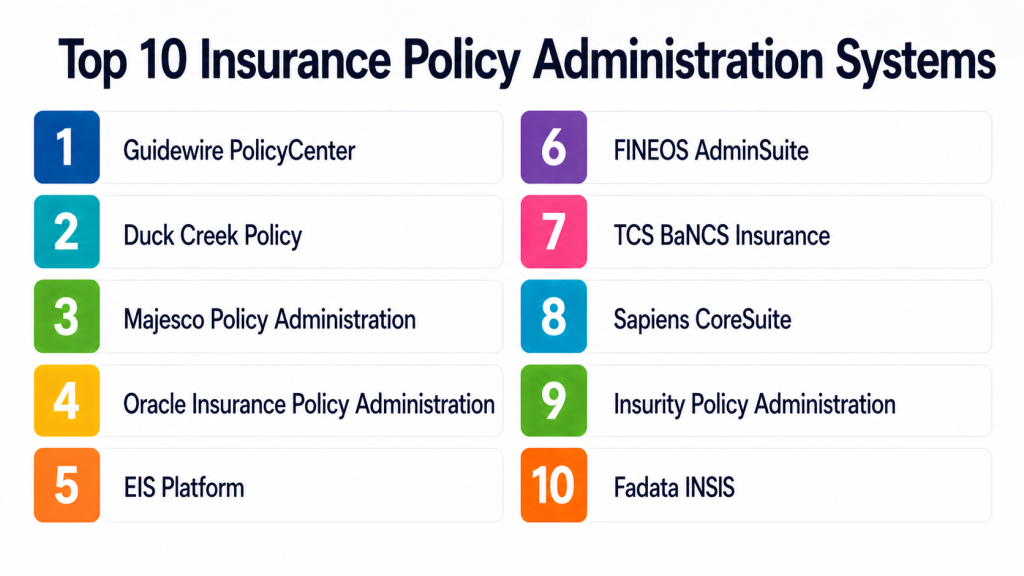
Top 10 Insurance Policy Administration Systems
#1 — Guidewire PolicyCenter
Short description: Guidewire PolicyCenter is a leading policy administration platform widely used by property and casualty insurers. It enables full lifecycle policy management with strong configurability and integration capabilities. It is best suited for enterprise insurers undergoing digital transformation.
Key Features
- End-to-end policy lifecycle management
- Product configuration tools
- Workflow automation
- Integration APIs
- Underwriting and rating support
- Policy servicing and endorsements
- Reporting and analytics
Pros
- Industry-standard platform
- Highly configurable
- Strong ecosystem
- Scalable for large insurers
Cons
- Complex implementation
- High cost
- Requires experienced teams
- Not ideal for small companies
Platforms / Deployment
Web
Cloud / Hybrid
Security & Compliance
Role-based access, audit controls may be available
Certifications: Not publicly stated
Integrations & Ecosystem
Guidewire supports integrations across underwriting, claims, billing, and customer systems, making it a central hub for insurance operations.
- API integrations
- CRM systems
- Claims platforms
- Billing systems
- Data analytics tools
Support & Community
Strong enterprise support and large ecosystem of partners and consultants.
#2 — Duck Creek Policy
Short description: Duck Creek Policy is a flexible policy administration system designed for insurers that need configurable workflows and rapid product deployment. It is widely used in P&C insurance.
Key Features
- Policy lifecycle management
- Product configuration
- Workflow automation
- Cloud deployment
- Rating engine
- Reporting tools
- Integration APIs
Pros
- Flexible and configurable
- Strong cloud capabilities
- Good for modernization
- Supports rapid product launch
Cons
- Implementation effort required
- Customization complexity
- Enterprise-focused
- Pricing varies
Platforms / Deployment
Web
Cloud
Security & Compliance
Not publicly stated
Integrations & Ecosystem
Duck Creek integrates with multiple insurance systems to streamline operations.
- API-based integrations
- Claims systems
- CRM platforms
- Billing tools
Support & Community
Enterprise-level support and growing partner ecosystem.
#3 — Majesco Policy Administration
Short description: Majesco provides a cloud-based policy administration platform with strong focus on digital transformation and configurable insurance products.
Key Features
- Policy lifecycle automation
- Product configuration
- Billing and claims integration
- Digital customer engagement
- Analytics tools
- Cloud-native architecture
Pros
- Modern cloud platform
- Strong analytics
- Flexible product configuration
- Enterprise scalability
Cons
- Implementation complexity
- Cost considerations
- Requires configuration expertise
- Integration planning needed
Platforms / Deployment
Web
Cloud
Security & Compliance
Not publicly stated
Integrations & Ecosystem
Majesco supports integration across insurance operations and digital channels.
- API integrations
- Customer portals
- Claims and billing systems
- Analytics platforms
Support & Community
Enterprise support with implementation services.
#4 — Oracle Insurance Policy Administration
Short description: Oracle provides a robust policy administration platform designed for large insurers managing complex portfolios across multiple lines.
Key Features
- Policy lifecycle management
- Rules-based configuration
- Billing and claims integration
- Product management
- Workflow automation
- Reporting tools
Pros
- Highly scalable
- Strong enterprise capabilities
- Reliable performance
- Supports complex operations
Cons
- Complex setup
- Requires skilled teams
- Higher cost
- Not ideal for SMBs
Platforms / Deployment
Web
Cloud / Hybrid
Security & Compliance
Enterprise controls available
Certifications: Not publicly stated
Integrations & Ecosystem
Oracle integrates with enterprise systems and financial platforms.
- ERP integrations
- CRM systems
- Analytics tools
- Data platforms
Support & Community
Strong enterprise support and global ecosystem.
#5 — EIS Platform
Short description: EIS is a modern, API-first insurance platform built for digital insurers. It supports policy administration with a microservices architecture.
Key Features
- API-first design
- Policy lifecycle management
- Digital customer experiences
- Real-time analytics
- Product configuration
- Microservices architecture
Pros
- Modern architecture
- Flexible integrations
- Digital-first design
- Scalable
Cons
- May require technical expertise
- Implementation complexity
- Enterprise-focused
- Pricing varies
Platforms / Deployment
Web
Cloud
Security & Compliance
Not publicly stated
Integrations & Ecosystem
EIS is designed for integration-heavy environments.
- API ecosystem
- Digital platforms
- CRM tools
- Analytics systems
Support & Community
Enterprise support with focus on digital transformation.
#6 — FINEOS AdminSuite
Short description: FINEOS AdminSuite is a comprehensive platform for life, accident, and health insurance, covering policy, billing, and claims.
Key Features
- End-to-end policy administration
- Claims and billing integration
- Product configuration
- Customer management
- Workflow automation
Pros
- Strong life insurance capabilities
- Integrated platform
- Scalable
- Industry-focused
Cons
- Limited outside specific insurance lines
- Enterprise complexity
- Setup effort required
- Pricing varies
Platforms / Deployment
Web
Cloud
Security & Compliance
Not publicly stated
Integrations & Ecosystem
FINEOS supports integration across insurance operations.
- Claims systems
- Billing systems
- CRM tools
- Analytics platforms
Support & Community
Enterprise-grade support and specialized ecosystem.
#7 — TCS BaNCS Insurance
Short description: TCS BaNCS is a large-scale insurance platform used by global insurers to standardize operations across regions and product lines.
Key Features
- Multi-line policy administration
- Workflow automation
- Global compliance support
- Product configuration
- Analytics dashboards
Pros
- Highly scalable
- Global capabilities
- Strong enterprise support
- Multi-region support
Cons
- Complex implementation
- High cost
- Requires transformation effort
- Not suited for small teams
Platforms / Deployment
Web
Cloud / Hybrid
Security & Compliance
Not publicly stated
Integrations & Ecosystem
TCS BaNCS integrates with enterprise systems and global infrastructure.
- Core banking systems
- Insurance platforms
- Data analytics
- CRM tools
Support & Community
Strong enterprise support with managed services.
#8 — Sapiens CoreSuite
Short description: Sapiens CoreSuite provides policy administration along with digital and integration layers for modern insurers.
Key Features
- Policy lifecycle management
- Digital engagement tools
- API integrations
- Product configuration
- Workflow automation
Pros
- Strong digital capabilities
- Multi-line support
- Good integration ecosystem
- Enterprise ready
Cons
- Implementation effort
- Configuration complexity
- Pricing varies
- Enterprise-focused
Platforms / Deployment
Web
Cloud
Security & Compliance
Not publicly stated
Integrations & Ecosystem
Sapiens supports digital transformation through integrations.
- API ecosystem
- Customer portals
- CRM tools
- Data platforms
Support & Community
Enterprise support with implementation partners.
#9 — Insurity Policy Administration
Short description: Insurity offers a cloud-based policy administration system focused on property and casualty insurers with strong automation capabilities.
Key Features
- Policy lifecycle automation
- Product configuration
- Claims and billing integration
- Reporting dashboards
- Cloud deployment
Pros
- Cloud-native platform
- Good automation features
- Flexible workflows
- Suitable for mid-market
Cons
- Limited global footprint
- Integration depth varies
- Enterprise features may vary
- Pricing varies
Platforms / Deployment
Web
Cloud
Security & Compliance
Not publicly stated
Integrations & Ecosystem
Insurity integrates with insurance and business systems.
- CRM systems
- Claims platforms
- Billing tools
- Data analytics
Support & Community
Support available with onboarding resources.
#10 — Fadata INSIS
Short description: Fadata INSIS is a policy administration system supporting life, health, and general insurance on a unified platform.
Key Features
- Multi-line policy administration
- Product configuration
- Workflow automation
- Claims and billing integration
- Analytics dashboards
Pros
- Supports multiple insurance lines
- Unified platform
- Flexible configuration
- Good for mid-market
Cons
- Less global visibility than top vendors
- Implementation effort
- Integration complexity
- Pricing varies
Platforms / Deployment
Web
Cloud
Security & Compliance
Not publicly stated
Integrations & Ecosystem
Fadata supports integration across insurance operations.
- API integrations
- CRM systems
- Claims and billing
- Analytics tools
Support & Community
Support available with regional focus.
Comparison Table
| Tool Name | Best For | Platform(s) Supported | Deployment | Standout Feature | Public Rating |
|---|---|---|---|---|---|
| Guidewire PolicyCenter | Enterprise P&C insurers | Web | Cloud/Hybrid | Industry-standard PAS | N/A |
| Duck Creek Policy | Configurable insurers | Web | Cloud | Flexible workflows | N/A |
| Majesco | Digital insurers | Web | Cloud | Cloud-native PAS | N/A |
| Oracle Insurance | Large insurers | Web | Cloud/Hybrid | High scalability | N/A |
| EIS Platform | Digital-first insurers | Web | Cloud | API-first architecture | N/A |
| FINEOS | Life insurance | Web | Cloud | End-to-end platform | N/A |
| TCS BaNCS | Global enterprises | Web | Cloud/Hybrid | Multi-region support | N/A |
| Sapiens CoreSuite | Enterprise insurers | Web | Cloud | Digital + PAS combo | N/A |
| Insurity | Mid-market insurers | Web | Cloud | Cloud automation | N/A |
| Fadata INSIS | Multi-line insurers | Web | Cloud | Unified PAS | N/A |
Evaluation & Scoring
| Tool | Core | Ease | Integrations | Security | Performance | Support | Value | Total |
|---|---|---|---|---|---|---|---|---|
| Guidewire | 9 | 7 | 9 | 8 | 9 | 8 | 7 | 8.3 |
| Duck Creek | 8.5 | 7.5 | 8.5 | 8 | 8.5 | 8 | 7.5 | 8.1 |
| Majesco | 8.5 | 7.5 | 8 | 8 | 8.5 | 8 | 7.5 | 8.0 |
| Oracle | 9 | 7 | 8 | 8 | 9 | 8 | 7 | 8.2 |
| EIS | 8.5 | 7.5 | 9 | 8 | 8.5 | 8 | 7.5 | 8.2 |
| FINEOS | 8.5 | 7 | 8 | 8 | 8.5 | 8 | 7 | 8.0 |
| TCS BaNCS | 9 | 6.5 | 8 | 8 | 9 | 8 | 7 | 8.1 |
| Sapiens | 8.5 | 7.5 | 8.5 | 8 | 8.5 | 8 | 7.5 | 8.2 |
| Insurity | 8 | 8 | 7.5 | 7.5 | 8 | 7.5 | 8 | 7.9 |
| Fadata | 8 | 7.5 | 7.5 | 7.5 | 8 | 7.5 | 8 | 7.8 |
Scores are relative comparisons based on features, usability, integrations, and scalability. Higher scores indicate stronger enterprise capability, while mid-range scores may reflect easier usability or cost efficiency.
Which Insurance Policy Administration System Is Right for You?
Solo / Freelancer
Not typically required. Basic CRM or agency management tools are usually sufficient.
SMB
Look for simpler cloud tools like Insurity or Fadata that offer ease of use without heavy implementation.
Mid-Market
Consider Duck Creek, Majesco, or EIS for flexibility, scalability, and digital capabilities.
Enterprise
Choose Guidewire, Oracle, TCS BaNCS, or Sapiens for full-scale transformation and global operations.
Budget vs Premium
Lower-cost tools focus on usability, while premium platforms provide scalability, compliance, and deep customization.
Feature Depth vs Ease of Use
Simple tools prioritize speed and usability, while enterprise PAS platforms focus on configurability and control.
Integrations & Scalability
Ensure the system integrates with claims, billing, CRM, analytics, and underwriting tools.
Security & Compliance Needs
Check for access control, audit logs, and regulatory compliance support before final selection.
Frequently Asked Questions
1. What is a policy administration system?
It is software used by insurers to manage policies from creation to renewal and claims. It centralizes all policy data and automates workflows.
2. Why do insurers need PAS?
PAS improves efficiency, reduces manual work, ensures compliance, and enhances customer service.
3. Is PAS only for large insurers?
Mostly used by medium and large insurers, but smaller providers can use simplified versions.
4. What features matter most?
Policy lifecycle management, automation, integrations, reporting, and configurability are key features.
5. How long does implementation take?
Enterprise systems can take months, while cloud tools may be faster depending on complexity.
6. Can PAS integrate with other systems?
Yes, most platforms integrate with CRM, claims, billing, and analytics systems.
7. Are PAS platforms secure?
Security varies by vendor. Buyers should verify access controls, encryption, and compliance standards.
8. What industries use PAS?
Insurance carriers, brokers, MGAs, and insurtech companies.
9. What is the difference between PAS and CRM?
PAS manages policies, while CRM manages customer relationships and sales processes.
10. What are alternatives to PAS?
Spreadsheets, legacy systems, or custom-built platforms, though they lack scalability.
Conclusion
Insurance policy administration systems are the core engine of modern insurance operations. They enable insurers to manage policies efficiently while improving accuracy, compliance, and customer experience. Enterprise platforms like Guidewire, Oracle, and TCS BaNCS offer unmatched scalability and control for large organizations. Meanwhile, tools like Insurity, Fadata, and Duck Creek provide flexible options for mid-sized and growing insurers. The right system depends on your business size, product complexity, and digital maturity. Organizations should carefully evaluate integration capabilities, automation features, and scalability before choosing. A phased implementation approach with pilot testing can reduce risks and improve adoption.