Introduction
Web Application Scanners are security tools designed to identify vulnerabilities, misconfigurations, and security weaknesses in websites, APIs, and web applications. These platforms automatically scan applications for issues such as SQL injection, cross-site scripting, authentication flaws, insecure APIs, exposed sensitive data, and outdated software components.
Modern organizations rely heavily on web applications for customer services, e-commerce, SaaS delivery, cloud platforms, and internal operations. As cyberattacks targeting web applications continue to increase, automated vulnerability scanning has become a critical part of modern application security strategies. Web application scanners help organizations continuously test their applications and reduce security risks before attackers can exploit vulnerabilities.
Common real-world use cases include:
- Continuous vulnerability scanning for web applications
- API security testing
- DevSecOps pipeline automation
- Compliance validation and audit preparation
- Security testing for cloud-native applications
Buyers evaluating web application scanners should focus on:
- Vulnerability detection accuracy
- False positive reduction
- API security testing
- Automation capabilities
- CI/CD integrations
- Cloud-native compatibility
- Reporting and analytics
- Scalability
- Ease of deployment
- Compliance support
Best for: Enterprises, SaaS providers, e-commerce businesses, financial institutions, healthcare organizations, DevSecOps teams, and cloud-native development environments.
Not ideal for: Static websites with minimal functionality, organizations with very limited web exposure, or teams requiring only basic network vulnerability scanning.
Key Trends in Web Application Scanners
- AI-assisted vulnerability analysis is improving detection accuracy and prioritization.
- API security testing is becoming a core feature across modern scanners.
- Cloud-native and Kubernetes application scanning support is expanding rapidly.
- Shift-left security integration into CI/CD pipelines is becoming standard.
- Automated remediation guidance is improving developer workflows.
- Runtime scanning and behavioral analysis are gaining importance.
- Unified platforms combining DAST, API security, and compliance monitoring are increasing in popularity.
- Headless browser testing support is improving modern application coverage.
- Continuous security monitoring is replacing periodic scanning models.
- Integration with SIEM and DevSecOps platforms is becoming more important.
How We Selected These Tools Methodology
The tools in this list were selected based on practical enterprise relevance, market adoption, and modern web application security testing capabilities.
- Evaluated vulnerability detection coverage
- Assessed DAST and API security capabilities
- Reviewed CI/CD and DevSecOps integration depth
- Considered cloud-native compatibility
- Evaluated scalability across enterprise environments
- Assessed reporting and remediation workflows
- Reviewed automation and scheduling capabilities
- Considered developer usability and deployment simplicity
- Evaluated ecosystem integrations
- Reviewed support quality and operational maturity
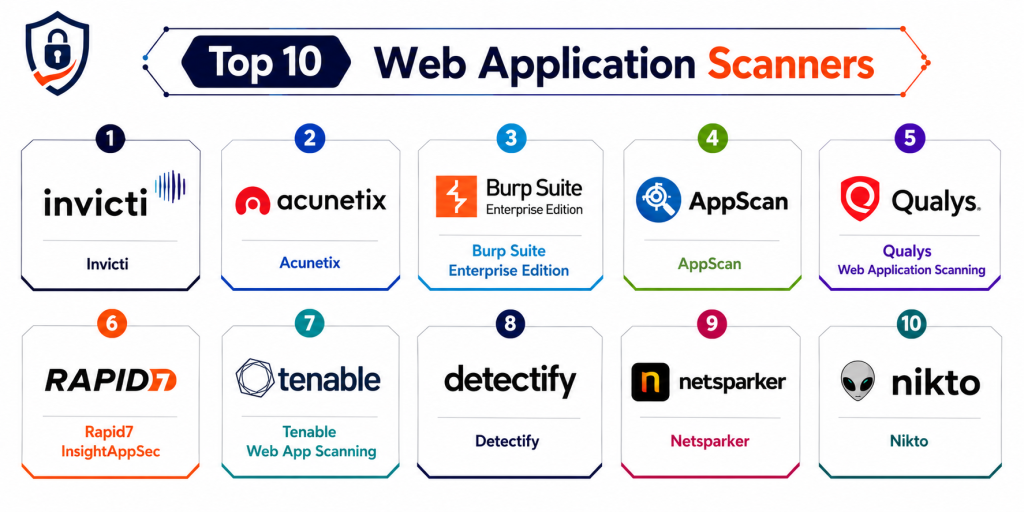
Top 10 Web Application Scanners
1- Invicti
Short description: Invicti is one of the most recognized web application scanning platforms focused on automated vulnerability detection and proof-based scanning. It is widely used by enterprises seeking scalable DAST and API security testing.
Key Features
- Automated DAST scanning
- API security testing
- Proof-based vulnerability verification
- Continuous vulnerability monitoring
- CI/CD integrations
- Compliance reporting
- Web asset discovery
Pros
- Strong automated validation capabilities
- Excellent enterprise scalability
- Good vulnerability accuracy
Cons
- Premium pricing structure
- Primarily focused on DAST
- Large deployments may require tuning
Platforms / Deployment
- Windows / Linux
- Cloud / Self-hosted
Security & Compliance
- RBAC
- Audit logging
- Encryption support
- GDPR support
Integrations & Ecosystem
Invicti integrates with development pipelines, ticketing systems, and security operations workflows.
- Jira
- Jenkins
- GitHub
- Azure DevOps
- Splunk
- Slack
Support & Community
Strong enterprise support with onboarding guidance and extensive documentation.
2- Acunetix
Short description: Acunetix is a widely used web vulnerability scanner designed for SMB and mid-market organizations seeking fast deployment and practical security testing capabilities.
Key Features
- Automated web vulnerability scanning
- API testing
- Authentication testing
- Compliance reporting
- Continuous scanning
- Scheduling automation
- Vulnerability management dashboards
Pros
- Easy deployment process
- User-friendly interface
- Strong vulnerability coverage
Cons
- Limited deep code analysis
- Enterprise governance features may vary
- Advanced customization can be limited
Platforms / Deployment
- Windows / Linux
- Cloud / Self-hosted
Security & Compliance
- RBAC
- Audit capabilities
- Encryption support
Integrations & Ecosystem
Acunetix integrates with DevOps workflows and vulnerability management systems.
- Jira
- Jenkins
- GitHub
- Azure DevOps
- Slack
Support & Community
Good onboarding experience with practical documentation and support resources.
3- Burp Suite Enterprise Edition
Short description: Burp Suite Enterprise Edition extends the well-known Burp Suite security testing ecosystem with enterprise-grade automation, continuous scanning, and centralized vulnerability management.
Key Features
- Automated vulnerability scanning
- API security testing
- Manual penetration testing support
- CI/CD integrations
- Authentication handling
- Scan scheduling
- Vulnerability management
Pros
- Strong security testing flexibility
- Excellent penetration testing ecosystem
- Large security community adoption
Cons
- Advanced usage requires expertise
- Enterprise configuration complexity
- Manual testing knowledge recommended
Platforms / Deployment
- Windows / Linux / macOS
- Cloud / Self-hosted
Security & Compliance
- RBAC
- Audit logging
- Encryption support
Integrations & Ecosystem
Burp Suite integrates with security testing workflows, developer environments, and CI/CD pipelines.
- Jenkins
- GitHub
- Jira
- Kubernetes
- CI/CD platforms
- APIs
Support & Community
Very large security research community with extensive training and plugin support.
4- Rapid7 InsightAppSec
Short description: Rapid7 InsightAppSec is a cloud-based DAST platform designed for modern web applications and APIs. It emphasizes automation, runtime visibility, and operational simplicity.
Key Features
- Dynamic application security testing
- API scanning
- Cloud-based vulnerability management
- CI/CD integrations
- Compliance reporting
- Attack simulation testing
- Risk prioritization
Pros
- Cloud-native deployment simplicity
- Good API testing support
- Effective vulnerability management workflows
Cons
- Primarily DAST-focused
- Advanced customization may require expertise
- Limited deep static analysis capabilities
Platforms / Deployment
- Cloud
Security & Compliance
- RBAC
- Audit logging
- Encryption support
Integrations & Ecosystem
Rapid7 integrates with security operations, cloud infrastructure, and DevSecOps workflows.
- Jira
- Jenkins
- GitHub
- AWS
- Splunk
- SIEM platforms
Support & Community
Strong enterprise support with onboarding assistance and detailed technical documentation.
5- Qualys Web Application Scanning
Short description: Qualys Web Application Scanning provides scalable vulnerability assessment and web application security testing capabilities within the broader Qualys security ecosystem.
Key Features
- Automated web application scanning
- Vulnerability prioritization
- API testing
- Compliance reporting
- Asset discovery
- Continuous monitoring
- Threat intelligence integration
Pros
- Strong enterprise scalability
- Broad vulnerability management ecosystem
- Effective reporting capabilities
Cons
- Interface complexity for new users
- Advanced tuning may be needed
- Best value in larger environments
Platforms / Deployment
- Cloud
Security & Compliance
- SSO/SAML
- RBAC
- Audit logs
- Encryption support
Integrations & Ecosystem
Qualys integrates with enterprise vulnerability management and cloud security ecosystems.
- AWS
- Azure
- Splunk
- ServiceNow
- Jira
- SIEM platforms
Support & Community
Enterprise-grade support with strong documentation and implementation resources.
6- OWASP ZAP
Short description: OWASP ZAP is one of the most popular open-source web application scanners. It provides automated scanning and manual testing capabilities for developers, security researchers, and DevSecOps teams.
Key Features
- Automated vulnerability scanning
- Manual security testing tools
- API security testing
- Open-source extensibility
- Proxy-based testing
- Script automation
- Plugin ecosystem
Pros
- Free and open-source
- Large security community
- Strong flexibility for testing workflows
Cons
- Requires technical expertise
- Enterprise management capabilities are limited
- Advanced automation setup may be complex
Platforms / Deployment
- Windows / Linux / macOS
- Self-hosted
Security & Compliance
- Varies / N/A
Integrations & Ecosystem
OWASP ZAP integrates with CI/CD workflows and developer-driven security environments.
- Jenkins
- Docker
- Kubernetes
- GitHub
- APIs
Support & Community
Very active open-source security community with extensive learning resources.
7- Checkmarx DAST
Short description: Checkmarx DAST extends the Checkmarx application security ecosystem with automated runtime vulnerability scanning and API testing capabilities.
Key Features
- Dynamic application security testing
- API vulnerability scanning
- CI/CD integrations
- Vulnerability prioritization
- Threat analytics
- Cloud-native application support
- Compliance reporting
Pros
- Strong AppSec ecosystem integration
- Good enterprise scalability
- Broad DevSecOps workflow support
Cons
- Enterprise pricing structure
- Platform complexity for smaller teams
- Some advanced workflows require customization
Platforms / Deployment
- Cloud / Hybrid
Security & Compliance
- SSO/SAML
- RBAC
- Audit logs
- Encryption support
Integrations & Ecosystem
Checkmarx integrates deeply with DevSecOps and software development pipelines.
- GitHub
- Jenkins
- Jira
- Azure DevOps
- Kubernetes
- AWS
Support & Community
Enterprise onboarding assistance with strong technical documentation.
8- AppScan by HCLSoftware
Short description: AppScan provides application security testing capabilities including DAST, SAST, and API security support for enterprise software development environments.
Key Features
- Dynamic application testing
- Static analysis support
- API security testing
- Compliance reporting
- Vulnerability management
- Risk prioritization
- CI/CD integration support
Pros
- Broad AppSec feature coverage
- Enterprise-focused reporting
- Good compliance capabilities
Cons
- Complex deployment workflows
- Premium enterprise pricing
- Learning curve for new teams
Platforms / Deployment
- Windows / Linux
- Cloud / Self-hosted / Hybrid
Security & Compliance
- SSO/SAML
- RBAC
- Audit logging
- Encryption support
Integrations & Ecosystem
AppScan integrates with enterprise DevOps and governance ecosystems.
- Jenkins
- GitHub
- Azure DevOps
- Jira
- Kubernetes
- AWS
Support & Community
Enterprise-focused support with onboarding programs and technical resources.
9- Netsparker
Short description: Netsparker became well known for automated web application scanning and proof-based vulnerability validation. It is widely recognized for balancing automation with usability.
Key Features
- Automated vulnerability scanning
- Proof-based scanning
- API testing
- CI/CD integrations
- Authentication support
- Vulnerability reporting
- Web asset discovery
Pros
- Good vulnerability accuracy
- Easy-to-use interface
- Strong automation capabilities
Cons
- Enterprise costs may increase at scale
- Primarily DAST-focused
- Advanced workflow customization may vary
Platforms / Deployment
- Windows / Linux
- Cloud / Self-hosted
Security & Compliance
- RBAC
- Encryption support
- Audit logging
Integrations & Ecosystem
Netsparker integrates with developer and security operations environments.
- Jira
- Jenkins
- GitHub
- Azure DevOps
- Slack
Support & Community
Good documentation and onboarding support for enterprise teams.
10- Detectify
Short description: Detectify is a cloud-based web application scanning platform focused on external attack surface management and automated vulnerability detection.
Key Features
- Automated vulnerability scanning
- External attack surface monitoring
- Continuous testing
- Threat intelligence updates
- Web asset discovery
- API support
- Security reporting
Pros
- Easy cloud-based deployment
- Good external visibility
- Continuous monitoring approach
Cons
- Limited deep enterprise customization
- Primarily focused on external attack surfaces
- Advanced governance capabilities may vary
Platforms / Deployment
- Cloud
Security & Compliance
- RBAC
- Audit logging
- Encryption support
Integrations & Ecosystem
Detectify integrates with cloud infrastructure and vulnerability management workflows.
- Slack
- Jira
- APIs
- Cloud platforms
- Security workflows
Support & Community
Good onboarding experience with modern documentation resources.
Comparison Table
| Tool Name | Best For | Platform(s) Supported | Deployment | Standout Feature | Public Rating |
|---|---|---|---|---|---|
| Invicti | Enterprise DAST automation | Windows, Linux | Cloud, Self-hosted | Proof-based scanning | N/A |
| Acunetix | SMB web security testing | Windows, Linux | Cloud, Self-hosted | Easy deployment | N/A |
| Burp Suite Enterprise Edition | Security testing flexibility | Windows, Linux, macOS | Cloud, Self-hosted | Large penetration testing ecosystem | N/A |
| Rapid7 InsightAppSec | Cloud-native DAST | Cloud platforms | Cloud | API security testing | N/A |
| Qualys Web Application Scanning | Enterprise vulnerability management | Cloud platforms | Cloud | Integrated security ecosystem | N/A |
| OWASP ZAP | Open-source security testing | Windows, Linux, macOS | Self-hosted | Open-source flexibility | N/A |
| Checkmarx DAST | Enterprise DevSecOps | Cloud-native platforms | Cloud, Hybrid | Unified AppSec workflows | N/A |
| AppScan | Enterprise application security | Windows, Linux | Cloud, Hybrid | Broad AppSec coverage | N/A |
| Netsparker | Automated web scanning | Windows, Linux | Cloud, Self-hosted | Proof-based validation | N/A |
| Detectify | External attack surface monitoring | Cloud platforms | Cloud | Continuous monitoring | N/A |
Evaluation & Scoring of Web Application Scanners
| Tool Name | Core 25% | Ease 15% | Integrations 15% | Security 10% | Performance 10% | Support 10% | Value 15% | Weighted Total |
|---|---|---|---|---|---|---|---|---|
| Invicti | 9 | 8 | 8 | 9 | 8 | 8 | 7 | 8.15 |
| Acunetix | 8 | 9 | 7 | 8 | 8 | 7 | 8 | 7.95 |
| Burp Suite Enterprise Edition | 9 | 7 | 8 | 8 | 8 | 9 | 7 | 8.00 |
| Rapid7 InsightAppSec | 8 | 8 | 8 | 8 | 8 | 8 | 7 | 7.95 |
| Qualys Web Application Scanning | 8 | 7 | 8 | 9 | 8 | 8 | 7 | 7.85 |
| OWASP ZAP | 7 | 6 | 7 | 7 | 7 | 8 | 10 | 7.40 |
| Checkmarx DAST | 8 | 7 | 9 | 8 | 8 | 8 | 6 | 7.75 |
| AppScan | 8 | 7 | 8 | 8 | 8 | 8 | 6 | 7.60 |
| Netsparker | 8 | 8 | 7 | 8 | 8 | 7 | 7 | 7.65 |
| Detectify | 7 | 8 | 7 | 7 | 7 | 7 | 8 | 7.30 |
These scores are comparative rather than absolute. Higher scores generally indicate broader vulnerability coverage, stronger integrations, and greater enterprise readiness. Open-source and SMB-focused tools may provide excellent operational value even if they have fewer enterprise governance capabilities.
Which Web Application Scanner Is Right for You?
Solo / Freelancer
Independent developers and security researchers often benefit from OWASP ZAP and Burp Suite because of their flexibility, affordability, and large security testing communities.
SMB
Small and medium businesses should prioritize deployment simplicity, automation, and ease of management. Acunetix and Detectify provide strong scanning capabilities without excessive operational complexity.
Mid-Market
Mid-market organizations usually require stronger reporting, DevSecOps integrations, and scalable automation. Invicti and Rapid7 InsightAppSec provide balanced enterprise-grade functionality.
Enterprise
Large enterprises typically need centralized governance, advanced reporting, compliance workflows, and broad integration support. Qualys, Checkmarx DAST, and AppScan are strong enterprise-focused choices.
Budget vs Premium
Open-source and SMB-focused scanners provide lower operational costs and easier onboarding. Enterprise platforms deliver stronger automation, governance, and integration depth but generally require larger budgets.
Feature Depth vs Ease of Use
Platforms such as Burp Suite Enterprise Edition and Qualys provide extensive testing capabilities but may require more operational expertise. Acunetix and Detectify emphasize usability and faster deployment.
Integrations & Scalability
Organizations with mature DevSecOps pipelines should prioritize integrations with CI/CD systems, Kubernetes, SIEM platforms, ticketing systems, and cloud providers.
Security & Compliance Needs
Regulated industries should prioritize platforms offering audit logging, RBAC, compliance reporting, encryption support, and centralized governance controls.
Frequently Asked Questions FAQs
1. What is a Web Application Scanner?
A Web Application Scanner is a security tool that automatically identifies vulnerabilities, misconfigurations, and security weaknesses in websites, APIs, and web applications.
2. How do web application scanners work?
These platforms crawl applications, analyze requests and responses, simulate attacks, and identify vulnerabilities such as SQL injection, cross-site scripting, and insecure authentication mechanisms.
3. What is the difference between DAST and SAST?
DAST tests running applications from the outside, while SAST analyzes source code during development. Many organizations use both approaches together for broader security coverage.
4. Can web application scanners detect API vulnerabilities?
Yes. Most modern platforms now include API discovery, API testing, and runtime API security analysis capabilities.
5. Are open-source scanners reliable?
Open-source scanners like OWASP ZAP can be highly effective when managed by technically skilled teams. Enterprise organizations may still require commercial platforms for governance and support.
6. Do these scanners support cloud-native applications?
Yes. Many modern scanners support Kubernetes, containers, microservices, and cloud-native environments.
7. Can web application scanners replace penetration testing?
Automated scanners improve vulnerability detection efficiency but usually complement rather than replace manual penetration testing and security reviews.
8. What integrations are most important?
Important integrations include CI/CD pipelines, Git repositories, Kubernetes, SIEM platforms, ticketing systems, and cloud infrastructure providers.
9. What are common deployment mistakes?
Common mistakes include insufficient authentication testing, poor scan configuration, ignoring false positives, and failing to integrate scanning into development workflows.
10. How often should organizations run scans?
Organizations should ideally run continuous or scheduled scans integrated into development pipelines and production monitoring workflows.
Conclusion
Web Application Scanners have become essential components of modern application security programs as organizations continue expanding their digital services, APIs, cloud-native workloads, and customer-facing applications. These platforms help security and DevSecOps teams identify vulnerabilities early, automate security testing workflows, and reduce the risk of runtime attacks and data exposure. Enterprise buyers should evaluate vulnerability detection accuracy, API security capabilities, deployment flexibility, integration depth, reporting quality, and operational simplicity before selecting a platform. Invicti, Burp Suite Enterprise Edition, and Qualys provide strong enterprise-grade capabilities, while Acunetix and Detectify offer practical options for SMB and mid-market environments. Open-source solutions such as OWASP ZAP remain highly valuable for technically skilled teams and developer-driven security workflows. The best solution ultimately depends on application complexity, security maturity, compliance requirements, and operational scale. Shortlist a few scanners, integrate them into your CI/CD pipelines, validate vulnerability detection accuracy, and evaluate workflow efficiency before making a long-term investment decision.
The article could also cover how these tools manage authentication during scans. Testing secured areas is often challenging in real scenarios