Introduction
Infrastructure as Code IaC Tools help organizations provision, manage, automate, and govern infrastructure using machine-readable configuration files instead of manual processes. These platforms allow DevOps, cloud engineering, and platform teams to automate infrastructure deployment across cloud, on-premises, Kubernetes, and hybrid environments with consistency, scalability, and repeatability.
As enterprises increasingly adopt multi-cloud architectures, Kubernetes environments, AI workloads, and platform engineering practices, Infrastructure as Code has become a foundational component of modern DevOps operations. Modern IaC tools now combine automation, policy enforcement, GitOps workflows, drift detection, compliance validation, and cloud-native orchestration to improve operational reliability and deployment speed.
Real-world use cases include:
- Cloud infrastructure provisioning
- Kubernetes environment automation
- CI/CD infrastructure deployment
- Multi-cloud infrastructure management
- Compliance-driven infrastructure governance
Evaluation Criteria for Buyers
Organizations evaluating Infrastructure as Code Tools should consider:
- Multi-cloud compatibility
- Automation and orchestration capabilities
- Kubernetes and container support
- Scalability across environments
- State management and drift detection
- Security and compliance integrations
- GitOps and CI/CD compatibility
- Community and ecosystem maturity
- Reporting and governance visibility
- Ease of learning and operational usability
Best for: Enterprises, DevOps teams, cloud-native businesses, fintech companies, SaaS providers, telecom operators, managed service providers, and platform engineering teams.
Not ideal for: Organizations with minimal infrastructure automation requirements or businesses relying entirely on manually managed infrastructure.
Key Trends in Infrastructure as Code Tools
- GitOps and IaC convergence is accelerating rapidly.
- Kubernetes-native automation is becoming standard.
- AI-assisted infrastructure automation is emerging.
- Policy as Code integration is improving governance workflows.
- Multi-cloud orchestration capabilities are expanding.
- Drift detection and remediation are becoming more advanced.
- Platform engineering workflows are increasing IaC adoption.
- Security scanning within CI/CD pipelines is becoming standard.
- Declarative infrastructure management continues gaining popularity.
- Infrastructure automation for AI and GPU workloads is growing rapidly.
How We Selected These Tools
The following Infrastructure as Code Tools were selected based on automation capabilities, enterprise adoption, ecosystem maturity, and operational flexibility.
- Strong infrastructure automation support
- Multi-cloud compatibility
- Kubernetes and cloud-native integrations
- Enterprise and SMB adoption
- Community and ecosystem maturity
- Security and governance workflows
- Scalability across distributed environments
- CI/CD and GitOps integration support
- Operational usability and reliability
- Long-term DevOps relevance
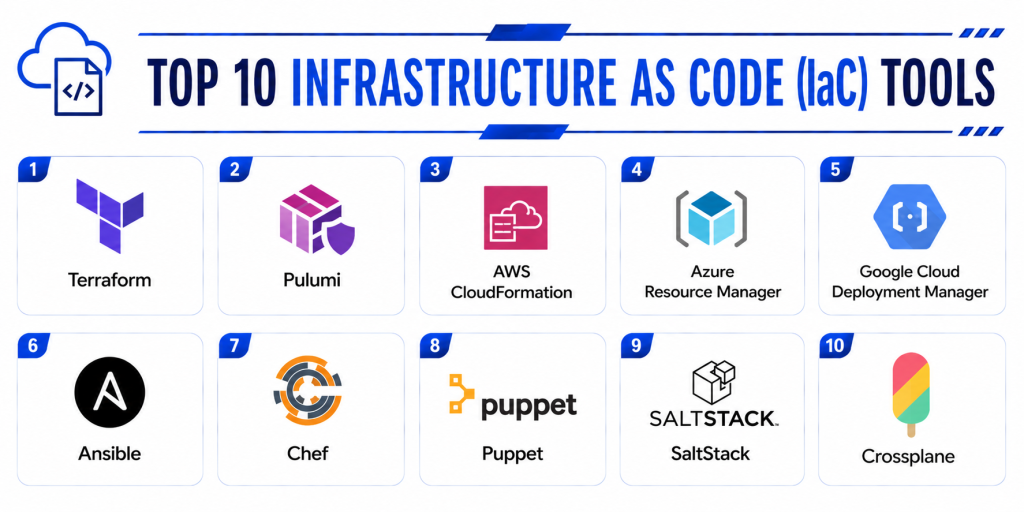
Top 10 Infrastructure as Code IaC Tools
1- Terraform
Short description: Terraform is one of the most widely adopted Infrastructure as Code platforms for provisioning and managing cloud, hybrid, and multi-cloud infrastructure using declarative configuration files.
Key Features
- Multi-cloud infrastructure provisioning
- Declarative configuration language
- State management workflows
- Infrastructure drift detection
- Modular infrastructure automation
- Policy as Code integration
- Kubernetes support
Pros
- Broad multi-cloud ecosystem support
- Strong community and provider ecosystem
- Excellent automation flexibility
Cons
- State management complexity
- Large-scale deployments require governance planning
- Advanced modules require expertise
Platforms / Deployment
- Cloud / Self-hosted / Hybrid
Security & Compliance
Supports RBAC, governance workflows, policy enforcement, and operational audit visibility.
Integrations & Ecosystem
Terraform integrates with major cloud and DevOps ecosystems.
- AWS
- Azure
- Google Cloud
- Kubernetes
- CI/CD platforms
Support & Community
Extremely large DevOps ecosystem with strong enterprise and community support.
2- Pulumi
Short description: Pulumi provides Infrastructure as Code automation using modern programming languages for cloud-native and Kubernetes infrastructure management.
Key Features
- Infrastructure automation with programming languages
- Multi-cloud provisioning
- Kubernetes support
- CI/CD integrations
- Infrastructure testing workflows
- Policy as Code support
- State management capabilities
Pros
- Developer-friendly workflows
- Broad cloud-native support
- Strong Kubernetes compatibility
Cons
- Smaller ecosystem than Terraform
- Advanced governance workflows vary
- Enterprise customization may require planning
Platforms / Deployment
- Cloud / Hybrid
Security & Compliance
Supports governance workflows, RBAC, operational audit visibility, and policy enforcement.
Integrations & Ecosystem
Pulumi integrates with cloud-native and DevOps ecosystems.
- AWS
- Azure
- Google Cloud
- Kubernetes
- GitHub Actions
Support & Community
Growing cloud-native ecosystem with active developer community support.
3- AWS CloudFormation
Short description: AWS CloudFormation provides native Infrastructure as Code automation for provisioning and managing AWS infrastructure environments.
Key Features
- AWS-native provisioning
- Template-driven automation
- Stack management
- Resource dependency orchestration
- Drift detection
- IAM integration
- Infrastructure rollback support
Pros
- Strong AWS integration
- Native AWS governance compatibility
- Good enterprise scalability
Cons
- AWS-only focus
- Multi-cloud support unavailable
- Complex templates require expertise
Platforms / Deployment
- Cloud
Security & Compliance
Supports governance workflows, IAM integration, audit logging, and compliance visibility.
Integrations & Ecosystem
CloudFormation integrates with AWS ecosystems.
- AWS IAM
- AWS Config
- CloudTrail
- Lambda
- AWS Organizations
Support & Community
Strong AWS ecosystem with extensive operational documentation.
4- Ansible
Short description: Ansible provides agentless automation and Infrastructure as Code workflows for configuration management, provisioning, and orchestration.
Key Features
- Agentless automation
- Configuration management
- Infrastructure provisioning
- Playbook-based orchestration
- Hybrid infrastructure support
- CI/CD integration
- Kubernetes automation
Pros
- Easy onboarding workflows
- Broad infrastructure compatibility
- Strong automation flexibility
Cons
- Large-scale orchestration complexity
- State management less extensive
- Advanced workflows require tuning
Platforms / Deployment
- Cloud / Hybrid / On-premises
Security & Compliance
Supports RBAC, governance workflows, and operational automation controls.
Integrations & Ecosystem
Ansible integrates with infrastructure and DevOps ecosystems.
- AWS
- Azure
- VMware
- Kubernetes
- CI/CD platforms
Support & Community
Large automation ecosystem with strong enterprise and community support.
5- Azure Resource Manager ARM Templates
Short description: Azure Resource Manager ARM Templates provide Infrastructure as Code automation for Microsoft Azure cloud infrastructure environments.
Key Features
- Azure-native infrastructure automation
- Template-driven provisioning
- Resource dependency orchestration
- Policy integration
- Governance automation
- Role-based access integration
- Infrastructure deployment workflows
Pros
- Strong Azure ecosystem integration
- Good governance capabilities
- Broad Azure service support
Cons
- Azure-focused deployment
- Complex template syntax
- Multi-cloud support limited
Platforms / Deployment
- Cloud
Security & Compliance
Supports governance workflows, audit visibility, RBAC, and Azure compliance controls.
Integrations & Ecosystem
ARM Templates integrate with Microsoft cloud ecosystems.
- Azure Policy
- Microsoft Entra ID
- Azure DevOps
- Defender for Cloud
- Azure Monitor
Support & Community
Strong Microsoft ecosystem with onboarding-focused support.
6- Bicep
Short description: Bicep provides simplified Infrastructure as Code automation for Microsoft Azure environments with improved readability over ARM templates.
Key Features
- Azure infrastructure automation
- Simplified declarative syntax
- Resource dependency management
- Native Azure integration
- Governance support
- Modular infrastructure deployment
- CI/CD integration
Pros
- Easier syntax than ARM Templates
- Strong Azure compatibility
- Good modular deployment workflows
Cons
- Azure-only focus
- Multi-cloud support unavailable
- Enterprise customization varies
Platforms / Deployment
- Cloud
Security & Compliance
Supports governance workflows, RBAC integration, audit visibility, and policy enforcement.
Integrations & Ecosystem
Bicep integrates with Microsoft cloud ecosystems.
- Azure DevOps
- Azure Policy
- Microsoft Entra ID
- Defender for Cloud
- GitHub Actions
Support & Community
Growing Microsoft cloud ecosystem with active community adoption.
7- Chef
Short description: Chef provides Infrastructure as Code automation and configuration management for enterprise infrastructure and hybrid cloud environments.
Key Features
- Infrastructure automation
- Configuration management
- Policy enforcement
- Compliance automation
- Infrastructure testing
- CI/CD integration
- Hybrid cloud orchestration
Pros
- Strong enterprise automation support
- Good compliance workflows
- Broad hybrid infrastructure compatibility
Cons
- Learning curve for policy development
- Large-scale orchestration complexity
- Smaller ecosystem growth compared to newer tools
Platforms / Deployment
- Cloud / Hybrid / On-premises
Security & Compliance
Supports governance workflows, compliance automation, RBAC, and operational audit visibility.
Integrations & Ecosystem
Chef integrates with enterprise automation ecosystems.
- AWS
- Azure
- VMware
- Kubernetes
- CI/CD systems
Support & Community
Strong enterprise automation ecosystem with implementation-focused support.
8- Puppet
Short description: Puppet provides Infrastructure as Code automation and configuration management for enterprise infrastructure operations and compliance workflows.
Key Features
- Configuration management
- Infrastructure automation
- Compliance enforcement
- Drift remediation
- Policy management
- Hybrid infrastructure support
- Operational orchestration
Pros
- Strong enterprise governance support
- Good compliance automation
- Broad infrastructure compatibility
Cons
- Advanced configuration complexity
- Large-scale environments require tuning
- Learning curve for policy workflows
Platforms / Deployment
- Cloud / Hybrid / On-premises
Security & Compliance
Supports governance workflows, RBAC, audit visibility, and operational compliance enforcement.
Integrations & Ecosystem
Puppet integrates with enterprise infrastructure ecosystems.
- AWS
- Azure
- VMware
- Kubernetes
- Monitoring platforms
Support & Community
Strong enterprise infrastructure ecosystem with onboarding-focused support.
9- Google Cloud Deployment Manager
Short description: Google Cloud Deployment Manager provides Infrastructure as Code automation for provisioning and managing Google Cloud infrastructure environments.
Key Features
- Google Cloud automation
- Template-driven provisioning
- Infrastructure orchestration
- Resource dependency management
- Governance support
- Operational monitoring
- CI/CD compatibility
Pros
- Strong Google Cloud integration
- Native GCP governance support
- Good infrastructure automation workflows
Cons
- Google Cloud-focused deployment
- Multi-cloud support limited
- Smaller ecosystem compared to Terraform
Platforms / Deployment
- Cloud
Security & Compliance
Supports governance workflows, audit visibility, RBAC, and operational compliance monitoring.
Integrations & Ecosystem
Deployment Manager integrates with Google Cloud ecosystems.
- Google Cloud IAM
- Cloud Logging
- Security Command Center
- Kubernetes Engine
- Cloud Build
Support & Community
Strong Google Cloud ecosystem with operational documentation support.
10- Crossplane
Short description: Crossplane provides Kubernetes-native infrastructure orchestration and Infrastructure as Code automation using Kubernetes APIs and declarative workflows.
Key Features
- Kubernetes-native orchestration
- Multi-cloud provisioning
- Declarative infrastructure management
- GitOps compatibility
- API-driven automation
- Infrastructure composition workflows
- Cloud-native governance
Pros
- Strong Kubernetes integration
- Good GitOps compatibility
- Broad cloud-native flexibility
Cons
- Kubernetes expertise required
- Enterprise governance workflows require planning
- Smaller ecosystem maturity
Platforms / Deployment
- Kubernetes / Cloud / Hybrid
Security & Compliance
Supports governance workflows, RBAC, policy enforcement, and operational audit visibility.
Integrations & Ecosystem
Crossplane integrates with cloud-native ecosystems.
- Kubernetes
- GitOps platforms
- AWS
- Azure
- Google Cloud
Support & Community
Growing cloud-native ecosystem with active Kubernetes community support.
Comparison Table
| Tool Name | Best For | Platform(s) Supported | Deployment | Standout Feature | Public Rating |
|---|---|---|---|---|---|
| Terraform | Multi-cloud automation | Cloud / Hybrid | Hybrid | Broad provider ecosystem | N/A |
| Pulumi | Developer-focused IaC | Cloud / Hybrid | Hybrid | Programming language support | N/A |
| AWS CloudFormation | AWS-native provisioning | Cloud | Cloud | Native AWS integration | N/A |
| Ansible | Agentless automation | Cloud / Hybrid | Hybrid | Simple orchestration workflows | N/A |
| ARM Templates | Azure-native automation | Cloud | Cloud | Native Azure governance | N/A |
| Bicep | Simplified Azure IaC | Cloud | Cloud | Readable Azure syntax | N/A |
| Chef | Enterprise automation | Cloud / Hybrid | Hybrid | Compliance-driven automation | N/A |
| Puppet | Infrastructure governance | Cloud / Hybrid | Hybrid | Drift remediation workflows | N/A |
| Google Cloud Deployment Manager | GCP infrastructure automation | Cloud | Cloud | Native Google Cloud integration | N/A |
| Crossplane | Kubernetes-native orchestration | Kubernetes / Hybrid | Hybrid | Kubernetes API-driven automation | N/A |
Evaluation & Scoring of Infrastructure as Code IaC Tools
| Tool Name | Core 25% | Ease 15% | Integrations 15% | Security 10% | Performance 10% | Support 10% | Value 15% | Weighted Total |
|---|---|---|---|---|---|---|---|---|
| Terraform | 10 | 8 | 10 | 9 | 9 | 10 | 9 | 9.4 |
| Pulumi | 9 | 8 | 8 | 8 | 8 | 8 | 8 | 8.2 |
| AWS CloudFormation | 8 | 7 | 8 | 8 | 8 | 8 | 8 | 7.9 |
| Ansible | 9 | 9 | 9 | 8 | 8 | 9 | 9 | 8.8 |
| ARM Templates | 8 | 6 | 8 | 8 | 8 | 8 | 8 | 7.7 |
| Bicep | 8 | 8 | 8 | 8 | 8 | 8 | 8 | 8.0 |
| Chef | 8 | 7 | 8 | 8 | 8 | 8 | 7 | 7.7 |
| Puppet | 8 | 7 | 8 | 8 | 8 | 8 | 7 | 7.7 |
| Google Cloud Deployment Manager | 7 | 7 | 7 | 8 | 8 | 7 | 7 | 7.3 |
| Crossplane | 9 | 7 | 8 | 8 | 8 | 8 | 8 | 8.0 |
These scores are comparative evaluations intended to help organizations understand differences across Infrastructure as Code ecosystems. Some platforms focus heavily on multi-cloud provisioning and automation, while others prioritize Kubernetes orchestration, compliance automation, or developer-centric workflows.
Which Infrastructure as Code Tool Is Right for You?
Solo / Freelancer
Independent developers and smaller DevOps teams may benefit most from Terraform, Ansible, or Pulumi because of broad flexibility and easier onboarding.
SMB
Small and medium-sized businesses should evaluate Terraform, Bicep, or Ansible for scalable automation and operational simplicity.
Mid-Market
Mid-market organizations should prioritize Pulumi, Crossplane, or Chef depending on Kubernetes adoption and governance requirements.
Enterprise
Large enterprises, fintech companies, SaaS providers, telecom operators, and healthcare organizations should evaluate Terraform, Puppet, or Prisma-integrated IaC ecosystems for advanced automation and governance.
Budget vs Premium
Open-source IaC platforms reduce operational costs and provide strong flexibility, while enterprise ecosystems provide deeper governance, compliance automation, and centralized orchestration capabilities.
Feature Depth vs Ease of Use
Simpler platforms focus on rapid infrastructure deployment and automation visibility, while enterprise systems provide stronger compliance workflows, drift remediation, and policy orchestration.
Integrations & Scalability
Organizations with hybrid infrastructure and Kubernetes environments should prioritize tools with strong GitOps, CI/CD, observability, and cloud-native integrations.
Security & Compliance Needs
Businesses should prioritize governance workflows, audit visibility, Infrastructure as Code scanning, drift detection, and policy enforcement before selecting an IaC platform.
Frequently Asked Questions FAQs
1- What are Infrastructure as Code IaC Tools?
Infrastructure as Code Tools automate infrastructure provisioning and management using configuration files instead of manual deployment processes.
2- Why are IaC platforms important?
They improve deployment consistency, scalability, automation, governance, and operational efficiency across infrastructure environments.
3- Which industries use IaC tools most?
Fintech, SaaS, healthcare, telecom, cloud-native businesses, government agencies, and enterprise DevOps environments are major adopters.
4- Can IaC tools automate Kubernetes deployments?
Yes. Many modern IaC platforms support Kubernetes provisioning, orchestration, governance, and policy enforcement workflows.
5- What is infrastructure drift detection?
Drift detection identifies differences between declared infrastructure configurations and the actual deployed environment.
6- Are open-source IaC tools available?
Yes. Terraform, Ansible, Crossplane, and Pulumi offer strong open-source infrastructure automation capabilities.
7- What should organizations evaluate before selecting an IaC platform?
Organizations should evaluate cloud compatibility, automation depth, governance capabilities, integrations, scalability, and operational usability.
8- Can IaC tools integrate with CI/CD pipelines?
Yes. Most modern IaC tools integrate with GitOps workflows, CI/CD systems, observability platforms, and cloud-native ecosystems.
9- Are Policy as Code and IaC related?
Yes. Policy as Code platforms often integrate with IaC tools to automate compliance and governance enforcement during infrastructure deployment.
10- Which IaC platform is best for enterprise deployments?
Terraform, Ansible, Pulumi, and Crossplane are commonly evaluated for enterprise-scale infrastructure automation.
Conclusion
Infrastructure as Code IaC Tools have become foundational components of modern cloud operations, DevOps automation, Kubernetes orchestration, and platform engineering workflows. Modern IaC platforms provide centralized automation, infrastructure provisioning, governance enforcement, and operational consistency while helping organizations improve scalability, reduce manual errors, and accelerate deployment velocity. Platforms such as Terraform, Pulumi, and Ansible provide broad multi-cloud automation and orchestration flexibility, while solutions like Crossplane, Bicep, and AWS CloudFormation focus more heavily on Kubernetes-native automation and cloud-provider-specific governance workflows. The ideal platform depends heavily on organizational size, cloud maturity, infrastructure complexity, and governance requirements. Smaller organizations may prioritize simplicity and rapid onboarding, while enterprises often focus more on compliance automation, drift detection, policy enforcement, and large-scale orchestration capabilities. Before selecting an Infrastructure as Code platform, organizations should benchmark automation capabilities, validate CI/CD and cloud-native integrations, review governance workflows, and carefully evaluate long-term scalability for evolving infrastructure automation and cloud operations requirements.
From my experience, one important point is how teams manage state locking in shared environments. Without it, conflicts can easily happen during deployments.