Introduction
Multi-party Computation MPC Toolkits are advanced cryptographic frameworks that allow multiple organizations or participants to jointly compute results on private data without exposing the underlying information to one another. Instead of sharing raw datasets, MPC enables encrypted collaborative computation where each participant maintains control over their own sensitive data.
MPC technologies are becoming increasingly important for industries that require secure collaboration across organizations while maintaining strict privacy and regulatory controls. Financial institutions, healthcare providers, government agencies, cybersecurity teams, and AI platforms are adopting MPC to enable privacy-preserving analytics, fraud detection, secure AI collaboration, and confidential data sharing.
Real-world use cases include:
- Cross-bank fraud detection
- Secure healthcare research collaboration
- Privacy-preserving AI model training
- Secure blockchain and cryptocurrency operations
- Confidential business analytics between organizations
Evaluation Criteria for Buyers
Organizations evaluating MPC Toolkits should focus on:
- Supported MPC protocols
- Scalability and computation performance
- AI and analytics compatibility
- Security architecture maturity
- Cloud and distributed deployment support
- API flexibility and developer tooling
- Multi-party orchestration capabilities
- Integration ecosystem
- Governance and auditability
- Documentation and operational usability
Best for: Financial institutions, healthcare organizations, government agencies, AI research teams, blockchain platforms, and enterprises requiring secure collaborative analytics.
Not ideal for: Small businesses with basic encryption needs or organizations without distributed collaboration requirements.
Key Trends in Multi-party Computation MPC Toolkits
- Privacy-preserving AI collaboration is accelerating MPC adoption.
- MPC is increasingly integrated with confidential computing and homomorphic encryption.
- Secure blockchain and decentralized finance systems are driving new MPC innovation.
- Cloud-native MPC orchestration platforms are becoming more enterprise-ready.
- Federated learning ecosystems are adopting MPC-based secure aggregation.
- GPU acceleration is improving MPC workload performance.
- Privacy-focused analytics and secure data clean rooms are expanding rapidly.
- Enterprises are demanding easier orchestration and automation capabilities.
- AI governance requirements are increasing demand for secure collaborative computation.
- MPC frameworks are becoming more developer-friendly with higher-level APIs.
How We Selected These Tools
The following MPC Toolkits were selected based on technical maturity, enterprise relevance, ecosystem adoption, and cryptographic capabilities.
- Industry credibility and adoption
- Support for modern MPC protocols
- Enterprise deployment readiness
- AI and analytics compatibility
- Cloud and distributed infrastructure support
- Security and cryptographic architecture
- Developer tooling and SDK maturity
- Performance optimization capabilities
- Open-source ecosystem activity
- Long-term scalability and ecosystem viability
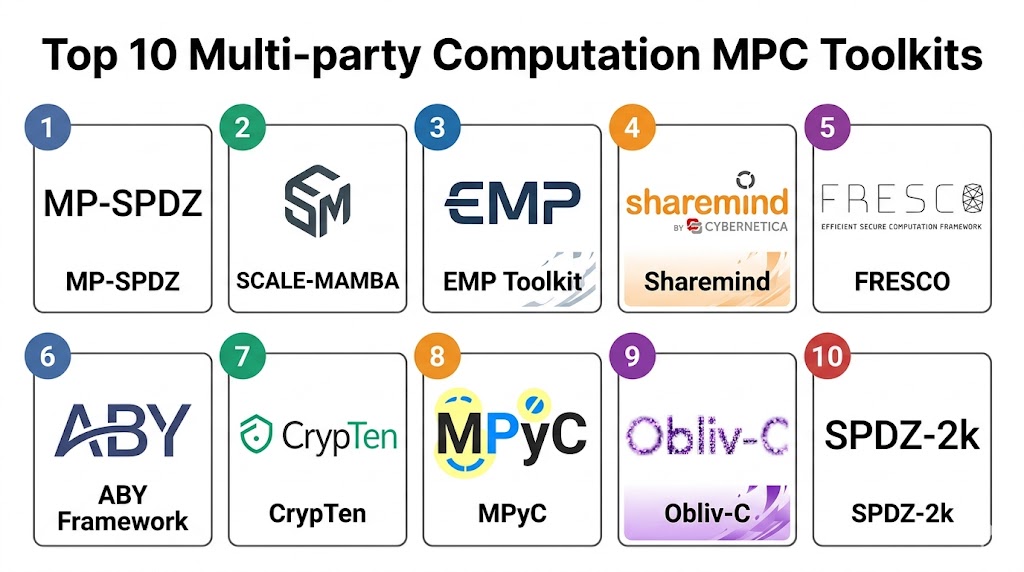
Top 10 Multi-party Computation MPC Toolkits
1- MP-SPDZ
Short description: MP-SPDZ is one of the most advanced open-source MPC frameworks designed for secure multi-party computation and privacy-preserving analytics across distributed environments.
Key Features
- Multiple MPC protocol support
- Secure arithmetic computation
- Machine learning compatibility
- Distributed cryptographic processing
- Advanced protocol flexibility
- Secure aggregation workflows
- High-performance MPC execution
Pros
- Broad protocol support
- Strong research credibility
- Highly flexible architecture
Cons
- Complex deployment requirements
- Requires advanced cryptography expertise
- Limited beginner accessibility
Platforms / Deployment
- Linux / Cloud / Hybrid
Security & Compliance
Supports encrypted distributed computation and privacy-preserving collaborative analytics protections.
Integrations & Ecosystem
MP-SPDZ integrates with secure analytics and AI experimentation environments.
- AI frameworks
- Secure analytics systems
- Research platforms
- Cloud infrastructure
- Enterprise cryptographic environments
Support & Community
Strong research-oriented open-source community with active cryptographic innovation.
2- Sharemind
Short description: Sharemind is an enterprise-oriented MPC platform focused on secure data analytics and privacy-preserving collaboration across organizations.
Key Features
- Secure distributed analytics
- MPC-based data collaboration
- Enterprise governance controls
- Privacy-preserving reporting
- Secure statistical analysis
- Multi-party orchestration
- Regulated industry support
Pros
- Strong enterprise usability
- Good analytics integration
- Mature collaborative workflows
Cons
- Premium enterprise focus
- Smaller open-source ecosystem
- Specialized deployment model
Platforms / Deployment
- Cloud / Hybrid
Security & Compliance
Supports encrypted analytics, governance controls, and secure collaborative computation protections.
Integrations & Ecosystem
Sharemind integrates with enterprise analytics and secure reporting systems.
- BI platforms
- Data warehouses
- Cloud analytics systems
- Governance tools
- Enterprise reporting environments
Support & Community
Strong enterprise onboarding and implementation support capabilities.
3- SCALE-MAMBA
Short description: SCALE-MAMBA is an MPC framework designed for secure distributed computation and advanced cryptographic experimentation.
Key Features
- Secure multi-party protocols
- Distributed cryptographic execution
- Advanced arithmetic operations
- Flexible protocol implementation
- Secure collaborative analytics
- Open-source architecture
- Scalable MPC computation
Pros
- Strong protocol flexibility
- Good research ecosystem
- Broad MPC experimentation support
Cons
- Steep learning curve
- Limited enterprise tooling
- Requires cryptographic expertise
Platforms / Deployment
- Linux / Cloud
Security & Compliance
Supports encrypted distributed computation and secure MPC protections.
Integrations & Ecosystem
SCALE-MAMBA integrates with secure analytics and cryptographic research environments.
- Research systems
- AI experimentation platforms
- Secure analytics infrastructure
- Cloud environments
- Enterprise cryptographic systems
Support & Community
Active research community focused on secure distributed computation.
4- FRESCO
Short description: FRESCO is a Java-based MPC framework focused on secure collaborative analytics and privacy-preserving distributed computation.
Key Features
- Java-based MPC architecture
- Secure collaborative computation
- Distributed analytics support
- Modular cryptographic design
- Privacy-preserving workflows
- Flexible protocol support
- Enterprise compatibility
Pros
- Strong Java ecosystem support
- Flexible modular architecture
- Good enterprise compatibility
Cons
- Smaller ecosystem visibility
- Limited cloud-native tooling
- Requires MPC expertise
Platforms / Deployment
- Windows / Linux / Cloud
Security & Compliance
Supports secure distributed analytics and privacy-preserving computation protections.
Integrations & Ecosystem
FRESCO integrates with enterprise Java and analytics systems.
- Java environments
- Enterprise analytics systems
- Cloud infrastructure
- Research environments
- Secure collaboration systems
Support & Community
Growing technical community focused on Java-based secure computation.
5- CrypTen
Short description: CrypTen is a privacy-preserving machine learning framework designed for secure AI training and encrypted collaborative analytics.
Key Features
- Secure machine learning workflows
- MPC-based AI computation
- PyTorch compatibility
- Encrypted tensor operations
- Privacy-preserving model training
- Distributed AI collaboration
- AI-focused secure computation
Pros
- Strong AI compatibility
- Good PyTorch integration
- Modern ML workflow support
Cons
- AI-focused deployment scope
- Requires machine learning expertise
- Smaller enterprise governance ecosystem
Platforms / Deployment
- Linux / Cloud / Hybrid
Security & Compliance
Supports secure AI collaboration and privacy-preserving machine learning protections.
Integrations & Ecosystem
CrypTen integrates with AI and distributed machine learning systems.
- PyTorch
- AI pipelines
- Kubernetes
- Cloud AI platforms
- Secure ML infrastructure
Support & Community
Growing AI privacy engineering and research ecosystem.
6- SEPior
Short description: SEPior provides enterprise MPC infrastructure for secure analytics, privacy-preserving collaboration, and cryptographic data protection.
Key Features
- Enterprise MPC orchestration
- Secure analytics processing
- Privacy-preserving workflows
- Distributed cryptographic operations
- Secure multi-party collaboration
- Governance controls
- Cloud-compatible deployment
Pros
- Strong enterprise focus
- Good governance support
- Flexible collaboration capabilities
Cons
- Smaller ecosystem adoption
- Enterprise-oriented complexity
- Limited open-source visibility
Platforms / Deployment
- Cloud / Hybrid
Security & Compliance
Supports encrypted analytics, secure collaboration, and governance-focused privacy protections.
Integrations & Ecosystem
SEPior integrates with enterprise security and analytics environments.
- Cloud infrastructure
- Analytics systems
- Governance platforms
- Secure collaboration tools
- Enterprise security stacks
Support & Community
Enterprise onboarding and implementation support are generally strong.
7- Partisia Platform
Short description: Partisia Platform combines MPC technologies with blockchain infrastructure to support secure decentralized computation and confidential collaboration.
Key Features
- MPC and blockchain integration
- Secure decentralized computation
- Privacy-preserving smart contracts
- Distributed governance support
- Secure collaborative analytics
- Multi-party cryptographic workflows
- Blockchain-compatible privacy controls
Pros
- Strong decentralized architecture
- Blockchain privacy capabilities
- Secure collaborative infrastructure
Cons
- Blockchain-focused orientation
- Specialized deployment requirements
- Smaller enterprise adoption
Platforms / Deployment
- Cloud / Hybrid
Security & Compliance
Supports distributed encrypted computation and secure decentralized privacy protections.
Integrations & Ecosystem
Partisia integrates with blockchain and decentralized computing systems.
- Blockchain infrastructure
- Smart contract systems
- Cloud environments
- Cryptographic platforms
- Distributed analytics systems
Support & Community
Growing decentralized privacy and blockchain community.
8- PySyft
Short description: PySyft is an open-source privacy-preserving AI framework supporting MPC, federated learning, and secure distributed machine learning.
Key Features
- MPC-enabled AI workflows
- Federated learning integration
- Privacy-preserving machine learning
- Secure distributed analytics
- Python-based APIs
- Data privacy orchestration
- AI collaboration support
Pros
- Strong AI research ecosystem
- Flexible privacy-preserving workflows
- Good Python compatibility
Cons
- Requires advanced AI expertise
- Complex distributed orchestration
- Limited enterprise governance tooling
Platforms / Deployment
- Windows / Linux / Cloud
Security & Compliance
Supports secure distributed AI and privacy-preserving collaborative computation protections.
Integrations & Ecosystem
PySyft integrates with modern AI and distributed analytics systems.
- PyTorch
- TensorFlow
- AI pipelines
- Federated learning systems
- Cloud AI infrastructure
Support & Community
Large AI privacy engineering and research-oriented open-source community.
9- EMP Toolkit
Short description: EMP Toolkit is a cryptographic framework focused on efficient secure multi-party computation and privacy-preserving protocol development.
Key Features
- Efficient MPC protocol support
- Secure computation primitives
- High-performance cryptographic operations
- Flexible protocol experimentation
- Open-source architecture
- Distributed secure processing
- Advanced cryptographic tooling
Pros
- Strong cryptographic flexibility
- High-performance optimization
- Good research ecosystem
Cons
- Research-focused complexity
- Limited enterprise usability
- Requires protocol expertise
Platforms / Deployment
- Linux / Cloud
Security & Compliance
Supports secure cryptographic computation and privacy-preserving distributed processing.
Integrations & Ecosystem
EMP Toolkit integrates with cryptographic research and secure analytics systems.
- Research environments
- AI experimentation
- Cloud infrastructure
- Secure analytics systems
- Distributed cryptographic platforms
Support & Community
Strong academic and cryptographic research community.
10- Roseman Labs MPC Platform
Short description: Roseman Labs provides enterprise-oriented MPC solutions focused on secure analytics, confidential collaboration, and regulated data-sharing environments.
Key Features
- Secure collaborative analytics
- MPC-powered data sharing
- Privacy-preserving computation
- Enterprise governance controls
- Confidential data collaboration
- Secure reporting workflows
- Regulatory-focused architecture
Pros
- Enterprise privacy focus
- Good collaboration usability
- Strong regulated industry applicability
Cons
- Smaller ecosystem visibility
- Specialized deployment scope
- Limited low-level customization
Platforms / Deployment
- Cloud / Hybrid
Security & Compliance
Supports encrypted analytics, privacy governance, and secure collaborative processing protections.
Integrations & Ecosystem
Roseman Labs integrates with enterprise analytics and governance systems.
- Data warehouses
- BI systems
- Cloud analytics platforms
- Governance environments
- Secure reporting infrastructure
Support & Community
Provides enterprise implementation support and privacy-focused onboarding services.
Comparison Table
| Tool Name | Best For | Platform(s) Supported | Deployment | Standout Feature | Public Rating |
|---|---|---|---|---|---|
| MP-SPDZ | Advanced MPC research | Linux / Cloud | Hybrid | Broad MPC protocol support | N/A |
| Sharemind | Enterprise secure analytics | Cloud / Hybrid | Hybrid | Privacy-preserving collaboration | N/A |
| SCALE-MAMBA | Distributed cryptography | Linux / Cloud | Cloud | Flexible MPC experimentation | N/A |
| FRESCO | Java secure analytics | Windows / Linux | Hybrid | Java-based MPC architecture | N/A |
| CrypTen | Secure AI training | Linux / Cloud | Hybrid | MPC-powered AI workflows | N/A |
| SEPior | Enterprise collaboration security | Cloud / Hybrid | Hybrid | Governance-focused MPC | N/A |
| Partisia Platform | Blockchain MPC | Cloud / Hybrid | Hybrid | MPC and blockchain integration | N/A |
| PySyft | Privacy-preserving AI | Windows / Linux | Hybrid | Federated privacy workflows | N/A |
| EMP Toolkit | High-performance cryptography | Linux / Cloud | Cloud | Efficient MPC primitives | N/A |
| Roseman Labs MPC Platform | Regulated secure collaboration | Cloud / Hybrid | Hybrid | Enterprise confidential analytics | N/A |
Evaluation & Scoring of Multi-party Computation MPC Toolkits
| Tool Name | Core 25% | Ease 15% | Integrations 15% | Security 10% | Performance 10% | Support 10% | Value 15% | Weighted Total |
|---|---|---|---|---|---|---|---|---|
| MP-SPDZ | 9 | 6 | 8 | 9 | 8 | 7 | 8 | 7.9 |
| Sharemind | 8 | 8 | 8 | 9 | 8 | 8 | 7 | 8.0 |
| SCALE-MAMBA | 8 | 6 | 7 | 8 | 8 | 7 | 7 | 7.3 |
| FRESCO | 7 | 7 | 7 | 8 | 7 | 7 | 8 | 7.3 |
| CrypTen | 8 | 7 | 8 | 8 | 8 | 7 | 8 | 7.8 |
| SEPior | 8 | 7 | 8 | 9 | 7 | 7 | 7 | 7.6 |
| Partisia Platform | 8 | 7 | 7 | 8 | 7 | 7 | 7 | 7.4 |
| PySyft | 8 | 7 | 8 | 8 | 7 | 8 | 8 | 7.8 |
| EMP Toolkit | 8 | 6 | 7 | 8 | 9 | 7 | 7 | 7.4 |
| Roseman Labs MPC Platform | 8 | 8 | 7 | 9 | 7 | 8 | 7 | 7.8 |
These scores are intended as comparative guidance rather than absolute rankings. Some platforms focus heavily on AI and machine learning privacy, while others specialize in enterprise analytics or cryptographic experimentation. Organizations should align platform selection with operational goals, collaboration requirements, and engineering expertise.
Which Multi-party Computation MPC Toolkit Is Right for You?
Solo / Freelancer
Independent researchers and developers experimenting with secure distributed computation may benefit from MP-SPDZ, EMP Toolkit, or PySyft because of their strong open-source ecosystems and flexible APIs.
SMB
Small and medium-sized businesses exploring secure collaboration and analytics may prefer CrypTen or Sharemind for easier AI and analytics integration.
Mid-Market
Mid-market organizations requiring stronger orchestration and governance should evaluate Sharemind, SEPior, or Roseman Labs MPC Platform.
Enterprise
Large enterprises handling highly sensitive collaborative analytics and regulated workloads should prioritize Sharemind, Roseman Labs, or enterprise-oriented MPC orchestration platforms.
Budget vs Premium
Open-source MPC frameworks reduce licensing costs but often require advanced cryptographic expertise. Enterprise platforms generally provide easier onboarding and governance capabilities.
Feature Depth vs Ease of Use
Research-focused MPC frameworks offer extensive protocol flexibility but can be difficult to deploy and manage. Enterprise platforms simplify operations while reducing customization complexity.
Integrations & Scalability
Organizations with large AI, analytics, or cloud-native ecosystems should prioritize platforms with strong API support and orchestration compatibility.
Security & Compliance Needs
Highly regulated industries should focus on secure aggregation, governance controls, encrypted collaboration, and auditability when selecting an MPC platform.
Frequently Asked Questions FAQs
1- What is Multi-party Computation MPC?
MPC is a cryptographic technique that allows multiple parties to jointly compute results without revealing their underlying private data to each other.
2- Why is MPC important?
MPC enables secure collaboration between organizations while protecting sensitive data and reducing privacy risks.
3- Which industries use MPC the most?
Financial services, healthcare, government, cybersecurity, blockchain, and AI research organizations are major adopters of MPC technologies.
4- Can MPC work with AI and machine learning?
Yes. Several MPC frameworks support privacy-preserving AI training and collaborative machine learning workflows.
5- Is MPC the same as homomorphic encryption?
No. Both protect sensitive computation, but they use different cryptographic approaches. Many organizations combine MPC with homomorphic encryption for stronger privacy protections.
6- Does MPC impact performance?
Yes. MPC workloads can introduce computational overhead because of secure cryptographic operations, although performance optimization technologies continue to improve.
7- Can MPC work in cloud environments?
Yes. Many MPC platforms support cloud-native deployment and distributed infrastructure orchestration.
8- Are MPC Toolkits open source?
Several popular MPC frameworks including MP-SPDZ, PySyft, EMP Toolkit, and SCALE-MAMBA are open source.
9- Is cryptography expertise required for MPC deployment?
Most advanced MPC deployments require at least some expertise in distributed systems, security engineering, or cryptographic protocols.
10- What should organizations evaluate before selecting an MPC Toolkit?
Organizations should evaluate scalability, protocol support, AI compatibility, governance controls, deployment flexibility, integrations, and operational complexity.
Conclusion
Multi-party Computation MPC Toolkits are becoming essential technologies for organizations pursuing privacy-preserving collaboration, secure analytics, and distributed AI workflows. As enterprises increasingly need to collaborate across organizational boundaries without exposing sensitive information, MPC provides a practical framework for secure shared computation and privacy-focused analytics. Platforms such as MP-SPDZ, Sharemind, CrypTen, and PySyft provide strong foundations for encrypted collaborative processing, while enterprise-focused solutions like Roseman Labs and SEPior emphasize governance, operational scalability, and regulated industry support. The ideal toolkit depends heavily on organizational priorities including AI adoption, collaboration requirements, cloud strategy, and engineering expertise. Research-driven teams may prioritize protocol flexibility and cryptographic depth, while enterprises often focus more on usability, orchestration, and compliance capabilities. Before selecting a platform, organizations should benchmark workload performance, validate integrations, assess governance requirements, and carefully evaluate long-term scalability and operational complexity for secure collaborative computing environments.