Introduction
Risk-based Authentication Tools help organizations dynamically adjust authentication requirements based on user behavior, device trust, login patterns, geographic signals, network intelligence, and transaction risk. Instead of applying the same authentication method to every user session, these platforms evaluate risk in real time and trigger additional verification only when suspicious activity is detected.
Modern organizations increasingly use risk-based authentication to balance security and user experience. Traditional static multi-factor authentication can create friction for legitimate users, while risk-based systems use contextual intelligence and adaptive policies to strengthen security without interrupting trusted activity unnecessarily.
Real-world use cases include:
- Adaptive multi-factor authentication
- Account takeover prevention
- Workforce identity protection
- Banking and payment fraud prevention
- Zero Trust access management
Evaluation Criteria for Buyers
Organizations evaluating Risk-based Authentication Tools should consider:
- Adaptive authentication capabilities
- Behavioral analytics quality
- Device and network intelligence
- MFA and passwordless support
- Identity federation compatibility
- API and integration ecosystem
- Policy management flexibility
- Reporting and auditability
- Scalability and uptime reliability
- Compliance and governance support
Best for: Enterprises, fintech companies, banks, SaaS providers, healthcare organizations, ecommerce businesses, government agencies, and hybrid workforce environments.
Not ideal for: Very small organizations with simple identity needs or businesses relying only on basic username and password workflows.
Key Trends in Risk-based Authentication Tools
- Passwordless authentication adoption is increasing rapidly.
- AI-driven behavioral analytics are improving threat detection accuracy.
- Device trust scoring is becoming more sophisticated.
- Continuous authentication is replacing static login-only verification.
- Zero Trust security architectures are driving adaptive authentication adoption.
- Biometrics and behavioral signals are being combined for stronger identity assurance.
- Fraud prevention systems are integrating directly with authentication engines.
- Identity orchestration platforms are simplifying adaptive policy management.
- Cloud-native identity infrastructure is becoming dominant.
- Decentralized identity and passkey support are expanding.
How We Selected These Tools
The following Risk-based Authentication Tools were selected based on enterprise adoption, adaptive authentication capabilities, integration flexibility, and security maturity.
- Strong adaptive authentication capabilities
- Enterprise identity ecosystem adoption
- MFA and passwordless authentication support
- API and integration flexibility
- Device and behavioral intelligence quality
- Governance and compliance capabilities
- Scalability and reliability
- Developer and administrator usability
- Threat detection sophistication
- Long-term ecosystem strength
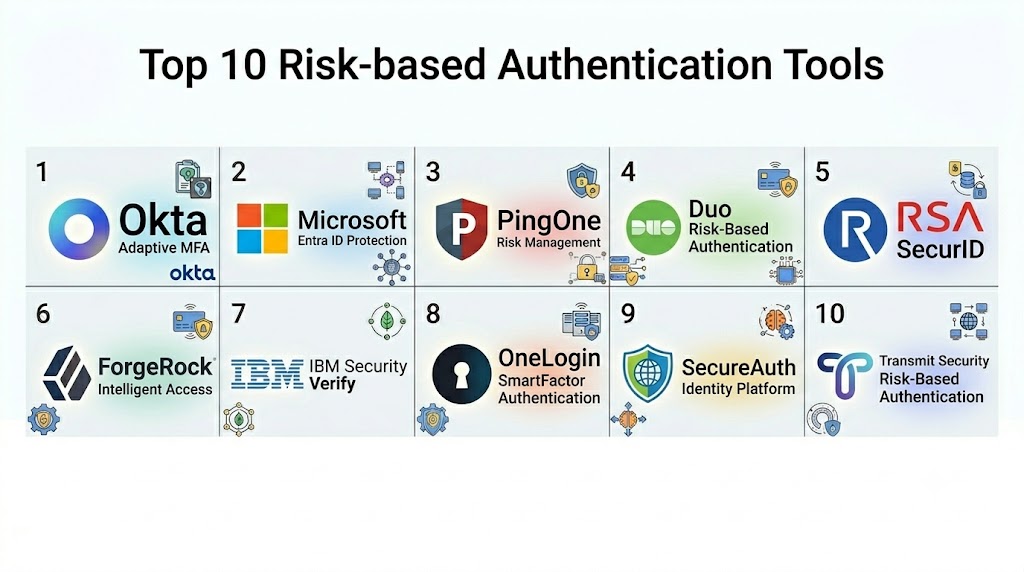
Top 10 Risk-based Authentication Tools
1- Okta Adaptive MFA
Short description: Okta Adaptive MFA provides contextual authentication and risk-aware access management for enterprises, SaaS applications, and hybrid workforce environments. It combines adaptive policies, device trust, and behavioral signals to strengthen identity security.
Key Features
- Adaptive multi-factor authentication
- Risk-based policy enforcement
- Device trust evaluation
- Passwordless authentication support
- Behavioral login analysis
- Identity federation support
- Zero Trust integration capabilities
Pros
- Strong enterprise ecosystem
- Broad SaaS integration support
- Flexible policy management
Cons
- Enterprise pricing structure
- Advanced workflows require planning
- Complex deployments may require expertise
Platforms / Deployment
- Cloud / Hybrid
Security & Compliance
Supports MFA, SSO, RBAC, audit logging, adaptive policies, and enterprise identity governance protections.
Integrations & Ecosystem
Okta integrates with enterprise identity, cloud, and SaaS ecosystems.
- Microsoft 365
- Salesforce
- AWS
- Google Workspace
- Enterprise applications
Support & Community
Large enterprise identity ecosystem with extensive implementation resources and strong documentation.
2- Microsoft Entra ID Protection
Short description: Microsoft Entra ID Protection provides adaptive authentication and identity risk detection capabilities integrated into Microsoft identity and cloud ecosystems.
Key Features
- Identity risk scoring
- Adaptive access policies
- User behavior analytics
- Conditional access workflows
- Threat intelligence integration
- Passwordless authentication support
- Cloud identity protection
Pros
- Deep Microsoft ecosystem integration
- Strong enterprise identity analytics
- Good Zero Trust compatibility
Cons
- Best optimized for Microsoft environments
- Advanced policy configuration can be complex
- Some capabilities require premium licensing
Platforms / Deployment
- Cloud / Hybrid
Security & Compliance
Supports conditional access, MFA, threat analytics, audit logging, and enterprise governance protections.
Integrations & Ecosystem
Microsoft Entra integrates with Microsoft cloud and enterprise ecosystems.
- Microsoft 365
- Azure
- Intune
- Defender
- Enterprise SaaS systems
Support & Community
Strong enterprise support ecosystem with extensive Microsoft identity documentation.
3- Ping Identity PingOne Protect
Short description: PingOne Protect provides risk-based authentication and identity threat protection using AI-driven behavioral analytics and adaptive access controls.
Key Features
- Risk-based authentication
- Behavioral analytics
- AI-driven threat detection
- Passwordless authentication
- Adaptive MFA workflows
- Device intelligence
- Identity orchestration support
Pros
- Strong enterprise identity capabilities
- Good adaptive authentication flexibility
- Enterprise-grade policy orchestration
Cons
- Enterprise deployment complexity
- Premium identity infrastructure pricing
- Requires identity architecture planning
Platforms / Deployment
- Cloud / Hybrid
Security & Compliance
Supports MFA, adaptive access controls, identity governance, audit logging, and secure authentication workflows.
Integrations & Ecosystem
Ping Identity integrates with enterprise identity and access ecosystems.
- Enterprise SaaS applications
- Cloud infrastructure
- Workforce identity systems
- Identity providers
- Security orchestration tools
Support & Community
Strong enterprise identity ecosystem with implementation-focused support resources.
4- Duo Security
Short description: Duo Security provides adaptive authentication and secure access management for workforce identity, VPN protection, and Zero Trust access environments.
Key Features
- Adaptive MFA
- Device trust verification
- Risk-based access controls
- VPN protection
- Passwordless authentication
- Endpoint visibility
- Secure access policies
Pros
- Strong usability
- Good remote workforce protection
- Flexible MFA deployment
Cons
- Advanced enterprise orchestration is more limited
- Best suited for workforce identity use cases
- Some advanced analytics require additional tooling
Platforms / Deployment
- Cloud
Security & Compliance
Supports MFA, device trust, audit logging, adaptive access controls, and secure authentication workflows.
Integrations & Ecosystem
Duo integrates with enterprise workforce and access management ecosystems.
- VPN systems
- Cloud applications
- Identity providers
- Endpoint security tools
- Workforce platforms
Support & Community
Large enterprise security ecosystem with strong administrator onboarding resources.
5- ForgeRock Intelligent Access
Short description: ForgeRock Intelligent Access provides adaptive authentication and identity orchestration for enterprises managing complex workforce and customer identity ecosystems.
Key Features
- Adaptive authentication
- Identity orchestration
- Behavioral analytics
- Passwordless authentication
- Risk scoring
- Identity federation
- Customer identity workflows
Pros
- Strong enterprise scalability
- Flexible orchestration capabilities
- Broad identity management support
Cons
- Complex enterprise deployments
- Requires identity expertise
- Premium infrastructure positioning
Platforms / Deployment
- Cloud / Hybrid / Self-hosted
Security & Compliance
Supports MFA, identity federation, adaptive policies, governance workflows, and enterprise auditability.
Integrations & Ecosystem
ForgeRock integrates with enterprise identity and customer authentication ecosystems.
- Enterprise applications
- Customer identity systems
- Cloud infrastructure
- Security orchestration tools
- Workforce identity platforms
Support & Community
Strong enterprise identity ecosystem with large-scale deployment support capabilities.
6- IBM Security Verify
Short description: IBM Security Verify provides adaptive authentication and identity intelligence for workforce and customer access management environments.
Key Features
- Risk-based authentication
- Adaptive MFA
- AI-driven identity analytics
- Passwordless workflows
- Identity federation
- Behavioral monitoring
- Governance integrations
Pros
- Strong enterprise governance capabilities
- Good identity analytics support
- Broad enterprise compatibility
Cons
- Enterprise implementation complexity
- Advanced workflows require expertise
- Premium enterprise positioning
Platforms / Deployment
- Cloud / Hybrid
Security & Compliance
Supports MFA, identity governance, audit logging, adaptive authentication, and enterprise compliance protections.
Integrations & Ecosystem
IBM Security Verify integrates with enterprise identity and governance ecosystems.
- Workforce identity systems
- Enterprise SaaS applications
- Cloud platforms
- Security tools
- Governance workflows
Support & Community
Strong enterprise support ecosystem with governance-focused onboarding resources.
7- SecureAuth
Short description: SecureAuth provides adaptive authentication and passwordless access solutions for workforce identity and enterprise security environments.
Key Features
- Risk-based authentication
- Passwordless authentication
- Behavioral analytics
- Adaptive MFA
- Identity intelligence
- Fraud prevention workflows
- Device recognition
Pros
- Strong passwordless support
- Good adaptive authentication flexibility
- Enterprise security compatibility
Cons
- Smaller ecosystem than larger competitors
- Enterprise planning required
- Advanced analytics may require tuning
Platforms / Deployment
- Cloud / Hybrid
Security & Compliance
Supports MFA, adaptive authentication, device intelligence, and governance protections.
Integrations & Ecosystem
SecureAuth integrates with workforce identity and enterprise security systems.
- Identity providers
- Workforce platforms
- Security tools
- Cloud infrastructure
- Enterprise applications
Support & Community
Growing enterprise identity ecosystem with implementation support capabilities.
8- RSA SecurID
Short description: RSA SecurID provides adaptive authentication and identity assurance solutions focused on enterprise security and access protection.
Key Features
- Adaptive authentication
- Risk analytics
- MFA workflows
- Identity assurance
- Device trust support
- Behavioral monitoring
- Secure workforce access
Pros
- Strong enterprise security reputation
- Broad authentication experience
- Good governance capabilities
Cons
- Legacy deployment complexity
- User experience modernization varies
- Enterprise operational overhead
Platforms / Deployment
- Cloud / Hybrid / Self-hosted
Security & Compliance
Supports MFA, secure identity verification, governance workflows, and enterprise auditability.
Integrations & Ecosystem
RSA integrates with enterprise identity and access ecosystems.
- Enterprise applications
- VPN systems
- Workforce platforms
- Security infrastructure
- Governance tools
Support & Community
Large enterprise authentication ecosystem with extensive operational support.
9- Auth0 Adaptive MFA
Short description: Auth0 Adaptive MFA provides adaptive authentication and developer-friendly identity security for SaaS platforms, customer identity systems, and modern applications.
Key Features
- Adaptive MFA
- Passwordless authentication
- Behavioral anomaly detection
- Developer APIs
- Customer identity workflows
- Identity federation
- Risk-aware access controls
Pros
- Strong developer usability
- Good SaaS compatibility
- Flexible authentication APIs
Cons
- Enterprise governance capabilities vary
- Advanced workflows may require customization
- Pricing scales with usage
Platforms / Deployment
- Cloud
Security & Compliance
Supports MFA, identity federation, secure authentication, and adaptive risk-based workflows.
Integrations & Ecosystem
Auth0 integrates with modern application and identity ecosystems.
- SaaS platforms
- Customer identity systems
- Developer applications
- Cloud infrastructure
- Enterprise APIs
Support & Community
Large developer-focused identity ecosystem with extensive documentation.
10- OneLogin SmartFactor Authentication
Short description: OneLogin SmartFactor Authentication provides adaptive access controls and risk-based authentication workflows for workforce and enterprise identity protection.
Key Features
- Risk-based authentication
- SmartFactor adaptive policies
- MFA workflows
- Device trust verification
- User behavior analysis
- Secure application access
- Workforce identity protection
Pros
- Strong workforce identity focus
- Good SaaS integration support
- Flexible adaptive access controls
Cons
- Advanced enterprise orchestration is more limited
- Complex policy tuning may require expertise
- Ecosystem smaller than larger identity providers
Platforms / Deployment
- Cloud
Security & Compliance
Supports MFA, adaptive authentication, audit logging, and secure access governance workflows.
Integrations & Ecosystem
OneLogin integrates with workforce identity and enterprise SaaS ecosystems.
- Enterprise SaaS applications
- Workforce identity systems
- Cloud applications
- Security platforms
- Productivity tools
Support & Community
Strong workforce identity ecosystem with administrator onboarding support.
Comparison Table
| Tool Name | Best For | Platform(s) Supported | Deployment | Standout Feature | Public Rating |
|---|---|---|---|---|---|
| Okta Adaptive MFA | Enterprise adaptive authentication | Cloud / Hybrid | Hybrid | Broad SaaS integration ecosystem | N/A |
| Microsoft Entra ID Protection | Microsoft ecosystem identity protection | Cloud / Hybrid | Hybrid | Deep Microsoft integration | N/A |
| PingOne Protect | AI-driven identity protection | Cloud / Hybrid | Hybrid | Behavioral authentication analytics | N/A |
| Duo Security | Workforce adaptive access | Cloud | Cloud | Device trust verification | N/A |
| ForgeRock Intelligent Access | Enterprise identity orchestration | Cloud / Hybrid / Self-hosted | Hybrid | Flexible identity workflows | N/A |
| IBM Security Verify | Enterprise identity governance | Cloud / Hybrid | Hybrid | AI-driven identity analytics | N/A |
| SecureAuth | Passwordless adaptive authentication | Cloud / Hybrid | Hybrid | Passwordless workforce access | N/A |
| RSA SecurID | Enterprise authentication security | Cloud / Hybrid / Self-hosted | Hybrid | Identity assurance workflows | N/A |
| Auth0 Adaptive MFA | Developer-friendly adaptive MFA | Cloud | Cloud | Flexible authentication APIs | N/A |
| OneLogin SmartFactor Authentication | Workforce identity security | Cloud | Cloud | SmartFactor adaptive policies | N/A |
Evaluation & Scoring of Risk-based Authentication Tools
| Tool Name | Core 25% | Ease 15% | Integrations 15% | Security 10% | Performance 10% | Support 10% | Value 15% | Weighted Total |
|---|---|---|---|---|---|---|---|---|
| Okta Adaptive MFA | 10 | 8 | 10 | 9 | 9 | 9 | 7 | 8.9 |
| Microsoft Entra ID Protection | 9 | 8 | 9 | 9 | 9 | 9 | 8 | 8.7 |
| PingOne Protect | 9 | 7 | 8 | 9 | 8 | 8 | 7 | 8.0 |
| Duo Security | 8 | 9 | 8 | 9 | 8 | 8 | 8 | 8.3 |
| ForgeRock Intelligent Access | 9 | 6 | 9 | 9 | 8 | 8 | 7 | 8.0 |
| IBM Security Verify | 8 | 7 | 8 | 9 | 8 | 8 | 7 | 7.8 |
| SecureAuth | 8 | 7 | 7 | 8 | 8 | 7 | 8 | 7.7 |
| RSA SecurID | 8 | 6 | 8 | 9 | 8 | 8 | 7 | 7.7 |
| Auth0 Adaptive MFA | 8 | 9 | 8 | 8 | 8 | 8 | 8 | 8.1 |
| OneLogin SmartFactor Authentication | 8 | 8 | 8 | 8 | 8 | 7 | 8 | 7.9 |
These scores are comparative evaluations intended to help organizations understand differences across adaptive authentication ecosystems. Some platforms focus heavily on workforce identity and Zero Trust security, while others prioritize developer flexibility, customer identity, or enterprise identity orchestration.
Which Risk-based Authentication Tool Is Right for You?
Solo / Freelancer
Independent developers and smaller SaaS platforms may benefit most from Auth0 Adaptive MFA or Duo Security because of easier onboarding and developer-friendly identity workflows.
SMB
Small and medium-sized businesses should evaluate Duo Security, Microsoft Entra ID Protection, or OneLogin SmartFactor Authentication for scalable workforce identity protection.
Mid-Market
Mid-market organizations needing stronger adaptive policies and governance should prioritize Okta Adaptive MFA, PingOne Protect, or SecureAuth.
Enterprise
Large enterprises and regulated industries should evaluate Okta, ForgeRock, Microsoft Entra, IBM Security Verify, or RSA SecurID for scalability and advanced identity governance.
Budget vs Premium
Developer-friendly adaptive authentication tools reduce onboarding complexity, while enterprise identity orchestration platforms provide broader governance and security controls at higher operational cost.
Feature Depth vs Ease of Use
Simpler adaptive MFA platforms prioritize usability and rapid deployment, while enterprise identity platforms offer deeper orchestration, governance, and policy customization.
Integrations & Scalability
Organizations with large SaaS ecosystems or hybrid workforce environments should prioritize platforms with strong federation support, API ecosystems, and enterprise scalability.
Security & Compliance Needs
Businesses should focus on MFA strength, adaptive policies, audit logging, governance controls, passwordless support, and Zero Trust compatibility before selecting a platform.
Frequently Asked Questions FAQs
1- What is risk-based authentication?
Risk-based authentication dynamically adjusts authentication requirements based on risk signals such as device trust, location, behavior, and login activity.
2- Why is adaptive authentication important?
It improves security while reducing unnecessary login friction for trusted users and low-risk activity.
3- What industries use risk-based authentication the most?
Banking, fintech, healthcare, government, SaaS, ecommerce, and enterprise IT environments are major adopters.
4- How does risk-based authentication reduce fraud?
It analyzes contextual and behavioral signals to detect suspicious activity and trigger stronger verification when needed.
5- Can risk-based authentication support passwordless access?
Yes. Many modern platforms support passwordless workflows combined with adaptive policies and device trust verification.
6- What is device trust?
Device trust evaluates whether a device is known, secure, managed, or previously associated with legitimate user activity.
7- What should organizations evaluate before choosing a platform?
Organizations should evaluate adaptive policy flexibility, MFA support, integrations, behavioral analytics, scalability, and governance capabilities.
8- Are these platforms compatible with Zero Trust security models?
Yes. Risk-based authentication is a core component of many Zero Trust access architectures.
9- Can these platforms integrate with existing identity systems?
Most platforms integrate with identity providers, SaaS applications, cloud infrastructure, VPN systems, and workforce security ecosystems.
10- Which platform is best for enterprise adaptive authentication?
Okta Adaptive MFA, Microsoft Entra ID Protection, ForgeRock Intelligent Access, and PingOne Protect are commonly evaluated for enterprise deployments.
Conclusion
Risk-based Authentication Tools are becoming essential for organizations that need stronger identity security without creating excessive friction for legitimate users. As cyber threats, account takeover attacks, phishing campaigns, and credential abuse continue evolving, adaptive authentication systems help organizations respond dynamically using behavioral analytics, device intelligence, and contextual access policies. Platforms such as Okta Adaptive MFA, Microsoft Entra ID Protection, Duo Security, and PingOne Protect provide mature adaptive authentication ecosystems for workforce and enterprise identity protection, while ForgeRock, IBM Security Verify, and RSA SecurID focus more heavily on orchestration, governance, and enterprise-scale identity assurance. The ideal platform depends heavily on organizational size, compliance requirements, workforce complexity, and identity architecture maturity. Smaller organizations may prioritize ease of deployment and usability, while enterprises often focus more on governance, Zero Trust alignment, advanced analytics, and scalability. Before selecting a risk-based authentication platform, organizations should benchmark authentication workflows, validate integration compatibility, review policy flexibility, and carefully evaluate long-term security and operational requirements for identity protection.
Nice article showing how adaptive authentication tools improve cybersecurity and simplify secure user access management for businesses effectively today.