Introduction
Many beginners enter the stock market with excitement, but they often feel confused when prices move up and down quickly. You might open a news app or turn on the television only to hear flashing headlines declaring that the “Sensex has crashed by 1,000 points” or “Sensex has crossed a historic milestone.” For a salaried individual or a small business owner, these numbers can feel like an exclusive language spoken only by high-flying institutional traders. This systemic lack of clarity often leads to deep anxiety or, worse, impulsive investment choices driven by the fear of missing out.
When individuals do not fundamentally understand what these market indicators signify, they frequently make severe financial errors. They might liquidate their long-term mutual funds during a temporary market correction, or they may pour their hard-earned savings into speculative penny stocks when the broader market is overheating. This blog acts as an educational anchor to demystify the benchmark index of the Bombay Stock Exchange (BSE).
We will break down what the index represents, how it acts as the macroeconomic pulse of the Indian financial ecosystem, and how you can use this baseline knowledge to build sustainable financial habits. By prioritizing structural education over short-term market noise, this guide ensures you develop a patient, risk-aware mindset. Instead of feeling overwhelmed by daily fluctuations, you will learn to look at the market through a lens of long-term discipline and calculated clarity.
Understanding Sensex in Simple Words
What It Is
The term Sensex stands for Sensitive Index, and it is the benchmark stock market index of the Bombay Stock Exchange (BSE). Think of it as a curated display window for the Indian corporate economy. Instead of tracking all the thousands of companies listed on the exchange, Sensex monitors the performance of 30 of the largest, most financially sound, and most actively traded companies across key industrial sectors.
How It Works
When people ask “What Is Sensex and Why It Matters,” they need to understand that this index functions like a weighted average. If the collective stock prices of these 30 mega-companies rise, the Sensex moves upward. If those stock prices decline, the Sensex moves downward. It serves as a statistical sample that reflects the overall health of the equity market.
Real-Life Application
In real life, Sensex is used as an economic thermometer. When the index climbs consistently over months, it indicates corporate growth, robust consumer demand, and strong investor confidence. Conversely, a sustained drop often signals underlying economic friction, policy tightening, or global geopolitical stress.
- Beginner Example: Imagine a massive shopping mall containing 5,000 diverse retail shops. To understand whether the mall’s business is flourishing or failing, you don’t need to audit every small kiosk. Instead, you check the daily sales of the top 30 flagship anchor stores. If those 30 major stores are thriving, it is highly likely that the overall mall ecosystem is healthy. Sensex does exactly this for the Indian corporate sector.
- Common Misunderstanding: A very frequent misconception is believing that the Sensex represents the entire stock market, or that every single company’s stock falls when the Sensex drops. In reality, it only tracks 30 specific giant corporations. A small-cap or mid-cap company’s stock might surge on the exact same day the Sensex loses points.
- Practical Takeaway: Do not treat daily index movements as a direct report card for your unique individual investments. Use it exclusively to gauge the broader macroeconomic climate and institutional investor sentiment.
Why Sensex Is Important for Your Financial Decisions
The movement of the Sensex does not exist in a vacuum; it has a cascading effect on everyday personal finance, affecting everything from personal savings to borrowing costs.
- Impact on Savings and Mutual Funds: Millions of salaried employees hold Equity Linked Savings Schemes (ELSS), Employees’ Provident Fund (EPF) balances, or systematic investment plans (SIPs). Because a massive portion of institutional pension and mutual fund capital is anchored directly to the top 30 companies, a rising Sensex expands your retirement corpus, while a falling index temporarily compresses your portfolio value.
- Influence on Borrowing and Loans: Major shifts in the Sensex can influence banking liquidity and monetary policy. When the stock market faces structural stress, the central bank might adjust interest rates to stabilize the economy, directly modifying your home loan or car loan Equated Monthly Installments (EMIs).
- Long-Term Financial Discipline: Tracking the historical trajectory of the index reveals a vital truth: despite short-term geopolitical wars, domestic policy shifts, and recessions, the long-term trend line of a growing economy’s benchmark index has historically moved upward. Understanding this baseline dynamic prevents emotional panic selling and builds the mental fortitude required to stay invested for decades.
Short Practical Scenario
Consider a small business owner who regularly invests Rs. 10,000 monthly through an equity mutual fund. During a global supply-chain crisis, the Sensex plummets by 15% over three weeks. A regular news consumer without structured knowledge might panic, halt their SIP, and lock in capital losses. However, an index-aware investor recognizes that the long-term underlying fundamentals of the top 30 Indian companies remain intact. They maintain their automated investments, effectively purchasing more mutual fund units at discounted prices.
The Real Problem Readers Face With Sensex
The primary challenge for everyday individuals is not a lack of market information, but an overwhelming deluge of unstructured data.
Confusing Advice and Noise
The modern digital ecosystem is filled with continuous commentary from social media financial influencers, real-time media alerts, and speculative forums. Beginners are constantly bombarded with contradictory directives: buy a certain stock immediately, liquidate portfolios due to an impending crash, or shift entirely into alternative assets. This creates massive cognitive fatigue and decision paralysis.
The Traps of Emotion and Unrealistic Expectations
When the market is in a structural bull run (rising phase), greed takes over. Beginners view the rapidly climbing index numbers and falsely assume that the stock market is a guaranteed engine for quick, risk-free riches. They buy overvalued shares at historical peaks. When the market reverses into a bear phase (falling phase), fear sets in, causing investors to exit the market permanently with heavy losses.
Ignoring Structural Realities
Many retail participants read headlines about index milestones without examining the underlying component mechanics, such as the free-float market capitalization methodology or sector weighting shifts. They treat the market like a speculative game rather than an evaluation of real corporate businesses that have tangible supply chains, regulatory costs, and balance sheet liabilities.
How Sensex Works Step by Step
To demystify the operations behind the index, let us break down exactly how companies are selected, weighted, and balanced over time.
Step 1: Corporate Listing on the Exchange
- What It Means: A company must first list its shares publicly on the Bombay Stock Exchange (BSE) through an Initial Public Offering (IPO).
- Why It Matters: This ensures the company operates under stringent capital market regulations and public disclosure norms.
- How to Apply It: Beginners should confirm a company’s full regulatory listing status on the official BSE website before reading third-party summaries.
- Practical Example: A major retail enterprise decides to transition from a private entity to a publicly traded corporation, listing its shares openly on the BSE platform.
- Common Mistake: Assuming every single listed public stock is automatically eligible to be part of the benchmark index.
- Better Approach: Realize that out of over 5,000 listed firms, only an elite subset is ever vetted for index inclusion.
Step 2: Screening for Large Market Capitalization
- What It Means: Market capitalization is the total market value of a company’s outstanding shares, calculated by multiplying the current share price by the total number of outstanding shares.
- Why It Matters: The index requires large-cap companies that possess substantial structural stability and financial size.
- How to Apply It: Look at market capitalization metrics rather than just the individual stock price to determine a company’s true scale.
- Practical Example: Company A has a share price of Rs. 2,000 with 10 lakh shares, while Company B has a share price of Rs. 100 with 5 crore shares. Company B is significantly larger by market capitalization despite its lower nominal share price.
- Common Mistake: Equating a high individual stock price with a massive corporate market valuation.
- Better Approach: Evaluate companies uniformly by using their full aggregate market capitalization metric.
Step 3: Isolating the Free-Float Capitalization
- What It Means: Free-float capitalization excludes shares held locked up by promoters, government bodies, or strategic internal insiders. It isolates only the shares freely available for public trading on the open market.
- Why It Matters: Sensex uses the Free-Float Market Capitalization methodology to prevent concentrated internal holdings from distorting the index value.
- How to Apply It: Check the free-float percentage of a stock to evaluate its true market liquidity and susceptibility to price manipulation.
- Practical Example: A multinational firm has a total valuation of Rs. 10,000 crore, but the founding family legally owns 75% of it. The remaining Rs. 2,500 crore available to the public is its free-float capitalization.
- Common Mistake: Judging an index’s movement weights based purely on total asset size rather than publicly tradable float.
- Better Approach: Focus strictly on free-float liquidity metrics when assessing institutional weightings.
Step 4: Assessing Sector Representation and Liquidity
- What It Means: The selection panel ensures that the 30 companies adequately span the diverse landscape of the national economy, including banking, information technology, pharmaceuticals, energy, and manufacturing.
- Why It Matters: A diversified selection prevents a localized downturn in one specific industry from incorrectly biasing the entire national index.
- How to Apply It: Diversify your personal investment portfolio across sectors to mimic this risk-mitigation strategy.
- Practical Example: If the banking sector faces temporary margin pressures, strong earnings in the consumer goods or IT sectors can stabilize the aggregate index.
- Common Mistake: Concentrating personal trading capital into a single hot industry sector.
- Better Approach: Allocate capital across multiple distinct sectors to mirror institutional diversification models.
Step 5: Applying the Base Period Conversion Formula
- What It Means: The current free-float market value of the 30 component stocks is compared mathematically against a historical base period (1978–1979) with an assigned base index value of 100 points.
- Why It Matters: This provides a standardized baseline point scale, turning trillions of rupees of market value into an easily scannable, multi-digit index number.
- How to Apply It: View index points as relative percentage shifts from historical levels rather than an absolute monetary sum.
- Practical Example: When you see the index trading at a high point level, it indicates the exponential compounding of corporate asset values since the 1978 baseline.
- Common Mistake: Falsely believing that a 500-point drop holds the exact same economic impact today as a 500-point drop did twenty years ago.
- Better Approach: Always interpret index movements as a percentage change relative to its current overall base.
Step 6: Periodic Rebalancing by Index Committees
- What It Means: The BSE Index Committee formally reviews the components semi-annually to swap out lagging companies for rising corporate giants.
- Why It Matters: This ensures that the index remains relevant and continues to represent only the absolute leaders of the corporate world over time.
- How to Apply It: Routinely rebalance your personal long-term investment holdings based on shifting operational performance.
- Practical Example: A legacy textile company experiencing prolonged revenue decay is systematically removed from the index, and a rapidly growing tech services provider takes its place.
- Common Mistake: Unconditionally holding onto a stagnant company under the assumption that once it is a market leader, it will remain one forever.
- Better Approach: Accept that the corporate lifecycle is dynamic, and periodically audit your investments to weed out structural underperformers.
Key Factors That Influence Sensex Movements
The movement of the benchmark index is driven by a complex interplay of domestic policies, corporate earnings, and global capital flows. Understanding these variables helps investors accurately interpret everyday market fluctuations.
Domestic Monetary Policy and Interest Rates
The monetary policy set by the Reserve Bank of India (RBI) acts as a primary economic driver. When the central bank reduces repo rates (the rate at which it lends money to commercial banks), borrowing costs drop for both corporations and consumers. This liquidity boosts business expansions and discretionary spending, which typically drives company valuations upward. Conversely, rate hikes implemented to counter high inflation increase debt servicing burdens, slow down capital expenditures, and often lead to a contraction in index valuations.
Corporate Earnings Cycles
At its core, the index is driven by the underlying profitability of its 30 component stocks. Every quarter, these corporations are legally required to publish audited financial balance sheets. When the collective revenues, profit margins, and forward growth guidance exceed market expectations, institutional buying drives the index up. If corporate earnings show structural decay due to rising raw material inputs or slowing consumer demand, the index adjusts downward to reflect these weakened fundamentals.
Global Institutional Capital Flows
Modern financial markets are deeply interconnected. Foreign Portfolio Investors (FPIs) manage trillions of dollars of global pension and endowment capital. When international macroeconomic factors are stable, these institutional funds often allocate significant capital to high-growth emerging economies like India, pushing the index higher. However, if the US Federal Reserve increases its domestic bond yields or global geopolitical risks rise, these foreign investors may withdraw capital from emerging markets to de-risk, causing a sharp, liquidity-driven drop in the local index.
Domestic Macroeconomic Indicators
The broader performance of the domestic economy provides the structural foundation for corporate revenue growth. Key indicators such as Gross Domestic Product (GDP) expansion rates, monthly Goods and Services Tax (GST) collections, industrial production outputs, and consumer inflation prints offer vital clues about economic health. Positive trends in these metrics signal strong consumer demand and systemic stability, encouraging both retail and corporate capital investments.
Detailed Breakdown of Sensex and Stock Market Basics
To master the concept of the stock market, beginners must move beyond simple definitions and understand the structural components that govern the financial ecosystem.
The Anatomy of the Exchange Ecosystem
The stock market operates via two distinct channels: the primary market and the secondary market. The primary market is where corporations issue fresh shares to the public for the first time through an Initial Public Offering (IPO) to raise long-term capital. Once these shares are successfully allocated, they move to the secondary market—the exchange platform—where everyday buyers and sellers trade existing shares among themselves.
The Bombay Stock Exchange (BSE) provides the electronic infrastructure, clearing houses, and strict settlement rules to ensure that every transaction settles securely, preventing defaults between transacting parties.
Investing vs. Trading: Defining the Operational Frameworks
A major source of confusion for beginners is blurring the lines between investing and short-term trading. Understanding the distinct horizons, risk profiles, and operational styles of each approach is essential for long-term market success.
- Long-Term Investing: This methodology is rooted in business ownership. An investor treats a stock share as a fractional ownership stake in a live business enterprise. They rely on fundamental analysis, which involves studying audited balance sheets, debt-to-equity ratios, management integrity, and competitive advantages (economic moats). The typical investment horizon spans years or decades, aiming to participate in the multi-year compounding of corporate profits and dividend distributions.
- Short-Term Trading: This approach views stocks as transactional vehicles. Traders focus on technical analysis, utilizing charts, price patterns, moving averages, and volume data to predict short-term price movements over days, hours, or minutes. This framework requires strict disciplined stop-loss risk systems, constant screen monitoring, and a high psychological tolerance for rapid capital turnover.
Diversification and Portfolio Construction
A common mistake among retail investors is over-concentrating capital into a small number of stocks, exposing them to severe losses if a specific business faces unexpected issues. Professional portfolio construction relies on systematic diversification across uncorrelated asset classes and distinct industrial sectors.
By spreading capital across banking, technology, consumer goods, and energy, you ensure that a regulatory setback or downturn in one industry will not destabilize your entire net worth. The Sensex naturally implements this by balancing its weights across the key driving sectors of the Indian economy.
Common Mistakes Beginners Make With Sensex
When individuals lack a systematic understanding of stock indices, they frequently fall victim to predictable behavioral and tactical traps.
- Chasing Market Momentum at Peaks: Driven by greed and media hype surrounding all-time index highs, beginners often inject large sums of capital at market tops. This exposes them to significant corrections when the index reverts to its historical mean valuation levels.
- Panic Selling During Corrections: When the index undergoes a normal, healthy correction (such as a 10% decline), untrained investors interpret it as a permanent collapse. They liquidate their portfolios in a panic, locking in temporary paper losses and missing the eventual market recovery.
- Treating Index Milestones as Direct Buying Signals: A headline proclaiming that the index has crossed a major point milestone does not mean that every individual underlying stock is a safe or lucrative buy. Purchasing random equities based purely on overall index optimism often results in capital destruction.
- Over-Leveraging and Day Trading With Emergency Funds: Attempting to amplify short-term gains by using borrowed broker margin capital or deploying vital emergency reserves into volatile derivatives (Futures and Options) is a primary driver of retail financial ruin.
The “Don’t Do This” Action Checklist
- Don’t deploy capital into any financial instrument based solely on social media tips or unverified SMS alerts.
- Don’t invest emergency savings, medical reserves, or near-term down payments into the equity markets.
- Don’t neglect to review the underlying debt levels and cash flow statements of individual companies before buying shares.
- Don’t trade frequently in an effort to timing daily micro-movements of the index.
- Don’t log into your long-term investment accounts daily to monitor minor price fluctuations.
Practical Real-Life Examples of Sensex Application
Example 1: Salaried Professional Managing Market Noise
- Situation: A salaried software engineer notices intense media coverage about the Sensex plunging 1,200 points due to an unexpected overseas interest rate hike.
- Mistake/Challenge: Out of sudden fear, they consider canceling their automated equity mutual fund SIPs to preserve their remaining capital.
- Better Action: They review historical index charts, recognize that temporary global liquidity withdrawals create long-term buying opportunities, and leave their automated monthly allocations untouched.
- Learning: Short-term macro noise does not diminish the intrinsic, long-term compounding value of well-run domestic corporate businesses.
Example 2: Small Business Owner Rebalancing Business Reserves
- Situation: A retail merchant experiences a highly profitable wedding season and accumulates a surplus of capital that won’t be needed for core business operations for another seven years.
- Mistake/Challenge: They contemplate investing the entire surplus into a volatile, hyped small-cap stock that has recently surged.
- Better Action: They choose a diversified index fund anchored to the top 30 Sensex companies to systematically match the steady compounding of the broader national economy.
- Learning: Allocating long-term surplus capital to stable, diversified index heavyweights reduces specific business risks while providing reliable market returns.
Example 3: First-Time Investor Navigating a Market High
- Situation: A young professional receives a year-end corporate bonus just as the Sensex scales an all-time high, with optimism filling the financial news.
- Mistake/Challenge: They feel intense FOMO and want to invest the entire lump sum immediately into individual trending stocks.
- Better Action: They implement a Systematic Transfer Plan (STP), placing the lump sum in a secure liquid fund and gradually moving fixed amounts into equities over 12 months to smooth out entry costs.
- Learning: Spreading out your investments during periods of high market valuations helps mitigate the risk of entry timing errors.
Example 4: Loan Seeker Tracking Economic Cycles
- Situation: A family plans to apply for a floating-rate home loan while the stock market is expanding rapidly and consumer credit demand is near historic highs.
- Mistake/Challenge: They assume interest rates will remain low forever and stretch their budget to borrow the maximum amount possible.
- Better Action: They look at rising index valuations alongside growing inflation data and opt for a conservative loan-to-income ratio, preparing for potential interest rate hikes.
- Learning: Broad economic indicators and stock market trends can signal upcoming shifts in credit cycles and borrowing costs.
Example 5: Individual Retiring and Seeking Capital Preservation
- Situation: A public sector employee retires and receives their lump-sum provident fund payout during a strong, multi-year market upswing.
- Mistake/Challenge: Enticed by recent high stock market returns, they consider allocating 80% of their retirement capital into equity mutual funds for higher growth.
- Better Action: They consult a professional planner and adopt an asset allocation strategy, placing the majority of their funds into secure fixed-income options and only a conservative portion into index-linked equities.
- Learning: Your asset allocation should be guided by your specific life stage and risk tolerance, rather than current market momentum.
Core Metric Tables for Better Understanding
Table 1: Structural Differences Between Investing and Short-Term Trading
| Operational Dimension | Long-Term Investing Framework | Short-Term Trading Framework |
| Primary Horizon | Multi-year to multi-decade holding periods. | Intraday, days, or weeks. |
| Core Analytical Tool | Fundamental analysis (Balance sheets, earnings, debt). | Technical analysis (Price charts, volume, momentum indicators). |
| Primary Source of Return | Long-term corporate profit growth and dividends. | Exploiting short-term market price fluctuations. |
| Risk Exposure Profile | Market volatility and long-term structural changes. | High exposure to leverage, execution slippage, and sudden gaps. |
| Transactional Frequency | Low frequency; minimizes brokerages and taxes. | High frequency; generates significant transaction costs. |
Table 2: Beginner Misconception vs. Structural Market Reality
| Common Beginner Belief | Verified Structural Reality | Actionable Strategy Focus |
| “A high stock price means a company is large and premium.” | Share price is nominal; size is determined by total market capitalization. | Always evaluate total market value, not single share costs. |
| “When Sensex drops, every single listed stock loses value.” | The index tracks 30 stocks; individual companies can move independently. | Check your specific stock holdings’ fundamentals rather than just the index headline. |
| “Investing in equities offers guaranteed returns over time.” | Equities carry inherent market risks and do not provide fixed returns. | Build an emergency cash cushion before allocating capital to equities. |
| “The best strategy is to buy right after a major point milestone.” | Point milestones are often media-driven; valuation ratios matter more. | Analyze Price-to-Earnings (P/E) valuations instead of nominal point numbers. |
Tools, Methods, and Frameworks Readers Can Use
Fundamental Watchlist Framework
Beginners should avoid tracking thousands of erratic stock charts. Instead, create a targeted watchlist of 5 to 10 fundamentally sound companies, including several prominent Sensex constituents. Use online financial portals to monitor their core operational metrics twice a year: corporate debt-to-equity ratios (prefer values under 1.0), consistent five-year net profit growth, and robust return on equity (ROE). This structured method shifts your focus from erratic price tracking to real business evaluations.
Systematic Entry Method (SIP/STP)
Attempting to time the absolute bottom or top of the market is statistically a losing game for retail participants. Use a Systematic Investment Plan (SIP) for monthly income allocations, or a Systematic Transfer Plan (STP) for lump-sum distributions. This method automatically buys fewer mutual fund units when valuations are high and more units when prices fall. It removes emotional guesswork and utilizes market volatility to lower your average cost of acquisition over time.
The Debt-to-Income Allocation Rule
Before committing capital to volatile market indices, protect your financial baseline by calculating your Debt-to-Income Ratio. Total up all fixed monthly obligations (home loans, car loans, personal credits) and divide that by your total net monthly income. If this metric exceeds 40%, focus your surplus capital on paying down high-interest liabilities before taking on equity market risk.
Expert Tips to Make Better Decisions
- Prioritize Financial Literacy Over Quick Profits: Dedicate time to understanding balance sheets and basic economic principles before risking your capital in the markets.
- Maintain an Independent Emergency Cash Reserve: Ensure you have at least six to twelve months of non-negotiable living expenses safely tucked away in liquid bank deposits before investing in stocks.
- Emphasize Percentage Shifts Over Nominal Point Moves: A 600-point shift on a high index base is a minor percentage variation; evaluate market moves through percentages rather than large headline numbers.
- Keep an Investment Journal: Document the exact operational reasons behind every stock purchase; review this log annually to analyze your decision-making process.
- Understand the Impact of Compounding Over Time: Real wealth accumulation in equities typically occurs in the outer years of investment horizons, reward patience over short-term trading.
- Avoid the Pitfalls of Margin Financing: Never utilize broker-issued leverage or personal loans to purchase volatile equity shares or trade speculative derivatives.
- Audit Your Investment Portfolio Semi-Annually: Review your asset allocations twice a year to ensure your holdings remain aligned with your long-term goals and risk tolerance.
- Diversify Across Uncorrelated Industry Sectors: Avoid concentrating capital in a single sector; distribute investments across banking, consumer goods, technology, and healthcare to mitigate risk.
- Reinvest Dividends Automatically: Leverage the power of compounding by automatically routing corporate dividend payouts back into buying more shares or mutual fund units.
- Verify Information Through Official Exchange Disclosures: Rely on audited corporate filings posted directly on the BSE or NSE platforms rather than social media speculation.
- Know Your Personal Risk Tolerance: Never take on high-risk equity positions that cause sleepless nights or emotional stress during market drawdowns.
- Acknowledge the Value of Professional Financial Advice: When managing significant capital or navigating complex tax rules, consult a qualified, fee-only financial planner.
Case Studies: How Better Market Understanding Changes Decisions
Case Study 1: The Panic Investor vs. The Educated Accumulator
- Profile: Two salaried colleagues earning similar incomes with identical mutual fund allocations.
- Situation: A sudden global macroeconomic slowdown causes the benchmark index to experience a sharp 18% correction over two months.
- Wrong Approach: One colleague tracks the daily financial news updates, panics over their declining portfolio balance, and liquidates their entire mutual fund holdings at the market bottom.
- Better Approach: The second colleague recognizes that market corrections are standard historical events, maintains their automated monthly SIPs, and allows their fund manager to acquire discounted corporate shares.
- Result/Learning: The first colleague turns a temporary paper loss into a permanent capital loss and misses the subsequent market recovery. The second colleague lowers their average cost of investment and benefits significantly during the next growth cycle.
- Key Takeaway: A structured understanding of historical market patterns protects your capital from impulsive, fear-driven decisions.
Case Study 2: Over-Concentration Trap vs. Diversified Index Strategy
- Profile: A small business owner looking to invest excess business profits for long-term wealth accumulation.
- Situation: A specific infrastructure sector enters a rapid growth phase, with social media channels heavily promoting related stocks.
- Wrong Approach: The business owner concentrates 80% of their investable capital into two highly hyped mid-cap infrastructure companies at the peak of the cycle.
- Better Approach: A peer chooses to allocate their capital into a diversified index fund that tracks the top 30 Sensex companies, gaining balanced exposure across multiple sectors like banking, consumer goods, and IT.
- Result/Learning: Regulatory policy shifts unexpectedly stall infrastructure projects, causing those specific mid-cap stocks to drop 45%. While the infrastructure sector faces stress, the broader index fund remains stable due to strong performances in banking and consumer goods.
- Key Takeaway: Broad sector diversification protects your overall wealth from unexpected downturns in individual industries.
Case Study 3: Chasing Hype vs. Fundamental Watchlist Discipline
- Profile: A young retail professional starting out with a fresh demat and trading account.
- Situation: A newly listed stock climbs 30% in two weeks, attracting heavy media attention and speculative retail interest.
- Wrong Approach: The professional buys the stock at its peak using capital meant for their master’s degree tuition, without researching the company’s financial health.
- Better Approach: An educated investor reviews the company’s exchange filings, notes that it has negative cash flows and rising debt, and places it on a watchlist while keeping their tuition funds in a safe bank deposit.
- Result/Learning: The hyped stock drops sharply as institutional investors lock in profits, leaving the retail buyer with a 50% capital loss. The cautious investor avoids the drop and protects their near-term educational capital.
- Key Takeaway: High market momentum should never replace a thorough check of a company’s financial fundamentals and debt levels.
Risk Awareness: What Readers Must Check First
Market Volatility and Capital Risks
Investing in equities carries inherent market risks. Share prices fluctuate continuously based on economic data, corporate performance, and investor sentiment. It is entirely possible for the value of your investments to drop below your initial principal during market corrections. Equities do not offer fixed or guaranteed returns, and historical performance is not a reliable predictor of future results.
Liquidity and Operational Disruption Risks
While the 30 companies that comprise the Sensex are highly liquid blue-chip giants, smaller micro-cap and penny stocks listed on the broader exchange often face liquidity risks. During market panics, trading volumes can dry up rapidly, making it difficult to sell shares at a fair price. Additionally, systemic events like technical broker outages, regulatory shifts, or global geopolitical tensions can disrupt normal market operations. Investors should always maintain a diversified approach and consult a certified financial advisor before making significant asset allocations.
Checklist Before Taking Action in the Market
- Financial Baseline Audit: Confirm you have zero high-interest consumer debt and a fully funded emergency cash reserve equal to at least six months of living expenses.
- Investment Horizon Verification: Ensure that any capital allocated to equity investments or index funds will not be needed for personal expenses for at least five to seven years.
- Objective Analysis Check: Verify that your purchase decision is grounded in concrete financial metrics (such as P/E ratios and debt-to-equity levels) rather than news headlines or social media tips.
- Risk Tolerance Assessment: Confirm that your portfolio’s asset allocation aligns with your personal risk tolerance and will not cause emotional distress during temporary market corrections.
- Platform Security Review: Ensure you are using a SEBI-registered broker and that your multi-factor authentication and nominee details are fully updated.
How to Use This Checklist: Run through these five verification points before executing any major market transaction to ensure your financial baseline remains protected.
Strategic Insights for Better Decision-Making
Analyzing Market Valuation Through the P/E Ratio
To look past day-to-day point movements, serious investors monitor the Price-to-Earnings (P/E) Ratio of the aggregate Sensex. This metric divides the total market value of the index by the collective net profits of its 30 component companies. A historically high P/E ratio suggests that market valuations are stretched and running ahead of actual corporate earnings, signaling the need for cautious capital deployment.
Conversely, a low P/E ratio often indicates that asset prices are discounted relative to their earning potential, offering a more attractive margin of safety for long-term investors.
Shifting Focus to a Total Portfolio Framework
Retail investors often make the mistake of evaluating their investments in isolation, panicking if an individual stock experiences a temporary decline. A more reliable approach is to manage your investments through a holistic portfolio framework.
By tracking your overall asset allocation across equities, fixed deposits, gold, and liquid cash, you can ensure your financial plan remains steady. If a market correction causes your equity allocation to drop below its target percentage, you can rebalance systematically by moving capital from fixed income back into equities—buying low when valuations are more favorable.
Key Terms Explained for Beginners
- Market Index: A statistical measure that tracks the price movements of a selected group of stocks to gauge the overall performance of the broader market or a specific sector.
- Blue-Chip Stocks: Shares of large, financially stable, and well-established corporations with a proven track record of reliable earnings and robust corporate governance.
- Market Capitalization: The total valuation of a public company’s outstanding shares, calculated by multiplying its current share price by the total number of available shares.
- Free-Float Capitalization: A methodology that determines market value based strictly on the shares available for public trading, excluding locked-up internal or promoter holdings.
- Price-to-Earnings (P/E) Ratio: A valuation metric that compares a company’s current share price to its per-share earnings, helping investors determine if a stock is overvalued or undervalued.
- Systematic Investment Plan (SIP): An investment method that allows an individual to contribute a fixed amount of money into a mutual fund scheme at regular, automated intervals.
- Asset Allocation: The strategic distribution of an investment portfolio across different asset classes—such as equities, debt, gold, and cash—to optimize risk and return based on personal goals.
- Market Correction: A temporary decline of 10% or more in a stock index or individual security from its recent peak, often serving to align prices with underlying valuations.
- Bull Market: A prolonged period of economic optimism during which asset prices rise consistently, driven by strong corporate earnings and positive investor sentiment.
- Bear Market: A sustained market downturn characterized by falling prices, widespread investor pessimism, and scaling risk aversion across the financial ecosystem.
Who Should Read This Blog
- Beginner Retail Investors: Individuals looking to transition from traditional savings accounts to equity markets using a structured, risk-aware approach.
- Salaried Corporate Professionals: Employees seeking to optimize their monthly savings and better understand how macroeconomic trends affect their long-term mutual fund SIPs and retirement corpuses.
- Small Business Owners: Professionals wanting to invest long-term corporate surpluses into diversified asset classes without distracting from their core business operations.
- Students and Financial Learners: Individuals building a baseline understanding of capital markets, economics, and corporate governance principles.
Frequently Asked Questions
What is Sensex and why it matters?
Sensex is the benchmark stock index of the Bombay Stock Exchange (BSE), tracking 30 of India’s largest and most actively traded companies. It matters because it serves as a reliable economic indicator, reflecting corporate profitability, investor confidence, and the overall health of the domestic economy.
How are companies selected to be part of the Sensex index?
Companies are chosen by the BSE Index Committee based on specific criteria, including a large free-float market capitalization, robust trading liquidity, clean corporate governance records, and balanced representation across key industrial sectors.
Does a sharp drop in the Sensex mean I will lose all my invested money?
No, a drop in the index indicates a temporary reduction in the market valuation of its 30 component stocks. Unless you panic and sell your investments during a correction, your losses remain on paper, and the asset values have historically recovered alongside long-term economic growth.
What is the basic difference between the Sensex and the Nifty?
While both are benchmark market indices, Sensex represents the Bombay Stock Exchange (BSE) and tracks 30 major companies, whereas Nifty represents the National Stock Exchange (NSE) and monitors 50 large-cap corporate entities.
Can an individual beginner buy shares of the Sensex directly?
You cannot buy the index itself directly, but you can invest in low-cost index mutual funds or Exchange Traded Funds (ETFs) that mirror the Sensex, automatically allocating your capital across its 30 component companies in the exact same proportions.
What is the role of the free-float methodology in calculation?
The free-float methodology ensures that the index is calculated using only the shares available for public trading on the open market, preventing locked promoter holdings or government stakes from artificially distorting the index’s value.
How often does the BSE index component list change?
The BSE Index Committee formally reviews and rebalances the component companies semi-annually to replace stagnant or underperforming businesses with growing corporate enterprises.
Is it safe for salaried employees to invest in index funds at market highs?
Investing a large lump sum at market peaks carries higher timing risks. For salaried individuals, a more balanced approach is to use a monthly SIP, which averages out investment costs across various market cycles.
How do central bank interest rates influence index movements?
Lower interest rates reduce borrowing costs for corporations, boosting profit margins and expanding business investments, which typically drives the index up. Higher interest rates often have the opposite effect by increasing debt burdens.
What is a realistic long-term return expectation from index equities?
Historically, diversified Indian equity indices have delivered healthy returns over long-term horizons of 10+ years. However, these returns are never fixed or guaranteed, and portfolios will experience periods of volatility along the way.
Should beginners engage in short-term options trading based on index movements?
No, short-term derivatives and options trading involve significant leverage and complexity, which often results in swift capital losses for retail participants who lack institutional risk systems.
What is the most effective next step after understanding the index basics?
The most practical next step is to review your current financial profile, establish a reliable emergency fund, determine your asset allocation, and consider setting up a low-cost, automated index fund SIP for long-term wealth accumulation.
Conclusion and Next Steps
Building a clear understanding of what Sensex is and why it matters is a vital foundational step for anyone navigating the Indian stock market. Rather than viewing the index as a chaotic source of daily media noise, investors should recognize it for what it truly is: a structured thermometer tracking the long-term health and growth of India’s corporate leaders. Developing a long-term perspective helps protect your capital from the emotional traps of greed during market highs and panic during temporary corrections.
True financial discipline relies on prioritizing consistent, long-term wealth accumulation over speculative short-term trading. As a retail investor, your primary focus should be on building a stable financial foundation—ensuring you have zero high-interest debt, maintaining an independent emergency fund, and following a diversified asset allocation strategy. By shifting your attention from day-to-day point fluctuations to actual corporate earnings and economic fundamentals, you can participate in the compounding growth of the domestic economy with confidence, clarity, and peace of mind.
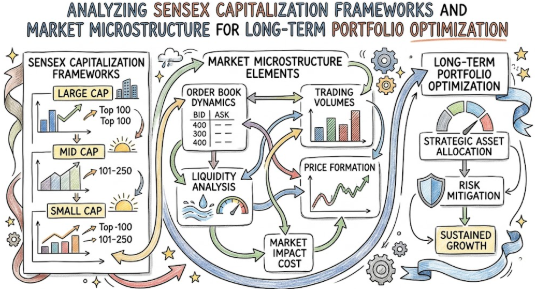
I think portfolio optimization becomes more meaningful when investors understand the mechanics behind benchmark indices rather than simply tracking performance numbers.