Introduction
Digital Banking Platforms are software systems that enable banks, fintech companies, and enterprises to deliver financial services through digital channels like mobile apps, web portals, and APIs. These platforms sit on top of core banking systems and handle customer onboarding, payments, account management, lending workflows, and real-time interactions.
They are essential because modern customers expect instant, mobile-first, and personalized banking experiences. Traditional banking systems cannot keep up with this demand, while digital platforms enable automation, scalability, and innovation. Common use cases include mobile banking apps, digital onboarding, payments, lending, and embedded finance.
Buyers should evaluate API architecture, scalability, security, compliance readiness, UX capabilities, integration ecosystem, cloud support, analytics, customization, and vendor support.
Best for: Banks, fintech startups, NBFCs, neobanks, and enterprises launching digital financial services.
Not ideal for: Small businesses needing only basic accounting or payment tools.
Key Trends in Digital Banking Platforms
- Cloud-native banking platforms replacing legacy infrastructure
- AI-driven personalization and fraud detection improving user experience
- Open banking APIs enabling third-party integrations
- Embedded finance within non-banking apps and ecosystems
- Real-time payments and processing becoming standard
- Low-code/no-code banking solutions accelerating deployment
- Biometric authentication and advanced security models
- Composable banking architectures for flexibility
- Digital-only banks (neobanks) gaining adoption globally
- Data-driven analytics and customer insights improving engagement
How We Selected These Tools (Methodology)
- Strong adoption across banks and fintech ecosystems
- End-to-end digital banking lifecycle support
- API-first and integration capabilities
- Scalability for high transaction volumes
- Cloud-native or hybrid deployment options
- Security and compliance readiness signals
- User experience and customization flexibility
- Vendor ecosystem and extensibility
- Fit across SMB, mid-market, and enterprise segments
- Innovation in AI, automation, and analytics
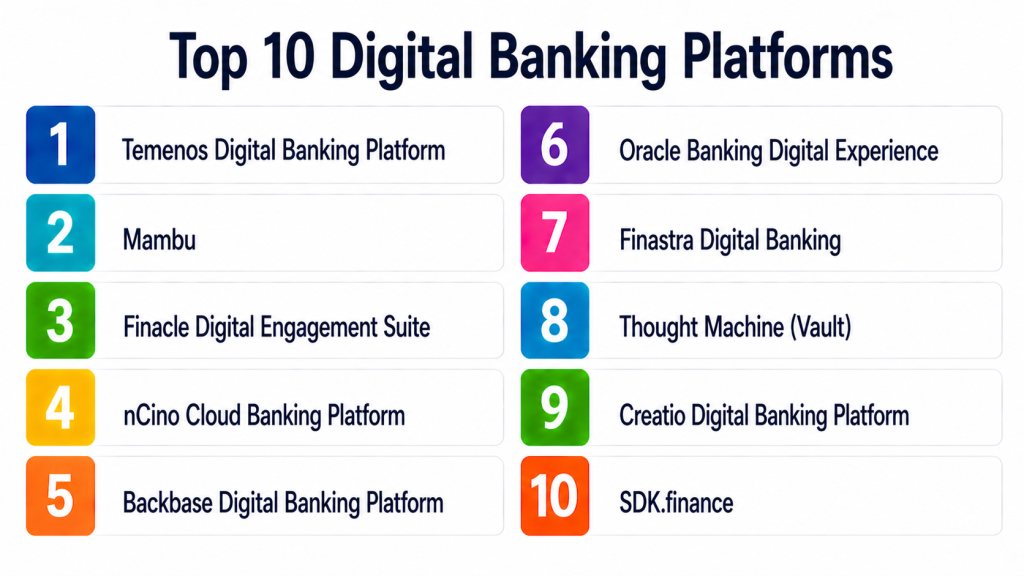
Top 10 Digital Banking Platforms
#1 — Temenos Digital Banking Platform
Short description: Temenos offers a comprehensive digital banking platform that supports retail, corporate, and fintech banking services with strong scalability and cloud-native architecture.
Key Features
- Omnichannel banking
- API-first architecture
- Real-time processing
- Customer onboarding tools
- Analytics dashboards
- Integration capabilities
Pros
- Enterprise-grade platform
- Highly scalable
- Strong global adoption
- Flexible architecture
Cons
- Complex implementation
- High cost
- Requires expertise
- Enterprise-focused
Platforms / Deployment
Web / Mobile
Cloud / Hybrid
Security & Compliance
Not publicly stated
Integrations & Ecosystem
Temenos integrates with banking, fintech, and data ecosystems.
- Core banking systems
- Payment networks
- CRM tools
- Analytics platforms
Support & Community
Strong enterprise support and global ecosystem.
#2 — Mambu
Short description: Mambu is a cloud-native banking platform that enables banks and fintechs to launch digital financial products quickly.
Key Features
- Cloud-native architecture
- Product configuration
- API integrations
- Real-time processing
- Workflow automation
Pros
- Fast deployment
- Flexible
- Scalable
- Developer-friendly
Cons
- Requires integration with core systems
- Pricing varies
- Customization needed
- Ecosystem dependency
Platforms / Deployment
Web
Cloud
Security & Compliance
Not publicly stated
Integrations & Ecosystem
Mambu integrates with fintech ecosystems and APIs.
- Payment systems
- CRM tools
- Data platforms
- API integrations
Support & Community
Strong fintech ecosystem and support.
#3 — Finacle Digital Engagement Suite
Short description: Finacle provides digital banking solutions focused on customer engagement, omnichannel experiences, and analytics.
Key Features
- Omnichannel banking
- Customer onboarding
- Personalization tools
- Workflow automation
- Analytics dashboards
Pros
- Strong customer experience
- Scalable
- Reliable
- Enterprise-ready
Cons
- Complex setup
- Pricing varies
- Requires integration
- Enterprise-focused
Platforms / Deployment
Web / Mobile
Cloud / Hybrid
Security & Compliance
Not publicly stated
Integrations & Ecosystem
- Core banking systems
- CRM tools
- Data platforms
- API integrations
Support & Community
Strong enterprise support and ecosystem.
#4 — nCino Cloud Banking Platform
Short description: nCino provides a cloud-based banking platform that integrates loan origination, account opening, and CRM functionalities.
Key Features
- Loan origination
- Account onboarding
- Workflow automation
- Document management
- Analytics dashboards
Pros
- Strong CRM integration
- Cloud-native
- Scalable
- Automation-focused
Cons
- Salesforce dependency
- Pricing varies
- Customization needed
- Enterprise focus
Platforms / Deployment
Web
Cloud
Security & Compliance
Not publicly stated
Integrations & Ecosystem
- CRM systems
- Financial platforms
- Analytics tools
Support & Community
Strong partner ecosystem.
#5 — Backbase Digital Banking Platform
Short description: Backbase provides an omnichannel digital banking platform that unifies customer experiences across web and mobile channels.
Key Features
- Omnichannel experience
- Customer engagement tools
- Workflow automation
- API integrations
- Analytics dashboards
Pros
- Strong UX capabilities
- Flexible architecture
- Scalable
- Modern platform
Cons
- Implementation effort
- Pricing varies
- Integration complexity
- Enterprise focus
Platforms / Deployment
Web / Mobile
Cloud
Security & Compliance
Not publicly stated
Integrations & Ecosystem
- Core banking systems
- CRM tools
- Fintech apps
- API ecosystem
Support & Community
Enterprise support with global presence.
#6 — Oracle Banking Digital Experience
Short description: Oracle provides a digital banking platform integrated with its core banking solutions for enterprise institutions.
Key Features
- Digital banking services
- Workflow automation
- Analytics dashboards
- API integrations
- Compliance tools
Pros
- Strong enterprise capabilities
- Reliable
- Scalable
- Comprehensive features
Cons
- Complex implementation
- Pricing varies
- Requires expertise
- Enterprise focus
Platforms / Deployment
Web
Cloud / Hybrid
Security & Compliance
Not publicly stated
Integrations & Ecosystem
- Core banking systems
- ERP platforms
- Data systems
Support & Community
Enterprise support available.
#7 — Finastra Digital Banking
Short description: Finastra offers digital banking solutions that support retail and corporate banking with strong integration capabilities.
Key Features
- Digital banking services
- Workflow automation
- API integrations
- Analytics dashboards
- Compliance tools
Pros
- Strong banking integration
- Scalable
- Reliable
- Enterprise-ready
Cons
- Implementation complexity
- Pricing varies
- Requires customization
- Enterprise focus
Platforms / Deployment
Web
Cloud / Hybrid
Security & Compliance
Not publicly stated
Integrations & Ecosystem
- Core banking systems
- CRM tools
- Data platforms
Support & Community
Enterprise support available.
#8 — Thought Machine (Vault)
Short description: Thought Machine provides a cloud-native core and digital banking platform focused on modern architecture and flexibility.
Key Features
- Cloud-native banking
- Product configuration
- Real-time processing
- API-first architecture
- Automation tools
Pros
- Modern architecture
- Highly flexible
- Scalable
- Developer-friendly
Cons
- Requires expertise
- Pricing varies
- Integration setup needed
- Enterprise focus
Platforms / Deployment
Web
Cloud
Security & Compliance
Not publicly stated
Integrations & Ecosystem
- Fintech ecosystems
- Payment systems
- Data platforms
Support & Community
Growing ecosystem and support.
#9 — Creatio Digital Banking Platform
Short description: Creatio provides a low-code platform for digital banking, enabling workflow automation and customer engagement.
Key Features
- Low-code workflows
- Customer engagement
- Automation tools
- Analytics dashboards
- Integration APIs
Pros
- Easy to configure
- Flexible
- Scalable
- Good for mid-market
Cons
- Limited enterprise depth
- Integration needs
- Pricing varies
- Smaller ecosystem
Platforms / Deployment
Web
Cloud
Security & Compliance
Not publicly stated
Integrations & Ecosystem
- CRM tools
- Data platforms
- API integrations
Support & Community
Support available with developer resources.
#10 — SDK.finance Platform
Short description: SDK.finance is a modular digital banking platform that enables fintechs and enterprises to build customized financial services.
Key Features
- Modular architecture
- API-first design
- Payment processing
- Account management
- Integration tools
Pros
- Highly customizable
- Developer-friendly
- Scalable
- Flexible
Cons
- Requires development effort
- Pricing varies
- Integration setup needed
- Smaller ecosystem
Platforms / Deployment
Web
Cloud / On-prem
Security & Compliance
Not publicly stated
Integrations & Ecosystem
- Payment systems
- Fintech apps
- Data platforms
Support & Community
Support available with developer focus.
Comparison Table
| Tool Name | Best For | Platform(s) Supported | Deployment | Standout Feature | Public Rating |
|---|---|---|---|---|---|
| Temenos | Enterprise banks | Web/Mobile | Cloud/Hybrid | End-to-end banking | N/A |
| Mambu | Fintech startups | Web | Cloud | Cloud-native banking | N/A |
| Finacle | Customer engagement | Web/Mobile | Hybrid | Omnichannel UX | N/A |
| nCino | Lending + CRM | Web | Cloud | Salesforce integration | N/A |
| Backbase | UX-focused banking | Web/Mobile | Cloud | Omnichannel experience | N/A |
| Oracle | Enterprise banks | Web | Hybrid | Banking integration | N/A |
| Finastra | Financial institutions | Web | Hybrid | Banking ecosystem | N/A |
| Thought Machine | Modern banking | Web | Cloud | Cloud-native core | N/A |
| Creatio | Low-code banking | Web | Cloud | Workflow automation | N/A |
| SDK.finance | Custom fintech | Web | Hybrid | Modular architecture | N/A |
Evaluation & Scoring of Digital Banking Platforms
| Tool | Core | Ease | Integrations | Security | Performance | Support | Value | Weighted Total |
|---|---|---|---|---|---|---|---|---|
| Temenos | 9 | 7 | 9 | 8 | 9 | 8 | 7 | 8.3 |
| Mambu | 8.5 | 8 | 8.5 | 8 | 8.5 | 8 | 8 | 8.3 |
| Finacle | 9 | 7.5 | 8.5 | 8 | 9 | 8 | 7.5 | 8.3 |
| nCino | 8.5 | 8 | 8.5 | 8 | 8.5 | 8 | 7.5 | 8.2 |
| Backbase | 8.5 | 8 | 8.5 | 8 | 8.5 | 8 | 7.5 | 8.2 |
| Oracle | 9 | 7 | 8.5 | 8 | 9 | 8 | 7 | 8.1 |
| Finastra | 9 | 7 | 8.5 | 8 | 9 | 8 | 7 | 8.1 |
| Thought Machine | 8.5 | 8 | 8.5 | 8 | 8.5 | 8 | 8 | 8.2 |
| Creatio | 8 | 8.5 | 8 | 7.5 | 8 | 7.5 | 8.5 | 8.1 |
| SDK.finance | 8 | 8 | 8.5 | 7.5 | 8 | 7.5 | 8.5 | 8.1 |
Scores are comparative and reflect relative strengths. Enterprise platforms score higher in scalability, while modern platforms excel in flexibility and usability.
Which Digital Banking Platform Is Right for You?
Solo / Freelancer
Not required; basic fintech apps may suffice.
SMB
Choose Creatio or SDK.finance for flexibility and affordability.
Mid-Market
Consider Mambu, Backbase, or nCino for scalability.
Enterprise
Use Temenos, Finacle, Oracle, or Finastra for full-scale banking.
Budget vs Premium
Budget tools focus on flexibility, while premium platforms offer full banking ecosystems.
Feature Depth vs Ease of Use
Enterprise platforms offer deep features, while modern tools emphasize usability.
Integrations & Scalability
Ensure integration with core banking, payments, and fintech ecosystems.
Security & Compliance Needs
Verify regulatory compliance and security features before selection.
Frequently Asked Questions
1. What is a digital banking platform?
It is software that enables banks to provide services via digital channels like apps and web portals.
2. How is it different from core banking?
Core banking manages financial records, while digital platforms handle customer interaction and services.
3. Who uses digital banking platforms?
Banks, fintech companies, and enterprises offering financial services.
4. What features matter most?
APIs, automation, UX, scalability, and security.
5. Are these platforms cloud-based?
Most modern platforms support cloud deployment.
6. Can they support mobile banking?
Yes, mobile-first experiences are a core feature.
7. How long does implementation take?
It varies from months to over a year depending on complexity.
8. Do they support integrations?
Yes, especially with fintech APIs and core banking systems.
9. Are they secure?
Security varies by vendor and must be evaluated.
10. What are alternatives?
Legacy banking systems or custom-built solutions.
Conclusion
Digital Banking Platforms are the foundation of modern financial services and digital transformation.
They enable seamless customer experiences, real-time transactions, and scalable financial products.
Enterprise platforms like Temenos, Oracle, and Finastra provide robust capabilities for large institutions.
Meanwhile, modern solutions like Mambu and SDK.finance offer flexibility and faster innovation.
The right platform depends on your business size, digital maturity, and integration needs.
Organizations should carefully evaluate scalability, APIs, and compliance features.
Running pilot implementations can help validate performance and usability.
Ultimately, the best platform aligns with your long-term digital banking strategy.