Introduction
Core Banking Systems are the central platforms that power a bank’s daily operations, including account management, transactions, payments, lending, and customer data processing. These systems act as the backbone of financial institutions, enabling real-time processing and integration with digital banking channels.
They are critical because modern banking demands high availability, real-time transactions, regulatory compliance, and seamless customer experiences. Traditional legacy systems are being replaced by modern, API-driven platforms that support innovation and scalability. Common use cases include deposit management, loan processing, payments, risk management, and integration with fintech ecosystems.
Buyers should evaluate real-time processing capabilities, scalability, API architecture, security, compliance readiness, integration ecosystem, cloud support, performance, customization flexibility, and vendor support.
Best for: Banks, NBFCs, credit unions, fintech companies, and enterprises managing financial services at scale.
Not ideal for: Small businesses that only require basic accounting or payment solutions.
Key Trends in Core Banking Systems
- Cloud-native core banking platforms replacing legacy systems
- API-first architecture enabling open banking and integrations
- Real-time transaction processing becoming standard
- Composable banking models allowing modular deployment
- AI-driven fraud detection and risk management
- Microservices-based architectures improving flexibility
- Integration with digital banking platforms for omnichannel experiences
- Automation of back-office operations reducing manual effort
- Embedded finance capabilities within ecosystems
- Data-driven analytics and reporting for decision-making
How We Selected These Tools (Methodology)
- Strong adoption across global banks and financial institutions
- Capability to handle core banking operations end-to-end
- Real-time transaction processing and scalability
- API and integration capabilities
- Cloud or hybrid deployment options
- Security and compliance readiness signals
- Vendor ecosystem and extensibility
- Usability for banking operations teams
- Innovation in architecture and automation
- Fit across SMB, mid-market, and enterprise institutions
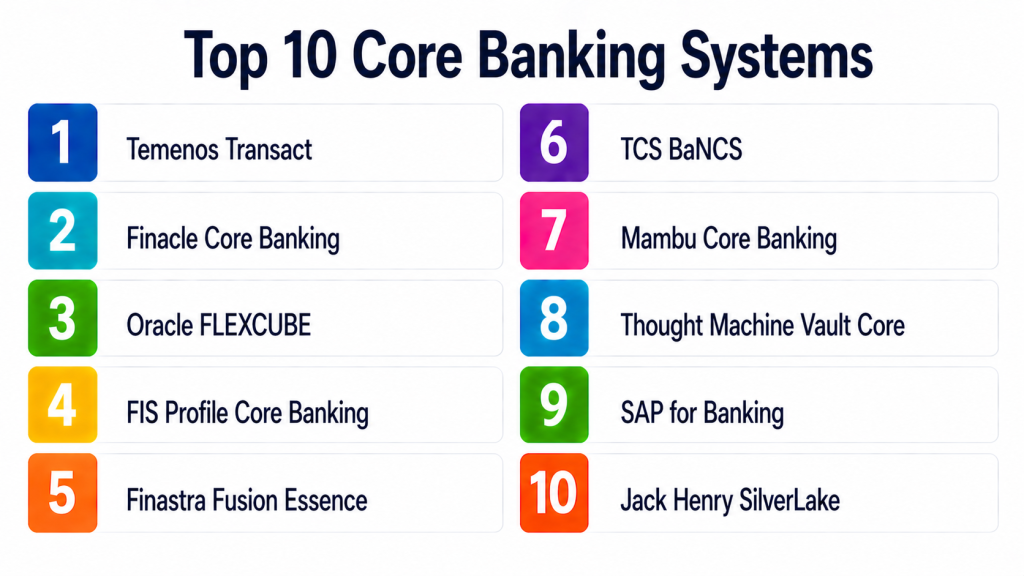
Top 10 Core Banking Systems
#1 — Temenos Transact
Short description: Temenos Transact is a leading core banking system that supports retail, corporate, and digital banking with high scalability and real-time processing.
Key Features
- Real-time transaction processing
- Multi-product support
- API-first architecture
- Integration capabilities
- Analytics dashboards
- Workflow automation
Pros
- Industry-leading platform
- Highly scalable
- Strong ecosystem
- Reliable performance
Cons
- Complex implementation
- High cost
- Requires expertise
- Enterprise-focused
Platforms / Deployment
Web
Cloud / Hybrid
Security & Compliance
Not publicly stated
Integrations & Ecosystem
Temenos integrates with banking and fintech systems for seamless operations.
- Digital banking platforms
- Payment systems
- CRM tools
- Analytics platforms
Support & Community
Strong global support and partner ecosystem.
#2 — Finacle Core Banking
Short description: Finacle is a widely used core banking platform that provides end-to-end banking capabilities with strong digital integration.
Key Features
- Core banking operations
- Real-time processing
- Workflow automation
- Analytics dashboards
- Integration APIs
Pros
- Reliable
- Scalable
- Strong adoption
- Good integration capabilities
Cons
- Implementation effort
- Pricing varies
- Requires expertise
- Enterprise focus
Platforms / Deployment
Web
Cloud / Hybrid
Security & Compliance
Not publicly stated
Integrations & Ecosystem
- Digital banking platforms
- CRM tools
- Payment systems
- Data platforms
Support & Community
Strong enterprise support.
#3 — Oracle FLEXCUBE
Short description: Oracle FLEXCUBE is a comprehensive core banking solution designed for large financial institutions.
Key Features
- Core banking operations
- Real-time processing
- Workflow automation
- Compliance tools
- Integration APIs
Pros
- Enterprise scalability
- Reliable
- Strong integration
- Comprehensive features
Cons
- Complex setup
- High cost
- Requires expertise
- Enterprise focus
Platforms / Deployment
Web
Cloud / Hybrid
Security & Compliance
Not publicly stated
Integrations & Ecosystem
- Banking systems
- ERP platforms
- Analytics tools
Support & Community
Enterprise support available.
#4 — FIS Profile Core Banking
Short description: FIS Profile provides core banking capabilities with strong transaction processing and integration features.
Key Features
- Core transaction processing
- Workflow automation
- Reporting dashboards
- Integration APIs
- Compliance tools
Pros
- Reliable
- Scalable
- Strong banking integration
- Good performance
Cons
- Enterprise complexity
- Pricing varies
- Implementation effort
- Customization required
Platforms / Deployment
Web
Cloud / On-prem
Security & Compliance
Not publicly stated
Integrations & Ecosystem
- Banking systems
- CRM tools
- Analytics platforms
Support & Community
Enterprise support with global reach.
#5 — Finastra Fusion Essence
Short description: Fusion Essence is a core banking system designed for digital transformation with strong flexibility and automation.
Key Features
- Core banking operations
- Workflow automation
- Real-time processing
- Integration APIs
- Reporting dashboards
Pros
- Flexible
- Scalable
- Good for digital transformation
- Reliable
Cons
- Implementation complexity
- Pricing varies
- Requires customization
- Enterprise focus
Platforms / Deployment
Web
Cloud / Hybrid
Security & Compliance
Not publicly stated
Integrations & Ecosystem
- Digital banking systems
- CRM tools
- Data platforms
Support & Community
Enterprise support available.
#6 — TCS BaNCS
Short description: TCS BaNCS is a global core banking platform supporting retail, corporate, and capital markets operations.
Key Features
- Core banking operations
- Real-time processing
- Multi-entity support
- Workflow automation
- Integration APIs
Pros
- Highly scalable
- Strong global adoption
- Comprehensive features
- Reliable
Cons
- Complex implementation
- High cost
- Requires expertise
- Enterprise focus
Platforms / Deployment
Web
Cloud / Hybrid
Security & Compliance
Not publicly stated
Integrations & Ecosystem
- Banking systems
- Payment networks
- CRM tools
Support & Community
Strong enterprise support.
#7 — Mambu Core Banking
Short description: Mambu is a cloud-native core banking platform designed for fintechs and modern financial institutions.
Key Features
- Cloud-native architecture
- Product configuration
- API integrations
- Real-time processing
- Workflow automation
Pros
- Fast deployment
- Flexible
- Developer-friendly
- Scalable
Cons
- Requires ecosystem integration
- Pricing varies
- Customization needed
- Dependency on APIs
Platforms / Deployment
Web
Cloud
Security & Compliance
Not publicly stated
Integrations & Ecosystem
- Fintech apps
- Payment systems
- CRM tools
Support & Community
Strong fintech ecosystem.
#8 — Thought Machine Vault Core
Short description: Vault Core is a modern core banking platform built on cloud-native architecture and microservices.
Key Features
- Cloud-native core
- Real-time processing
- API-first architecture
- Product configuration
- Automation tools
Pros
- Modern architecture
- Highly flexible
- Scalable
- Developer-friendly
Cons
- Requires expertise
- Pricing varies
- Integration setup needed
- Enterprise focus
Platforms / Deployment
Web
Cloud
Security & Compliance
Not publicly stated
Integrations & Ecosystem
- Fintech ecosystems
- Payment systems
- Data platforms
Support & Community
Growing ecosystem.
#9 — SAP for Banking
Short description: SAP provides core banking capabilities integrated with ERP systems for enterprise financial institutions.
Key Features
- Core banking operations
- Workflow automation
- Integration tools
- Reporting dashboards
- Compliance tools
Pros
- Strong ERP integration
- Reliable
- Scalable
- Enterprise-ready
Cons
- Requires SAP ecosystem
- Complex setup
- High cost
- Limited flexibility outside SAP
Platforms / Deployment
Web
Cloud / Hybrid
Security & Compliance
Not publicly stated
Integrations & Ecosystem
- ERP systems
- Financial platforms
- Analytics tools
Support & Community
Strong global support.
#10 — Jack Henry SilverLake
Short description: SilverLake is a core banking platform focused on banks and credit unions with strong operational capabilities.
Key Features
- Core banking operations
- Transaction processing
- Workflow automation
- Reporting dashboards
- Integration APIs
Pros
- Reliable
- Good for credit unions
- Scalable
- Strong support
Cons
- Limited global reach
- Legacy components
- Integration needs
- Pricing varies
Platforms / Deployment
Web
On-prem / Hybrid
Security & Compliance
Not publicly stated
Integrations & Ecosystem
- Banking systems
- CRM tools
- Analytics platforms
Support & Community
Strong support for regional institutions.
Comparison Table
| Tool Name | Best For | Platform(s) Supported | Deployment | Standout Feature | Public Rating |
|---|---|---|---|---|---|
| Temenos | Enterprise banks | Web | Cloud/Hybrid | Real-time core banking | N/A |
| Finacle | Global banks | Web | Hybrid | Digital integration | N/A |
| Oracle FLEXCUBE | Large banks | Web | Hybrid | Enterprise scalability | N/A |
| FIS | Financial institutions | Web | Hybrid | Transaction processing | N/A |
| Finastra | Digital transformation | Web | Hybrid | Flexible core | N/A |
| TCS BaNCS | Global banking | Web | Hybrid | Multi-entity support | N/A |
| Mambu | Fintech | Web | Cloud | Cloud-native core | N/A |
| Thought Machine | Modern banks | Web | Cloud | Microservices architecture | N/A |
| SAP | Enterprises | Web | Hybrid | ERP integration | N/A |
| Jack Henry | Credit unions | Web | Hybrid | Operational reliability | N/A |
Evaluation & Scoring of Core Banking Systems
| Tool | Core | Ease | Integrations | Security | Performance | Support | Value | Weighted Total |
|---|---|---|---|---|---|---|---|---|
| Temenos | 9 | 7 | 9 | 8 | 9 | 8 | 7 | 8.3 |
| Finacle | 9 | 7.5 | 8.5 | 8 | 9 | 8 | 7.5 | 8.3 |
| Oracle | 9 | 7 | 8.5 | 8 | 9 | 8 | 7 | 8.2 |
| FIS | 8.5 | 7 | 8 | 8 | 8.5 | 8 | 7 | 8.0 |
| Finastra | 8.5 | 7.5 | 8 | 8 | 8.5 | 8 | 7.5 | 8.1 |
| TCS | 9 | 7 | 8.5 | 8 | 9 | 8 | 7 | 8.2 |
| Mambu | 8.5 | 8 | 8.5 | 8 | 8.5 | 8 | 8 | 8.3 |
| Thought Machine | 8.5 | 8 | 8.5 | 8 | 8.5 | 8 | 8 | 8.3 |
| SAP | 9 | 7 | 8.5 | 8 | 9 | 8 | 7 | 8.2 |
| Jack Henry | 8 | 7.5 | 7.5 | 8 | 8 | 8 | 7.5 | 7.9 |
Scores are comparative and highlight relative strengths. Enterprise platforms rank higher in scalability, while modern cloud platforms excel in flexibility.
Which Core Banking System Is Right for You?
Solo / Freelancer
Not required; basic financial tools are sufficient.
SMB
Consider Mambu or Thought Machine for flexibility and faster deployment.
Mid-Market
Choose Finastra, Finacle, or FIS for balanced performance.
Enterprise
Use Temenos, Oracle, or TCS BaNCS for full-scale banking operations.
Budget vs Premium
Budget tools focus on flexibility, while premium systems provide deep functionality.
Feature Depth vs Ease of Use
Enterprise platforms offer deep features, while cloud platforms prioritize usability.
Integrations & Scalability
Ensure integration with digital banking, payments, and fintech systems.
Security & Compliance Needs
Verify regulatory compliance and audit capabilities before selection.
Frequently Asked Questions
1. What is a core banking system?
It is the central system that manages banking operations like accounts, transactions, and payments.
2. Why is it important?
It ensures real-time processing and efficient banking operations.
3. Who uses these systems?
Banks, credit unions, and financial institutions.
4. What features matter most?
Real-time processing, APIs, scalability, and security.
5. Are these systems cloud-based?
Many modern systems support cloud deployment.
6. Can they integrate with fintech apps?
Yes, most support API-based integrations.
7. How long does implementation take?
It varies from months to years.
8. Do they support digital banking?
Yes, they integrate with digital banking platforms.
9. Are they secure?
Security varies by vendor.
10. What are alternatives?
Legacy systems or custom-built platforms.
Conclusion
Core Banking Systems are the foundation of modern financial institutions.
They enable real-time transactions, operational efficiency, and integration with digital ecosystems.
Enterprise platforms like Temenos, Oracle, and TCS BaNCS provide robust capabilities for large banks.
Meanwhile, modern solutions like Mambu and Thought Machine offer flexibility and faster innovation.
The right system depends on scale, complexity, and digital strategy.
Organizations should evaluate performance, integrations, and compliance carefully.
Pilot implementations can help validate functionality and scalability.
Ultimately, the best core banking system aligns with long-term business and technology goals.