Introduction
Virtual Event Platforms are software solutions that enable organizations to host online events such as webinars, conferences, trade shows, and summits with interactive and engaging digital experiences. In simple terms, these platforms replace physical venues with digital environments where attendees can join sessions, network, and interact from anywhere in the world.
These platforms have become essential because businesses now need scalable, cost-effective, and global event reach without physical limitations. Virtual event tools allow organizers to host thousands of attendees, automate engagement, and track performance through analytics. They also support hybrid events, combining in-person and virtual experiences.
Common use cases include webinars, virtual conferences, product launches, training sessions, networking events, and online expos. Buyers should evaluate streaming quality, engagement features, scalability, integrations, ease of use, customization, analytics, and pricing.
Best for: event organizers, marketing teams, enterprises, educators, and businesses hosting digital or hybrid events.
Not ideal for: small local events that rely heavily on physical interaction or require minimal digital presence.
Key Trends in Virtual Event Platforms
- Hybrid event support combining physical and digital experiences
- AI-driven attendee engagement and personalization
- Real-time analytics and performance tracking
- Interactive features like polls, Q&A, and networking lounges
- Mobile-first virtual event experiences
- Integration with CRM and marketing platforms
- On-demand content and session recordings
- Gamification to increase attendee engagement
- Scalable cloud-based infrastructure
- Virtual exhibition booths and sponsor tools
How We Selected These Tools (Methodology)
- Evaluated global adoption across industries
- Assessed core features like streaming, engagement, and networking
- Reviewed scalability for large audiences
- Analyzed integration with CRM and marketing tools
- Considered ease of use for organizers and attendees
- Evaluated analytics and reporting capabilities
- Assessed customization and branding options
- Reviewed vendor ecosystem and integrations
- Considered pricing flexibility and ROI
- Included a mix of SMB and enterprise platforms
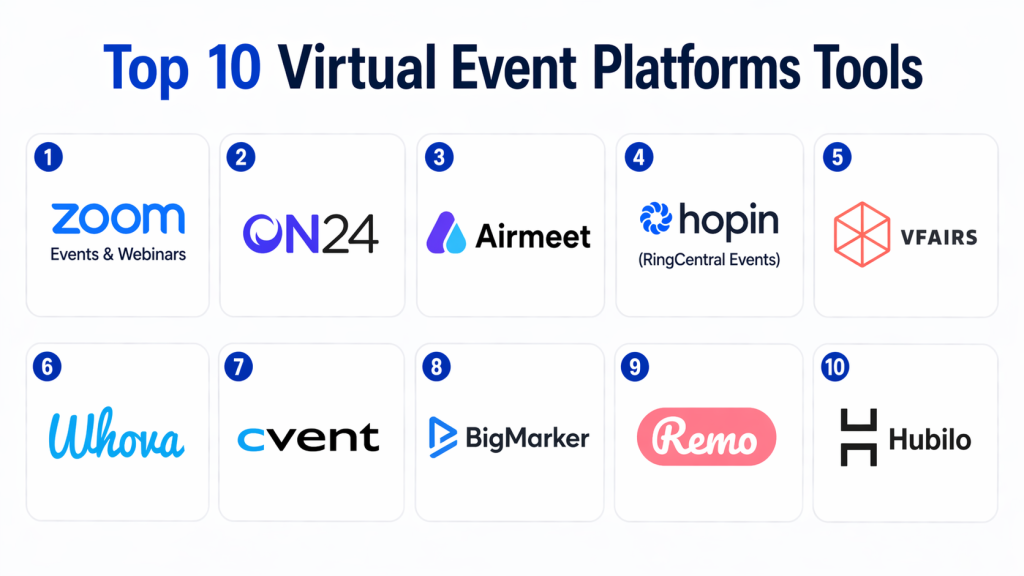
Top 10 Virtual Event Platforms Tools
#1 — Zoom Events & Webinars
Short description : Zoom Events & Webinars is a widely used virtual event platform known for reliable video conferencing and large-scale webinar capabilities. It enables organizations to host events with thousands of attendees while maintaining high-quality streaming. The platform includes engagement tools such as polls, Q&A, and chat. It is easy to use and familiar to most users. It is ideal for webinars and corporate virtual events.
Key Features
- Live streaming and webinars
- Breakout rooms
- Polls and Q&A
- Event registration
- Recording and playback
Pros
- Reliable and scalable
- Easy to use
Cons
- Limited customization
- Basic networking features
Platforms / Deployment
- Web / Windows / macOS / iOS / Android / Cloud
Security & Compliance
- Encryption and authentication features (details not publicly stated)
Integrations & Ecosystem
Zoom integrates with a wide range of tools for event management.
- CRM tools
- Marketing platforms
- APIs
Support & Community
- Extensive documentation and global support
#2 — ON24
Short description : ON24 is an enterprise-grade virtual event platform focused on webinars and digital experiences. It provides advanced analytics and audience engagement tools. The platform is widely used by large organizations for marketing events. It supports scalable virtual experiences. It is ideal for data-driven events.
Key Features
- Webinar hosting
- Engagement tools
- Analytics dashboards
- Audience insights
- Content management
Pros
- Strong analytics
- Enterprise-ready
Cons
- Expensive
- Complex setup
Platforms / Deployment
- Web / Cloud
Security & Compliance
- Not publicly stated
Integrations & Ecosystem
- CRM systems
- Marketing tools
- APIs
Support & Community
- Enterprise support
#3 — Airmeet
Short description : Airmeet is a virtual event platform designed for immersive networking and engagement. It offers interactive features such as virtual tables and lounges. The platform supports webinars, conferences, and meetups. It is widely used for community-driven events. It provides analytics and reporting tools.
Key Features
- Networking lounges
- Live streaming
- Engagement tools
- Analytics
- Event automation
Pros
- Strong networking features
- Engaging experience
Cons
- Learning curve
- Requires setup
Platforms / Deployment
- Web / Cloud
Security & Compliance
- Not publicly stated
Integrations & Ecosystem
- APIs
- CRM tools
Support & Community
- Vendor support
#4 — Hopin (RingCentral Events)
Short description : Hopin, now part of RingCentral Events, is a comprehensive virtual event platform offering tools for hosting large-scale conferences and expos. It provides features for networking, streaming, and analytics. It is widely used by enterprises. It supports hybrid events. It enables full event lifecycle management.
Key Features
- Live streaming
- Virtual expo booths
- Networking tools
- Analytics
- Event management
Pros
- Scalable
- Comprehensive features
Cons
- Premium pricing
- Complex interface
Platforms / Deployment
- Web / Cloud
Security & Compliance
- Not publicly stated
Integrations & Ecosystem
- CRM tools
- APIs
Support & Community
- Enterprise support
#5 — vFairs
Short description : vFairs provides virtual event solutions with a focus on exhibitions, job fairs, and conferences. It offers customizable virtual environments and engagement tools. The platform is widely used for large events. It supports hybrid experiences. It includes analytics and reporting features.
Key Features
- Virtual booths
- Live streaming
- Networking tools
- Analytics
- Custom environments
Pros
- Highly customizable
- Strong for expos
Cons
- Setup complexity
- Premium pricing
Platforms / Deployment
- Web / Cloud
Security & Compliance
- Not publicly stated
Integrations & Ecosystem
- APIs
- CRM systems
Support & Community
- Vendor support
#6 — Whova
Short description : Whova is an event management and virtual event platform known for its strong attendee engagement features. It supports hybrid and virtual events. The platform includes networking, analytics, and mobile apps. It is widely used for conferences. It focuses on improving attendee experience.
Key Features
- Event registration
- Networking tools
- Mobile apps
- Analytics
- Engagement features
Pros
- Strong engagement tools
- Easy to use
Cons
- Limited customization
- Pricing tiers
Platforms / Deployment
- Web / Mobile / Cloud
Security & Compliance
- Not publicly stated
Integrations & Ecosystem
- CRM tools
- APIs
Support & Community
- Vendor support
#7 — Cvent
Short description : Cvent is an enterprise event management platform that supports virtual and hybrid events. It offers comprehensive tools for registration, marketing, and analytics. The platform is widely used by enterprises. It supports large-scale events. It integrates with CRM systems.
Key Features
- Event registration
- Marketing tools
- Analytics
- Hybrid support
- Automation
Pros
- Enterprise-ready
- Scalable
Cons
- Expensive
- Complex setup
Platforms / Deployment
- Web / Cloud
Security & Compliance
- Not publicly stated
Integrations & Ecosystem
- CRM systems
- APIs
Support & Community
- Enterprise support
#8 — BigMarker
Short description : BigMarker is a webinar and virtual event platform designed for marketing and engagement. It provides tools for hosting live and automated webinars. The platform supports customization and branding. It is ideal for marketers. It includes analytics features.
Key Features
- Live webinars
- Automation
- Custom branding
- Analytics
- Engagement tools
Pros
- Marketing-focused
- Customizable
Cons
- Learning curve
- Setup required
Platforms / Deployment
- Web / Cloud
Security & Compliance
- Not publicly stated
Integrations & Ecosystem
- CRM tools
- APIs
Support & Community
- Vendor support
#9 — Remo
Short description : Remo is a virtual event platform focused on networking and interactive experiences. It offers table-based networking and video interactions. The platform is ideal for small to mid-sized events. It provides engagement tools and analytics. It enhances attendee interaction.
Key Features
- Networking tables
- Video interaction
- Engagement tools
- Analytics
- Event management
Pros
- Strong networking
- Interactive experience
Cons
- Limited scalability
- Basic features
Platforms / Deployment
- Web / Cloud
Security & Compliance
- Not publicly stated
Integrations & Ecosystem
- APIs
- CRM tools
Support & Community
- Vendor support
#10 — Hubilo
Short description : Hubilo is a virtual event platform focused on engagement and analytics. It provides tools for hosting webinars and conferences. The platform supports branding and customization. It is widely used for marketing events. It includes analytics and reporting features.
Key Features
- Live streaming
- Engagement tools
- Analytics
- Branding
- Automation
Pros
- Strong analytics
- Customizable
Cons
- Premium pricing
- Learning curve
Platforms / Deployment
- Web / Cloud
Security & Compliance
- Not publicly stated
Integrations & Ecosystem
- CRM tools
- APIs
Support & Community
- Vendor support
Comparison Table (Top 10)
| Tool Name | Best For | Platform(s) Supported | Deployment | Standout Feature | Public Rating |
|---|---|---|---|---|---|
| Zoom Events | Webinars | Web/Mobile | Cloud | Reliability | N/A |
| ON24 | Enterprise | Web | Cloud | Analytics | N/A |
| Airmeet | Community events | Web | Cloud | Networking | N/A |
| Hopin | Large events | Web | Cloud | Full event suite | N/A |
| vFairs | Expos | Web | Cloud | Custom environments | N/A |
| Whova | Conferences | Web/Mobile | Cloud | Engagement tools | N/A |
| Cvent | Enterprise | Web | Cloud | Event automation | N/A |
| BigMarker | Marketing events | Web | Cloud | Webinar tools | N/A |
| Remo | Networking events | Web | Cloud | Interactive tables | N/A |
| Hubilo | Marketing events | Web | Cloud | Analytics | N/A |
Evaluation & Scoring of Virtual Event Platforms
| Tool Name | Core (25%) | Ease (15%) | Integrations (15%) | Security (10%) | Performance (10%) | Support (10%) | Value (15%) | Weighted Total |
|---|---|---|---|---|---|---|---|---|
| Zoom | 9 | 9 | 8 | 8 | 9 | 8 | 8 | 8.6 |
| ON24 | 9 | 7 | 9 | 8 | 9 | 8 | 7 | 8.3 |
| Airmeet | 8 | 8 | 7 | 7 | 8 | 7 | 8 | 7.9 |
| Hopin | 9 | 7 | 9 | 7 | 9 | 8 | 7 | 8.2 |
| vFairs | 9 | 7 | 8 | 7 | 9 | 8 | 7 | 8.1 |
| Whova | 8 | 8 | 8 | 7 | 8 | 7 | 8 | 8.0 |
| Cvent | 10 | 6 | 9 | 8 | 9 | 8 | 6 | 8.4 |
| BigMarker | 8 | 7 | 8 | 7 | 8 | 7 | 8 | 7.8 |
| Remo | 7 | 8 | 6 | 7 | 7 | 7 | 8 | 7.4 |
| Hubilo | 8 | 7 | 8 | 7 | 8 | 7 | 7 | 7.8 |
Scores are comparative and help shortlist tools based on priorities like engagement, scalability, and analytics.
Which Virtual Event Platform Is Right for You?
Solo / Freelancer
- Remo, BigMarker
SMB
- Airmeet, Whova
Mid-Market
- Hubilo, vFairs
Enterprise
- Cvent, ON24, Hopin
Budget vs Premium
- Budget → Remo
- Premium → ON24
Feature Depth vs Ease of Use
- Easy → Zoom
- Advanced → Cvent
Integrations & Scalability
- Choose platforms with CRM integrations
Security & Compliance Needs
- Enterprise tools provide better control
Frequently Asked Questions (FAQs)
1. What is a virtual event platform?
It is software used to host online events with streaming and interaction features.
2. Why is it important?
It enables global reach and scalable event hosting.
3. Can it support hybrid events?
Yes, most platforms support hybrid formats.
4. Does it include analytics?
Yes, analytics is a core feature.
5. Can attendees interact?
Yes, through chat, polls, and networking tools.
6. Is it cloud-based?
Most platforms are cloud-based.
7. Can it scale to large events?
Yes, enterprise platforms handle thousands of attendees.
8. Does it integrate with CRM?
Yes, integration is common.
9. How long does setup take?
Cloud tools can be set up quickly.
10. What is the biggest benefit?
Global reach and engagement.
Conclusion
Virtual event platforms have transformed how organizations host and manage events by enabling scalable, engaging, and cost-effective digital experiences. From simple webinar tools like Zoom to enterprise-grade platforms like Cvent and ON24, there is a solution for every use case and budget. These platforms empower organizers to reach global audiences, automate workflows, and deliver interactive experiences that rival physical events. The right choice depends on your event type, audience size, and engagement needs. Start by defining your goals, shortlist a few platforms, and run pilot events to evaluate performance, integrations, and user experience before making a final decision.