Introduction
Reservation Management Software is a digital system used to manage bookings, table reservations, room allocations, appointments, and service scheduling in real time. It replaces manual booking methods like phone calls, registers, and spreadsheets with automated systems that improve efficiency and customer experience.
These tools are widely used in hotels, restaurants, travel companies, clinics, rental services, and event venues. They help businesses avoid overbooking, manage availability, and streamline customer reservations.
Modern reservation systems also support online booking, automated confirmations, payment integration, and real-time availability tracking.
Common use cases:
- Hotel room reservations
- Restaurant table booking
- Travel and tour scheduling
- Event and venue reservations
- Rental service management
Key evaluation criteria:
- Real-time availability management
- Multi-channel booking support
- Payment integration
- Automation and reminders
- Multi-location support
- Reporting and analytics
- Ease of use
- Scalability
Best for: Hospitality, travel, healthcare, rentals, and service-based businesses.
Not ideal for: Businesses without booking or scheduling needs.
Key Trends in Reservation Management Software
- Shift toward cloud-based booking platforms
- Rise of mobile-first reservation systems
- AI-based smart booking optimization
- Real-time availability synchronization
- Integration with WhatsApp, SMS, and email alerts
- Contactless and self-service booking growth
- Dynamic pricing in reservations
- API-first booking ecosystems
- Multi-channel booking (web + mobile + app)
- Strong integration with CRM systems
How We Selected These Tools (Methodology)
- Evaluated global adoption and usage
- Reviewed real-world reservation performance
- Analyzed automation capabilities
- Considered scalability and multi-location support
- Included industry-specific tools
- Focused on user experience
- Compared integration ecosystems
- Balanced enterprise and SMB solutions
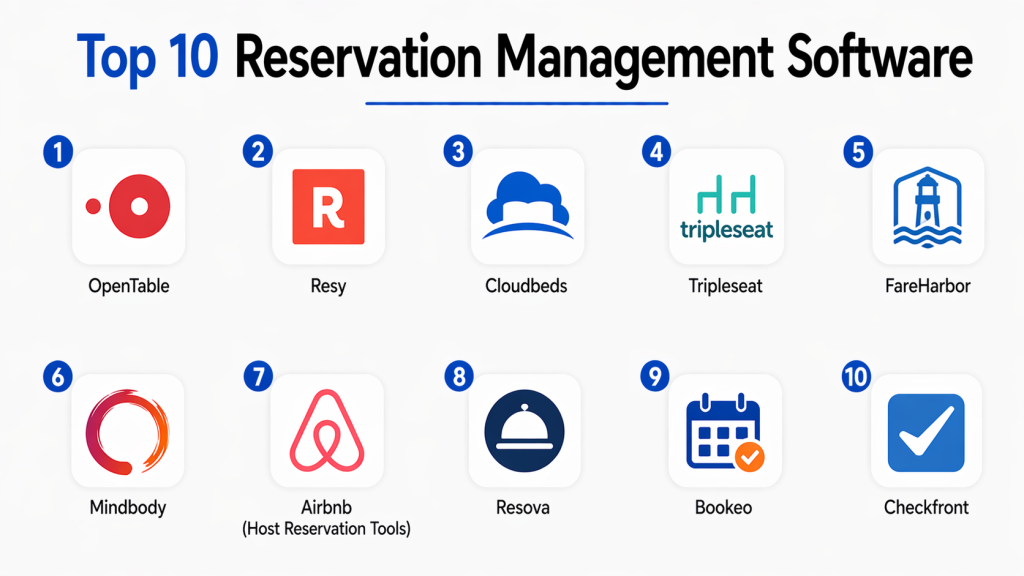
Top 10 Reservation Management Software
#1 — OpenTable
Short description: A widely used restaurant reservation system that helps manage table bookings, guest management, and dining operations efficiently.
Key Features
- Table reservation system
- Guest management
- Availability tracking
- Automated confirmations
- Restaurant analytics
Pros
- Strong global adoption
- Easy reservation handling
Cons
- High service cost
- Limited customization
Platforms / Deployment
Cloud / Mobile / Web
Security & Compliance
Enterprise-level protection
Integrations & Ecosystem
Restaurant POS and management systems
Support & Community
Strong hospitality support
#2 — Resy
Short description: A restaurant reservation platform focused on premium dining experiences and customer engagement.
Key Features
- Table booking system
- Guest list management
- Waitlist control
- Mobile reservations
- CRM tools
Pros
- Great user experience
- Strong restaurant branding
Cons
- Limited global coverage
- Restaurant-dependent system
Platforms / Deployment
Cloud / Mobile
Security & Compliance
Not publicly stated
Integrations & Ecosystem
Restaurant systems
Support & Community
Strong hospitality support
#3 — Cloudbeds
Short description: A hotel reservation and property management system designed for managing bookings and hospitality operations.
Key Features
- Hotel booking engine
- Room availability tracking
- Channel management
- Payment processing
- Guest management
Pros
- Strong hotel focus
- Scalable system
Cons
- Complex for beginners
- Subscription cost
Platforms / Deployment
Cloud
Security & Compliance
Hospitality-grade security
Integrations & Ecosystem
OTA and payment systems
Support & Community
Global hotel support
#4 — Tripleseat
Short description: A reservation and event management platform for restaurants, hotels, and venues.
Key Features
- Event booking system
- Reservation management
- Guest communication
- Contract handling
- Reporting tools
Pros
- Strong event handling
- Good automation
Cons
- High pricing
- Complex setup
Platforms / Deployment
Cloud
Security & Compliance
Not publicly stated
Integrations & Ecosystem
POS and CRM tools
Support & Community
Strong hospitality support
#5 — FareHarbor
Short description: A booking system designed for tours, activities, and experience-based businesses.
Key Features
- Activity booking system
- Inventory management
- Payment processing
- Real-time availability
- Mobile booking tools
Pros
- Strong tourism focus
- Easy booking flow
Cons
- Limited customization
- Service fees apply
Platforms / Deployment
Cloud
Security & Compliance
Not publicly stated
Integrations & Ecosystem
Travel platforms
Support & Community
Tourism industry support
#6 — Mindbody
Short description: A reservation system for fitness, wellness, and health businesses like gyms, salons, and studios.
Key Features
- Class scheduling
- Membership management
- Online booking
- Payment processing
- Customer CRM
Pros
- Strong wellness ecosystem
- Client management tools
Cons
- Expensive
- Complex interface
Platforms / Deployment
Cloud
Security & Compliance
Not publicly stated
Integrations & Ecosystem
Fitness and payment tools
Support & Community
Strong wellness support
#7 — Airbnb Experiences Tools
Short description: A booking management system used by hosts to manage reservations, availability, and guest communication.
Key Features
- Booking calendar
- Guest messaging
- Availability control
- Payment system
- Review management
Pros
- Global reach
- Easy usage
Cons
- Platform dependency
- Limited customization
Platforms / Deployment
Cloud / Mobile
Security & Compliance
Platform-managed security
Integrations & Ecosystem
Airbnb ecosystem
Support & Community
Large global user base
#8 — Resova
Short description: A reservation system designed for tours, activity providers, and experience businesses.
Key Features
- Online booking system
- Inventory management
- Payment support
- Customer tracking
- Reporting tools
Pros
- Good for tours
- Simple booking system
Cons
- Limited enterprise use
- UI complexity
Platforms / Deployment
Cloud
Security & Compliance
Not publicly stated
Integrations & Ecosystem
Tour booking systems
Support & Community
Moderate support
#9 — Bookeo
Short description: A flexible reservation platform for appointments, classes, tours, and events.
Key Features
- Online booking system
- Calendar sync
- Payment integration
- Multi-service booking
- Automated reminders
Pros
- Highly flexible
- Easy setup
Cons
- Basic UI design
- Limited advanced features
Platforms / Deployment
Cloud
Security & Compliance
Not publicly stated
Integrations & Ecosystem
Payment and calendar tools
Support & Community
Good SMB support
#10 — Checkfront
Short description: A reservation and booking platform for tours, rentals, and hospitality businesses.
Key Features
- Inventory-based booking
- Real-time availability
- Payment processing
- Multi-channel booking
- Reporting dashboard
Pros
- Strong inventory control
- Flexible system
Cons
- Learning curve
- Subscription cost
Platforms / Deployment
Cloud
Security & Compliance
Not publicly stated
Integrations & Ecosystem
Travel and booking systems
Support & Community
Strong SMB support
Comparison Table (Top 10)
| Tool Name | Best For | Platform(s) Supported | Deployment | Standout Feature | Public Rating |
|---|---|---|---|---|---|
| OpenTable | Restaurants | Multi-platform | Cloud | Table booking system | N/A |
| Resy | Premium dining | Mobile/Web | Cloud | Guest experience | N/A |
| Cloudbeds | Hotels | Multi-platform | Cloud | Property management | N/A |
| Tripleseat | Events | Web | Cloud | Event booking | N/A |
| FareHarbor | Tours | Cloud | Cloud | Activity booking | N/A |
| Mindbody | Wellness | Multi-platform | Cloud | Fitness scheduling | N/A |
| Airbnb Tools | Experiences | Mobile/Web | Cloud | Global booking | N/A |
| Resova | Tours | Cloud | Cloud | Tour management | N/A |
| Bookeo | SMBs | Multi-platform | Cloud | Flexible booking | N/A |
| Checkfront | Rentals | Cloud | Cloud | Inventory system | N/A |
Evaluation & Scoring of Reservation Tools
| Tool Name | Core | Ease | Integrations | Security | Performance | Support | Value | Weighted Total |
|---|---|---|---|---|---|---|---|---|
| OpenTable | 10 | 9 | 9 | 9 | 9 | 9 | 8 | 9.0 |
| Resy | 9 | 9 | 8 | 8 | 9 | 9 | 8 | 8.7 |
| Cloudbeds | 10 | 8 | 10 | 9 | 9 | 9 | 8 | 9.0 |
| Tripleseat | 9 | 8 | 9 | 9 | 9 | 9 | 7 | 8.6 |
| FareHarbor | 9 | 9 | 8 | 8 | 9 | 8 | 8 | 8.5 |
| Mindbody | 9 | 8 | 9 | 8 | 9 | 9 | 7 | 8.5 |
| Airbnb Tools | 8 | 10 | 8 | 9 | 9 | 9 | 9 | 8.8 |
| Resova | 8 | 8 | 8 | 8 | 8 | 8 | 8 | 8.0 |
| Bookeo | 8 | 9 | 8 | 8 | 8 | 8 | 9 | 8.3 |
| Checkfront | 9 | 8 | 9 | 8 | 9 | 9 | 8 | 8.6 |
Frequently Asked Questions (FAQs)
1. What is reservation management software?
It is a tool used to manage bookings and reservations for services like hotels, restaurants, tours, and events in an automated way.
2. Why is it important?
It reduces manual errors, prevents overbooking, and improves customer experience through automation.
3. Who uses it?
Hotels, restaurants, travel agencies, clinics, rental companies, and event organizers use it widely.
4. Does it support online booking?
Yes, customers can book directly through websites or apps.
5. Can it handle payments?
Many systems include payment integration for deposits or full payments.
6. Is it cloud-based?
Most modern reservation systems are cloud-based for real-time access.
7. Can it manage multiple locations?
Yes, enterprise systems support multi-branch and multi-location management.
8. Does it send reminders?
Yes, automated reminders reduce cancellations and no-shows.
9. Is it secure?
Yes, enterprise solutions use encryption and secure data handling.
10. What is the best reservation software?
OpenTable, Cloudbeds, Mindbody, and FareHarbor are among the most popular depending on industry needs.
Conclusion
Reservation Management Software plays a key role in modern service industries by automating booking processes, reducing manual work, and improving customer experience. There is no single best tool for all businesses. OpenTable is ideal for restaurants, Cloudbeds for hotels, Mindbody for wellness businesses, and FareHarbor for tours and activities. The right choice depends on your industry, scale, and integration needs. Focus on automation, ease of use, and real-time availability management when selecting a platform.