Introduction
Data governance platforms are software solutions designed to manage and oversee an organization’s data assets. They provide tools for ensuring data quality, compliance, security, and accessibility while enabling organizations to leverage data as a strategic asset. In simple terms, these platforms help businesses know what data they have, where it resides, who owns it, and how it can be safely used.
With organizations increasingly relying on AI, analytics, and cloud-native applications, the demand for structured data governance has grown. Proper governance ensures regulatory compliance, reduces operational risks, and enhances decision-making capabilities.
Real-world use cases include:
- Ensuring compliance with privacy regulations such as GDPR and HIPAA.
- Maintaining accurate master data across multiple systems.
- Supporting AI/ML initiatives with high-quality, trusted data.
- Streamlining data stewardship workflows for large enterprises.
- Enabling cross-departmental collaboration on critical data assets.
Key evaluation criteria for buyers:
- Data cataloging and metadata management capabilities.
- Policy management and workflow automation.
- Security, compliance, and audit capabilities.
- Integrations with existing data pipelines and analytics platforms.
- Usability and onboarding ease.
- Scalability and deployment flexibility.
- Reporting, analytics, and AI-powered recommendations.
- Pricing models and total cost of ownership.
- Community and support ecosystem.
Best for:
Data governance platforms are ideal for data stewards, IT managers, compliance officers, and analytics teams in mid-market to large enterprises across industries like finance, healthcare, retail, and technology.
Not ideal for:
Small teams with minimal data complexity or organizations without structured data initiatives may find standalone governance platforms unnecessary. Lightweight spreadsheet-based solutions or built-in platform features may suffice.
Key Trends in Data Governance Platforms
- AI-driven metadata management: Platforms increasingly use AI/ML to automate data classification, lineage tracking, and anomaly detection.
- Integrated data catalogs: Centralized repositories help users quickly discover and understand data across hybrid environments.
- Automated policy enforcement: Platforms enforce compliance rules and data access policies with minimal manual oversight.
- Cloud-native adoption: Many tools offer scalable SaaS deployments with hybrid capabilities for multi-cloud data estates.
- Interoperability with analytics and BI tools: Seamless integration with modern analytics, BI, and data lakes is standard.
- Enhanced security & compliance monitoring: Continuous monitoring for GDPR, HIPAA, and other regulations ensures audit readiness.
- Low-code workflows: Simplified interfaces allow non-technical users to manage data governance tasks.
- Real-time lineage tracking: Understanding how data flows between systems improves quality and reduces risk.
- Flexible pricing models: Subscription-based, per-seat, or usage-based pricing is increasingly common.
- Collaboration and data stewardship tools: Platforms support cross-functional teams with collaborative features.
How We Selected These Tools (Methodology)
- Evaluated market adoption and mindshare to identify widely used platforms.
- Reviewed feature completeness, including data cataloging, lineage, policy management, and AI capabilities.
- Assessed reliability and performance signals, considering uptime, scalability, and responsiveness.
- Examined security posture, including access controls, encryption, and compliance readiness.
- Considered integration ecosystem, API availability, and connectivity to modern data pipelines.
- Checked suitability for various customer segments, from SMBs to large enterprises.
- Factored in usability and ease of adoption across technical and non-technical users.
- Analyzed support and community strength for onboarding, documentation, and troubleshooting.
- Accounted for pricing and overall value relative to functionality.
- Prioritized tools offering AI-driven governance enhancements and future-ready features.
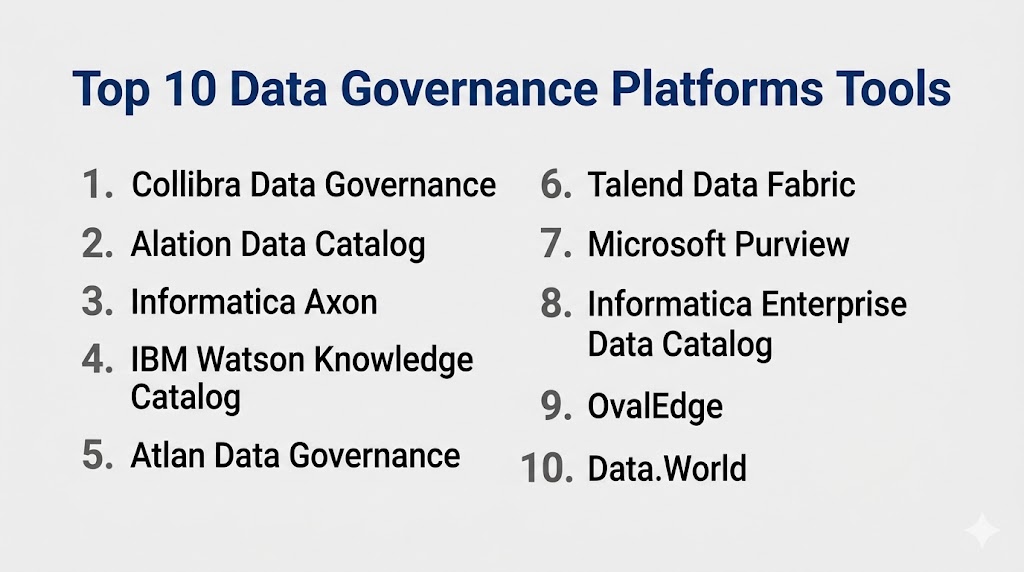
Top 10 Data Governance Platforms Tools
#1 — Collibra Data Governance
Short description: Collibra provides a cloud-based governance solution for cataloging, stewardship, and policy enforcement, designed for enterprise teams.
Key Features
- Enterprise-wide data catalog with automated metadata discovery
- Workflow automation for approvals and stewardship
- Policy and compliance management
- AI-assisted data classification and lineage
- Role-based access controls and audit trails
- Collaboration tools for cross-functional teams
- Integration with BI, analytics, and ETL pipelines
Pros
- Strong compliance and policy enforcement
- Intuitive UI for technical and non-technical users
Cons
- Higher pricing for smaller teams
- Initial setup can be complex
Platforms / Deployment
- Web
- Cloud / Hybrid
Security & Compliance
- SSO/SAML, MFA, encryption, RBAC
- SOC 2, GDPR
Integrations & Ecosystem
Collibra integrates across enterprise data ecosystems to connect ETL tools, BI platforms, and cloud storage.
- Salesforce, Snowflake, Tableau, Power BI
- REST APIs for custom integrations
- Cloud storage connectors (AWS, Azure, GCP)
Support & Community
- Tiered support options and professional services
- Active community and knowledge base
#2 — Alation Data Catalog
Short description: Alation provides a collaborative data catalog with AI-driven search, governance, and stewardship tools for enterprises.
Key Features
- Automated metadata ingestion and classification
- Behavioral analytics to suggest datasets
- Policy management and workflow automation
- Lineage tracking across databases and pipelines
- Collaboration and data stewardship tools
- Cloud-native architecture
- AI-powered data quality recommendations
Pros
- Strong AI-driven data discovery
- Collaborative features for data teams
Cons
- Expensive for smaller organizations
- Customization may require support
Platforms / Deployment
- Web
- Cloud / Hybrid
Security & Compliance
- SSO, MFA, RBAC
- GDPR
Integrations & Ecosystem
- Snowflake, Redshift, BigQuery, Tableau, Power BI
- APIs for custom data workflows
Support & Community
- Professional services and training
- Active user community and forums
#3 — Informatica Axon
Short description: Informatica Axon delivers enterprise-grade governance with focus on data quality, cataloging, and compliance.
Key Features
- Business glossary and enterprise data catalog
- Data quality scoring and monitoring
- Policy enforcement
- Data lineage visualization
- Integration with Informatica suite
- AI-powered recommendations
Pros
- Deep integration with Informatica ecosystem
- Robust compliance capabilities
Cons
- Requires specialized training
- Licensing costs high for small teams
Platforms / Deployment
- Web
- Cloud / Hybrid
Security & Compliance
- SSO, encryption, audit logs
- GDPR, SOC 2
Integrations & Ecosystem
- ETL tools, BI systems, cloud platforms
- APIs for automation
Support & Community
- Extensive documentation and enterprise support
- Large user community
#4 — IBM Watson Knowledge Catalog
Short description: IBM Watson Knowledge Catalog enables AI-driven data cataloging and governance for enterprises.
Key Features
- Automated metadata extraction
- AI recommendations for datasets
- Policy enforcement and governance
- Data lineage visualization
- Collaboration for stewardship
Pros
- Strong AI and ML capabilities
- Enterprise-grade compliance support
Cons
- Steeper learning curve outside IBM environment
- Configuration may require support
Platforms / Deployment
- Web
- Cloud / Hybrid
Security & Compliance
- SSO/SAML, encryption, RBAC
- GDPR, ISO 27001
Integrations & Ecosystem
- IBM Cloud Pak, Watson Studio, ETL tools
- APIs for custom integration
Support & Community
- Professional support and training
- IBM developer and user communities
#5 — Atlan Data Governance
Short description: Atlan offers a collaborative, cloud-first governance platform with AI-assisted metadata management.
Key Features
- Unified data catalog with automated discovery
- Collaboration tools
- AI-assisted tagging and recommendations
- Policy enforcement workflows
- Integration with modern data warehouses
- Custom roles and access controls
Pros
- Modern, user-friendly interface
- Quick onboarding
Cons
- Smaller community compared to legacy platforms
- Advanced features may require setup
Platforms / Deployment
- Web
- Cloud
Security & Compliance
- SSO, encryption, RBAC
- SOC 2
Integrations & Ecosystem
- Snowflake, BigQuery, Redshift, Tableau, Looker
- REST APIs for automation
Support & Community
- Responsive support team
- Growing knowledge base
#6 — Talend Data Fabric
Short description: Talend combines governance, integration, and quality in one platform for enterprise data teams.
Key Features
- Data catalog and lineage visualization
- Data quality monitoring
- Policy management and automation
- AI-driven recommendations
- Integration with cloud and on-prem systems
- Collaboration tools
Pros
- Unified approach to data management
- Strong integration ecosystem
Cons
- Resource-intensive deployment
- Learning curve for new users
Platforms / Deployment
- Web
- Cloud / On-prem
Security & Compliance
- SSO, MFA, encryption
- GDPR, SOC 2
Integrations & Ecosystem
- Cloud data warehouses, BI tools, ETL pipelines
- APIs for custom workflows
Support & Community
- Extensive documentation and support
- Active Talend community
#7 — Microsoft Purview
Short description: Microsoft Purview provides data cataloging, classification, and governance for hybrid environments.
Key Features
- Unified catalog across on-prem and cloud
- Data classification and labeling
- Policy enforcement and role-based access
- Lineage visualization
- AI-powered discovery
Pros
- Seamless integration with Microsoft ecosystem
- Cloud-native with hybrid support
Cons
- Limited customization outside Microsoft platforms
- Advanced features may require extra licensing
Platforms / Deployment
- Web
- Cloud / Hybrid
Security & Compliance
- SSO/SAML, encryption, RBAC
- GDPR, SOC 2
Integrations & Ecosystem
- Azure Data Lake, SQL Server, Power BI
- REST APIs for integration
Support & Community
- Microsoft support tiers
- Large enterprise community
#8 — Informatica Enterprise Data Catalog
Short description: Enterprise Data Catalog provides comprehensive metadata management and governance.
Key Features
- Automated metadata scanning
- AI-powered lineage and recommendations
- Policy enforcement workflows
- Collaboration for data teams
- Integration with Informatica suite and cloud
Pros
- Extensive enterprise capabilities
- Strong metadata management
Cons
- Complex for small teams
- Cost-intensive licensing
Platforms / Deployment
- Web
- Cloud / Hybrid
Security & Compliance
- SSO, MFA, RBAC, encryption
- GDPR, SOC 2
Integrations & Ecosystem
- ETL, BI, cloud storage, analytics tools
- APIs for automation
Support & Community
- Enterprise support and services
- Active user community
#9 — OvalEdge
Short description: OvalEdge is a governance platform focused on cataloging, lineage, and policy enforcement.
Key Features
- Centralized catalog with automated discovery
- Data lineage and impact analysis
- Policy management workflows
- Collaboration tools
- AI-driven recommendations
Pros
- Easy-to-use interface for mid-market teams
- Affordable relative to enterprise competitors
Cons
- Smaller integration ecosystem
- Limited advanced AI features
Platforms / Deployment
- Web
- Cloud / Hybrid
Security & Compliance
- SSO, MFA, encryption
- GDPR
Integrations & Ecosystem
- ETL tools, BI systems, cloud storage
- APIs for custom integrations
Support & Community
- Responsive support
- Growing community
#10 — Data.World
Short description: Data.World offers a cloud-based collaborative data catalog and governance platform.
Key Features
- Centralized catalog and metadata management
- Collaboration workflows
- Policy enforcement for access control
- AI-powered recommendations
- Integration with cloud storage and BI tools
Pros
- Cloud-native and easy to deploy
- Collaboration-focused features
Cons
- Less suited for highly regulated industries
- Limited on-premises support
Platforms / Deployment
- Web
- Cloud
Security & Compliance
- SSO, RBAC, encryption
- SOC 2
Integrations & Ecosystem
- Cloud data warehouses, ETL tools, BI platforms
- REST APIs for automation
Support & Community
- Professional support tiers
- Active online community
Comparison Table (Top 10)
| Tool Name | Best For | Platform(s) Supported | Deployment | Standout Feature | Public Rating |
|---|---|---|---|---|---|
| Collibra Data Governance | Enterprise data teams | Web | Cloud/Hybrid | AI-assisted stewardship | N/A |
| Alation Data Catalog | Collaborative cataloging | Web | Cloud/Hybrid | AI-driven recommendations | N/A |
| Informatica Axon | Enterprise governance | Web | Cloud/Hybrid | Policy enforcement & quality | N/A |
| IBM Watson Knowledge Catalog | AI-powered governance | Web | Cloud/Hybrid | AI metadata discovery | N/A |
| Atlan Data Governance | Cloud-first teams | Web | Cloud | Modern UI & collaboration | N/A |
| Talend Data Fabric | Unified data management | Web | Cloud/On-prem | Integration + governance | N/A |
| Microsoft Purview | Microsoft ecosystem | Web | Cloud/Hybrid | Seamless MS integration | N/A |
| Informatica Enterprise Data Catalog | Metadata-heavy enterprises | Web | Cloud/Hybrid | Enterprise metadata management | N/A |
| OvalEdge | Mid-market teams | Web | Cloud/Hybrid | Ease-of-use & affordability | N/A |
| Data.World | Collaborative teams | Web | Cloud | Cloud-native collaboration | N/A |
Evaluation & Scoring of Data Governance Platforms
| Tool Name | Core (25%) | Ease (15%) | Integrations (15%) | Security (10%) | Performance (10%) | Support (10%) | Value (15%) | Weighted Total (0–10) |
|---|---|---|---|---|---|---|---|---|
| Collibra | 9 | 7 | 8 | 9 | 8 | 8 | 6 | 8.0 |
| Alation | 8 | 8 | 7 | 8 | 8 | 7 | 7 | 7.7 |
| Informatica Axon | 9 | 6 | 8 | 9 | 8 | 8 | 6 | 7.9 |
| IBM Watson KC | 8 | 7 | 7 | 8 | 8 | 7 | 7 | 7.5 |
| Atlan | 7 | 9 | 7 | 7 | 8 | 7 | 8 | 7.6 |
| Talend | 8 | 6 | 8 | 8 | 8 | 7 | 7 | 7.6 |
| Microsoft Purview | 7 | 8 | 7 | 8 | 8 | 7 | 7 | 7.4 |
| Informatica EDC | 9 | 6 | 8 | 9 | 8 | 8 | 6 | 7.9 |
| OvalEdge | 7 | 8 | 6 | 7 | 7 | 7 | 8 | 7.3 |
| Data.World | 7 | 8 | 7 | 7 | 7 | 7 | 8 | 7.4 |
Which Data Governance Platforms Tool Is Right for You?
Solo / Freelancer
Smaller operations may benefit from Data.World or Atlan for cloud-native, collaborative cataloging without heavy enterprise overhead.
SMB
Mid-market teams can leverage OvalEdge or Alation to implement governance quickly with AI-assisted discovery and stewardship.
Mid-Market
Talend and Microsoft Purview provide flexible deployment and integration across hybrid systems, supporting moderate governance requirements.
Enterprise
Large enterprises with complex data landscapes may prefer Collibra, Informatica Axon, or IBM Watson Knowledge Catalog for full-featured governance, compliance, and AI-powered data stewardship.
Budget vs Premium
Organizations prioritizing cost-effectiveness may lean toward OvalEdge or Atlan, while those requiring enterprise-grade functionality and regulatory compliance should consider Collibra or Informatica.
Feature Depth vs Ease of Use
- Deep-featured platforms (Informatica, Collibra) excel at complex governance but require training.
- Modern, easy-to-use platforms (Atlan, Data.World) offer faster onboarding and collaboration.
Integrations & Scalability
Choose platforms that seamlessly integrate with your existing data pipelines, warehouses, and BI tools, ensuring scalability as data grows.
Security & Compliance Needs
Organizations in highly regulated industries should prioritize SOC 2, GDPR, HIPAA compliance, RBAC, SSO, and encryption features.
Frequently Asked Questions (FAQs)
What is a data governance platform?
A data governance platform manages data quality, security, compliance, and accessibility. It ensures organizations can trust their data for analytics, AI, and decision-making.
How do pricing models typically work?
Pricing varies by platform, including per-seat, subscription, or usage-based models. Enterprise solutions may include additional fees for advanced features and integrations.
Can small businesses benefit from these platforms?
Yes, though some tools may be overkill. Cloud-native, collaborative platforms like Atlan or Data.World provide governance without heavy enterprise overhead.
How long does onboarding take?
Depending on platform complexity, onboarding can range from days for cloud-native tools to several weeks for enterprise-grade solutions.
Are these platforms AI-enabled?
Many platforms now include AI for metadata classification, data lineage, and policy recommendations, enhancing automation and accuracy.
How do integrations work?
Platforms provide connectors and APIs to integrate with ETL pipelines, BI tools, cloud storage, and analytics platforms, ensuring data consistency.
What are common mistakes in governance adoption?
Common mistakes include underestimating training needs, ignoring integrations, and not defining clear stewardship responsibilities.
How scalable are these platforms?
Most platforms are designed to scale with data volume and organizational complexity, especially cloud-native and hybrid solutions.
Can these platforms replace manual spreadsheets and governance?
Yes, they automate workflows, enforce policies, and provide visibility that manual spreadsheets cannot match.
How do I switch from one platform to another?
Switching requires exporting metadata, ensuring integration continuity, and updating policies and workflows in the new platform.
Conclusion
Data governance platforms are no longer optional—they are critical for organizations aiming to leverage their data securely and effectively. Selecting the right platform depends on factors like organizational size, data complexity, compliance requirements, and integration needs. Enterprise organizations may benefit from feature-rich solutions like Collibra, Informatica, or IBM Watson Knowledge Catalog, while mid-market and collaborative teams may find Atlan, Data.World, or OvalEdge more practical. Ease of use, deployment flexibility, and AI-powered features.