Introduction
Security Information & Event Management (SIEM) solutions collect, analyze, and correlate security data from multiple sources, providing real-time visibility into security events across an organization. SIEM platforms are essential for detecting, investigating, and responding to threats efficiently while supporting compliance and auditing requirements.
Organizations deploy SIEM tools to monitor network traffic, endpoints, cloud environments, and application logs. Common use cases include threat detection, incident response, log aggregation, anomaly detection, regulatory compliance reporting, and forensic investigations.
When evaluating SIEM solutions, buyers should consider:
- Real-time event correlation
- Threat intelligence integration
- Log collection and normalization
- Alerting and incident response capabilities
- Cloud, on-premises, or hybrid support
- Scalability and performance
- Integration with other security tools
- Compliance reporting
- Ease of deployment and management
- Licensing and total cost of ownership
Best for: Security operations teams in medium to large organizations, IT managers managing hybrid environments, and industries with strict regulatory compliance.
Not ideal for: Small businesses with limited IT staff or minimal compliance requirements, or organizations that primarily need endpoint-only monitoring.
Key Trends in Security Information & Event Management (SIEM)
- AI-driven threat detection and anomaly scoring
- Cloud-native and hybrid SIEM platforms
- Integration with Extended Detection & Response (XDR) ecosystems
- Automated incident response and orchestration
- Centralized threat intelligence feeds
- Behavior-based and UEBA (User & Entity Behavior Analytics)
- API-first design for custom integrations
- Multi-cloud and hybrid environment visibility
- Compliance automation and reporting
- Scalable log storage and retention management
How We Selected These Tools
- Evaluated market adoption and mindshare
- Assessed detection and analytics capabilities
- Reviewed reliability, performance, and scalability
- Verified security posture and compliance support
- Examined integration options with NDR, EDR, and SOAR tools
- Considered ease of deployment and usability
- Reviewed support and community engagement
- Compared pricing models and licensing flexibility
- Factored in suitability for enterprise, mid-market, and cloud environments
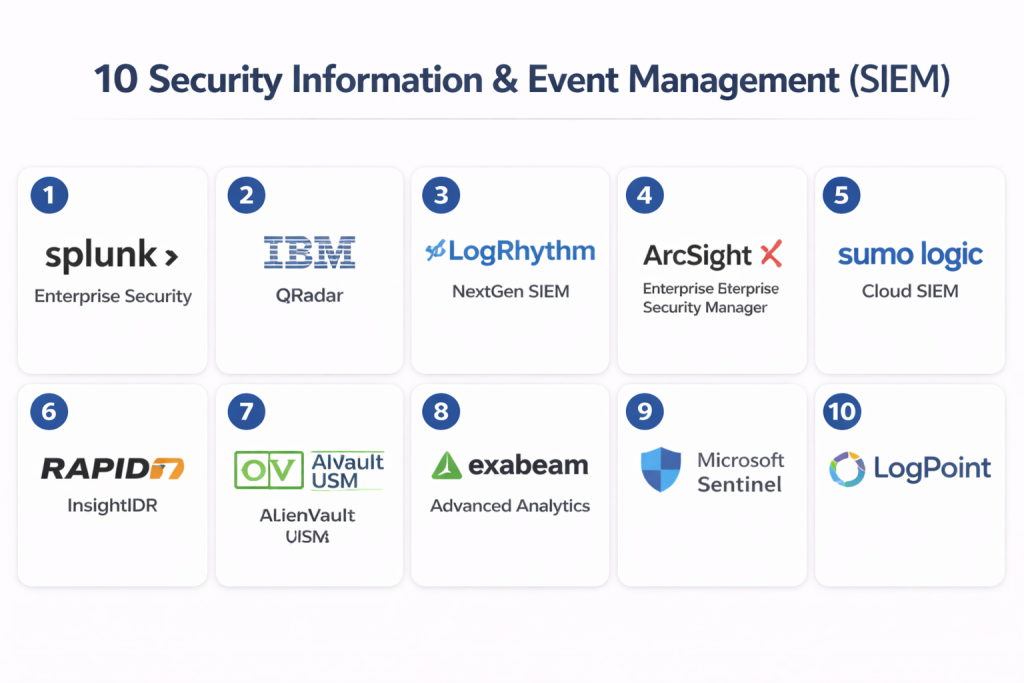
Top 10 Security Information & Event Management (SIEM) Tools
#1 — Splunk Enterprise Security
Short description: Comprehensive SIEM platform providing real-time analytics, threat detection, and incident response for enterprises.
Key Features
- Real-time log aggregation and analysis
- Threat intelligence integration
- Automated alerts and dashboards
- Advanced analytics with machine learning
- Integration with SOAR, NDR, and endpoint tools
- Compliance reporting and auditing
Pros
- Highly scalable and customizable
- Strong analytics and visualization
Cons
- Licensing cost can be high
- Complex setup for large-scale deployments
Platforms / Deployment
- Windows, Linux
- Cloud / On-premises / Hybrid
Security & Compliance
- SOC 2, ISO 27001
- MFA, encryption, audit logs
Integrations & Ecosystem
- SOAR, NDR, EDR
- APIs for custom workflows
- Threat intelligence feeds
Support & Community
- 24/7 enterprise support
- Active community forums and documentation
#2 — IBM QRadar
Short description: Enterprise SIEM with analytics-driven threat detection, automated response, and compliance reporting.
Key Features
- Real-time event correlation
- User and entity behavior analytics (UEBA)
- Threat intelligence integration
- Automated incident response
- Cloud and on-premises monitoring
Pros
- Strong analytics and correlation engine
- Enterprise-grade scalability
Cons
- Complex configuration
- Premium support may be required for advanced features
Platforms / Deployment
- Windows, Linux
- Cloud / On-premises / Hybrid
Security & Compliance
- SOC 2, ISO 27001
- MFA, audit logs
Integrations & Ecosystem
- NDR, EDR, SOAR
- APIs for integration
- ITSM systems
Support & Community
- Enterprise support tiers
- Documentation and community resources
#3 — LogRhythm NextGen SIEM
Short description: SIEM platform combining threat detection, UEBA, and automated response for enterprise security operations.
Key Features
- Centralized log management
- UEBA for insider threat detection
- Threat intelligence feeds
- Automated response workflows
- Advanced analytics and reporting
Pros
- User-friendly interface
- Strong threat detection capabilities
Cons
- Scaling for large environments can be complex
- Some integrations require additional modules
Platforms / Deployment
- Windows, Linux
- Cloud / On-premises / Hybrid
Security & Compliance
- SOC 2, ISO 27001
- MFA, encryption, audit trails
Integrations & Ecosystem
- SOAR, NDR, endpoint security
- APIs for workflow automation
- Compliance reporting tools
Support & Community
- 24/7 support options
- Knowledge base and forums
#4 — ArcSight Enterprise Security Manager (ESM)
Short description: SIEM solution offering advanced correlation, threat intelligence, and enterprise-scale monitoring.
Key Features
- Event correlation engine
- Threat intelligence integration
- Compliance reporting
- Centralized log aggregation
- Integration with SOAR and NDR tools
Pros
- Enterprise-grade scalability
- Strong compliance support
Cons
- Complex deployment
- Learning curve for advanced analytics
Platforms / Deployment
- Windows, Linux
- Cloud / On-premises / Hybrid
Security & Compliance
- SOC 2, ISO 27001
- Audit logs, encryption
Integrations & Ecosystem
- SOAR, NDR, EDR
- APIs for automation
Support & Community
- Enterprise support
- Documentation and user forums
#5 — Sumo Logic Cloud SIEM
Short description: Cloud-native SIEM providing real-time threat detection, log management, and automated response.
Key Features
- Cloud-based log aggregation
- Real-time security analytics
- Automated alerts and incident response
- Threat intelligence integration
- Compliance dashboards
Pros
- Fully cloud-native
- Rapid deployment
Cons
- Advanced analytics may require training
- Limited on-premises support
Platforms / Deployment
- Cloud
- SaaS
Security & Compliance
- SOC 2, ISO 27001
- MFA, audit logs
Integrations & Ecosystem
- SOAR, NDR, EDR
- APIs for custom workflows
- ITSM systems
Support & Community
- Enterprise support available
- Knowledge base and forums
#6 — Rapid7 InsightIDR
Short description: SIEM platform focused on threat detection, user behavior analytics, and automated response for mid-market and enterprises.
Key Features
- User and entity behavior analytics (UEBA)
- Log aggregation and correlation
- Threat intelligence feeds
- Automated alerting and response
- Cloud and on-premises monitoring
Pros
- Easy-to-use interface
- Strong automation features
Cons
- Limited scalability for very large enterprises
- Advanced features may require add-ons
Platforms / Deployment
- Windows, Linux
- Cloud / Hybrid
Security & Compliance
- SOC 2, ISO 27001
- MFA, audit logs
Integrations & Ecosystem
- SOAR, NDR, EDR
- APIs for workflow automation
Support & Community
- Enterprise support tiers
- Documentation and community
#7 — AlienVault USM
Short description: Unified SIEM platform with threat detection, compliance management, and integrated NDR/EDR capabilities.
Key Features
- Unified security management
- Threat detection and correlation
- Compliance reporting dashboards
- Integrated NDR and EDR
- Automated response workflows
Pros
- Unified visibility for IT and security teams
- Strong compliance features
Cons
- Limited advanced analytics
- Scaling for large enterprises can be challenging
Platforms / Deployment
- Cloud / On-premises / Hybrid
Security & Compliance
- SOC 2, ISO 27001
- MFA, audit logs
Integrations & Ecosystem
- SOAR, endpoint security, NDR
- APIs for automation
Support & Community
- Enterprise support
- Active knowledge base
#8 — Exabeam Advanced Analytics
Short description: SIEM with UEBA, automated threat detection, and response orchestration for enterprise networks.
Key Features
- UEBA for insider threat detection
- Threat detection and correlation
- Automated incident response
- Cloud and on-premises support
- Integration with NDR and EDR tools
Pros
- Strong AI-driven analytics
- Rapid detection of anomalies
Cons
- Learning curve for advanced analytics
- Premium pricing
Platforms / Deployment
- Windows, Linux
- Cloud / Hybrid
Security & Compliance
- SOC 2, ISO 27001
- MFA, audit trails
Integrations & Ecosystem
- NDR, EDR, SOAR
- APIs for workflow automation
Support & Community
- Tiered enterprise support
- Knowledge base and forums
#9 — Microsoft Sentinel
Short description: Cloud-native SIEM platform integrated with Microsoft ecosystem for log management, threat detection, and incident response.
Key Features
- Cloud log aggregation
- AI-driven threat detection
- Integration with Microsoft 365 and Azure
- Automated response workflows
- Compliance dashboards
Pros
- Cloud-native and scalable
- Tight integration with Microsoft ecosystem
Cons
- Advanced features require expertise
- Limited on-premises support
Platforms / Deployment
- Cloud
- SaaS
Security & Compliance
- SOC 2, ISO 27001
- MFA, audit logs
Integrations & Ecosystem
- EDR, NDR, SOAR
- APIs for automation
- ITSM integrations
Support & Community
- Enterprise support tiers
- Documentation and forums
#10 — LogPoint
Short description: Enterprise SIEM platform with analytics, threat detection, and compliance reporting for mid-market and large organizations.
Key Features
- Real-time event correlation
- Threat intelligence integration
- Compliance and auditing dashboards
- UEBA analytics
- Automated alerts and incident workflows
Pros
- Flexible deployment options
- User-friendly dashboards
Cons
- Scaling for very large environments may be complex
- Advanced analytics require configuration
Platforms / Deployment
- Windows, Linux
- Cloud / On-premises / Hybrid
Security & Compliance
- SOC 2, ISO 27001
- MFA, audit logs
Integrations & Ecosystem
- SOAR, NDR, EDR
- APIs for automation
Support & Community
- Tiered support
- Documentation and community forums
Comparison Table (Top 10)
| Tool Name | Best For | Platform(s) Supported | Deployment | Standout Feature | Public Rating |
|---|---|---|---|---|---|
| Splunk Enterprise Security | Large enterprises | Windows, Linux | Cloud / On-premises / Hybrid | Real-time analytics | N/A |
| IBM QRadar | Enterprise networks | Windows, Linux | Cloud / On-premises / Hybrid | Threat correlation engine | N/A |
| LogRhythm NextGen SIEM | Mid-market to enterprises | Windows, Linux | Cloud / On-premises / Hybrid | UEBA & automated response | N/A |
| ArcSight ESM | Enterprises | Windows, Linux | Cloud / On-premises / Hybrid | Event correlation | N/A |
| Sumo Logic Cloud SIEM | Cloud-focused organizations | Cloud | Cloud | Rapid deployment & analytics | N/A |
| Rapid7 InsightIDR | Mid-market | Windows, Linux | Cloud / Hybrid | UEBA & automation | N/A |
| AlienVault USM | Unified security monitoring | Cloud / On-premises / Hybrid | Cloud / On-premises / Hybrid | Unified NDR/EDR integration | N/A |
| Exabeam Advanced Analytics | Enterprise analytics | Windows, Linux | Cloud / Hybrid | AI-driven UEBA | N/A |
| Microsoft Sentinel | Microsoft ecosystem | Cloud | Cloud | Cloud-native threat detection | N/A |
| LogPoint | Mid-market and large enterprises | Windows, Linux | Cloud / On-premises / Hybrid | Compliance dashboards | N/A |
Evaluation & Scoring of SIEM
| Tool Name | Core (25%) | Ease (15%) | Integrations (15%) | Security (10%) | Performance (10%) | Support (10%) | Value (15%) | Weighted Total (0–10) |
|---|---|---|---|---|---|---|---|---|
| Splunk Enterprise Security | 9 | 7 | 8 | 9 | 9 | 8 | 7 | 8.3 |
| IBM QRadar | 9 | 7 | 8 | 9 | 8 | 7 | 7 | 8.1 |
| LogRhythm NextGen SIEM | 8 | 8 | 7 | 8 | 8 | 7 | 7 | 7.8 |
| ArcSight ESM | 8 | 7 | 7 | 8 | 8 | 7 | 7 | 7.7 |
| Sumo Logic Cloud SIEM | 8 | 8 | 7 | 8 | 8 | 7 | 7 | 7.8 |
| Rapid7 InsightIDR | 8 | 8 | 7 | 8 | 8 | 7 | 7 | 7.8 |
| AlienVault USM | 7 | 8 | 7 | 8 | 7 | 7 | 7 | 7.5 |
| Exabeam Advanced Analytics | 8 | 7 | 7 | 8 | 8 | 7 | 7 | 7.7 |
| Microsoft Sentinel | 8 | 8 | 7 | 8 | 8 | 7 | 7 | 7.8 |
| LogPoint | 7 | 7 | 7 | 8 | 7 | 7 | 7 | 7.4 |
Which SIEM Tool Is Right for You?
Solo / Freelancer
- Cloud-native SIEM with minimal setup, e.g., Sumo Logic Cloud SIEM
SMB
- Rapid7 InsightIDR
- LogPoint
Mid-Market
- LogRhythm NextGen SIEM
- Exabeam Advanced Analytics
Enterprise
- Splunk Enterprise Security
- IBM QRadar
- ArcSight ESM
Budget vs Premium
- Budget: LogPoint, Rapid7 InsightIDR
- Premium: Splunk, IBM QRadar, ArcSight
Feature Depth vs Ease of Use
- Depth: Splunk, ArcSight, QRadar
- Ease: Sumo Logic, Rapid7, LogPoint
Integrations & Scalability
- Enterprises: Splunk, IBM QRadar
- SMBs: Sumo Logic, LogPoint
Security & Compliance Needs
- High compliance: Splunk, ArcSight, IBM QRadar
- Smaller environments: LogPoint, Rapid7
Frequently Asked Questions (FAQs)
What is SIEM and how does it work?
SIEM collects and correlates security events from multiple sources to detect, analyze, and respond to threats in real time.
Are SIEM tools suitable for SMBs?
Yes, lightweight or cloud-native SIEM platforms like Rapid7 InsightIDR and LogPoint are suitable for SMBs.
Can SIEM integrate with EDR and NDR tools?
Yes, most SIEM platforms integrate with endpoint and network detection solutions to provide comprehensive visibility.
How long does SIEM deployment take?
Cloud-native SIEM can be operational within hours, while enterprise-scale on-premises deployment may take weeks.
Can SIEM help with compliance?
Yes, SIEM provides reporting and auditing features to meet regulatory requirements like SOC 2, ISO, and GDPR.
Does SIEM require trained security analysts?
Yes, advanced features such as threat correlation and anomaly detection typically require trained analysts.
Can SIEM detect insider threats?
Yes, SIEM combined with UEBA can identify unusual user behavior indicating potential insider threats.
How is SIEM priced?
Pricing is usually based on data ingested, events per second (EPS), or number of monitored systems, with enterprise modules affecting cost.
Can SIEM replace endpoint security?
No, SIEM complements endpoint security by analyzing logs and network events for comprehensive threat detection.
What are common mistakes in SIEM deployment?
- Overloading SIEM with unnecessary logs
- Poorly tuned alerts leading to alert fatigue
- Failing to integrate with other security tools
Conclusion
Choosing the right SIEM solution depends on your organization’s size, security objectives, and compliance needs. Enterprises often benefit from Splunk, IBM QRadar, or ArcSight for full-featured visibility, while SMBs can leverage Rapid7 InsightIDR or LogPoint for cost-effective monitoring. Consider deployment, integrations, and budget before shortlisting tools. Piloting 2–3 solutions helps validate detection, alerting, and reporting capabilities for your environment.