Introduction
Business Intelligence (BI) for Finance Tools are software platforms designed to help finance teams analyze data, create dashboards, and generate actionable insights from financial information. These tools combine data visualization, reporting, forecasting, and analytics to support better financial decision-making.
In modern finance operations, data is growing rapidly across ERP systems, accounting platforms, banking systems, and SaaS tools. BI for finance helps unify this data into a single source of truth, enabling CFOs and finance teams to make faster, data-driven decisions.
Real-world use cases include:
- Financial reporting and performance tracking
- Revenue and expense analysis
- Budgeting and forecasting
- Cash flow monitoring
- Profitability and margin analysis
- Executive dashboards for CFOs
When evaluating BI tools for finance, buyers should consider:
- Data integration with ERP and accounting systems
- Real-time dashboards and reporting capabilities
- Forecasting and predictive analytics
- Ease of use for finance and non-technical users
- Data accuracy and governance features
- Customization and visualization flexibility
- Automation of reporting workflows
- Scalability for enterprise finance teams
- Security, compliance, and audit readiness
- Collaboration and sharing capabilities
Best for: CFOs, finance analysts, FP&A teams, accountants, and enterprise finance departments.
Not ideal for: Very small businesses that only need basic bookkeeping or manual Excel reporting without advanced analytics.
Key Trends in Business Intelligence for Finance Tools
- AI-powered financial forecasting and anomaly detection
- Real-time cash flow and revenue monitoring dashboards
- Integration with ERP, CRM, and accounting platforms
- Self-service analytics for finance teams
- Automated financial reporting and close processes
- Cloud-native BI platforms replacing legacy systems
- Predictive analytics for budgeting and planning
- Natural language querying for financial data
- Stronger data governance and compliance controls
- Embedded analytics within finance applications
How We Selected These Tools (Methodology)
- Evaluated market adoption in finance and FP&A teams
- Assessed financial reporting and analytics capabilities
- Reviewed data integration with ERP and accounting systems
- Analyzed dashboarding and visualization features
- Considered forecasting and predictive analytics strength
- Evaluated scalability for enterprise finance environments
- Factored in ease of use for finance professionals
- Reviewed automation and reporting workflows
- Assessed security, compliance, and audit readiness
- Balanced advanced analytics with usability
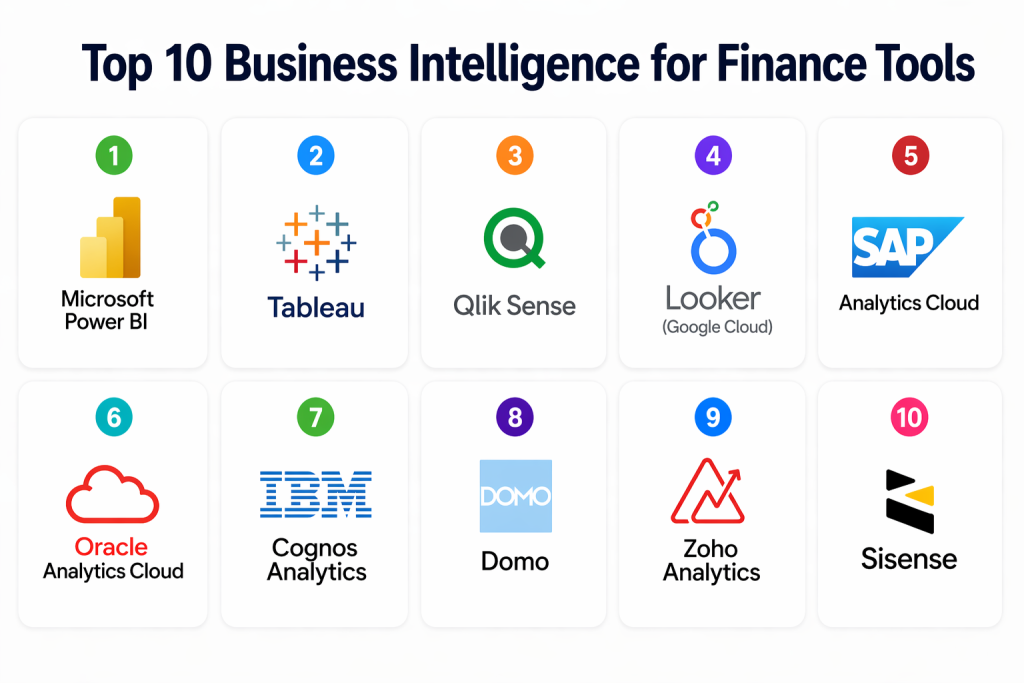
Top 10 Business Intelligence for Finance Tools
#1 — Microsoft Power BI
Short description: Microsoft Power BI is a leading BI platform widely used in finance for dashboards, reporting, and advanced analytics. It enables finance teams to connect multiple data sources and build interactive financial dashboards.
Key Features
- Financial dashboards and KPI tracking
- Data modeling and transformation
- Real-time reporting
- AI-powered insights
- Integration with Excel and ERP systems
- Custom visualization tools
Pros
- Strong ecosystem integration
- Cost-effective and scalable
Cons
- Requires learning for advanced modeling
- Performance depends on data setup
Platforms / Deployment
- Web / Windows / Mobile
- Cloud / Hybrid
Security & Compliance
- RBAC, encryption, audit logs
- Not publicly stated
Integrations & Ecosystem
- Excel
- Microsoft Dynamics
- ERP systems
- APIs for data sources
Support & Community
Large documentation base and global community support
#2 — Tableau
Short description: Tableau is a powerful data visualization and BI tool used in finance for deep analytics and interactive dashboards.
Key Features
- Interactive financial dashboards
- Advanced data visualization
- Real-time analytics
- Data blending and modeling
- Forecasting tools
- Collaboration features
Pros
- Best-in-class visual analytics
- Strong data exploration capabilities
Cons
- Higher cost
- Requires training for finance users
Platforms / Deployment
- Web / Desktop
- Cloud / On-prem
Security & Compliance
- RBAC, encryption, audit logs
- Not publicly stated
Integrations & Ecosystem
- ERP systems
- Cloud databases
- Excel and CSV
- APIs
Support & Community
Strong enterprise support and large user community
#3 — Qlik Sense
Short description: Qlik Sense provides associative data analytics for finance teams, enabling fast insights across multiple datasets.
Key Features
- Associative data engine
- Financial dashboards
- Predictive analytics
- Data integration tools
- Self-service BI
- Automated reporting
Pros
- Fast data exploration
- Strong analytics engine
Cons
- Complex for beginners
- Requires setup effort
Platforms / Deployment
- Web / Mobile
- Cloud / On-prem
Security & Compliance
- RBAC, encryption
- Not publicly stated
Integrations & Ecosystem
- ERP systems
- Databases
- APIs
Support & Community
Enterprise documentation and support
#4 — Looker (Google Cloud)
Short description: Looker is a cloud BI platform designed for data-driven financial analysis and enterprise reporting.
Key Features
- Data modeling layer (LookML)
- Financial dashboards
- Real-time reporting
- Embedded analytics
- Cloud-native architecture
- Data governance tools
Pros
- Strong cloud integration
- Highly scalable
Cons
- Requires technical expertise
- Not beginner-friendly
Platforms / Deployment
- Web
- Cloud
Security & Compliance
- RBAC, encryption, audit logs
- Not publicly stated
Integrations & Ecosystem
- Google Cloud
- BigQuery
- ERP systems
- APIs
Support & Community
Enterprise support and documentation
#5 — Oracle Analytics Cloud
Short description: Oracle Analytics Cloud delivers enterprise-grade BI for financial planning, reporting, and forecasting.
Key Features
- Financial reporting dashboards
- Predictive analytics
- Data modeling
- ERP integration
- AI-driven insights
- Self-service analytics
Pros
- Strong enterprise finance focus
- Deep ERP integration
Cons
- Complex implementation
- Higher cost
Platforms / Deployment
- Web
- Cloud
Security & Compliance
- RBAC, encryption, audit logs
- Not publicly stated
Integrations & Ecosystem
- Oracle ERP
- Databases
- APIs
Support & Community
Enterprise-level support
#6 — SAP Analytics Cloud
Short description: SAP Analytics Cloud combines BI, planning, and predictive analytics for enterprise finance teams.
Key Features
- Financial planning and analysis
- Dashboards and reporting
- Predictive forecasting
- ERP integration
- Collaboration tools
- Data visualization
Pros
- Strong SAP ecosystem integration
- Excellent for enterprise finance
Cons
- Expensive
- Requires SAP environment familiarity
Platforms / Deployment
- Web
- Cloud
Security & Compliance
- RBAC, encryption, audit logs
- Not publicly stated
Integrations & Ecosystem
- SAP ERP
- Finance systems
- APIs
Support & Community
Enterprise support and training
#7 — IBM Cognos Analytics
Short description: IBM Cognos Analytics is an AI-powered BI platform used for financial reporting and enterprise analytics.
Key Features
- AI-assisted insights
- Financial dashboards
- Reporting automation
- Data modeling
- Predictive analytics
- Collaboration tools
Pros
- Strong enterprise analytics
- AI-driven insights
Cons
- Complex UI
- Requires training
Platforms / Deployment
- Web
- Cloud / On-prem
Security & Compliance
- RBAC, encryption, audit logs
- Not publicly stated
Integrations & Ecosystem
- ERP systems
- Databases
- APIs
Support & Community
Enterprise support
#8 — Domo
Short description: Domo is a cloud BI platform that provides real-time financial dashboards and data integration for finance teams.
Key Features
- Real-time financial dashboards
- Data integration pipelines
- KPI tracking
- Forecasting tools
- Collaboration features
- Mobile analytics
Pros
- Strong real-time capabilities
- Easy dashboard sharing
Cons
- Pricing can be high
- Limited deep modeling tools
Platforms / Deployment
- Web / Mobile
- Cloud
Security & Compliance
- RBAC, encryption
- Not publicly stated
Integrations & Ecosystem
- ERP systems
- Cloud databases
- APIs
Support & Community
Strong enterprise support
#9 — Zoho Analytics
Short description: Zoho Analytics is a self-service BI tool offering financial dashboards, reporting, and forecasting capabilities for SMBs and finance teams.
Key Features
- Financial dashboards
- Data visualization
- Forecasting tools
- Data blending
- KPI tracking
- Reporting automation
Pros
- Affordable
- Easy to use
Cons
- Limited enterprise scalability
- Less advanced analytics
Platforms / Deployment
- Web
- Cloud
Security & Compliance
- RBAC, encryption
- Not publicly stated
Integrations & Ecosystem
- Zoho apps
- Accounting tools
- APIs
Support & Community
Good documentation and support
#10 — Sisense
Short description: Sisense provides embedded analytics and BI capabilities for finance teams needing customizable dashboards and insights.
Key Features
- Financial dashboards
- Embedded analytics
- Data modeling tools
- Predictive analytics
- KPI tracking
- Automation features
Pros
- Highly customizable
- Strong embedded analytics
Cons
- Requires technical setup
- Learning curve for finance users
Platforms / Deployment
- Web
- Cloud / On-prem
Security & Compliance
- RBAC, encryption
- Not publicly stated
Integrations & Ecosystem
- ERP systems
- Databases
- APIs
Support & Community
Enterprise support
Comparison Table (Top 10)
| Tool Name | Best For | Platform(s) Supported | Deployment | Standout Feature | Public Rating |
|---|---|---|---|---|---|
| Power BI | SMB & enterprise | Web / Windows | Cloud / Hybrid | Microsoft integration | N/A |
| Tableau | Data visualization | Web / Desktop | Cloud / On-prem | Visual analytics | N/A |
| Qlik Sense | Data exploration | Web | Cloud / On-prem | Associative engine | N/A |
| Looker | Cloud enterprises | Web | Cloud | Data modeling layer | N/A |
| Oracle Analytics | ERP users | Web | Cloud | ERP integration | N/A |
| SAP Analytics Cloud | SAP users | Web | Cloud | Financial planning | N/A |
| IBM Cognos | Enterprises | Web | Cloud / On-prem | AI insights | N/A |
| Domo | Real-time BI | Web | Cloud | Live dashboards | N/A |
| Zoho Analytics | SMBs | Web | Cloud | Affordable BI | N/A |
| Sisense | Custom BI | Web | Cloud / On-prem | Embedded analytics | N/A |
Evaluation & Scoring of BI for Finance Tools
| Tool Name | Core (25%) | Ease (15%) | Integrations (15%) | Security (10%) | Performance (10%) | Support (10%) | Value (15%) | Weighted Total |
|---|---|---|---|---|---|---|---|---|
| Power BI | 10 | 9 | 10 | 9 | 9 | 9 | 10 | 9.55 |
| Tableau | 10 | 8 | 9 | 9 | 9 | 9 | 8 | 9.05 |
| Qlik Sense | 9 | 7 | 9 | 9 | 9 | 8 | 8 | 8.45 |
| Looker | 9 | 7 | 9 | 9 | 9 | 8 | 7 | 8.25 |
| Oracle Analytics | 9 | 6 | 9 | 9 | 9 | 8 | 7 | 8.05 |
| SAP Analytics Cloud | 9 | 6 | 9 | 9 | 9 | 8 | 6 | 7.90 |
| IBM Cognos | 9 | 6 | 8 | 9 | 9 | 8 | 7 | 7.95 |
| Domo | 8 | 8 | 8 | 8 | 8 | 8 | 7 | 7.95 |
| Zoho Analytics | 8 | 9 | 7 | 7 | 7 | 7 | 9 | 7.70 |
| Sisense | 8 | 7 | 8 | 8 | 8 | 8 | 7 | 7.85 |
Interpretation: These scores compare BI tools based on financial analytics capability, usability, integration strength, security, performance, support, and value. Higher scores indicate stronger enterprise finance readiness.
Which BI for Finance Tool Is Right for You?
Solo / Freelancer
Zoho Analytics or Power BI provide affordable and easy-to-use financial dashboards.
SMB
Power BI, Zoho Analytics, and Domo offer balanced analytics and affordability.
Mid-Market
Tableau, Qlik Sense, and Sisense provide deeper analytics and customization.
Enterprise
SAP Analytics Cloud, Oracle Analytics, and IBM Cognos deliver full-scale financial intelligence.
Budget vs Premium
SMBs should prioritize affordability; enterprises need scalability and advanced analytics.
Feature Depth vs Ease of Use
Advanced BI tools offer deeper insights but require training; simpler tools prioritize usability.
Integrations & Scalability
Choose tools that integrate with ERP, accounting, and cloud data systems.
Security & Compliance Needs
Finance tools must support encryption, RBAC, and audit-ready reporting.
Frequently Asked Questions (FAQs)
1. What is BI for finance used for?
It is used for financial reporting, forecasting, and performance analysis.
2. Do these tools support forecasting?
Yes, most BI tools include predictive financial modeling features.
3. Can BI tools replace spreadsheets?
Yes, they automate reporting and reduce manual spreadsheet work.
4. Are these tools suitable for CFOs?
Yes, they are designed for finance leaders and analysts.
5. Do they integrate with ERP systems?
Yes, integration with ERP and accounting systems is standard.
6. Are these tools secure?
Yes, they include encryption, RBAC, and audit logs.
7. Can SMBs use BI tools?
Yes, many tools like Power BI and Zoho Analytics are SMB-friendly.
8. Do these tools support real-time data?
Yes, many provide real-time dashboards and updates.
9. Are BI tools expensive?
Pricing varies from affordable SMB tools to enterprise-grade platforms.
10. What is the main benefit of BI for finance?
It enables faster, data-driven financial decision-making.
Conclusion
Business Intelligence for Finance tools are essential for modern financial decision-making, enabling organizations to move from static reporting to real-time insights. SMBs benefit from Power BI and Zoho Analytics for affordability and usability, while enterprises rely on SAP, Oracle, and IBM Cognos for advanced analytics and scalability. The right choice depends on data complexity, integration needs, and organizational size. Finance teams should shortlist tools, test dashboards, and evaluate forecasting capabilities before final adoption.