Introduction
Bug Tracking Tools are software systems that help development and QA teams identify, log, manage, prioritize, and resolve software defects (bugs) throughout the software development lifecycle. These tools act as a centralized system where issues are reported, tracked, assigned, and resolved in a structured workflow.
In modern software development, bug tracking is not just about fixing errors—it is about improving product quality, ensuring faster releases, and maintaining user trust. With increasing complexity in applications, distributed teams, and rapid deployment cycles, bug tracking tools have become essential for DevOps, Agile, and CI/CD workflows.
Real-world use cases include:
- Logging and tracking software bugs during development
- Managing QA testing issues before production release
- Prioritizing critical production defects
- Assigning bugs to developers and tracking resolution status
- Integrating with CI/CD pipelines for automated issue reporting
- Improving collaboration between QA, Dev, and Product teams
When evaluating bug tracking tools, teams should consider:
- Issue lifecycle management capabilities
- Workflow customization and automation
- Integration with Git, CI/CD, and DevOps tools
- Real-time collaboration features
- Reporting and analytics dashboards
- Scalability for enterprise projects
- Performance and speed of issue tracking
- Role-based access control and permissions
- Notification and alert systems
- Ease of use for both technical and non-technical users
Best for: Software developers, QA engineers, DevOps teams, product managers, and engineering organizations.
Not ideal for: Very small projects or non-technical workflows that do not involve structured software development.
Key Trends in Bug Tracking Tools
- AI-assisted bug detection and auto-classification
- Deep integration with CI/CD pipelines
- Shift from standalone tools to DevOps platforms
- Real-time issue tracking and notifications
- Git-based issue tracking systems
- Enhanced automation for bug lifecycle management
- Integration with observability and monitoring tools
- Cloud-native scalable issue tracking systems
- Improved UX for non-technical stakeholders
- Stronger focus on security and access control
How We Selected These Tools (Methodology)
- Market adoption in software development teams
- Depth of issue tracking and workflow customization
- Integration with DevOps and version control systems
- Performance in large-scale engineering environments
- Collaboration and team productivity features
- Reporting and analytics capabilities
- Ease of use for developers and QA teams
- Scalability for enterprise-level projects
- Automation and AI-driven features
- Security, permissions, and compliance readiness
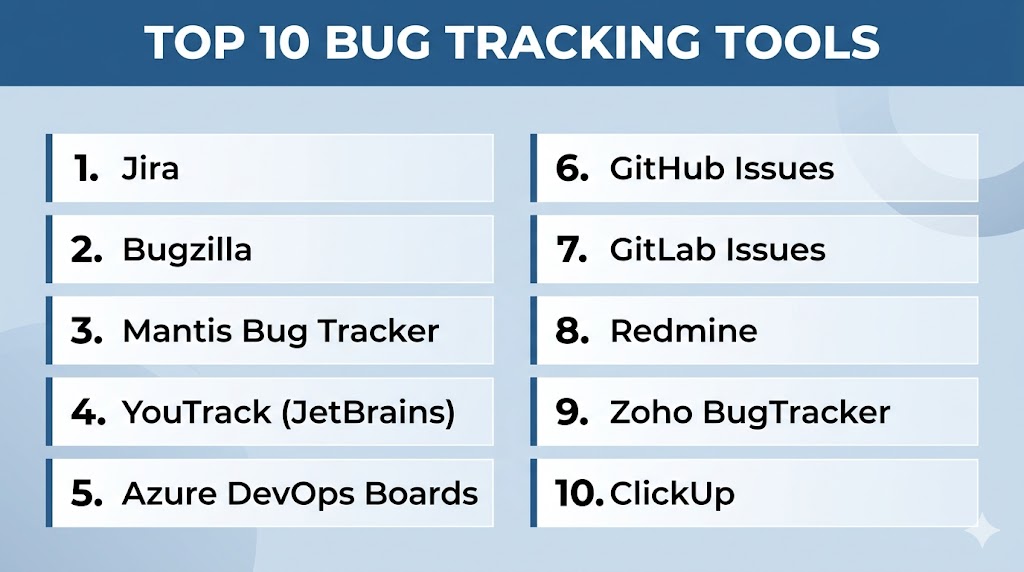
Top 10 Bug Tracking Tools
#1 — Jira Software
Short description: Jira is one of the most widely used bug tracking and project management tools, designed for Agile development teams to manage issues, sprints, and workflows efficiently.
Key Features
- Advanced issue tracking system
- Agile boards (Scrum and Kanban)
- Custom workflows and automation
- Sprint planning and backlog management
- Real-time reporting dashboards
- Integration with DevOps tools
Pros
- Highly customizable workflows
- Strong Agile and DevOps support
Cons
- Complex setup for beginners
- Can feel heavy for small teams
Platforms / Deployment
- Web
- Cloud / Self-hosted
Security & Compliance
- RBAC, encryption, audit logs
- Enterprise-grade compliance support
Integrations & Ecosystem
- Bitbucket, GitHub, GitLab
- CI/CD tools
- Slack, Confluence
- APIs and marketplace apps
Support & Community
- Large global community
- Strong enterprise support
#2 — Bugzilla
Short description: Bugzilla is a powerful open-source bug tracking system widely used for software defect tracking and quality assurance workflows.
Key Features
- Advanced bug lifecycle management
- Customizable workflows
- Email notifications
- Search and filtering system
- Multi-project support
- Reporting tools
Pros
- Free and open-source
- Highly stable and reliable
Cons
- Outdated UI
- Requires technical setup
Platforms / Deployment
- Web
- Self-hosted
Security & Compliance
- Role-based permissions
- Not publicly stated compliance certifications
Integrations & Ecosystem
- Version control systems
- Email systems
- APIs for extensions
Support & Community
- Strong open-source community
- Documentation available
#3 — Mantis Bug Tracker
Short description: Mantis is a lightweight and easy-to-use bug tracking tool designed for teams that need simple but effective issue management.
Key Features
- Simple bug tracking system
- Email notifications
- Custom fields and workflows
- Role-based access control
- Time tracking support
- Reporting dashboard
Pros
- Easy to deploy and use
- Lightweight system
Cons
- Limited advanced features
- Basic UI design
Platforms / Deployment
- Web
- Self-hosted / Cloud
Security & Compliance
- Access control system
- Not publicly stated
Integrations & Ecosystem
- Git integration
- Email systems
- APIs
Support & Community
- Active community support
- Documentation available
#4 — YouTrack (JetBrains)
Short description: YouTrack is a flexible issue tracking and project management tool built by JetBrains, optimized for Agile teams and developers.
Key Features
- Smart search-based issue tracking
- Agile boards
- Time tracking
- Automation rules
- Custom workflows
- Reporting dashboards
Pros
- Very fast and flexible
- Strong developer focus
Cons
- Learning curve for new users
- Less intuitive for non-technical teams
Platforms / Deployment
- Web
- Cloud / Self-hosted
Security & Compliance
- RBAC, encryption
- Not publicly stated certifications
Integrations & Ecosystem
- JetBrains IDEs
- GitHub, GitLab
- CI/CD tools
- APIs
Support & Community
- Strong developer community
- Good documentation
#5 — Azure DevOps Boards
Short description: Azure DevOps Boards provides integrated bug tracking and project management within the Microsoft DevOps ecosystem.
Key Features
- Work item tracking
- Agile planning boards
- Sprint management
- CI/CD integration
- Custom dashboards
- Backlog management
Pros
- Strong Microsoft ecosystem integration
- Excellent for enterprise DevOps
Cons
- Complex for beginners
- Best within Microsoft stack
Platforms / Deployment
- Web
- Cloud
Security & Compliance
- Enterprise-grade security
- RBAC and encryption
Integrations & Ecosystem
- GitHub
- Azure Pipelines
- Microsoft tools
- APIs
Support & Community
- Strong enterprise support
- Microsoft documentation
#6 — GitHub Issues
Short description: GitHub Issues is a lightweight bug tracking system integrated directly into GitHub repositories for developers.
Key Features
- Issue tracking system
- Git integration
- Labels and milestones
- Project boards
- Collaboration tools
- Automation via GitHub Actions
Pros
- Seamless Git integration
- Easy for developers
Cons
- Limited advanced workflows
- Not ideal for large enterprises
Platforms / Deployment
- Web
- Cloud
Security & Compliance
- RBAC and encryption
- GitHub enterprise security
Integrations & Ecosystem
- GitHub Actions
- CI/CD tools
- APIs
Support & Community
- Strong developer ecosystem
#7 — GitLab Issues
Short description: GitLab Issues is a built-in bug tracking system within GitLab’s DevOps platform, offering full lifecycle management.
Key Features
- Issue tracking tied to Git repositories
- Agile boards
- Milestones and epics
- CI/CD integration
- Automation workflows
- Reporting tools
Pros
- Fully integrated DevOps platform
- Strong automation
Cons
- Complex interface
- Best within GitLab ecosystem
Platforms / Deployment
- Web
- Cloud / Self-hosted
Security & Compliance
- RBAC, encryption
- Enterprise compliance support
Integrations & Ecosystem
- GitLab CI/CD
- Kubernetes
- APIs
Support & Community
- Strong open-source community
#8 — Redmine
Short description: Redmine is an open-source bug tracking and project management tool widely used for customizable issue tracking workflows.
Key Features
- Multi-project tracking
- Issue management system
- Gantt charts
- Time tracking
- Role-based access
- Plugin support
Pros
- Highly customizable
- Free and open-source
Cons
- Outdated UI
- Requires manual setup
Platforms / Deployment
- Web
- Self-hosted
Security & Compliance
- Access control system
- Not publicly stated
Integrations & Ecosystem
- Git integration
- Plugins ecosystem
- APIs
Support & Community
- Active open-source community
#9 — Zoho BugTracker
Short description: Zoho BugTracker is a simple and efficient issue tracking tool designed for small to mid-sized teams.
Key Features
- Bug tracking system
- Workflow automation
- SLA tracking
- Reporting dashboards
- Email integration
- Time tracking
Pros
- Easy to use
- Affordable for SMBs
Cons
- Limited enterprise features
- Basic customization
Platforms / Deployment
- Web
- Cloud
Security & Compliance
- Encryption and RBAC
- Not publicly stated
Integrations & Ecosystem
- Zoho ecosystem
- Third-party APIs
- Email systems
Support & Community
- Standard Zoho support
#10 — ClickUp
Short description: ClickUp is a versatile productivity platform that includes bug tracking, task management, and project collaboration features.
Key Features
- Task-based bug tracking
- Custom workflows
- Agile boards
- Automation rules
- Time tracking
- Reporting dashboards
Pros
- Highly flexible platform
- Combines project + bug tracking
Cons
- Can feel overwhelming
- Not dedicated purely to bugs
Platforms / Deployment
- Web
- Cloud
Security & Compliance
- RBAC, encryption
- Not publicly stated certifications
Integrations & Ecosystem
- GitHub, GitLab
- Slack
- APIs
Support & Community
- Strong documentation
- Active user community
Comparison Table (Top 10)
| Tool Name | Best For | Platform(s) Supported | Deployment | Standout Feature | Public Rating |
|---|---|---|---|---|---|
| Jira | Enterprise Agile teams | Web | Cloud/Self-hosted | Workflow customization | N/A |
| Bugzilla | Open-source teams | Web | Self-hosted | Stability | N/A |
| Mantis | Small teams | Web | Cloud/Self-hosted | Lightweight tracking | N/A |
| YouTrack | Developers | Web | Cloud/Self-hosted | Smart search | N/A |
| Azure DevOps | Microsoft ecosystem | Web | Cloud | DevOps integration | N/A |
| GitHub Issues | Developers | Web | Cloud | Git integration | N/A |
| GitLab Issues | DevOps teams | Web | Cloud/Self-hosted | CI/CD integration | N/A |
| Redmine | Custom workflows | Web | Self-hosted | Open-source flexibility | N/A |
| Zoho BugTracker | SMBs | Web | Cloud | Simplicity | N/A |
| ClickUp | General teams | Web | Cloud | All-in-one platform | N/A |
Evaluation & Scoring of Bug Tracking Tools
| Tool Name | Core (25%) | Ease (15%) | Integrations (15%) | Security (10%) | Performance (10%) | Support (10%) | Value (15%) | Weighted Total |
|---|---|---|---|---|---|---|---|---|
| Jira | 10 | 8 | 10 | 9 | 9 | 9 | 8 | 9.00 |
| Bugzilla | 8 | 7 | 7 | 8 | 8 | 8 | 10 | 8.10 |
| Mantis | 8 | 9 | 7 | 8 | 8 | 8 | 9 | 8.15 |
| YouTrack | 9 | 8 | 9 | 8 | 9 | 8 | 8 | 8.50 |
| Azure DevOps | 10 | 7 | 10 | 9 | 9 | 9 | 8 | 8.85 |
| GitHub Issues | 8 | 9 | 10 | 9 | 9 | 9 | 10 | 8.90 |
| GitLab Issues | 9 | 8 | 9 | 9 | 9 | 9 | 9 | 8.80 |
| Redmine | 8 | 7 | 7 | 8 | 8 | 8 | 10 | 8.05 |
| Zoho BugTracker | 8 | 9 | 8 | 8 | 8 | 8 | 9 | 8.20 |
| ClickUp | 9 | 9 | 9 | 8 | 8 | 8 | 9 | 8.55 |
Which Bug Tracking Tool Is Right for You?
Solo / Freelancer
GitHub Issues or ClickUp for simple and flexible tracking.
SMB
Zoho BugTracker, Mantis, and ClickUp for cost-effective management.
Mid-Market
YouTrack, GitLab Issues, and Azure DevOps for structured workflows.
Enterprise
Jira and Azure DevOps for scalable, enterprise-grade bug tracking.
Budget vs Premium
Open-source tools reduce cost, while enterprise tools provide deeper automation and scalability.
Feature Depth vs Ease of Use
Advanced tools offer powerful workflows but require onboarding and configuration.
Integrations & Scalability
Choose tools that integrate with Git, CI/CD, and DevOps ecosystems.
Security & Compliance Needs
Enterprise platforms provide RBAC, encryption, and compliance support.
Frequently Asked Questions (FAQs)
1. What is a bug tracking tool?
It is software used to log, manage, and resolve software defects.
2. Are bug tracking tools only for developers?
No, QA engineers and product teams also use them.
3. Do these tools integrate with Git?
Yes, most modern tools integrate with Git platforms.
4. Are bug tracking tools free?
Some are free (like GitHub Issues and Bugzilla), others are paid.
5. What is the most popular bug tracking tool?
Jira is one of the most widely used tools globally.
6. Can small teams use bug trackers?
Yes, lightweight tools like ClickUp or Zoho BugTracker are ideal.
7. Do these tools support automation?
Yes, many support workflow automation and CI/CD triggers.
8. Are bug tracking tools cloud-based?
Most modern tools are cloud-based, with some self-hosted options.
9. Can they improve software quality?
Yes, they help identify and fix issues faster.
10. What is the main benefit?
They improve collaboration and ensure faster, structured bug resolution.
Conclusion
Bug Tracking Tools are essential for modern software development, helping teams manage defects, improve product quality, and streamline collaboration between developers and QA teams. Open-source tools like Bugzilla and Redmine offer flexibility, while platforms like Jira, GitHub Issues, and Azure DevOps provide powerful enterprise-grade workflows. The right choice depends on team size, workflow complexity, and integration needs. Teams should prioritize ease of use, automation capabilities, and DevOps integration when selecting a tool.