Introduction
Personalization engines are platforms that analyze user behavior, preferences, and contextual data to deliver tailored experiences across digital channels—such as websites, apps, emails, and product recommendations.
These tools use AI, machine learning, and real-time data processing to customize content, offers, and interactions for each individual user. As customer expectations continue to rise, personalization has become a core component of digital experience strategies, directly impacting engagement, conversion rates, and customer loyalty.
Common Use Cases
- Product recommendations in e-commerce
- Personalized website content and landing pages
- Email and marketing campaign personalization
- In-app messaging and onboarding experiences
- Cross-channel customer journey orchestration
What Buyers Should Evaluate
- Real-time personalization capabilities
- AI/ML sophistication and predictive analytics
- Data integration (CDP, CRM, analytics tools)
- Omnichannel support (web, mobile, email, ads)
- Segmentation and targeting flexibility
- Experimentation and A/B testing support
- Scalability and performance
- Privacy and compliance features
- Ease of use (marketer vs developer-friendly)
Best for: Marketing teams, growth teams, e-commerce businesses, SaaS companies, and enterprises focused on customer experience optimization.
Not ideal for: Small websites with limited traffic or businesses without sufficient customer data to drive meaningful personalization.
Key Trends in Personalization Engines
- AI-driven hyper-personalization using real-time behavioral data
- Integration with Customer Data Platforms (CDPs) for unified profiles
- Predictive personalization (next-best action, recommendations)
- Omnichannel personalization across web, mobile, and email
- Server-side personalization for performance and SEO
- Privacy-first personalization strategies (cookieless tracking)
- Experimentation + personalization convergence
- Edge-based personalization for low latency experiences
- Composable architectures (headless CMS + personalization)
- Generative AI for dynamic content creation
How We Selected These Tools (Methodology)
The tools were selected based on:
- Market adoption and enterprise usage
- Depth of personalization capabilities
- AI and predictive analytics features
- Integration ecosystem (CDP, CRM, marketing stack)
- Scalability and performance
- Ease of use for marketers and developers
- Deployment flexibility (cloud, hybrid)
- Security and governance features
- Innovation in real-time and omnichannel personalization
- Suitability across SMB to enterprise
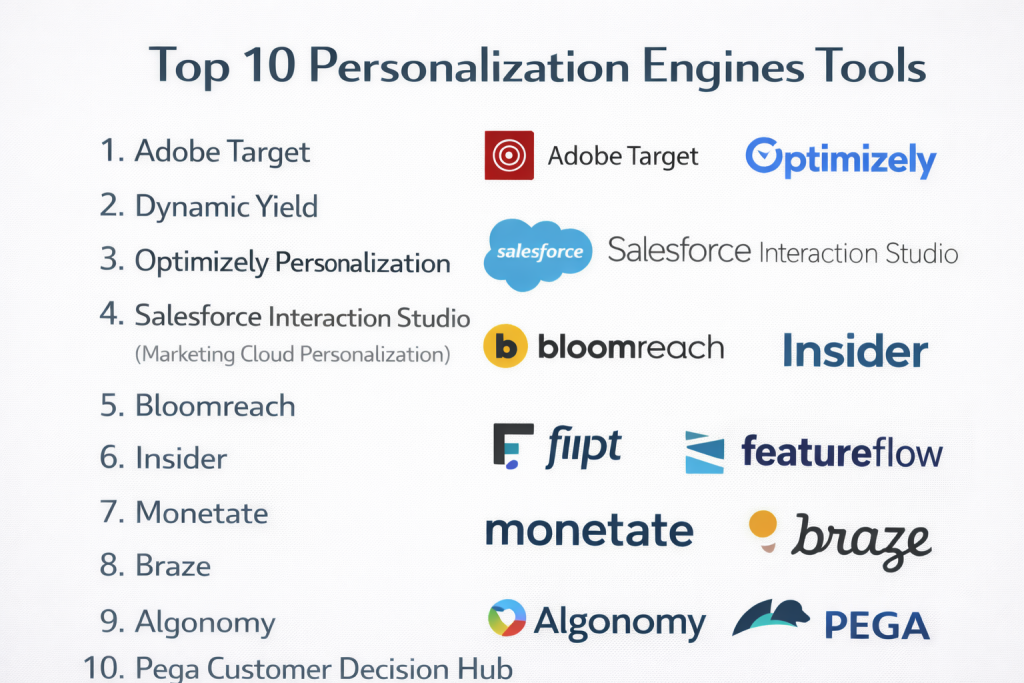
Top 10 Personalization Engines Tools
#1 — Adobe Target
Short description: An enterprise-grade personalization and experimentation platform within the Adobe ecosystem.
Key Features
- AI-driven personalization
- A/B and multivariate testing
- Real-time audience segmentation
- Omnichannel personalization
- Integration with Adobe Experience Cloud
- Automated decisioning
Pros
- Deep enterprise capabilities
- Strong integration ecosystem
Cons
- Complex implementation
- Expensive
Platforms / Deployment
Web / Mobile
Cloud
Security & Compliance
Not publicly stated
Integrations & Ecosystem
Part of a large enterprise ecosystem.
- Adobe Analytics
- CDP tools
- APIs
- Marketing platforms
Support & Community
Enterprise support with strong documentation.
#2 — Dynamic Yield
Short description: A personalization platform focused on real-time recommendations and customer journey optimization.
Key Features
- Product recommendations
- Behavioral targeting
- A/B testing
- Omnichannel personalization
- AI-driven insights
- Experience optimization
Pros
- Strong e-commerce capabilities
- Real-time personalization
Cons
- Enterprise-focused pricing
- Learning curve
Platforms / Deployment
Web
Cloud
Security & Compliance
Not publicly stated
Integrations & Ecosystem
Integrates with marketing and commerce platforms.
- CRM tools
- APIs
- E-commerce platforms
Support & Community
Enterprise support.
#3 — Optimizely Personalization
Short description: A digital experience platform combining experimentation with personalization capabilities.
Key Features
- Personalization + A/B testing
- Audience segmentation
- AI recommendations
- Feature experimentation
- Content personalization
- Analytics
Pros
- Unified experimentation + personalization
- Flexible platform
Cons
- Expensive
- Requires setup
Platforms / Deployment
Web
Cloud
Security & Compliance
Not publicly stated
Integrations & Ecosystem
Strong integration ecosystem.
- Analytics tools
- CMS platforms
- APIs
Support & Community
Strong enterprise support.
#4 — Salesforce Interaction Studio (Marketing Cloud Personalization)
Short description: A real-time personalization engine within Salesforce Marketing Cloud.
Key Features
- Real-time user tracking
- Journey orchestration
- AI-driven recommendations
- Customer segmentation
- Cross-channel personalization
- Data integration
Pros
- Strong CRM integration
- Real-time personalization
Cons
- Complex setup
- Requires Salesforce ecosystem
Platforms / Deployment
Web
Cloud
Security & Compliance
Not publicly stated
Integrations & Ecosystem
Deep integration with CRM and marketing tools.
- Salesforce CRM
- APIs
- Marketing automation tools
Support & Community
Enterprise-grade support.
#5 — Bloomreach
Short description: A digital experience platform focused on e-commerce personalization and search.
Key Features
- AI-driven product recommendations
- Search + personalization
- Customer segmentation
- Content personalization
- Real-time data processing
- Omnichannel support
Pros
- Strong for e-commerce
- AI-powered search
Cons
- Pricing varies
- Requires integration effort
Platforms / Deployment
Web
Cloud
Security & Compliance
Not publicly stated
Integrations & Ecosystem
Supports commerce integrations.
- E-commerce platforms
- APIs
- Marketing tools
Support & Community
Strong enterprise support.
#6 — Insider
Short description: A growth management platform combining personalization, engagement, and analytics.
Key Features
- AI-driven personalization
- Customer journey orchestration
- Cross-channel messaging
- Predictive segmentation
- A/B testing
- Behavioral targeting
Pros
- All-in-one growth platform
- Strong omnichannel capabilities
Cons
- Pricing varies
- Enterprise focus
Platforms / Deployment
Web / Mobile
Cloud
Security & Compliance
Not publicly stated
Integrations & Ecosystem
Integrates with marketing stack.
- CRM tools
- APIs
- Messaging platforms
Support & Community
Enterprise support.
#7 — Monetate
Short description: A personalization platform focused on customer experience and commerce optimization.
Key Features
- Dynamic content personalization
- Testing and optimization
- Customer segmentation
- AI recommendations
- Experience orchestration
- Real-time personalization
Pros
- Strong commerce focus
- Easy campaign management
Cons
- Enterprise pricing
- Limited SMB appeal
Platforms / Deployment
Web
Cloud
Security & Compliance
Not publicly stated
Integrations & Ecosystem
Supports commerce integrations.
- APIs
- Marketing tools
Support & Community
Enterprise support.
#8 — Braze
Short description: A customer engagement platform with strong personalization capabilities across messaging channels.
Key Features
- Cross-channel messaging
- Personalization engine
- Real-time data processing
- Customer segmentation
- Campaign automation
- Analytics
Pros
- Strong messaging capabilities
- Real-time engagement
Cons
- Not purely a personalization tool
- Requires setup
Platforms / Deployment
Web / Mobile
Cloud
Security & Compliance
Not publicly stated
Integrations & Ecosystem
Strong integration ecosystem.
- CRM tools
- APIs
- Messaging platforms
Support & Community
Strong documentation and support.
#9 — Algonomy
Short description: A personalization platform focused on retail and commerce use cases.
Key Features
- Product recommendations
- AI personalization
- Customer segmentation
- Behavioral targeting
- Analytics
- Omnichannel support
Pros
- Retail-focused
- Strong recommendation engine
Cons
- Niche focus
- Pricing varies
Platforms / Deployment
Web
Cloud
Security & Compliance
Not publicly stated
Integrations & Ecosystem
Commerce-focused integrations.
- E-commerce tools
- APIs
Support & Community
Moderate support.
#10 — Pega Customer Decision Hub
Short description: An AI-driven decisioning and personalization platform for enterprise customer engagement.
Key Features
- AI decisioning engine
- Next-best-action recommendations
- Real-time personalization
- Customer journey orchestration
- Predictive analytics
- Omnichannel delivery
Pros
- Advanced AI capabilities
- Strong enterprise features
Cons
- Complex implementation
- High cost
Platforms / Deployment
Web
Cloud
Security & Compliance
Not publicly stated
Integrations & Ecosystem
Enterprise integrations.
- CRM systems
- APIs
- Data platforms
Support & Community
Enterprise-level support.
Comparison Table (Top 10)
| Tool Name | Best For | Platform(s) Supported | Deployment | Standout Feature | Public Rating |
|---|---|---|---|---|---|
| Adobe Target | Enterprise personalization | Web, Mobile | Cloud | AI personalization | N/A |
| Dynamic Yield | E-commerce | Web | Cloud | Real-time recommendations | N/A |
| Optimizely | Experimentation + personalization | Web | Cloud | Unified platform | N/A |
| Salesforce Interaction Studio | CRM personalization | Web | Cloud | Real-time journeys | N/A |
| Bloomreach | Commerce personalization | Web | Cloud | AI search + personalization | N/A |
| Insider | Growth teams | Web, Mobile | Cloud | Omnichannel engagement | N/A |
| Monetate | CX optimization | Web | Cloud | Dynamic personalization | N/A |
| Braze | Messaging personalization | Web, Mobile | Cloud | Cross-channel messaging | N/A |
| Algonomy | Retail personalization | Web | Cloud | Recommendation engine | N/A |
| Pega Customer Decision Hub | Enterprise AI | Web | Cloud | Next-best-action AI | N/A |
Evaluation & Scoring of Personalization Engines
| Tool Name | Core (25%) | Ease (15%) | Integrations (15%) | Security (10%) | Performance (10%) | Support (10%) | Value (15%) | Weighted Total |
|---|---|---|---|---|---|---|---|---|
| Adobe Target | 10 | 6 | 10 | 8 | 9 | 9 | 6 | 8.6 |
| Dynamic Yield | 9 | 7 | 9 | 7 | 9 | 8 | 7 | 8.2 |
| Optimizely | 9 | 7 | 9 | 7 | 9 | 8 | 7 | 8.2 |
| Salesforce | 9 | 6 | 10 | 8 | 9 | 9 | 6 | 8.4 |
| Bloomreach | 8 | 7 | 8 | 7 | 8 | 8 | 7 | 7.9 |
| Insider | 8 | 8 | 8 | 7 | 8 | 8 | 7 | 7.9 |
| Monetate | 8 | 8 | 7 | 7 | 8 | 8 | 7 | 7.8 |
| Braze | 8 | 8 | 9 | 7 | 8 | 8 | 7 | 8.0 |
| Algonomy | 7 | 7 | 7 | 7 | 8 | 7 | 7 | 7.3 |
| Pega | 10 | 5 | 9 | 8 | 9 | 9 | 6 | 8.3 |
How to interpret scores:
- Higher scores indicate stronger enterprise readiness
- AI-driven platforms score high in core features
- CRM-integrated tools score high in integrations
- Simpler tools score higher in ease of use
- Choose based on use case rather than total score
Which Personalization Engine Is Right for You?
Solo / Freelancer
- Limited need; consider lightweight tools or CMS-based personalization
SMB
- Best options: Insider, Bloomreach
- Focus on ease and quick ROI
Mid-Market
- Best options: Dynamic Yield, Optimizely
- Balance personalization and experimentation
Enterprise
- Best options: Adobe Target, Salesforce, Pega
- Focus on scale, AI, and governance
Budget vs Premium
- Budget: Insider, Bloomreach
- Premium: Adobe, Salesforce, Pega
Feature Depth vs Ease of Use
- Advanced: Adobe Target, Pega
- Easy: Insider, Monetate
Integrations & Scalability
- Strong integrations: Salesforce, Adobe
- Lightweight: Algonomy
Security & Compliance Needs
- High compliance: Enterprise platforms
- Basic needs: SMB tools
Frequently Asked Questions (FAQs)
What is a personalization engine?
A tool that delivers tailored experiences using user data and AI.
How does personalization work?
It analyzes behavior and predicts what content or offer to show.
Are personalization engines expensive?
Most enterprise tools are premium-priced; SMB options are available.
Do I need a CDP?
Not always, but it improves data quality and personalization accuracy.
Can personalization increase conversions?
Yes, it significantly improves engagement and conversion rates.
Is AI required?
Modern tools rely heavily on AI for predictive personalization.
Can I use personalization without cookies?
Yes, many tools support privacy-first approaches.
What industries use these tools?
E-commerce, SaaS, media, finance, and enterprise marketing.
How long does implementation take?
From weeks to months depending on complexity.
Which tool is best overall?
It depends on your scale, data maturity, and tech stack.
Conclusion
Personalization engines are critical for delivering modern, customer-centric digital experiences.