Introduction
Restaurant Reservation & Table Management Platforms help restaurants manage bookings, optimize seating, reduce wait times, and improve guest experience. In simple terms, these tools replace manual reservation books with digital systems that allow customers to book tables online while giving restaurants full visibility into seating, availability, and guest preferences.
These platforms are essential because they increase table turnover, reduce no-shows, and streamline front-of-house operations. They are widely used for online reservations, waitlist management, table allocation, guest profiling, and analytics. For example, modern systems allow 24/7 bookings, automated confirmations, and real-time table tracking to improve efficiency and customer satisfaction
Common use cases include managing peak-hour reservations, optimizing seating layouts, handling walk-ins, and improving customer engagement. Buyers should evaluate booking automation, floor plan management, integrations, analytics, scalability, ease of use, and customer experience features.
Best for: restaurants, cafes, chains, hospitality groups, and fine-dining establishments.
Not ideal for: very small eateries with minimal seating or businesses without reservation requirements.
Key Trends in Restaurant Reservation & Table Management Platforms
- AI-powered table allocation and seating optimization
- Automated booking confirmations and reminders
- Integration with POS and CRM systems
- Mobile-first reservation experiences
- Guest profiling and personalization
- Real-time table availability dashboards
- Omnichannel booking (website, Google, social media)
- Waitlist and walk-in management automation
- Analytics for occupancy and revenue optimization
- Cloud-based systems for scalability
How We Selected These Tools (Methodology)
- Evaluated global adoption across restaurants and chains
- Assessed reservation, waitlist, and table management features
- Reviewed ease of use for front-of-house staff
- Analyzed integration with POS, CRM, and marketing tools
- Considered scalability for multi-location businesses
- Evaluated analytics and reporting capabilities
- Reviewed customer experience features
- Assessed vendor ecosystem and integrations
- Considered pricing flexibility and ROI
- Ensured a mix of SMB and enterprise solutions
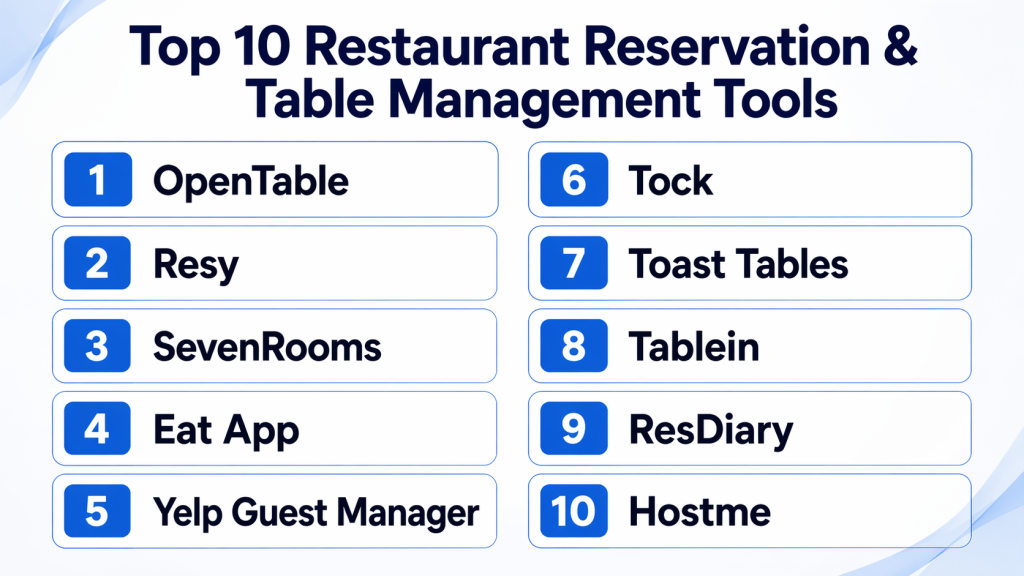
Top 10 Restaurant Reservation & Table Management Platforms
#1 — OpenTable
Short description : OpenTable is one of the most widely used restaurant reservation platforms globally, offering booking, table management, and guest engagement tools for restaurants of all sizes.
Key Features
- Online reservations and waitlist
- Automated table assignment
- Guest profiles and CRM
- Analytics dashboards
- Marketing and promotions
Pros
- Massive diner network
- Strong integrations
Cons
- Commission-based pricing
- Less brand control
Platforms / Deployment
- Web / Mobile / Cloud
Security & Compliance
- Not publicly stated
Integrations & Ecosystem
OpenTable integrates with a wide range of restaurant systems to streamline operations.
- POS systems
- CRM tools
- Marketing platforms
Support & Community
- Extensive support and global ecosystem
#2 — Resy
Short description : Resy focuses on premium dining experiences, offering reservation management, guest insights, and table optimization tools.
Key Features
- Reservation management
- Waitlist tools
- Guest insights
- Table management
- CRM capabilities
Pros
- Strong guest experience focus
- High-end restaurant adoption
Cons
- Limited SMB focus
- Premium pricing
Platforms / Deployment
- Web / Mobile / Cloud
Security & Compliance
- Not publicly stated
Integrations & Ecosystem
- POS integrations
- CRM tools
- APIs
Support & Community
- Vendor support
#3 — SevenRooms
Short description : SevenRooms is a data-driven platform combining reservations, CRM, and marketing automation for restaurants.
Key Features
- Reservation management
- Guest CRM
- Marketing automation
- Table optimization
- Analytics
Pros
- Strong data insights
- CRM integration
Cons
- Complex setup
- Premium pricing
Platforms / Deployment
- Web / Cloud
Security & Compliance
- Not publicly stated
Integrations & Ecosystem
- POS systems
- Marketing tools
- APIs
Support & Community
- Enterprise support
#4 — Eat App
Short description : Eat App provides a flexible reservation and table management system suitable for both small and large restaurants.
Key Features
- Online reservations
- Waitlist management
- Table layout tools
- Analytics dashboards
- Guest profiles
Pros
- Easy to use
- Scalable
Cons
- Add-ons may increase cost
- Limited customization
Platforms / Deployment
- Web / Cloud
Security & Compliance
- Not publicly stated
Integrations & Ecosystem
- POS systems
- APIs
- Marketing tools
Support & Community
- Vendor support
#5 — Tablein
Short description : Tablein is a simple and user-friendly reservation system designed for small to mid-sized restaurants.
Key Features
- Reservation calendar
- Floor plan visualization
- Online booking widget
- Reporting tools
- Payment integration
Pros
- Easy onboarding
- Affordable
Cons
- Limited enterprise features
- Basic analytics
Platforms / Deployment
- Web / Cloud
Security & Compliance
- SSL encryption
Integrations & Ecosystem
- Payment gateways
- APIs
- Website integrations
Support & Community
- Documentation and support
#6 — Toast Tables
Short description : Toast Tables integrates reservation management with Toast POS, offering seamless front-of-house operations.
Key Features
- Reservation system
- Waitlist management
- POS integration
- Guest profiles
- Analytics
Pros
- Strong POS integration
- Unified system
Cons
- Best for Toast users
- Limited standalone use
Platforms / Deployment
- Web / Cloud
Security & Compliance
- Not publicly stated
Integrations & Ecosystem
- Toast ecosystem
- APIs
Support & Community
- Vendor support
#7 — Yelp Guest Manager
Short description : Yelp Guest Manager combines reservations, waitlists, and customer engagement tools with Yelp’s large user base.
Key Features
- Online reservations
- Waitlist management
- Customer engagement
- Analytics
- Marketing tools
Pros
- Large audience reach
- Easy setup
Cons
- Dependency on Yelp ecosystem
- Limited customization
Platforms / Deployment
- Web / Cloud
Security & Compliance
- Not publicly stated
Integrations & Ecosystem
- Yelp ecosystem
- POS integrations
Support & Community
- Vendor support
#8 — TouchBistro Reservations
Short description : TouchBistro provides restaurant-specific reservation and table management tools integrated with its POS system.
Key Features
- Table management
- Reservation system
- POS integration
- Analytics
- Floor planning
Pros
- Restaurant-focused
- Strong table management
Cons
- Requires POS setup
- Learning curve
Platforms / Deployment
- Web / iOS / Cloud
Security & Compliance
- Not publicly stated
Integrations & Ecosystem
- POS systems
- APIs
Support & Community
- Vendor support
#9 — SimplyBook.me
Short description : SimplyBook.me is a general booking system that can be adapted for restaurant reservations and scheduling.
Key Features
- Online booking system
- Automated reminders
- Calendar integration
- Custom booking pages
- Reporting
Pros
- Flexible
- Easy to use
Cons
- Not restaurant-specific
- Limited table optimization
Platforms / Deployment
- Web / Cloud
Security & Compliance
- Not publicly stated
Integrations & Ecosystem
- Calendar tools
- APIs
Support & Community
- Documentation and support
#10 — easyTable
Short description : easyTable is an all-in-one booking system designed to simplify reservation and table management.
Key Features
- Online reservations
- Table management
- Booking dashboard
- Reporting
- Customer management
Pros
- Simple interface
- Quick setup
Cons
- Limited advanced features
- Smaller ecosystem
Platforms / Deployment
- Web / Cloud
Security & Compliance
- Not publicly stated
Integrations & Ecosystem
- APIs
- Payment systems
Support & Community
- Vendor support
Comparison Table (Top 10)
| Tool Name | Best For | Platform(s) Supported | Deployment | Standout Feature | Public Rating |
|---|---|---|---|---|---|
| OpenTable | Global restaurants | Web/Mobile | Cloud | Large diner network | N/A |
| Resy | Premium dining | Web/Mobile | Cloud | Guest insights | N/A |
| SevenRooms | Enterprise | Web | Cloud | CRM + marketing | N/A |
| Eat App | SMB & enterprise | Web | Cloud | Flexible system | N/A |
| Tablein | SMB | Web | Cloud | Simple UI | N/A |
| Toast Tables | POS users | Web | Cloud | POS integration | N/A |
| Yelp Guest Manager | SMB | Web | Cloud | Yelp traffic | N/A |
| TouchBistro | Restaurant POS | iOS/Web | Cloud | Table layout | N/A |
| SimplyBook.me | Flexible booking | Web | Cloud | Calendar sync | N/A |
| easyTable | SMB | Web | Cloud | Simple setup | N/A |
Evaluation & Scoring of Restaurant Reservation & Table Management Platforms
| Tool Name | Core (25%) | Ease (15%) | Integrations (15%) | Security (10%) | Performance (10%) | Support (10%) | Value (15%) | Weighted Total |
|---|---|---|---|---|---|---|---|---|
| OpenTable | 9 | 8 | 9 | 7 | 9 | 8 | 7 | 8.4 |
| Resy | 8 | 8 | 8 | 7 | 8 | 7 | 7 | 7.8 |
| SevenRooms | 9 | 7 | 9 | 7 | 9 | 8 | 6 | 8.2 |
| Eat App | 8 | 9 | 8 | 7 | 8 | 7 | 8 | 8.1 |
| Tablein | 7 | 9 | 7 | 7 | 7 | 7 | 8 | 7.6 |
| Toast Tables | 8 | 8 | 8 | 7 | 8 | 7 | 7 | 7.8 |
| Yelp Guest Manager | 7 | 9 | 7 | 7 | 7 | 7 | 8 | 7.5 |
| TouchBistro | 8 | 7 | 8 | 7 | 8 | 7 | 7 | 7.7 |
| SimplyBook.me | 7 | 9 | 7 | 7 | 7 | 7 | 8 | 7.5 |
| easyTable | 7 | 9 | 6 | 7 | 7 | 6 | 8 | 7.3 |
Scores are comparative and help shortlist tools based on operational needs and complexity.
Which Restaurant Reservation & Table Management Platform Is Right for You?
Solo / Small Restaurant
- Tablein, easyTable, SimplyBook.me for simplicity and affordability
SMB
- Eat App, Yelp Guest Manager, Toast Tables for balanced features
Mid-Market
- TouchBistro, Resy for better analytics and guest management
Enterprise
- OpenTable, SevenRooms for scale and advanced capabilities
Budget vs Premium
- Budget → Tablein, SimplyBook.me
- Premium → OpenTable, SevenRooms
Feature Depth vs Ease of Use
- Easy → Tablein
- Advanced → SevenRooms
Integrations & Scalability
- Choose tools with POS and CRM integrations
Security & Compliance Needs
- Larger restaurants should prioritize data protection and integrations
Frequently Asked Questions (FAQs)
1. What is restaurant reservation software?
It allows customers to book tables online while helping restaurants manage seating and availability.
2. How does table management work?
It tracks table availability and assigns guests efficiently to reduce wait times.
3. Can these tools reduce no-shows?
Yes, automated reminders and deposits help minimize no-shows.
4. Do they integrate with POS systems?
Most modern platforms support POS integrations.
5. Are these tools cloud-based?
Yes, most are cloud-based for easy access and scalability.
6. Can customers book tables online?
Yes, platforms enable 24/7 online reservations.
7. Are they suitable for small restaurants?
Yes, many tools are designed for SMBs.
8. Do they support waitlists?
Yes, most include waitlist management features.
9. How long does implementation take?
Cloud tools can be set up quickly; enterprise tools take longer.
10. What is the biggest benefit?
Improved efficiency and better customer experience.
Conclusion
Restaurant reservation and table management platforms are essential for modern hospitality businesses aiming to optimize operations and deliver exceptional guest experiences. From simple tools like Tablein to advanced systems like OpenTable and SevenRooms, the right platform depends on your restaurant size, complexity, and growth goals. Small restaurants can benefit from easy-to-use solutions, while larger operations should invest in platforms with strong analytics, integrations, and CRM capabilities. The best approach is to shortlist a few tools, test them in real scenarios, and choose one that aligns with your workflow, improves table utilization, and enhances customer satisfaction.