Introduction
Business Plan Software helps entrepreneurs, startups, and established companies create structured, data-driven business plans. These tools simplify financial forecasting, market analysis, strategy building, and investor presentations by providing templates, automation, and real-time calculations.
In 2026, business planning is no longer just a static document exercise. Modern platforms integrate financial modeling, AI-assisted insights, and collaboration features, making business plans dynamic and continuously updated as the business evolves.
Real-world use cases include:
- Creating startup business plans for investors and funding rounds
- Building financial forecasts and revenue projections
- Preparing pitch decks and investor presentations
- Running scenario analysis for business growth strategies
- Aligning teams on strategic goals and KPIs
When evaluating business plan software, buyers should consider:
- Ease of use and planning templates
- Financial forecasting and modeling accuracy
- Collaboration and sharing features
- Investor-ready reporting and pitch generation
- AI-assisted planning and insights
- Integration with accounting or CRM tools
- Scenario planning capabilities
- Data visualization and dashboards
- Export options (PDF, PPT, Excel)
- Pricing and scalability
Best for: Entrepreneurs, startups, small businesses, consultants, and corporate strategy teams.
Not ideal for: Very early idea-stage users who only need simple notes or informal planning without financial modeling.
Key Trends in Business Plan Software
- AI-generated business plans and financial models
- Real-time forecasting and scenario simulation
- Integration with accounting and ERP systems
- Cloud-based collaboration for remote teams
- Automated investor pitch deck creation
- Data-driven market analysis and benchmarking
- Mobile-friendly planning dashboards
- Subscription-based SaaS pricing models
- Embedded analytics for decision-making
- Integration with CRM and fundraising platforms
How We Selected These Tools (Methodology)
- Evaluated market adoption and startup ecosystem usage
- Assessed financial modeling and forecasting capabilities
- Reviewed usability for founders and non-finance users
- Analyzed collaboration and multi-user functionality
- Examined integration with accounting, CRM, and funding tools
- Considered scalability for startups to enterprise use
- Factored in automation and AI-powered features
- Evaluated reporting and export capabilities
- Reviewed pricing flexibility and value for money
- Balanced simplicity with advanced planning depth
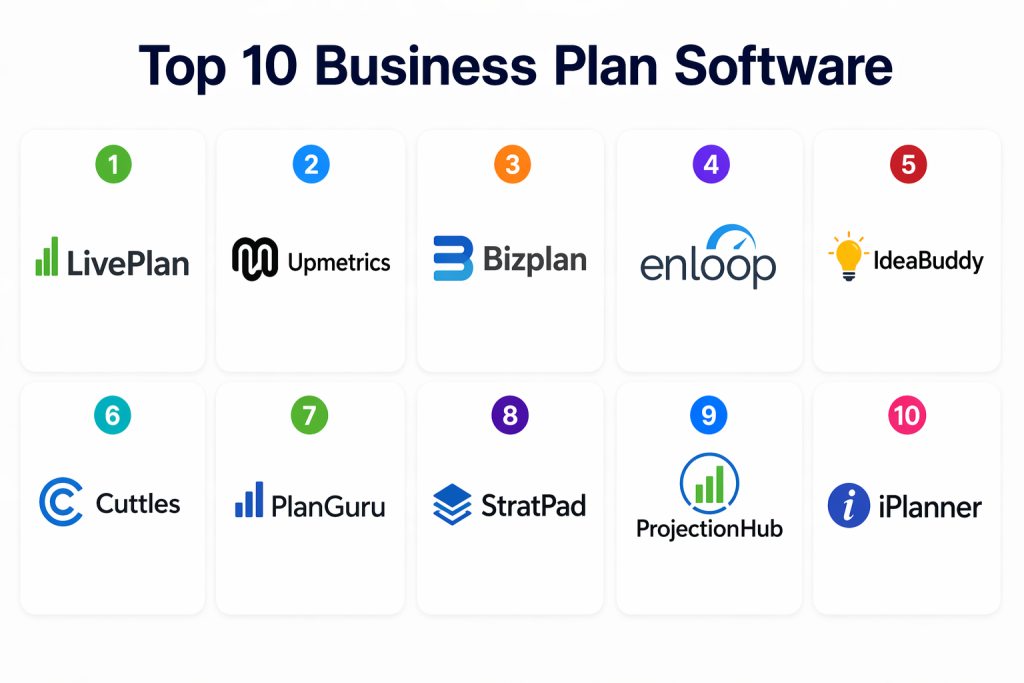
Top 10 Business Plan Software
#1 — LivePlan
Short description: LivePlan is one of the most widely used business planning tools, offering step-by-step guidance, financial forecasting, and investor-ready reports. It is ideal for startups and small businesses.
Key Features
- Step-by-step business plan builder
- Financial forecasting and budgeting
- Real-time performance dashboards
- Investor-ready pitch creation
- Industry benchmark data
- Collaboration features
Pros
- Easy to use for beginners
- Strong financial modeling tools
Cons
- Limited advanced customization
- Some features locked in premium plans
Platforms / Deployment
- Web
- Cloud
Security & Compliance
- RBAC, encryption, audit logs
- Not publicly stated
Integrations & Ecosystem
- Accounting tools
- Spreadsheet imports
- Export to PDF and PowerPoint
Support & Community
Strong documentation and onboarding support
#2 — Upmetrics
Short description: Upmetrics provides AI-powered business planning with forecasting, pitch deck creation, and collaboration tools. Suitable for startups and consultants.
Key Features
- AI-assisted business plan generation
- Financial forecasting tools
- Pitch deck builder
- Collaboration and sharing
- Scenario planning
Pros
- Modern AI-powered features
- Good for pitch preparation
Cons
- Limited enterprise capabilities
- Requires learning for advanced features
Platforms / Deployment
- Web
- Cloud
Security & Compliance
- Encryption, RBAC
- Not publicly stated
Integrations & Ecosystem
- Export tools (PDF, PPT)
- Spreadsheet integration
- API access
Support & Community
Documentation and chat support
#3 — Bizplan
Short description: Bizplan is a startup-focused platform that combines business planning with fundraising tools and investor networking features.
Key Features
- Drag-and-drop business plan builder
- Financial forecasting tools
- Investor dashboard
- Fundraising tracking
- Collaboration features
Pros
- Strong fundraising integration
- Easy-to-use interface
Cons
- Limited advanced financial modeling
- Smaller ecosystem
Platforms / Deployment
- Web
- Cloud
Security & Compliance
- Encryption, RBAC
- Not publicly stated
Integrations & Ecosystem
- Fundraising platforms
- CRM tools
- Export capabilities
Support & Community
Online documentation and support
#4 — Enloop
Short description: Enloop automates business plan writing and financial forecasting, making it ideal for small businesses and startups.
Key Features
- Automated business plan generation
- Financial performance scoring
- Forecasting tools
- Real-time updates
- Text and data synchronization
Pros
- Automation reduces manual work
- Simple interface
Cons
- Limited customization
- Basic design output
Platforms / Deployment
- Web
- Cloud
Security & Compliance
- Encryption
- Not publicly stated
Integrations & Ecosystem
- Spreadsheet imports
- Export to PDF
Support & Community
Basic documentation and support
#5 — IdeaBuddy
Short description: IdeaBuddy helps entrepreneurs validate ideas and build structured business plans with visual planning tools.
Key Features
- Idea validation tools
- Business model canvas
- Financial planning
- Step-by-step guidance
- Collaboration tools
Pros
- Great for early-stage startups
- Visual planning approach
Cons
- Limited advanced forecasting
- Not enterprise-focused
Platforms / Deployment
- Web
- Cloud
Security & Compliance
- Encryption
- Not publicly stated
Integrations & Ecosystem
- Export tools
- Spreadsheet support
Support & Community
Documentation and onboarding support
#6 — Cuttles
Short description: Cuttles provides simple business planning and startup management tools designed for entrepreneurs and small teams.
Key Features
- Business plan templates
- Financial projections
- Task management
- Investor pitch preparation
- Collaboration features
Pros
- Very easy to use
- Affordable pricing
Cons
- Limited advanced financial tools
- Not suitable for large enterprises
Platforms / Deployment
- Web
- Cloud
Security & Compliance
- Encryption
- Not publicly stated
Integrations & Ecosystem
- Export tools
- Basic integrations
Support & Community
Email support and documentation
#7 — PlanGuru
Short description: PlanGuru focuses on advanced budgeting, forecasting, and financial planning for businesses and finance professionals.
Key Features
- Financial forecasting tools
- Budgeting and scenario planning
- Cash flow analysis
- Reporting dashboards
- Multi-year projections
Pros
- Strong financial modeling
- Suitable for finance professionals
Cons
- Complex for beginners
- Higher learning curve
Platforms / Deployment
- Windows / Web
- Cloud / Desktop
Security & Compliance
- RBAC, encryption
- Not publicly stated
Integrations & Ecosystem
- Accounting software
- Excel integration
- API support
Support & Community
Strong documentation and training resources
#8 — StratPad
Short description: StratPad provides structured business planning with strategy mapping and financial forecasting for small businesses.
Key Features
- Business plan templates
- Strategy mapping tools
- Financial forecasting
- Progress tracking
- Reporting dashboards
Pros
- Simple and structured planning
- Good for small businesses
Cons
- Limited modern UI
- Basic analytics
Platforms / Deployment
- Web
- Cloud
Security & Compliance
- Encryption
- Not publicly stated
Integrations & Ecosystem
- Export tools
- Basic integrations
Support & Community
Documentation and email support
#9 — ProjectionHub
Short description: ProjectionHub specializes in financial projections and startup financial modeling for fundraising and loans.
Key Features
- Financial projection templates
- Startup financial models
- Loan and funding calculators
- Scenario planning
- Reporting tools
Pros
- Strong financial modeling focus
- Great for fundraising
Cons
- Limited business planning features
- Less collaboration support
Platforms / Deployment
- Web
- Cloud
Security & Compliance
- Encryption
- Not publicly stated
Integrations & Ecosystem
- Spreadsheet exports
- Accounting tools
Support & Community
Documentation and email support
#10 — Wrike Business Planning Templates
Short description: Wrike provides project management-based business planning tools with templates for strategy execution and planning workflows.
Key Features
- Business planning templates
- Task and workflow management
- Collaboration tools
- Reporting dashboards
- Timeline tracking
Pros
- Strong collaboration features
- Good for execution-focused planning
Cons
- Not dedicated financial planning tool
- Requires setup customization
Platforms / Deployment
- Web / Mobile
- Cloud
Security & Compliance
- RBAC, encryption
- Not publicly stated
Integrations & Ecosystem
- CRM tools
- Productivity apps
- API integrations
Support & Community
Strong documentation and enterprise support
Comparison Table (Top 10)
| Tool Name | Best For | Platform(s) Supported | Deployment | Standout Feature | Public Rating |
|---|---|---|---|---|---|
| LivePlan | SMBs & startups | Web | Cloud | Financial forecasting | N/A |
| Upmetrics | AI planning | Web | Cloud | AI-generated plans | N/A |
| Bizplan | Fundraising startups | Web | Cloud | Investor tools | N/A |
| Enloop | Small businesses | Web | Cloud | Automation | N/A |
| IdeaBuddy | Early-stage startups | Web | Cloud | Idea validation | N/A |
| Cuttles | Entrepreneurs | Web | Cloud | Simplicity | N/A |
| PlanGuru | Finance teams | Web / Windows | Cloud/Desktop | Advanced forecasting | N/A |
| StratPad | Small businesses | Web | Cloud | Strategy mapping | N/A |
| ProjectionHub | Fundraising | Web | Cloud | Financial projections | N/A |
| Wrike | Execution planning | Web / Mobile | Cloud | Workflow management | N/A |
Evaluation & Scoring of Business Plan Software
| Tool Name | Core (25%) | Ease (15%) | Integrations (15%) | Security (10%) | Performance (10%) | Support (10%) | Value (15%) | Weighted Total |
|---|---|---|---|---|---|---|---|---|
| LivePlan | 9 | 9 | 8 | 8 | 8 | 8 | 8 | 8.55 |
| Upmetrics | 9 | 8 | 8 | 8 | 8 | 7 | 8 | 8.25 |
| Bizplan | 8 | 8 | 7 | 7 | 7 | 7 | 7 | 7.45 |
| Enloop | 7 | 9 | 6 | 7 | 7 | 7 | 8 | 7.25 |
| IdeaBuddy | 8 | 9 | 7 | 7 | 7 | 7 | 8 | 7.75 |
| Cuttles | 7 | 9 | 6 | 7 | 7 | 7 | 8 | 7.20 |
| PlanGuru | 9 | 6 | 8 | 8 | 8 | 8 | 6 | 7.85 |
| StratPad | 7 | 8 | 6 | 7 | 7 | 7 | 7 | 7.10 |
| ProjectionHub | 8 | 7 | 7 | 7 | 7 | 7 | 7 | 7.35 |
| Wrike | 7 | 8 | 8 | 8 | 7 | 8 | 8 | 7.65 |
Interpretation: These scores compare tools across planning depth, usability, integrations, security, performance, support, and value. Higher scores indicate strong all-round business planning capabilities.
Which Business Plan Software Is Right for You?
Solo / Freelancer
IdeaBuddy or Cuttles provide simple and intuitive planning tools for early-stage ideas.
SMB
LivePlan, Upmetrics, and Enloop offer structured planning with financial forecasting and reporting.
Mid-Market
PlanGuru, Bizplan, and ProjectionHub provide advanced financial modeling and fundraising support.
Enterprise
Wrike and PlanGuru support execution-heavy planning and complex financial modeling needs.
Budget vs Premium
Early-stage startups should prioritize affordability, while scaling companies benefit from advanced forecasting tools.
Feature Depth vs Ease of Use
Advanced tools provide deeper financial insights but require learning; simpler tools prioritize usability.
Integrations & Scalability
Choose tools that integrate with accounting, CRM, and productivity systems as businesses scale.
Security & Compliance Needs
Businesses handling investor data should prioritize encryption, RBAC, and audit-ready reporting features.
Frequently Asked Questions (FAQs)
1. What is business plan software used for?
It is used to create structured business plans, financial forecasts, and investor presentations.
2. Can these tools help with fundraising?
Yes, many tools generate investor-ready pitch decks and financial projections.
3. Do these tools support financial forecasting?
Yes, most include revenue, expense, and cash flow forecasting features.
4. Are these tools suitable for startups?
Yes, most are designed specifically for startups and small businesses.
5. Do they support collaboration?
Yes, many tools allow team collaboration and shared planning.
6. Can I export business plans?
Yes, most tools support export in PDF, Excel, and presentation formats.
7. Are these tools secure?
They typically include encryption, access control, and secure cloud storage.
8. Do I need accounting knowledge to use them?
No, most tools are designed for non-finance users with guided workflows.
9. Can they integrate with accounting tools?
Yes, many integrate with accounting and CRM systems.
10. What is the biggest advantage of using business plan software?
It saves time, improves accuracy, and helps create investor-ready business strategies.
Conclusion
Business Plan Software plays a critical role in helping entrepreneurs and companies turn ideas into structured, financially sound strategies. Tools like LivePlan and Upmetrics are ideal for startups seeking simplicity and guidance, while PlanGuru and Wrike support more advanced financial planning and execution workflows. The right choice depends on business stage, financial complexity, and collaboration needs. Organizations should shortlist tools, test forecasting capabilities, and evaluate ease of use before making a final decision.