Introduction
API Security Platforms help organizations protect application programming interfaces from cyber threats, misuse, unauthorized access, and data exposure. APIs have become the foundation of modern applications, enabling communication between cloud services, mobile apps, SaaS platforms, microservices, and AI systems. As API usage grows rapidly, APIs are increasingly becoming a major attack surface for organizations.
Modern businesses rely on APIs for customer applications, integrations, payment systems, partner ecosystems, and internal operations. Traditional network security tools often lack deep visibility into API behavior, authentication flows, and runtime interactions. API security platforms provide specialized capabilities such as API discovery, threat detection, authentication monitoring, runtime protection, anomaly detection, and compliance visibility.
Common real-world use cases include:
- Securing public and internal APIs
- Protecting cloud-native applications
- Detecting API abuse and bot attacks
- Monitoring sensitive data exposure
- Supporting compliance and governance requirements
Buyers evaluating API security platforms should focus on:
- API discovery capabilities
- Runtime threat detection
- Authentication and authorization monitoring
- API inventory management
- Cloud-native compatibility
- Integration flexibility
- Performance impact
- Compliance reporting
- AI-driven analytics
- Scalability across distributed environments
Best for: Enterprises, SaaS companies, fintech platforms, healthcare organizations, e-commerce businesses, cloud-native development teams, and organizations operating large API ecosystems.
Not ideal for: Organizations with limited API exposure, static websites, or environments where basic firewall protection is sufficient.
Key Trends in API Security Platforms
- AI-assisted API threat detection is improving anomaly identification and attack prevention.
- API discovery and shadow API detection are becoming essential capabilities.
- Runtime API security is increasingly integrated with cloud-native security platforms.
- Zero Trust API security models are gaining broader adoption.
- API posture management is becoming a major enterprise requirement.
- Integration with Kubernetes and microservices environments is expanding rapidly.
- GraphQL and asynchronous API security support is improving.
- Unified platforms combining API security, WAAP, and bot mitigation are becoming more common.
- API compliance monitoring is growing in regulated industries.
- Real-time behavioral analytics are improving API abuse detection accuracy.
How We Selected These Tools Methodology
The tools in this list were selected based on market relevance, enterprise adoption, and modern API protection capabilities.
- Evaluated API discovery and runtime visibility features
- Assessed cloud-native and Kubernetes compatibility
- Reviewed threat detection and behavioral analytics capabilities
- Considered API inventory and governance functionality
- Evaluated DevSecOps and CI/CD integration support
- Reviewed scalability across distributed environments
- Considered compliance and reporting capabilities
- Evaluated deployment flexibility
- Assessed ecosystem integrations and extensibility
- Reviewed support quality and operational usability
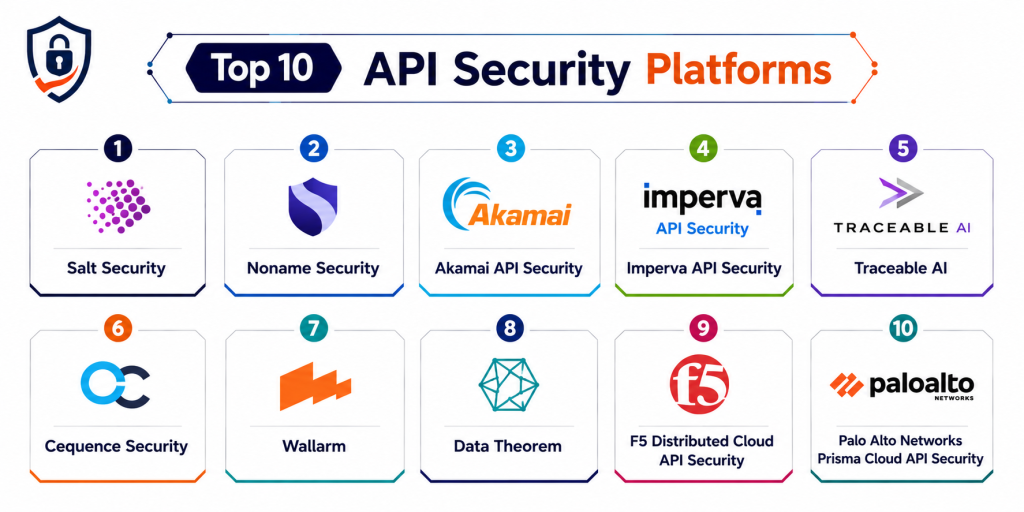
Top 10 API Security Platforms
1- Noname Security
Short description: Noname Security is one of the most recognized API security platforms focused on API discovery, runtime protection, and behavioral analytics. It is widely adopted by enterprises managing large API ecosystems across hybrid and cloud-native environments.
Key Features
- Automated API discovery
- Runtime API threat detection
- Behavioral analytics
- API posture management
- Sensitive data exposure monitoring
- API vulnerability assessment
- Multi-cloud visibility
Pros
- Strong API discovery capabilities
- Deep runtime visibility
- Enterprise-grade scalability
Cons
- Premium pricing structure
- Large deployments may require tuning
- Advanced workflows can be complex
Platforms / Deployment
- Cloud / Hybrid
Security & Compliance
- SSO/SAML
- RBAC
- Audit logging
- Encryption support
- GDPR support
Integrations & Ecosystem
Noname integrates with cloud infrastructure, API gateways, SIEM platforms, and DevSecOps environments.
- AWS
- Azure
- Kubernetes
- Splunk
- ServiceNow
- API gateways
Support & Community
Strong enterprise support with onboarding assistance and detailed implementation guidance.
2- Salt Security
Short description: Salt Security focuses on AI-driven API protection with strong behavioral analytics and runtime threat detection capabilities. The platform is designed to identify sophisticated API attacks and abnormal API activity patterns.
Key Features
- AI-driven threat detection
- API discovery
- Behavioral analytics
- Runtime API protection
- Attack surface visibility
- Sensitive data monitoring
- API posture management
Pros
- Strong AI-powered analytics
- Excellent runtime monitoring
- Good cloud-native support
Cons
- Enterprise pricing may be high for SMBs
- Advanced tuning may require expertise
- Broad feature set can increase complexity
Platforms / Deployment
- Cloud / Hybrid
Security & Compliance
- SSO/SAML
- RBAC
- Audit logs
- Encryption support
Integrations & Ecosystem
Salt Security integrates with enterprise security operations and API management ecosystems.
- Splunk
- AWS
- Azure
- Kubernetes
- SIEM platforms
- API gateways
Support & Community
Enterprise-focused support with strong technical documentation and deployment assistance.
3- Imperva API Security
Short description: Imperva API Security extends Imperva’s broader application security portfolio with runtime API visibility, threat detection, and API protection features. It is suitable for enterprises already invested in Imperva security infrastructure.
Key Features
- API discovery
- Runtime API protection
- Behavioral monitoring
- API abuse prevention
- Threat intelligence integration
- Bot mitigation
- Centralized policy management
Pros
- Strong enterprise security ecosystem
- Effective runtime protection
- Broad integration capabilities
Cons
- Best suited for larger environments
- Deployment complexity for smaller teams
- Premium pricing structure
Platforms / Deployment
- Cloud / Hybrid
Security & Compliance
- RBAC
- Audit logging
- Encryption support
- GDPR support
Integrations & Ecosystem
Imperva integrates closely with enterprise application security and security operations platforms.
- AWS
- Azure
- Splunk
- ServiceNow
- Kubernetes
- SIEM tools
Support & Community
Enterprise-grade support with managed service options and implementation guidance.
4- Akamai API Security
Short description: Akamai API Security combines API protection, threat intelligence, and runtime monitoring with Akamai’s broader edge security and CDN ecosystem. It is particularly effective for high-scale internet-facing environments.
Key Features
- API discovery
- Runtime API monitoring
- Threat intelligence
- API abuse prevention
- Edge security integration
- Real-time attack detection
- Traffic analytics
Pros
- Strong global infrastructure
- Effective internet-scale protection
- Broad edge security ecosystem
Cons
- Complex enterprise deployments
- Best value for large-scale organizations
- Pricing varies significantly
Platforms / Deployment
- Cloud
Security & Compliance
- SSO/SAML
- RBAC
- Audit logs
- Encryption support
Integrations & Ecosystem
Akamai integrates with cloud infrastructure, enterprise observability platforms, and application security environments.
- AWS
- Azure
- Kubernetes
- SIEM platforms
- API gateways
- CDN integrations
Support & Community
Global enterprise support with extensive documentation and onboarding resources.
5- Traceable AI
Short description: Traceable AI provides API security and runtime protection with AI-assisted behavioral analytics designed for cloud-native and microservices environments. The platform emphasizes API observability and threat detection.
Key Features
- API discovery
- Runtime API protection
- AI-driven analytics
- API posture management
- Cloud-native visibility
- Threat detection
- Sensitive data monitoring
Pros
- Strong cloud-native support
- AI-assisted analytics
- Good microservices visibility
Cons
- Enterprise pricing model
- Some advanced features require tuning
- Smaller ecosystem compared to legacy vendors
Platforms / Deployment
- Cloud / Hybrid
Security & Compliance
- RBAC
- Encryption support
- Audit logging
Integrations & Ecosystem
Traceable AI integrates with Kubernetes, cloud infrastructure, and observability platforms.
- AWS
- Kubernetes
- Splunk
- Datadog
- API gateways
- Azure
Support & Community
Responsive enterprise support with modern deployment documentation.
6- Cequence Security
Short description: Cequence Security focuses on API protection, bot mitigation, and runtime threat prevention. The platform is designed to defend APIs from abuse, fraud, and automated attacks.
Key Features
- API runtime protection
- Bot mitigation
- Fraud detection
- Behavioral analytics
- API discovery
- Real-time threat monitoring
- Traffic analysis
Pros
- Strong bot mitigation capabilities
- Effective fraud prevention
- Enterprise scalability
Cons
- Complex deployment for smaller organizations
- Premium licensing model
- Advanced policy management may require expertise
Platforms / Deployment
- Cloud / Hybrid
Security & Compliance
- SSO/SAML
- RBAC
- Audit logs
- Encryption support
Integrations & Ecosystem
Cequence integrates with enterprise application security and API infrastructure environments.
- AWS
- Azure
- Splunk
- SIEM platforms
- API gateways
- Kubernetes
Support & Community
Enterprise-focused support with deployment assistance and operational guidance.
7- Wallarm
Short description: Wallarm combines API security, WAAP capabilities, and runtime attack prevention into a developer-friendly platform. It is popular among cloud-native and DevSecOps-focused teams.
Key Features
- API discovery
- Runtime API protection
- WAAP capabilities
- Threat intelligence
- API abuse prevention
- CI/CD integrations
- Cloud-native support
Pros
- Developer-friendly deployment
- Strong API visibility
- Flexible deployment options
Cons
- Advanced configurations may require expertise
- Enterprise governance features may vary
- Smaller enterprise footprint compared to larger vendors
Platforms / Deployment
- Cloud / Self-hosted / Hybrid
Security & Compliance
- RBAC
- Audit logging
- Encryption support
Integrations & Ecosystem
Wallarm integrates well with cloud-native infrastructure and DevSecOps workflows.
- Kubernetes
- AWS
- Azure
- Jenkins
- GitHub
- API gateways
Support & Community
Good technical documentation with enterprise support options and active developer engagement.
8- Data Theorem
Short description: Data Theorem provides API security and application protection with strong emphasis on runtime visibility and continuous monitoring. The platform is designed for enterprise-scale API ecosystems.
Key Features
- API discovery
- Runtime monitoring
- Threat analytics
- API vulnerability assessment
- Compliance visibility
- Cloud-native integrations
- Continuous security monitoring
Pros
- Strong continuous monitoring
- Enterprise-focused capabilities
- Broad API visibility
Cons
- Premium pricing
- Complex deployment for smaller teams
- Some workflows may require customization
Platforms / Deployment
- Cloud / Hybrid
Security & Compliance
- SSO/SAML
- RBAC
- Encryption support
- Audit logs
Integrations & Ecosystem
Data Theorem integrates with enterprise cloud, DevOps, and security monitoring environments.
- AWS
- Azure
- Kubernetes
- Splunk
- SIEM platforms
- API gateways
Support & Community
Enterprise support with onboarding assistance and implementation guidance.
9- F5 Distributed Cloud API Security
Short description: F5 Distributed Cloud API Security combines API protection, traffic visibility, and application security within F5’s distributed cloud ecosystem. It is suitable for enterprises managing hybrid application environments.
Key Features
- API discovery
- Runtime API monitoring
- Threat analytics
- Distributed cloud visibility
- Bot mitigation
- Traffic analysis
- API abuse prevention
Pros
- Strong enterprise infrastructure support
- Broad hybrid environment visibility
- Good traffic analytics capabilities
Cons
- Best suited for F5-centric environments
- Complex enterprise deployment scenarios
- Premium pricing structure
Platforms / Deployment
- Cloud / Hybrid
Security & Compliance
- SSO/SAML
- RBAC
- Audit logging
- Encryption support
Integrations & Ecosystem
F5 integrates with enterprise networking, cloud, and security operations environments.
- AWS
- Azure
- Kubernetes
- Splunk
- API gateways
- SIEM platforms
Support & Community
Strong enterprise support and operational guidance resources.
10- 42Crunch
Short description: 42Crunch focuses on API security testing and API contract security for development teams. It is highly focused on shifting API security earlier into the development lifecycle.
Key Features
- API security testing
- OpenAPI contract analysis
- CI/CD integrations
- API compliance validation
- Runtime protection support
- Developer-focused workflows
- API governance controls
Pros
- Strong developer-focused approach
- Excellent API contract security
- Good CI/CD integrations
Cons
- Less runtime-focused than some competitors
- Smaller enterprise ecosystem
- Advanced governance features may vary
Platforms / Deployment
- Cloud / Self-hosted
Security & Compliance
- RBAC
- Audit logging
- Encryption support
Integrations & Ecosystem
42Crunch integrates directly with developer pipelines and API management workflows.
- GitHub
- Jenkins
- Azure DevOps
- Kubernetes
- API gateways
- IDE integrations
Support & Community
Good documentation and onboarding resources for development teams.
Comparison Table
| Tool Name | Best For | Platform(s) Supported | Deployment | Standout Feature | Public Rating |
|---|---|---|---|---|---|
| Noname Security | Enterprise API ecosystems | Cloud-native platforms | Cloud, Hybrid | Automated API discovery | N/A |
| Salt Security | AI-driven API protection | Cloud-native platforms | Cloud, Hybrid | Behavioral analytics | N/A |
| Imperva API Security | Enterprise application security | Cloud-native platforms | Cloud, Hybrid | API abuse prevention | N/A |
| Akamai API Security | Internet-scale API protection | Cloud platforms | Cloud | Edge security integration | N/A |
| Traceable AI | Cloud-native API monitoring | Cloud-native platforms | Cloud, Hybrid | AI-assisted observability | N/A |
| Cequence Security | Fraud and bot prevention | Cloud-native platforms | Cloud, Hybrid | Bot mitigation | N/A |
| Wallarm | DevSecOps API security | Cloud-native platforms | Cloud, Hybrid | Developer-friendly deployment | N/A |
| Data Theorem | Enterprise API visibility | Cloud-native platforms | Cloud, Hybrid | Continuous monitoring | N/A |
| F5 Distributed Cloud API Security | Hybrid enterprise security | Cloud-native platforms | Cloud, Hybrid | Distributed cloud visibility | N/A |
| 42Crunch | API contract security | Cloud-native platforms | Cloud, Self-hosted | OpenAPI security testing | N/A |
Evaluation & Scoring of API Security Platforms
| Tool Name | Core 25% | Ease 15% | Integrations 15% | Security 10% | Performance 10% | Support 10% | Value 15% | Weighted Total |
|---|---|---|---|---|---|---|---|---|
| Noname Security | 9 | 8 | 9 | 9 | 8 | 9 | 7 | 8.45 |
| Salt Security | 9 | 8 | 8 | 9 | 8 | 8 | 7 | 8.20 |
| Imperva API Security | 8 | 7 | 8 | 9 | 8 | 8 | 7 | 7.95 |
| Akamai API Security | 8 | 7 | 8 | 8 | 9 | 8 | 6 | 7.80 |
| Traceable AI | 8 | 8 | 8 | 8 | 8 | 7 | 7 | 7.85 |
| Cequence Security | 8 | 7 | 8 | 8 | 8 | 7 | 6 | 7.45 |
| Wallarm | 8 | 8 | 8 | 7 | 8 | 7 | 8 | 7.85 |
| Data Theorem | 8 | 7 | 7 | 8 | 8 | 7 | 6 | 7.35 |
| F5 Distributed Cloud API Security | 8 | 7 | 8 | 8 | 8 | 8 | 6 | 7.60 |
| 42Crunch | 7 | 8 | 8 | 7 | 7 | 7 | 8 | 7.45 |
These scores are comparative rather than absolute measurements. Higher scores generally indicate broader API security coverage, stronger integrations, and better enterprise readiness. Smaller or developer-focused platforms may provide excellent operational simplicity and value despite lower enterprise governance capabilities.
Which API Security Platform Is Right for You?
Solo / Freelancer
Independent developers and smaller engineering teams often benefit from lightweight and developer-focused platforms such as 42Crunch or Wallarm due to simpler deployment and strong API development integrations.
SMB
Small and medium businesses should prioritize ease of deployment, runtime visibility, and manageable operational overhead. Wallarm and Traceable AI provide balanced capabilities for growing API environments.
Mid-Market
Mid-market organizations usually require broader integrations, compliance visibility, and scalable API governance. Salt Security and Noname Security are strong choices for organizations scaling API ecosystems.
Enterprise
Large enterprises typically need centralized policy management, advanced analytics, hybrid deployment support, and large-scale API inventory management. Noname Security, Imperva API Security, and Akamai API Security are strong enterprise-focused options.
Budget vs Premium
Developer-focused tools generally provide lower operational costs and simpler onboarding, while enterprise platforms deliver stronger governance, AI-driven analytics, and broader runtime protection capabilities.
Feature Depth vs Ease of Use
Platforms such as Noname Security and Salt Security provide deep runtime analytics and extensive governance capabilities but may require more operational expertise. Wallarm and 42Crunch emphasize developer usability and deployment simplicity.
Integrations & Scalability
Organizations with mature cloud-native environments should prioritize integrations with Kubernetes, SIEM platforms, API gateways, observability tools, and CI/CD pipelines.
Security & Compliance Needs
Regulated industries should focus on audit logging, RBAC, encryption support, API governance controls, runtime monitoring, and centralized compliance visibility.
Frequently Asked Questions FAQs
1. What is an API Security Platform?
An API Security Platform helps organizations discover, monitor, protect, and manage APIs against threats such as abuse, unauthorized access, sensitive data exposure, and runtime attacks.
2. Why is API security important?
APIs are widely used to connect applications, services, and cloud platforms. Because APIs often expose sensitive business logic and customer data, they have become major attack targets.
3. How is API security different from traditional application security?
Traditional application security tools mainly focus on web applications and network traffic, while API security platforms specialize in API discovery, runtime behavior analysis, authentication monitoring, and API-specific threats.
4. Can API security platforms protect cloud-native environments?
Yes. Most modern API security platforms support Kubernetes, containers, microservices, serverless applications, and distributed cloud environments.
5. What is shadow API discovery?
Shadow API discovery identifies undocumented, unmanaged, or forgotten APIs that may expose security risks inside an organization’s infrastructure.
6. Are API security platforms suitable for DevSecOps workflows?
Yes. Many platforms integrate directly into CI/CD pipelines, API gateways, observability tools, and cloud-native development environments.
7. Do API security platforms support compliance requirements?
Many enterprise platforms provide compliance visibility, audit logging, governance reporting, and policy enforcement capabilities to support regulated industries.
8. What integrations are most important for API security?
Important integrations include API gateways, SIEM platforms, Kubernetes, cloud providers, CI/CD systems, observability platforms, and identity management tools.
9. What are common API security implementation mistakes?
Common mistakes include ignoring shadow APIs, poor authentication controls, insufficient runtime monitoring, lack of API inventory management, and weak governance policies.
10. Can API security platforms reduce bot attacks?
Yes. Many platforms include behavioral analytics, bot mitigation, anomaly detection, and automated threat prevention capabilities to reduce API abuse and automated attacks.
Conclusion
API Security Platforms have become essential for organizations operating modern digital applications, cloud-native workloads, APIs, and distributed microservices architectures. As APIs continue to grow as a primary attack surface, businesses need specialized security platforms capable of delivering runtime visibility, threat detection, behavioral analytics, and governance controls across increasingly complex environments. Enterprise buyers should evaluate API discovery accuracy, runtime monitoring depth, cloud-native compatibility, integration flexibility, compliance capabilities, and operational simplicity before selecting a platform. Noname Security, Salt Security, and Imperva API Security provide strong enterprise-grade capabilities, while Wallarm and 42Crunch offer developer-friendly options for modern DevSecOps teams. The right platform ultimately depends on API scale, security maturity, compliance requirements, operational expertise, and deployment architecture. Shortlist a few platforms, run pilot deployments across production and development environments, validate integrations with your API gateways and security stack, and carefully evaluate runtime visibility before making a long-term investment decision.
It would be great to see how these tools provide visibility into third party APIs, which are commonly used in modern applications