Introduction
UI Design Tools are platforms that help designers and product teams create visually appealing, functional, and user-friendly interfaces for websites, mobile apps, and digital products. In simple terms, these tools allow you to design layouts, build interactive prototypes, and collaborate with teams to bring ideas to life.
Modern UI design is no longer just about visuals—it’s about speed, collaboration, scalability, and seamless handoff to developers. With remote teams and fast product cycles, UI design tools play a crucial role in ensuring consistency, efficiency, and innovation.
These tools are essential for building intuitive user interfaces that align with brand identity and deliver excellent user experiences.
Common use cases include:
- Designing app and website interfaces
- Creating wireframes and mockups
- Building interactive prototypes
- Collaborating across design and product teams
- Sharing designs with stakeholders
- Developer handoff and design-to-code workflows
What buyers should evaluate:
- Ease of use and learning curve
- Collaboration and real-time editing
- Prototyping capabilities
- Design system and component support
- Integration with development tools
- Cross-platform compatibility
- Performance and scalability
- Pricing and licensing
Best for: UI designers, UX designers, product managers, startups, and enterprises building digital products.
Not ideal for: Teams not involved in digital product design or those relying only on basic graphic tools.
Key Trends in UI Design Tools
- Real-time collaboration: Teams designing together from anywhere
- AI-assisted design: Automated layouts and suggestions
- Design-to-code workflows: Faster developer handoff
- Component-driven design systems: Reusable UI elements
- Cross-platform design: Web, mobile, and desktop support
- Cloud-first tools: Reduced dependency on local installations
- Interactive prototyping: Advanced animations and transitions
- Integration with DevOps: Connecting design with development pipelines
- Low-code design tools: Enabling non-designers to contribute
How We Selected These Tools (Methodology)
- Evaluated industry adoption and popularity
- Assessed design and prototyping capabilities
- Reviewed collaboration and workflow features
- Considered integration with development tools
- Analyzed ease of use and onboarding
- Included both designer-focused and developer-friendly tools
- Balanced enterprise and startup-friendly platforms
- Evaluated performance and scalability
- Considered support and community strength
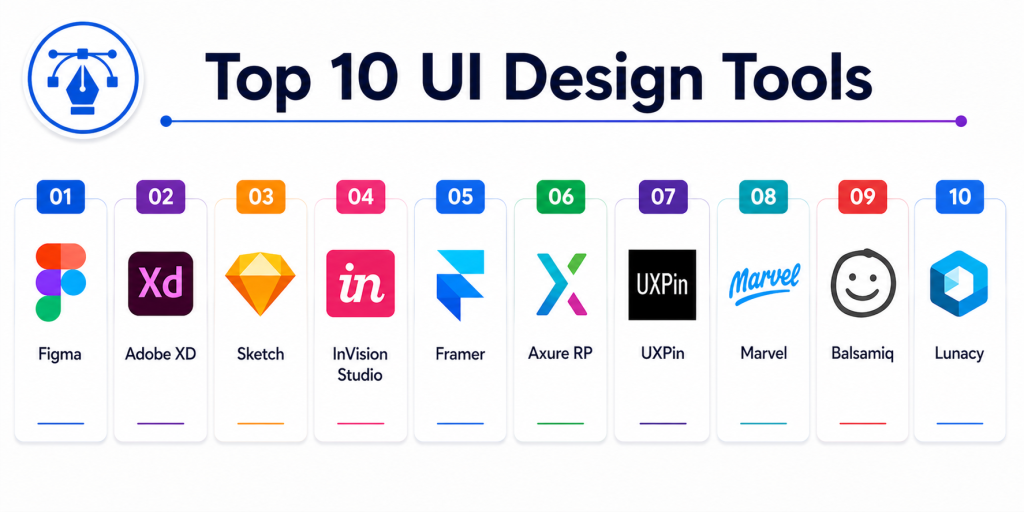
Top 10 UI Design Tools
#1 — Figma
Short description: A cloud-based UI design tool known for real-time collaboration and powerful design system capabilities.
Key Features
- Real-time collaboration
- Component libraries
- Prototyping tools
- Design systems support
- Dev mode for handoff
- Plugin ecosystem
Pros
- Easy to use
- Strong collaboration features
Cons
- Requires internet connection
- Limited offline support
Platforms / Deployment
Web / Windows / macOS
Cloud
Security & Compliance
SSO support, access control
Not publicly stated certifications
Integrations & Ecosystem
Figma integrates seamlessly with design and development workflows.
- Dev tools
- Plugins
- Collaboration tools
Support & Community
Very large global community.
#2 — Adobe XD
Short description: A UI/UX design tool offering vector design, prototyping, and collaboration features.
Key Features
- Vector-based design
- Interactive prototyping
- Voice prototyping
- Collaboration tools
- Repeat grid
- Plugin support
Pros
- Strong Adobe ecosystem
- Easy prototyping
Cons
- Limited updates recently
- Smaller community than competitors
Platforms / Deployment
Windows / macOS
Cloud
Security & Compliance
Not publicly stated
Integrations & Ecosystem
- Adobe Creative Cloud
- Design plugins
Support & Community
Moderate support.
#3 — Sketch
Short description: A macOS-based UI design tool widely used for building digital interfaces and design systems.
Key Features
- Vector design tools
- Symbol libraries
- Prototyping features
- Plugin ecosystem
- Design system support
Pros
- Lightweight and fast
- Strong design features
Cons
- macOS only
- Limited real-time collaboration
Platforms / Deployment
macOS
Cloud
Security & Compliance
Not publicly stated
Integrations & Ecosystem
- Plugins
- Design tools
Support & Community
Large design community.
#4 — InVision Studio
Short description: A design and prototyping tool focused on animation and interactive design.
Key Features
- Advanced animations
- Prototyping tools
- Collaboration features
- Design workflows
- Interactive design
Pros
- Strong animation tools
- Good for prototyping
Cons
- Declining ecosystem
- Limited updates
Platforms / Deployment
Windows / macOS
Cloud
Security & Compliance
Not publicly stated
Integrations & Ecosystem
- InVision tools
Support & Community
Moderate support.
#5 — Framer
Short description: A modern UI design tool focused on interactive design and real-time prototyping.
Key Features
- Interactive components
- Real-time previews
- Code-based design
- Animation tools
- Design system support
Pros
- Advanced interactivity
- Modern workflows
Cons
- Learning curve
- Requires technical understanding
Platforms / Deployment
Web
Cloud
Security & Compliance
Not publicly stated
Integrations & Ecosystem
- Dev tools
- Design tools
Support & Community
Growing community.
#6 — Axure RP
Short description: A powerful prototyping tool used for complex UI workflows and enterprise applications.
Key Features
- Advanced prototyping
- Logic-based interactions
- Wireframing tools
- Documentation features
- Collaboration tools
Pros
- Very powerful
- Great for complex apps
Cons
- Steep learning curve
- Outdated UI
Platforms / Deployment
Windows / macOS
Cloud / Local
Security & Compliance
Not publicly stated
Integrations & Ecosystem
- UX workflows
- Documentation tools
Support & Community
Strong niche adoption.
#7 — UXPin
Short description: A UI design tool that bridges design and development with code-based components.
Key Features
- Code-based design
- Interactive prototyping
- Component libraries
- Design systems
- Collaboration tools
Pros
- Strong design-to-code
- Integrated workflows
Cons
- Learning curve
- Limited popularity
Platforms / Deployment
Web
Cloud
Security & Compliance
Not publicly stated
Integrations & Ecosystem
- Dev tools
- Design tools
Support & Community
Moderate support.
#8 — Marvel
Short description: A simple UI design and prototyping tool for quick mockups and testing.
Key Features
- Wireframing tools
- Prototyping
- User testing
- Collaboration
- Feedback tools
Pros
- Easy to use
- Beginner-friendly
Cons
- Limited advanced features
- Not enterprise-ready
Platforms / Deployment
Web
Cloud
Security & Compliance
Not publicly stated
Integrations & Ecosystem
- UX tools
- Design tools
Support & Community
Moderate community.
#9 — Balsamiq
Short description: A wireframing tool focused on low-fidelity UI design and rapid prototyping.
Key Features
- Drag-and-drop wireframes
- Low-fidelity design
- UI components
- Quick prototyping
- Simple interface
Pros
- Very easy to use
- Fast wireframing
Cons
- Limited visual design
- Not suitable for final UI
Platforms / Deployment
Web / Desktop
Cloud / Local
Security & Compliance
Not publicly stated
Integrations & Ecosystem
- UX workflows
Support & Community
Strong niche community.
#10 — Lunacy
Short description: A free UI design tool offering offline capabilities and compatibility with design formats.
Key Features
- Offline design support
- Vector editing
- Built-in assets
- Prototyping tools
- Design system support
Pros
- Free and lightweight
- Works offline
Cons
- Smaller ecosystem
- Limited advanced features
Platforms / Deployment
Windows / macOS / Linux
Local
Security & Compliance
Not publicly stated
Integrations & Ecosystem
- Design tools
Support & Community
Growing adoption.
Comparison Table
| Tool Name | Best For | Platform(s) Supported | Deployment | Standout Feature | Public Rating |
|---|---|---|---|---|---|
| Figma | Collaboration | Web/Desktop | Cloud | Real-time design | N/A |
| Adobe XD | Prototyping | Desktop | Cloud | Adobe ecosystem | N/A |
| Sketch | Designers | macOS | Cloud | Lightweight | N/A |
| InVision Studio | Animation | Desktop | Cloud | Motion design | N/A |
| Framer | Interactive UI | Web | Cloud | Code-based design | N/A |
| Axure RP | Complex UX | Desktop | Hybrid | Logic workflows | N/A |
| UXPin | Design + Code | Web | Cloud | Code components | N/A |
| Marvel | Beginners | Web | Cloud | Simplicity | N/A |
| Balsamiq | Wireframing | Web/Desktop | Hybrid | Low fidelity | N/A |
| Lunacy | Free design | Desktop | Local | Offline support | N/A |
Evaluation & Scoring of UI Design Tools
| Tool Name | Core (25%) | Ease (15%) | Integrations (15%) | Security (10%) | Performance (10%) | Support (10%) | Value (15%) | Weighted Total |
|---|---|---|---|---|---|---|---|---|
| Figma | 10 | 10 | 10 | 9 | 9 | 10 | 9 | 9.6 |
| Adobe XD | 9 | 9 | 8 | 8 | 9 | 8 | 8 | 8.6 |
| Sketch | 9 | 9 | 8 | 8 | 9 | 9 | 8 | 8.7 |
| InVision | 8 | 8 | 7 | 7 | 8 | 7 | 7 | 7.6 |
| Framer | 9 | 8 | 8 | 8 | 9 | 8 | 8 | 8.5 |
| Axure RP | 9 | 7 | 7 | 8 | 8 | 8 | 7 | 8.0 |
| UXPin | 8 | 8 | 8 | 8 | 8 | 8 | 8 | 8.1 |
| Marvel | 7 | 9 | 7 | 7 | 7 | 7 | 8 | 7.6 |
| Balsamiq | 7 | 10 | 6 | 7 | 7 | 7 | 9 | 7.8 |
| Lunacy | 7 | 9 | 6 | 7 | 7 | 7 | 10 | 7.9 |
How to interpret the scores:
These scores are comparative and reflect real-world design workflows. Higher scores indicate stronger collaboration, performance, and scalability. Tools differ based on focus—some prioritize simplicity, while others focus on advanced prototyping and development integration.
Which UI Design Tool Is Right for You?
Solo / Freelancer
Figma or Balsamiq for simplicity and flexibility.
SMB
Figma or Sketch for balanced features and usability.
Mid-Market
Framer or UXPin for advanced workflows.
Enterprise
Figma, Axure RP, or Adobe XD for scalability.
Budget vs Premium
Free tools like Figma offer strong value; enterprise tools add advanced features.
Feature Depth vs Ease of Use
Balsamiq is easiest; Axure offers deeper functionality.
Integrations & Scalability
Figma and Framer provide strong ecosystems.
Security & Compliance Needs
Enterprise tools provide better governance.
Frequently Asked Questions (FAQs)
1. What are UI design tools?
They help create user interfaces for apps and websites.
2. Why are they important?
They improve design quality and collaboration.
3. What is prototyping?
Creating interactive mockups of designs.
4. Which tool is best for beginners?
Figma and Marvel are beginner-friendly.
5. Are UI tools free?
Some offer free tiers.
6. Can UI tools integrate with code?
Yes, many support developer handoff.
7. What is a design system?
Reusable UI components and guidelines.
8. Do I need multiple tools?
Often yes, for full workflow coverage.
9. Can I design mobile apps?
Yes, all tools support mobile design.
10. Which tool is best overall?
Depends on your workflow and team size.
Conclusion
UI Design Tools are essential for creating modern, user-friendly digital products. Platforms like Figma have become industry standards due to their collaboration capabilities and ease of use, while tools like Sketch and Adobe XD continue to serve dedicated design workflows. Advanced tools like Framer and Axure RP enable deeper interactivity and complex design logic, making them ideal for specialized use cases. Meanwhile, simpler tools like Marvel and Balsamiq help teams quickly prototype ideas and validate concepts. The right tool depends on your team size, design complexity, and collaboration needs. Smaller teams often prioritize simplicity and affordability, while enterprises require scalability and integration capabilities. Since no single tool covers every aspect of UI design, combining tools is often the best approach. Start with a core design platform and expand into prototyping and collaboration tools as needed. This ensures a scalable and efficient UI design workflow.