Introduction
Municipal Tax Collection Systems are specialized software platforms used by local governments, municipalities, and public finance departments to manage tax billing, revenue collection, property taxes, utility charges, permits, fines, and other civic revenue streams. These systems help automate tax administration workflows, improve revenue accuracy, reduce manual errors, and ensure compliance with government regulations.
In modern digital governance environments, municipalities face increasing pressure to improve transparency, reduce revenue leakage, and provide citizens with seamless digital payment experiences. Traditional paper-based or fragmented legacy systems are no longer sufficient. Modern tax collection platforms now integrate cloud computing, automation, AI-driven analytics, digital payment gateways, and citizen self-service portals.
Real-world use cases include:
- Property tax assessment and billing
- Utility billing and collection
- Business licensing and fee management
- Parking fines and penalty collection
- Online citizen payment portals
Buyers evaluating Municipal Tax Collection Systems should consider:
- Revenue management capabilities
- Billing and invoicing automation
- Payment gateway integration
- Compliance with tax regulations
- Workflow automation and approvals
- Citizen self-service functionality
- Reporting and audit capabilities
- Security and data protection
- Scalability for large populations
- Integration with ERP and government systems
Best for: Local governments, municipalities, revenue departments, smart city programs, and public finance authorities that manage tax collection, billing, and civic revenue operations.
Not ideal for: Small private businesses or organizations that do not handle government taxation or civic revenue collection processes.
Key Trends in Municipal Tax Collection Systems
- AI-based revenue forecasting and fraud detection improving financial accuracy
- Cloud-native municipal platforms replacing legacy on-premise tax systems
- Digital payment adoption including UPI, cards, wallets, and online banking
- Citizen self-service portals reducing administrative workload
- Integration with GIS systems for property-based taxation accuracy
- Automation of billing, reminders, and penalty calculations
- Interoperability with ERP and financial management systems
- Mobile-first payment and inspection capabilities for field officers
- Real-time dashboards for revenue tracking and compliance monitoring
- Increased focus on cybersecurity and data privacy compliance
How We Selected These Tools (Methodology)
- Market adoption across municipal and government revenue departments
- Depth of tax billing and revenue management capabilities
- Support for property, utility, and multi-source taxation
- Integration flexibility with financial and GIS systems
- Scalability for large municipal populations
- Security controls including audit logs and access management
- Workflow automation and citizen self-service features
- Cloud readiness and deployment flexibility
- Vendor support ecosystem and implementation maturity
- Ability to support compliance-heavy public finance environments
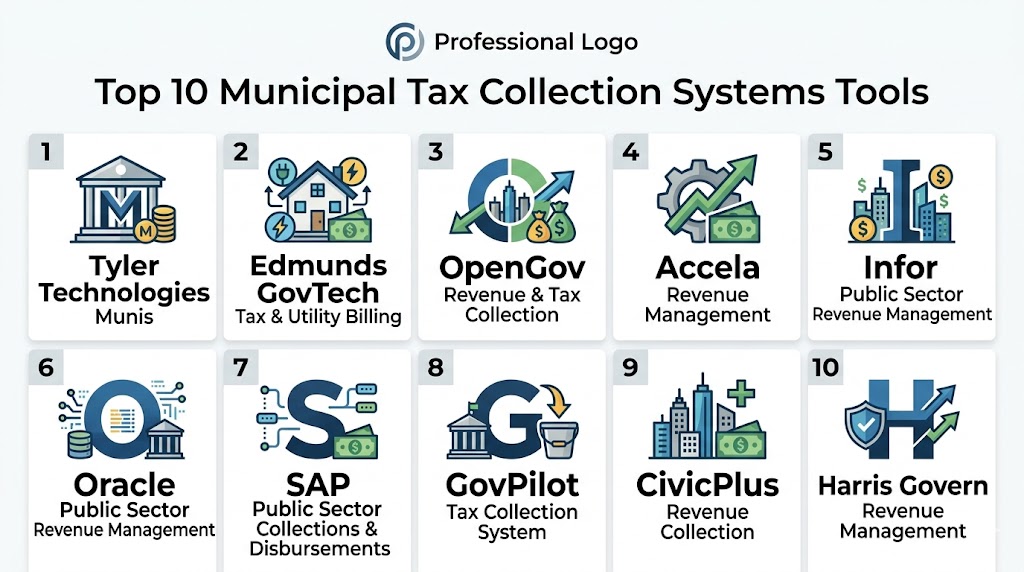
Top 10 Municipal Tax Collection Systems Tools
1- Tyler Technologies Munis
Short description:
Tyler Technologies Munis is a widely used public sector ERP and municipal tax collection platform. It provides comprehensive financial management, tax billing, and revenue collection capabilities designed for local governments and public agencies.
Key Features
- Property tax billing and collection
- Financial management and accounting
- Utility billing integration
- Citizen self-service portal
- Budget and revenue reporting
- Workflow automation for approvals
- Document management for tax records
Pros
- Strong government adoption
- Comprehensive ERP integration
- Robust reporting capabilities
Cons
- Complex implementation process
- Higher cost for smaller municipalities
- Requires training for full utilization
Platforms / Deployment
- Web / Windows
- Cloud / Hybrid
Security & Compliance
Supports RBAC, MFA, audit logging, and encryption. Compliance features vary by deployment configuration.
Integrations & Ecosystem
Tyler integrates with ERP systems, GIS platforms, payment gateways, and financial reporting tools.
- ERP systems
- Payment gateways
- GIS platforms
- Banking systems
- Document management systems
Support & Community
Strong government-focused support with extensive implementation services and training programs.
2- Oracle Public Sector Revenue Management
Short description:
Oracle Public Sector Revenue Management is an enterprise-grade platform designed to manage taxation, billing, and revenue collection for government organizations with high scalability requirements.
Key Features
- Tax and revenue lifecycle management
- Automated billing and invoicing
- Citizen payment portals
- Revenue analytics and forecasting
- Policy and rule-based taxation engine
- Multi-channel payment processing
- Compliance tracking
Pros
- Highly scalable enterprise solution
- Strong analytics capabilities
- Flexible revenue rule engine
Cons
- High implementation complexity
- Expensive for smaller municipalities
- Requires Oracle ecosystem alignment
Platforms / Deployment
- Web
- Cloud / Hybrid
Security & Compliance
Supports advanced encryption, identity management, audit trails, and enterprise-grade security controls.
Integrations & Ecosystem
Integrates with Oracle ERP, databases, analytics tools, and payment systems.
- Oracle ERP Cloud
- Payment gateways
- Financial systems
- Data warehouses
- API services
Support & Community
Enterprise-level global support with consulting services and implementation partners.
3- FAST Enterprises GenTax
Short description:
GenTax by FAST Enterprises is a government tax administration system widely used for managing tax processing, compliance, and revenue collection across multiple tax types.
Key Features
- Tax processing automation
- Revenue collection management
- Compliance tracking
- Audit and fraud detection tools
- Citizen service portals
- Refund and adjustment processing
- Workflow automation
Pros
- Highly specialized tax system
- Strong compliance capabilities
- Efficient automation workflows
Cons
- Limited flexibility outside tax domain
- Complex implementation lifecycle
- Vendor-specific customization
Platforms / Deployment
- Web
- Hybrid / On-premise / Cloud
Security & Compliance
Includes strong audit logging, role-based access control, encryption, and compliance monitoring tools.
Integrations & Ecosystem
Integrates with government financial systems, banking networks, and reporting tools.
- Government ERP systems
- Banking systems
- Reporting platforms
- Data warehouses
- Payment processors
Support & Community
Strong government implementation support with long-term maintenance programs.
4- OpenGov Revenue Collection
Short description:
OpenGov provides cloud-based financial and tax management solutions designed for municipalities focusing on transparency, reporting, and digital modernization.
Key Features
- Revenue collection dashboards
- Budget and forecasting tools
- Digital payment integration
- Citizen engagement portals
- Financial reporting automation
- Permit and fee management
- Workflow approvals
Pros
- Easy-to-use interface
- Strong transparency features
- Cloud-native architecture
Cons
- Less suitable for very large governments
- Limited deep tax customization
- Depends heavily on internet connectivity
Platforms / Deployment
- Web
- Cloud
Security & Compliance
Supports encryption, SSO, MFA, and role-based access controls.
Integrations & Ecosystem
Integrates with financial systems, ERP platforms, and payment gateways.
- ERP systems
- Payment providers
- Accounting tools
- Data visualization platforms
- Government databases
Support & Community
Strong SaaS support model with onboarding assistance and documentation.
5- Accela Civic Platform
Short description:
Accela Civic Platform supports permitting, licensing, and revenue collection for municipalities, focusing on digitizing government services and tax workflows.
Key Features
- Tax and permit management
- Revenue collection automation
- Citizen self-service portal
- Workflow automation engine
- Inspection and compliance tracking
- Document management
- Mobile field services
Pros
- Strong civic workflow automation
- Good citizen engagement tools
- Flexible service modules
Cons
- Configuration complexity
- Requires customization for large deployments
- UI can feel complex for new users
Platforms / Deployment
- Web / Mobile
- Cloud
Security & Compliance
Supports RBAC, encryption, audit logs, and secure identity management.
Integrations & Ecosystem
Integrates with GIS, payment systems, and government ERP platforms.
- GIS platforms
- Payment gateways
- ERP systems
- Document systems
- API integrations
Support & Community
Strong government SaaS support with training and implementation services.
6- Infor Public Sector Revenue Management
Short description:
Infor Public Sector Revenue Management provides financial and tax administration capabilities tailored for municipalities and public organizations.
Key Features
- Tax billing automation
- Revenue tracking and reporting
- Utility billing integration
- Citizen portals
- Financial analytics
- Workflow automation
- Compliance management
Pros
- Strong ERP integration
- Good financial analytics
- Scalable architecture
Cons
- Complex configuration
- Requires training
- Higher enterprise cost
Platforms / Deployment
- Web
- Cloud / Hybrid
Security & Compliance
Includes encryption, role-based access, and audit logging features.
Integrations & Ecosystem
Integrates with Infor ERP, payment systems, and analytics platforms.
- ERP systems
- Payment gateways
- Financial systems
- Reporting tools
- API services
Support & Community
Enterprise support with consulting and implementation partners.
7- Civica Revenue Management
Short description:
Civica provides public sector software solutions including tax collection and revenue management systems widely used in government modernization programs.
Key Features
- Property tax management
- Revenue collection automation
- Citizen payment portals
- Compliance tracking
- Financial reporting
- Workflow management
- Document storage
Pros
- Strong public sector focus
- Flexible deployment options
- Good compliance features
Cons
- Smaller global footprint
- Limited ecosystem compared to large vendors
- UI modernization needed in some modules
Platforms / Deployment
- Web
- Cloud / Hybrid
Security & Compliance
Supports access controls, encryption, and audit capabilities.
Integrations & Ecosystem
Integrates with financial systems, government databases, and payment gateways.
- ERP systems
- Payment platforms
- Government systems
- Reporting tools
- APIs
Support & Community
Strong government support model with regional implementation teams.
8- SAP Public Sector Revenue Management
Short description:
SAP Public Sector Revenue Management enables municipalities and governments to manage taxation, billing, and financial processes within the SAP ecosystem.
Key Features
- Tax billing and collection
- Financial integration with SAP ERP
- Revenue forecasting
- Compliance monitoring
- Workflow automation
- Citizen billing portals
- Reporting dashboards
Pros
- Strong ERP integration
- Highly scalable
- Robust analytics
Cons
- High complexity
- Expensive licensing
- Requires SAP expertise
Platforms / Deployment
- Web
- Cloud / Hybrid
Security & Compliance
Supports enterprise security standards including encryption, access control, and audit logs.
Integrations & Ecosystem
Deep integration with SAP ecosystem tools and enterprise systems.
- SAP ERP
- SAP Analytics
- Financial systems
- Government databases
- Payment systems
Support & Community
Enterprise-grade global support and consulting ecosystem.
9- Harris Govern Revenue Suite
Short description:
Harris Govern provides municipal tax collection and property assessment solutions designed for local government revenue management.
Key Features
- Property tax management
- Assessment workflows
- Billing and collection
- Citizen portals
- Compliance reporting
- Data management tools
- Workflow automation
Pros
- Strong property tax focus
- Good municipal adoption
- Reliable reporting tools
Cons
- Limited global presence
- Interface modernization needed
- Customization required for complex needs
Platforms / Deployment
- Web / Windows
- Cloud / Hybrid
Security & Compliance
Supports role-based access and encryption features.
Integrations & Ecosystem
Integrates with government ERP systems, GIS platforms, and financial systems.
- GIS systems
- ERP platforms
- Payment systems
- Reporting tools
- Databases
Support & Community
Stable government-focused support and implementation services.
10- Open Source Municipal Tax Platforms (Generic Category)
Short description:
Some municipalities use open-source frameworks and custom-built systems for tax collection and revenue management where cost control and flexibility are priorities.
Key Features
- Custom tax workflows
- Basic billing systems
- Payment integration support
- Reporting dashboards
- Modular architecture
- API-driven extensibility
- Data management tools
Pros
- Low licensing cost
- High customization flexibility
- Control over system architecture
Cons
- Requires strong technical teams
- Limited vendor support
- Higher long-term maintenance effort
Platforms / Deployment
- Web
- Self-hosted / Cloud
Security & Compliance
Varies based on implementation and infrastructure setup.
Integrations & Ecosystem
Integrates through APIs with financial systems, payment gateways, and government databases.
- Payment systems
- ERP systems
- Databases
- Reporting tools
- Custom APIs
Support & Community
Depends on internal teams or third-party vendors.
Comparison Table
| Tool Name | Best For | Platform(s) Supported | Deployment | Standout Feature | Public Rating |
|---|---|---|---|---|---|
| Tyler Munis | Municipal ERP + tax | Web, Windows | Cloud / Hybrid | Full civic ERP suite | N/A |
| Oracle PSRM | Large governments | Web | Cloud / Hybrid | Revenue engine | N/A |
| FAST GenTax | Tax administration | Web | Hybrid | Tax automation engine | N/A |
| OpenGov | Transparent reporting | Web | Cloud | Modern dashboards | N/A |
| Accela | Civic workflows | Web, Mobile | Cloud | Permits + tax system | N/A |
| Infor Public Sector | Financial integration | Web | Cloud / Hybrid | ERP alignment | N/A |
| Civica | Government modernization | Web | Cloud / Hybrid | Modular revenue suite | N/A |
| SAP PSRM | Enterprise governments | Web | Cloud / Hybrid | SAP ecosystem integration | N/A |
| Harris Govern | Property tax focus | Web | Cloud / Hybrid | Assessment workflows | N/A |
| Open-source solutions | Custom deployments | Web | Self-hosted | Full customization | N/A |
Evaluation & Scoring of Municipal Tax Collection Systems
| Tool Name | Core 25% | Ease 15% | Integrations 15% | Security 10% | Performance 10% | Support 10% | Value 15% | Weighted Total |
|---|---|---|---|---|---|---|---|---|
| Tyler Munis | 9.6 | 7.8 | 9.4 | 9.2 | 9.3 | 9.5 | 7.5 | 8.8 |
| Oracle PSRM | 9.7 | 7.2 | 9.6 | 9.5 | 9.6 | 9.4 | 7.0 | 8.7 |
| FAST GenTax | 9.5 | 7.4 | 9.2 | 9.3 | 9.4 | 9.2 | 7.6 | 8.7 |
| OpenGov | 8.7 | 8.8 | 8.5 | 8.4 | 8.6 | 8.8 | 8.9 | 8.6 |
| Accela | 8.9 | 8.0 | 8.8 | 8.5 | 8.6 | 8.7 | 8.4 | 8.5 |
| Infor | 8.8 | 7.6 | 8.9 | 8.6 | 8.7 | 8.6 | 8.2 | 8.4 |
| Civica | 8.4 | 8.1 | 8.3 | 8.2 | 8.3 | 8.4 | 8.5 | 8.3 |
| SAP PSRM | 9.5 | 7.0 | 9.5 | 9.4 | 9.6 | 9.3 | 6.8 | 8.5 |
| Harris Govern | 8.2 | 8.0 | 8.1 | 8.0 | 8.1 | 8.2 | 8.6 | 8.1 |
| Open Source | 7.8 | 7.5 | 8.0 | 6.8 | 7.9 | 7.2 | 9.4 | 7.7 |
Scoring reflects a comparative view of municipal readiness, integration strength, scalability, and operational maturity. Enterprise platforms rank higher in governance and scalability, while open-source approaches excel in flexibility and cost efficiency.
Which Municipal Tax Collection Systems Tool Is Right for You?
Solo / Small Municipal Teams
Smaller municipalities or pilot programs may benefit from OpenGov, Civica, or open-source systems due to lower complexity and faster deployment.
SMB / Regional Municipalities
Mid-sized municipalities often choose Accela, Infor, or Harris Govern for balanced functionality, usability, and integration capabilities.
Mid-Market Governments
Regional governments with complex workflows typically rely on Tyler Munis, Hexagon ecosystems, or FAST GenTax due to strong automation and tax handling depth.
Enterprise Governments
Large national or state-level governments generally prefer Oracle PSRM or SAP PSRM for scalability, compliance, and deep ERP integration.
Budget vs Premium
Budget-conscious organizations may opt for open-source or Civica-style platforms, while premium enterprise systems provide advanced governance, automation, and scalability.
Feature Depth vs Ease of Use
Oracle and SAP offer deep capabilities but require expertise, while OpenGov and Accela offer easier adoption with modern interfaces.
Integrations & Scalability
SAP, Oracle, and Tyler lead in integration ecosystems, especially for ERP, GIS, and financial systems.
Security & Compliance Needs
All government-grade systems must support RBAC, audit logging, encryption, MFA, and secure identity management, with enterprise vendors offering stronger compliance frameworks.
Frequently Asked Questions
1. What is a municipal tax collection system?
It is software used by local governments to manage tax billing, revenue collection, property taxes, and citizen payments in a centralized digital platform.
2. Why do municipalities need these systems?
They improve revenue accuracy, reduce manual errors, automate billing, and provide transparent digital services to citizens.
3. Can these systems handle multiple tax types?
Yes, most platforms support property tax, utility billing, permits, fines, and other municipal revenue streams.
4. Are cloud-based systems common in this category?
Yes, cloud adoption is increasing due to scalability, easier maintenance, and improved citizen access.
5. What integrations are important?
ERP systems, GIS platforms, payment gateways, banking systems, and government databases are key integrations.
6. How long does implementation take?
It varies from several months to multiple years depending on data complexity, scale, and customization needs.
7. Are open-source systems reliable?
They are flexible and cost-effective but require strong internal technical expertise and maintenance resources.
8. What security features are essential?
RBAC, MFA, encryption, audit logs, and secure APIs are critical for protecting sensitive financial data.
9. What are common implementation challenges?
Data migration, legacy system integration, user training, and workflow redesign are common challenges.
10. How should municipalities choose a system?
They should evaluate scalability, integration needs, compliance requirements, ease of use, and long-term maintenance costs.
Conclusion
Municipal Tax Collection Systems are essential for modernizing public finance operations and improving transparency in government revenue management. As municipalities continue to digitize services, these platforms are evolving to include cloud-native architecture, AI-driven analytics, mobile-first capabilities, and citizen self-service portals. Enterprise solutions like Oracle PSRM, SAP PSRM, and Tyler Munis provide deep functionality and scalability, while platforms like OpenGov and Accela focus on usability and modern digital experiences. Open-source solutions remain important for cost-sensitive deployments requiring flexibility. Ultimately, the best choice depends on organizational scale, regulatory requirements, integration complexity, and long-term digital transformation goals. A careful evaluation followed by pilot implementation ensures better alignment with operational needs and reduces deployment risks in the long term.