Introduction
Influencer affiliate platforms help brands manage influencer partnerships, affiliate tracking, commission payouts, creator campaigns, and performance analytics in a centralized environment. These platforms combine influencer marketing with affiliate management, allowing businesses to measure ROI more effectively while scaling creator partnerships across multiple channels.
As creator-led commerce continues to grow, businesses increasingly rely on influencer affiliate platforms to automate campaign management, track conversions, prevent fraud, and optimize creator relationships. Modern platforms now support AI-driven creator discovery, affiliate link generation, commission automation, social commerce integrations, and real-time campaign analytics.
Real-world use cases include:
- Influencer affiliate campaigns
- Creator partnership management
- Social commerce programs
- Ambassador marketing initiatives
- Performance-based influencer payouts
Evaluation Criteria for Buyers:
- Creator discovery capabilities
- Affiliate tracking accuracy
- Commission management flexibility
- Analytics and attribution visibility
- Fraud prevention tools
- E-commerce integrations
- Automation workflows
- Scalability and performance
- Security and compliance
- Pricing and ROI optimization
Best for: e-commerce brands, SaaS businesses, agencies, marketplaces, creator economy platforms, DTC brands, and enterprises managing influencer-driven customer acquisition.
Not ideal for: businesses without active creator partnerships, companies needing only simple affiliate tracking, or organizations requiring fully custom in-house influencer infrastructure.
Key Trends in Influencer Affiliate Platforms
- AI-driven influencer discovery and campaign matching are becoming mainstream.
- Social commerce integrations with TikTok, Instagram, and YouTube are expanding rapidly.
- Performance-based influencer compensation models are replacing flat sponsorship fees.
- Real-time affiliate attribution is improving ROI visibility.
- Fraud prevention and fake engagement detection tools are becoming more advanced.
- Creator marketplaces are merging with affiliate management ecosystems.
- Automated commission payouts are simplifying influencer operations.
- Short-form video commerce integrations are increasing campaign engagement.
- API-first influencer workflows are helping enterprises scale partnerships globally.
- Influencer CRM capabilities are becoming core platform requirements.
How We Selected These Tools Methodology
The platforms below were selected based on market adoption, influencer ecosystem maturity, automation capabilities, and affiliate tracking performance.
Our evaluation criteria included:
- Influencer discovery and management capabilities
- Affiliate tracking and attribution accuracy
- Campaign automation flexibility
- E-commerce and CRM integrations
- Fraud prevention and analytics visibility
- Scalability for SMB and enterprise use cases
- API and developer ecosystem maturity
- Security and account protection capabilities
- Ease of onboarding and usability
- Customer support and ecosystem reputation
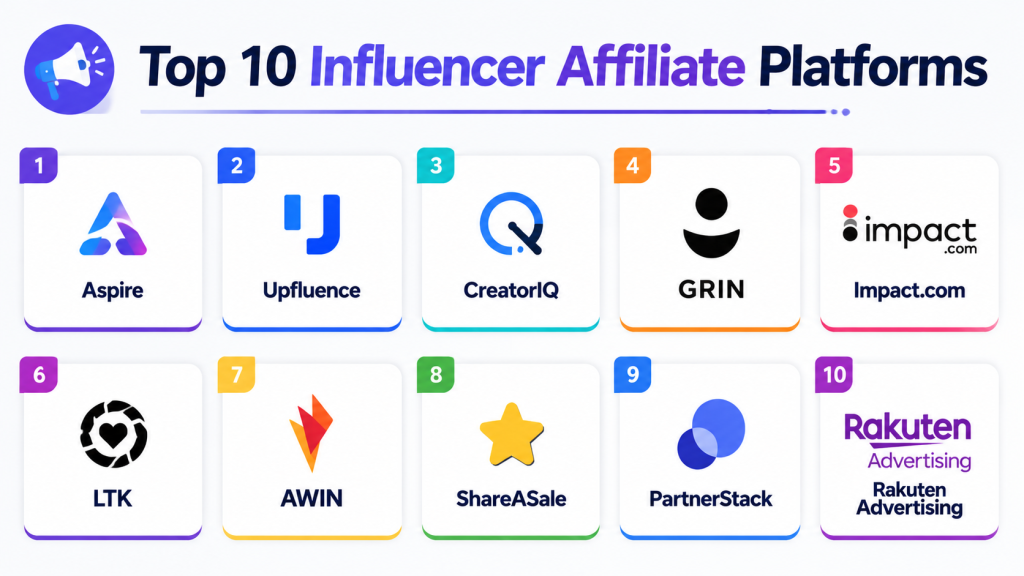
Top 10 Influencer Affiliate Platforms Tools
#1 — Impact
Short description: Impact is one of the leading partnership automation platforms for influencer marketing, affiliate programs, and creator commerce. It provides enterprise-grade automation, affiliate tracking, and partnership management capabilities for scaling influencer ecosystems.
Key Features
- Influencer and affiliate management
- Automated commission tracking
- Partnership lifecycle management
- Fraud prevention tools
- Real-time attribution analytics
- Creator onboarding workflows
- API-driven automation
Pros
- Strong enterprise scalability
- Advanced partnership automation
- Excellent analytics visibility
Cons
- Higher pricing for SMBs
- Complex onboarding for beginners
- Advanced workflows require setup planning
Platforms / Deployment
- Web
- Cloud
Security & Compliance
- MFA support
- GDPR support
- Role-based access controls
- Not publicly stated for broader certifications
Integrations & Ecosystem
Impact integrates with major e-commerce, CRM, and marketing ecosystems for partnership automation.
- Shopify
- Salesforce
- HubSpot
- APIs
- CRM systems
- Marketing automation tools
Support & Community
Strong enterprise onboarding, customer success support, and educational resources for partnership teams.
#2 — PartnerStack
Short description: PartnerStack is widely used by SaaS companies to manage affiliate, referral, and reseller partner programs. It specializes in recurring commission workflows and B2B partnership ecosystems.
Key Features
- SaaS affiliate management
- Recurring commission automation
- Partner onboarding workflows
- Referral and reseller support
- Campaign tracking
- Payout automation
- Performance analytics
Pros
- Excellent for SaaS partnerships
- Strong recurring payout workflows
- Good automation capabilities
Cons
- Primarily SaaS-focused
- Limited retail influencer workflows
- Enterprise customization may require setup support
Platforms / Deployment
- Web
- Cloud
Security & Compliance
- MFA support
- GDPR support
- Encryption support
- Not publicly stated for broader certifications
Integrations & Ecosystem
PartnerStack integrates with SaaS, CRM, and subscription ecosystems.
- HubSpot
- Stripe
- Salesforce
- APIs
- CRM systems
- Subscription tools
Support & Community
Provides strong onboarding and partner enablement support for SaaS-focused businesses.
#3 — Aspire
Short description: Aspire is an influencer marketing platform focused on creator relationship management, affiliate workflows, and social commerce campaigns. It is widely used by DTC and e-commerce brands.
Key Features
- Influencer discovery tools
- Affiliate link management
- Social commerce workflows
- Campaign automation
- Creator CRM functionality
- Analytics dashboards
- Product seeding support
Pros
- Excellent creator discovery
- Strong social commerce focus
- Good influencer relationship tools
Cons
- Enterprise pricing may be expensive
- Advanced analytics require higher plans
- Setup complexity increases at scale
Platforms / Deployment
- Web
- Cloud
Security & Compliance
- MFA support
- GDPR support
- Role-based controls
- Not publicly stated for advanced certifications
Integrations & Ecosystem
Aspire integrates with e-commerce and influencer marketing ecosystems.
- Shopify
- TikTok
- APIs
- E-commerce platforms
- CRM systems
Support & Community
Strong onboarding and influencer campaign support for growing creator programs.
#4 — CreatorIQ
Short description: CreatorIQ is an enterprise influencer marketing platform designed for global brands managing large creator ecosystems. It provides advanced analytics, campaign automation, and creator intelligence capabilities.
Key Features
- Enterprise creator management
- AI-driven influencer discovery
- Campaign analytics
- Fraud detection tools
- Affiliate tracking workflows
- Creator CRM
- Performance attribution
Pros
- Excellent enterprise functionality
- Strong analytics and reporting
- Advanced creator intelligence
Cons
- Enterprise-focused pricing
- Complex onboarding process
- Less suitable for SMBs
Platforms / Deployment
- Web
- Cloud
Security & Compliance
- MFA support
- GDPR support
- Role-based access controls
- Not publicly stated for broader certifications
Integrations & Ecosystem
CreatorIQ integrates with enterprise marketing and analytics ecosystems.
- Salesforce
- TikTok
- APIs
- CRM systems
- Analytics platforms
Support & Community
Strong enterprise implementation and customer success support for large-scale creator programs.
#5 — Upfluence
Short description: Upfluence combines influencer discovery, affiliate management, and creator relationship tools in a unified platform for e-commerce and DTC brands.
Key Features
- Influencer discovery engine
- Affiliate tracking support
- Campaign management workflows
- Creator relationship tools
- E-commerce integrations
- Automated outreach
- Performance analytics
Pros
- Strong e-commerce integrations
- Good influencer discovery capabilities
- Unified creator workflows
Cons
- Interface can feel complex
- Pricing may increase at scale
- Advanced reporting requires premium plans
Platforms / Deployment
- Web
- Cloud
Security & Compliance
- MFA support
- GDPR support
- Encryption support
- Not publicly stated for enterprise certifications
Integrations & Ecosystem
Upfluence supports integrations across e-commerce and social commerce ecosystems.
- Shopify
- WooCommerce
- APIs
- CRM systems
- E-commerce tools
Support & Community
Provides onboarding assistance and creator campaign support for growing influencer programs.
#6 — GRIN
Short description: GRIN is a creator management platform focused on influencer relationship building, affiliate workflows, and e-commerce-driven creator partnerships.
Key Features
- Influencer CRM
- Affiliate link management
- Product gifting workflows
- Campaign analytics
- Creator recruitment tools
- E-commerce integrations
- Automated reporting
Pros
- Strong creator relationship management
- Excellent e-commerce workflows
- Good analytics visibility
Cons
- Enterprise pricing structure
- Advanced onboarding required
- Limited SMB affordability
Platforms / Deployment
- Web
- Cloud
Security & Compliance
- MFA support
- GDPR support
- Role-based access controls
- Not publicly stated for broader certifications
Integrations & Ecosystem
GRIN integrates heavily with e-commerce and influencer ecosystems.
- Shopify
- WooCommerce
- TikTok
- APIs
- CRM systems
Support & Community
Strong onboarding and creator campaign management support for DTC businesses.
#7 — Refersion
Short description: Refersion is an affiliate and influencer tracking platform commonly used by e-commerce businesses for referral marketing and influencer commission management.
Key Features
- Affiliate and influencer tracking
- Commission management
- Referral campaign automation
- Real-time reporting
- Coupon tracking
- Marketplace integrations
- Automated payouts
Pros
- Easy e-commerce setup
- Strong Shopify integration
- Beginner-friendly workflows
Cons
- Limited enterprise customization
- Smaller analytics ecosystem
- Advanced automation may require integrations
Platforms / Deployment
- Web
- Cloud
Security & Compliance
- MFA support
- GDPR support
- Encryption support
- Not publicly stated for broader certifications
Integrations & Ecosystem
Refersion integrates strongly with e-commerce and affiliate workflows.
- Shopify
- BigCommerce
- WooCommerce
- APIs
- E-commerce systems
Support & Community
Provides onboarding tutorials and SMB-focused affiliate program support.
#8 — Awin
Short description: Awin is a global affiliate marketing network supporting influencer partnerships, affiliate campaigns, and publisher ecosystems across multiple industries.
Key Features
- Global affiliate network
- Influencer partnership workflows
- Campaign analytics
- Commission automation
- Fraud monitoring
- Publisher marketplace
- Performance tracking
Pros
- Large affiliate ecosystem
- Global partnership coverage
- Strong campaign analytics
Cons
- Interface can feel dated
- Requires campaign optimization expertise
- Enterprise onboarding may take time
Platforms / Deployment
- Web
- Cloud
Security & Compliance
- MFA support
- GDPR support
- Fraud monitoring systems
- Not publicly stated for broader certifications
Integrations & Ecosystem
Awin supports integrations across affiliate and commerce ecosystems.
- Shopify
- APIs
- CRM systems
- Affiliate networks
- Marketing tools
Support & Community
Large affiliate ecosystem with onboarding resources and global support operations.
#9 — Rakuten Advertising
Short description: Rakuten Advertising provides enterprise affiliate and influencer marketing infrastructure for brands managing large-scale partnership campaigns globally.
Key Features
- Affiliate campaign management
- Influencer marketing workflows
- Performance attribution
- Fraud prevention systems
- Commission automation
- Analytics dashboards
- Publisher ecosystem access
Pros
- Strong enterprise infrastructure
- Global affiliate reach
- Advanced analytics visibility
Cons
- Enterprise-focused pricing
- More complex onboarding
- Less SMB-focused
Platforms / Deployment
- Web
- Cloud
Security & Compliance
- MFA support
- GDPR support
- Fraud monitoring support
- Not publicly stated for advanced certifications
Integrations & Ecosystem
Rakuten Advertising integrates with large-scale marketing and commerce ecosystems.
- APIs
- Affiliate systems
- CRM platforms
- Marketing tools
- Commerce platforms
Support & Community
Strong enterprise onboarding and partnership support for large brands.
#10 — Everflow
Short description: Everflow is a partnership and affiliate tracking platform designed for performance marketing teams managing influencer, affiliate, and partner ecosystems.
Key Features
- Affiliate tracking automation
- Influencer partnership workflows
- Fraud prevention systems
- Real-time analytics
- Commission management
- API support
- Multi-channel attribution
Pros
- Strong tracking accuracy
- Good automation workflows
- Flexible reporting capabilities
Cons
- Advanced features require setup time
- Smaller creator marketplace ecosystem
- Interface may feel technical for beginners
Platforms / Deployment
- Web
- Cloud
Security & Compliance
- MFA support
- GDPR support
- Encryption support
- Not publicly stated for broader certifications
Integrations & Ecosystem
Everflow supports integrations across affiliate, analytics, and commerce ecosystems.
- APIs
- CRM systems
- Analytics tools
- Affiliate networks
- Marketing platforms
Support & Community
Provides onboarding support and performance marketing implementation guidance.
Comparison Table
| Tool Name | Best For | Platforms Supported | Deployment | Standout Feature | Public Rating |
|---|---|---|---|---|---|
| Impact | Enterprise partnerships | Web | Cloud | Partnership automation | N/A |
| PartnerStack | SaaS affiliate programs | Web | Cloud | Recurring commissions | N/A |
| Aspire | Creator commerce | Web | Cloud | Influencer discovery | N/A |
| CreatorIQ | Enterprise influencer marketing | Web | Cloud | AI creator intelligence | N/A |
| Upfluence | E-commerce influencer campaigns | Web | Cloud | Unified creator workflows | N/A |
| GRIN | Creator relationship management | Web | Cloud | Influencer CRM | N/A |
| Refersion | SMB affiliate tracking | Web | Cloud | E-commerce simplicity | N/A |
| Awin | Global affiliate programs | Web | Cloud | Large affiliate network | N/A |
| Rakuten Advertising | Enterprise affiliate campaigns | Web | Cloud | Global publisher ecosystem | N/A |
| Everflow | Performance marketing tracking | Web | Cloud | Advanced attribution analytics | N/A |
Evaluation & Scoring of Influencer Affiliate Platforms
| Tool Name | Core 25% | Ease 15% | Integrations 15% | Security 10% | Performance 10% | Support 10% | Value 15% | Weighted Total |
|---|---|---|---|---|---|---|---|---|
| Impact | 9 | 7 | 9 | 8 | 9 | 9 | 7 | 8.4 |
| PartnerStack | 8 | 8 | 8 | 8 | 8 | 8 | 8 | 8.0 |
| Aspire | 8 | 8 | 8 | 7 | 8 | 8 | 7 | 7.8 |
| CreatorIQ | 9 | 7 | 9 | 8 | 9 | 9 | 6 | 8.3 |
| Upfluence | 8 | 8 | 8 | 7 | 8 | 8 | 7 | 7.8 |
| GRIN | 8 | 7 | 8 | 8 | 8 | 8 | 7 | 7.8 |
| Refersion | 7 | 9 | 7 | 7 | 7 | 8 | 8 | 7.6 |
| Awin | 8 | 7 | 8 | 8 | 8 | 8 | 7 | 7.8 |
| Rakuten Advertising | 9 | 7 | 8 | 8 | 9 | 8 | 6 | 8.0 |
| Everflow | 8 | 7 | 8 | 8 | 8 | 8 | 7 | 7.8 |
These scores are comparative rather than absolute and are intended to help businesses evaluate influencer affiliate platforms based on operational priorities. Some platforms focus heavily on enterprise partnership automation, while others prioritize creator relationship management, social commerce, or affiliate simplicity. Businesses should evaluate influencer workflows, analytics capabilities, integrations, and scalability requirements carefully before selecting a solution. Running pilot creator campaigns with shortlisted platforms is usually the most effective evaluation strategy.
Which Influencer Affiliate Platforms Tool Is Right for You?
Solo / Freelancer
Individual creators and small businesses usually benefit most from simpler influencer affiliate tools with fast onboarding. Refersion and PartnerStack are strong choices for lightweight affiliate operations and creator partnerships.
SMB
SMBs often require automation, creator discovery, and strong e-commerce integrations. Aspire and Upfluence are excellent choices for growing influencer campaigns and social commerce initiatives.
Mid-Market
Mid-market businesses typically need advanced analytics, campaign automation, and influencer CRM functionality. GRIN and Everflow provide stronger operational visibility and tracking flexibility.
Enterprise
Large enterprises generally require enterprise-scale partnership automation, fraud prevention, and advanced attribution analytics. Impact and CreatorIQ are among the strongest enterprise-focused platforms.
Budget vs Premium
Refersion and PartnerStack provide more accessible entry points for smaller businesses, while Impact and CreatorIQ focus heavily on enterprise scalability and advanced partnership management.
Feature Depth vs Ease of Use
Refersion and Aspire provide easier onboarding experiences, while Everflow and Impact offer deeper automation and advanced operational capabilities.
Integrations & Scalability
Businesses operating across Shopify, Salesforce, HubSpot, and marketing automation ecosystems should prioritize platforms such as Impact, PartnerStack, and CreatorIQ.
Security & Compliance Needs
Organizations with advanced governance requirements should validate authentication controls, fraud prevention systems, API security, and partnership compliance capabilities directly with vendors before deployment.
Frequently Asked Questions
1. What is an influencer affiliate platform?
An influencer affiliate platform helps businesses manage influencer partnerships, affiliate tracking, commission payouts, and creator campaign analytics in one system.
2. How do influencer affiliate platforms improve marketing ROI?
These platforms track conversions and commissions accurately, allowing businesses to measure influencer performance and optimize campaigns based on revenue impact.
3. Which industries commonly use influencer affiliate platforms?
E-commerce, SaaS, beauty, fashion, gaming, fintech, fitness, and subscription businesses frequently use influencer affiliate platforms.
4. Can influencer affiliate platforms integrate with Shopify?
Yes. Most major platforms support Shopify and other e-commerce integrations for affiliate tracking and commission automation.
5. Why is fraud prevention important in influencer affiliate marketing?
Fraud prevention tools help detect fake clicks, invalid conversions, bot traffic, and suspicious influencer activity that can reduce campaign profitability.
6. Are influencer affiliate platforms suitable for SMBs?
Yes. Many platforms offer SMB-friendly pricing and onboarding workflows while still supporting scalable creator campaigns.
7. What metrics should businesses track in influencer affiliate campaigns?
Important metrics include conversion rates, attributed revenue, affiliate clicks, customer acquisition cost, engagement quality, and influencer ROI.
8. Can influencer affiliate platforms support creator payouts?
Yes. Many modern platforms automate commission payouts, recurring rewards, and influencer payment workflows.
9. What are the biggest influencer affiliate marketing mistakes?
Common mistakes include poor creator selection, weak tracking implementation, lack of fraud controls, unclear commission structures, and insufficient campaign optimization.
10. How should businesses evaluate influencer affiliate platform ROI?
Businesses should measure attributed revenue, creator performance, campaign profitability, customer acquisition costs, and operational efficiency improvements when evaluating ROI.
Conclusion
Influencer affiliate platforms have become essential infrastructure for brands managing creator partnerships, affiliate programs, and social commerce campaigns at scale. The best platform depends heavily on operational priorities such as creator discovery, affiliate tracking accuracy, analytics visibility, automation flexibility, and enterprise scalability. Impact remains one of the strongest all-around enterprise partnership platforms, while PartnerStack excels in SaaS-focused affiliate ecosystems and Aspire delivers strong creator commerce functionality for e-commerce brands. CreatorIQ and GRIN provide advanced influencer relationship management capabilities, while Refersion offers simplicity for SMB affiliate programs. Businesses should carefully evaluate integrations, tracking workflows, fraud prevention tools, and creator management capabilities before selecting a solution. Shortlisting two or three platforms, running pilot influencer campaigns, and validating attribution accuracy through real campaign data is usually the most effective approach before scaling long-term influencer affiliate operations.