Introduction
Scheduling Assistants are productivity and calendar automation tools designed to simplify meeting coordination, appointment booking, calendar management, and time scheduling across teams and organizations. These platforms reduce the back-and-forth communication involved in arranging meetings by automating availability sharing, booking workflows, reminders, and scheduling preferences.
Modern scheduling assistants now include AI-powered meeting suggestions, automated timezone handling, workflow automation, meeting analytics, CRM integrations, and collaborative calendar coordination. Businesses use these tools to improve productivity, reduce scheduling friction, optimize meeting management, and streamline customer interactions across remote and hybrid work environments.
Real-world use cases include:
- Client meeting scheduling
- Sales and demo bookings
- Team meeting coordination
- Interview scheduling
- Customer appointment management
Buyers should evaluate:
- Calendar integration support
- Ease of scheduling workflows
- Automation capabilities
- Timezone handling
- Team scheduling functionality
- CRM and productivity integrations
- Security and privacy controls
- Mobile accessibility
- Scalability for teams and enterprises
- AI-powered scheduling assistance
Best for: sales teams, consultants, recruiters, customer success teams, remote organizations, freelancers, and enterprises managing large scheduling workflows.
Not ideal for: businesses with minimal meeting coordination needs, organizations relying solely on manual calendar scheduling, or teams requiring only basic calendar functionality.
Key Trends in Scheduling Assistants
- AI-powered scheduling automation is becoming increasingly advanced.
- Smart meeting recommendations are improving productivity.
- Timezone automation is becoming standard for global teams.
- Scheduling assistants are integrating more deeply with CRM systems.
- Workflow automation is reducing manual meeting coordination.
- Round-robin and team scheduling features are expanding rapidly.
- Embedded booking experiences are becoming more common.
- Meeting analytics and productivity insights are improving.
- Mobile-first scheduling experiences are becoming essential.
- Privacy and calendar security controls are receiving greater attention.
How We Selected These Tools
The tools in this list were selected based on scheduling automation capabilities, market adoption, integration maturity, and productivity impact.
- Market adoption and vendor reputation
- Calendar and scheduling functionality
- Automation and AI capabilities
- Integration ecosystem maturity
- Ease of use and onboarding
- Team scheduling flexibility
- Security and governance controls
- Mobile accessibility
- Scalability across organization sizes
- Vendor support and platform reliability
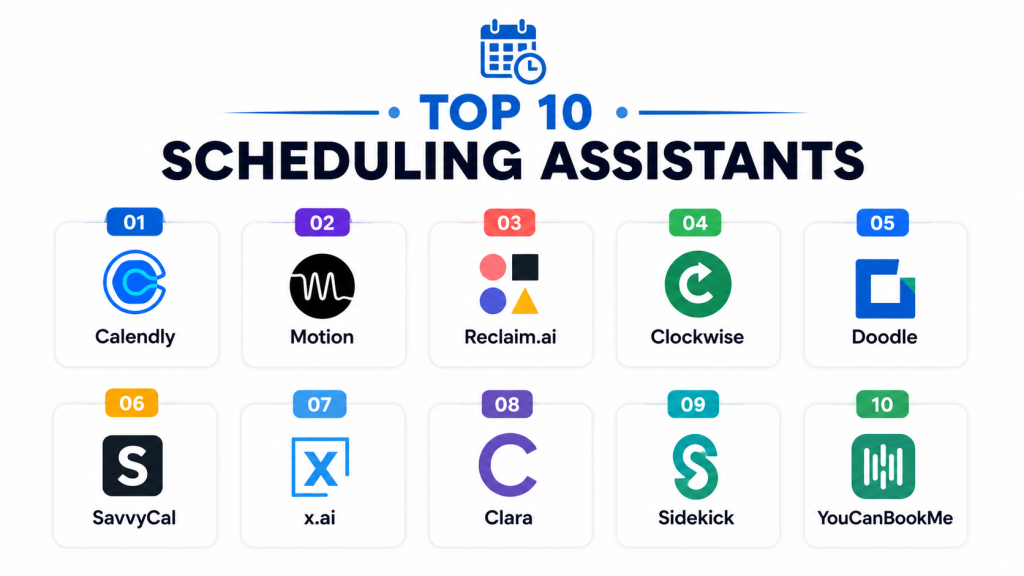
Top 10 Scheduling Assistants
#1 — Calendly
Short description: Calendly is one of the most popular scheduling assistants designed to automate meeting booking, appointment scheduling, and calendar coordination for individuals and businesses.
Key Features
- Automated meeting scheduling
- Calendar synchronization
- Team scheduling workflows
- Round-robin booking
- Automated reminders and notifications
- Timezone detection
- Workflow automation
Pros
- Extremely easy to use
- Strong integration ecosystem
- Excellent customer scheduling experience
Cons
- Advanced automation requires premium plans
- Limited deep project workflow features
- Custom branding may require higher tiers
Platforms / Deployment
- Web / iOS / Android
- Cloud
Security & Compliance
Supports MFA, SSO, encryption, RBAC, and administrative governance controls.
Integrations & Ecosystem
Calendly integrates with productivity, CRM, and communication platforms for automated scheduling workflows.
- Google Calendar
- Microsoft Outlook
- Zoom
- Salesforce
- Slack
- APIs
Support & Community
Strong onboarding experience and broad documentation resources.
#2 — Microsoft Scheduler
Short description: Microsoft Scheduler is part of the Microsoft productivity ecosystem and helps organizations automate meeting coordination, scheduling workflows, and calendar management.
Key Features
- AI-powered meeting coordination
- Outlook calendar integration
- Automated scheduling assistance
- Meeting availability management
- Team scheduling support
- Timezone handling
- Microsoft ecosystem integration
Pros
- Deep Microsoft integration
- Good enterprise scheduling support
- Familiar user experience
Cons
- Best suited for Microsoft environments
- Advanced functionality may require enterprise licensing
- Less flexible outside Microsoft ecosystem
Platforms / Deployment
- Web / Windows / macOS / iOS / Android
- Cloud
Security & Compliance
Supports SSO/SAML, MFA, encryption, RBAC, audit controls, and governance administration.
Integrations & Ecosystem
Microsoft Scheduler integrates deeply with Microsoft productivity and collaboration environments.
- Outlook
- Microsoft Teams
- Microsoft 365
- Dynamics 365
- Power Platform
- APIs
Support & Community
Strong enterprise documentation and large Microsoft support ecosystem.
#3 — Motion
Short description: Motion is an AI-powered scheduling and productivity assistant designed to automate calendar management, task prioritization, and meeting scheduling.
Key Features
- AI-powered scheduling automation
- Smart task prioritization
- Automated calendar optimization
- Meeting coordination
- Productivity planning
- Workflow automation
- Time blocking support
Pros
- Strong AI-driven automation
- Good productivity optimization
- Modern user experience
Cons
- Premium pricing structure
- Smaller ecosystem than established vendors
- Learning curve for advanced workflows
Platforms / Deployment
- Web / Windows / macOS / iOS / Android
- Cloud
Security & Compliance
Supports encryption, MFA, and administrative access controls.
Integrations & Ecosystem
Motion integrates with productivity and collaboration platforms for automated scheduling workflows.
- Google Calendar
- Outlook
- Zoom
- Slack
- Task management tools
- APIs
Support & Community
Good onboarding guidance and responsive customer support.
#4 — Reclaim AI
Short description: Reclaim AI is a smart scheduling assistant focused on AI-driven calendar optimization, meeting coordination, and productivity management.
Key Features
- AI-powered calendar optimization
- Smart scheduling automation
- Habit and focus time management
- Team scheduling coordination
- Meeting prioritization
- Calendar synchronization
- Productivity analytics
Pros
- Excellent AI scheduling intelligence
- Strong focus time management
- Good productivity optimization
Cons
- Smaller enterprise ecosystem
- Advanced workflows may require setup time
- Some features depend heavily on Google ecosystem
Platforms / Deployment
- Web / iOS / Android
- Cloud
Security & Compliance
Supports MFA, encryption, SSO, and governance administration controls.
Integrations & Ecosystem
Reclaim AI integrates with productivity and collaboration ecosystems for calendar automation.
- Google Calendar
- Slack
- Zoom
- Asana
- Task management tools
- APIs
Support & Community
Strong onboarding support and practical customer guidance.
#5 — Doodle
Short description: Doodle is a scheduling and group coordination platform designed to simplify meeting polling, appointment booking, and team scheduling.
Key Features
- Group scheduling polls
- Appointment booking pages
- Team coordination workflows
- Automated reminders
- Calendar synchronization
- Timezone management
- Meeting coordination support
Pros
- Excellent group scheduling functionality
- Simple meeting polling workflows
- Easy participant coordination
Cons
- Limited advanced automation
- Fewer productivity analytics features
- Enterprise capabilities are less extensive
Platforms / Deployment
- Web / iOS / Android
- Cloud
Security & Compliance
Supports encryption, MFA, SSO, and administrative controls.
Integrations & Ecosystem
Doodle integrates with productivity and communication platforms for scheduling coordination.
- Google Calendar
- Outlook
- Zoom
- Microsoft Teams
- Productivity tools
- APIs
Support & Community
Good onboarding experience and accessible customer support.
#6 — Chili Piper
Short description: Chili Piper is a scheduling and revenue acceleration platform focused on sales meeting automation, lead routing, and customer scheduling workflows.
Key Features
- Sales meeting scheduling
- Lead routing automation
- CRM scheduling workflows
- Team round-robin coordination
- Automated meeting booking
- Customer scheduling support
- Revenue workflow automation
Pros
- Excellent sales workflow automation
- Strong CRM integration
- Good enterprise scheduling support
Cons
- Primarily focused on sales teams
- Premium enterprise pricing
- Requires CRM ecosystem alignment
Platforms / Deployment
- Web / Mobile
- Cloud
Security & Compliance
Supports SSO, MFA, encryption, RBAC, and governance administration.
Integrations & Ecosystem
Chili Piper integrates deeply with CRM and sales productivity ecosystems.
- Salesforce
- HubSpot
- Google Calendar
- Outlook
- Zoom
- APIs
Support & Community
Strong enterprise onboarding and customer success support.
#7 — YouCanBookMe
Short description: YouCanBookMe is a scheduling automation platform designed to simplify appointment booking, customer scheduling, and calendar coordination workflows.
Key Features
- Appointment scheduling pages
- Automated reminders
- Calendar synchronization
- Team booking coordination
- Customer self-service scheduling
- Timezone support
- Workflow automation
Pros
- Easy customer booking experience
- Flexible scheduling workflows
- Good SMB usability
Cons
- Limited advanced enterprise analytics
- Smaller ecosystem than larger vendors
- Fewer AI-driven automation features
Platforms / Deployment
- Web / iOS / Android
- Cloud
Security & Compliance
Supports encryption, MFA, SSO, and governance administration controls.
Integrations & Ecosystem
YouCanBookMe integrates with productivity and communication systems.
- Google Calendar
- Outlook
- Zoom
- Stripe
- CRM systems
- APIs
Support & Community
Good onboarding support and practical documentation resources.
#8 — HubSpot Meetings
Short description: HubSpot Meetings is a scheduling assistant integrated into HubSpot’s CRM ecosystem for automated customer meeting coordination and sales scheduling.
Key Features
- CRM-integrated scheduling
- Automated meeting booking
- Customer self-service scheduling
- Team availability coordination
- Calendar synchronization
- Sales workflow automation
- Meeting tracking support
Pros
- Strong HubSpot CRM integration
- Good sales and customer workflows
- Easy scheduling automation
Cons
- Best suited for HubSpot users
- Limited standalone flexibility
- Advanced functionality may require premium plans
Platforms / Deployment
- Web / Mobile
- Cloud
Security & Compliance
Supports MFA, SSO, encryption, RBAC, and governance administration controls.
Integrations & Ecosystem
HubSpot Meetings integrates deeply into HubSpot’s CRM and sales ecosystem.
- HubSpot CRM
- Google Calendar
- Outlook
- Zoom
- Salesforce
- APIs
Support & Community
Strong onboarding resources and broad customer support ecosystem.
#9 — Clockwise
Short description: Clockwise is an AI-powered calendar assistant designed to optimize schedules, protect focus time, and improve team productivity through automated calendar coordination.
Key Features
- AI-powered calendar optimization
- Focus time scheduling
- Team meeting coordination
- Smart scheduling automation
- Productivity analytics
- Calendar conflict management
- Time blocking support
Pros
- Strong productivity optimization
- Excellent focus time management
- Good AI-powered scheduling intelligence
Cons
- Primarily focused on calendar optimization
- Smaller enterprise ecosystem
- Advanced workflows may require learning time
Platforms / Deployment
- Web / iOS / Android
- Cloud
Security & Compliance
Supports encryption, MFA, SSO, and governance controls.
Integrations & Ecosystem
Clockwise integrates with productivity and collaboration platforms for calendar optimization.
- Google Calendar
- Slack
- Zoom
- Asana
- Productivity tools
- APIs
Support & Community
Good onboarding guidance and practical support resources.
#10 — Zoho Bookings
Short description: Zoho Bookings is an appointment scheduling platform designed for businesses needing customer booking automation, calendar management, and scheduling workflows.
Key Features
- Appointment scheduling automation
- Customer booking pages
- Team scheduling workflows
- Calendar synchronization
- Automated reminders
- Payment integrations
- Timezone management
Pros
- Good value for SMBs
- Strong Zoho ecosystem integration
- Flexible appointment scheduling
Cons
- Best suited for Zoho environments
- Limited advanced AI scheduling
- Enterprise scalability less extensive than larger vendors
Platforms / Deployment
- Web / iOS / Android
- Cloud
Security & Compliance
Supports MFA, SSO, encryption, RBAC, and administrative controls.
Integrations & Ecosystem
Zoho Bookings integrates deeply into Zoho’s business productivity ecosystem.
- Zoho CRM
- Google Calendar
- Outlook
- Zoom
- Payment systems
- APIs
Support & Community
Strong SMB onboarding support and practical customer resources.
Comparison Table
| Tool Name | Best For | Platforms Supported | Deployment | Standout Feature | Public Rating |
|---|---|---|---|---|---|
| Calendly | General scheduling automation | Web, Mobile | Cloud | Simple booking workflows | N/A |
| Microsoft Scheduler | Microsoft-based enterprises | Web, Desktop, Mobile | Cloud | Outlook integration | N/A |
| Motion | AI-powered productivity scheduling | Web, Desktop, Mobile | Cloud | Smart task prioritization | N/A |
| Reclaim AI | Calendar optimization | Web, Mobile | Cloud | AI scheduling intelligence | N/A |
| Doodle | Group scheduling coordination | Web, Mobile | Cloud | Meeting polling workflows | N/A |
| Chili Piper | Sales scheduling automation | Web, Mobile | Cloud | CRM lead routing | N/A |
| YouCanBookMe | SMB appointment scheduling | Web, Mobile | Cloud | Customer self-booking | N/A |
| HubSpot Meetings | CRM scheduling workflows | Web, Mobile | Cloud | HubSpot integration | N/A |
| Clockwise | Productivity optimization | Web, Mobile | Cloud | Focus time management | N/A |
| Zoho Bookings | SMB appointment management | Web, Mobile | Cloud | Zoho ecosystem support | N/A |
Evaluation & Scoring of Scheduling Assistants
| Tool Name | Core 25% | Ease 15% | Integrations 15% | Security 10% | Performance 10% | Support 10% | Value 15% | Weighted Total |
|---|---|---|---|---|---|---|---|---|
| Calendly | 9.0 | 9.5 | 9.0 | 8.5 | 9.0 | 8.5 | 8.5 | 8.9 |
| Microsoft Scheduler | 8.5 | 8.0 | 9.5 | 9.0 | 8.5 | 8.5 | 8.0 | 8.5 |
| Motion | 8.5 | 8.0 | 7.5 | 8.0 | 8.5 | 8.0 | 7.5 | 8.1 |
| Reclaim AI | 8.5 | 8.0 | 7.5 | 8.0 | 8.5 | 8.0 | 8.0 | 8.2 |
| Doodle | 8.0 | 9.0 | 7.5 | 8.0 | 8.0 | 8.0 | 8.5 | 8.2 |
| Chili Piper | 9.0 | 8.0 | 9.0 | 8.5 | 8.5 | 8.5 | 7.0 | 8.4 |
| YouCanBookMe | 8.0 | 8.5 | 7.5 | 8.0 | 8.0 | 8.0 | 8.5 | 8.1 |
| HubSpot Meetings | 8.5 | 8.5 | 9.0 | 8.5 | 8.5 | 8.5 | 8.0 | 8.5 |
| Clockwise | 8.5 | 8.0 | 7.5 | 8.0 | 8.5 | 8.0 | 8.0 | 8.2 |
| Zoho Bookings | 8.0 | 8.5 | 8.0 | 8.0 | 8.0 | 8.0 | 8.5 | 8.1 |
These scores are comparative and designed to help organizations evaluate scheduling assistants based on operational priorities. Enterprise-focused tools generally perform better in integrations, governance, and workflow automation, while SMB-focused platforms often score highly in usability and affordability. Organizations should align tool selection with scheduling complexity, ecosystem compatibility, and automation requirements.
Which Scheduling Assistant Is Right for You?
Solo / Freelancer
Freelancers and solo professionals often prioritize simplicity, affordability, and quick setup. Calendly, YouCanBookMe, and Zoho Bookings are excellent choices.
SMB
Small and medium businesses usually require customer booking automation, calendar synchronization, and scheduling flexibility. Calendly, Doodle, and HubSpot Meetings are strong SMB-focused options.
Mid-Market
Mid-market organizations typically need workflow automation, productivity optimization, and team scheduling coordination. Motion, Reclaim AI, and Clockwise are practical choices.
Enterprise
Large enterprises usually prioritize governance, integrations, scalability, and workflow automation. Microsoft Scheduler, Chili Piper, and Calendly are strong enterprise-focused platforms.
Budget vs Premium
Budget-conscious organizations may prefer Doodle or Zoho Bookings, while enterprises requiring advanced automation and CRM workflows may benefit more from Chili Piper or Motion.
Feature Depth vs Ease of Use
Calendly and Doodle emphasize usability and quick deployment, while Motion and Chili Piper provide deeper automation and workflow optimization capabilities.
Integrations & Scalability
Microsoft Scheduler performs strongly in Microsoft ecosystems, while HubSpot Meetings and Chili Piper integrate deeply into CRM and revenue operations environments.
Security & Compliance Needs
Organizations with stronger governance requirements should prioritize Microsoft Scheduler, Calendly, Chili Piper, and HubSpot Meetings due to stronger enterprise administrative controls.
Frequently Asked Questions FAQs
1. What are Scheduling Assistants?
Scheduling Assistants are tools designed to automate meeting coordination, appointment booking, calendar synchronization, and scheduling workflows.
2. Why are scheduling assistants important?
These tools reduce manual scheduling effort, improve productivity, eliminate scheduling conflicts, and simplify customer and team coordination workflows.
3. How do scheduling assistants work?
Most platforms connect to calendars, detect availability, automate booking workflows, and provide booking links for self-service scheduling.
4. Are these tools suitable for remote teams?
Yes. Scheduling assistants are especially valuable for distributed and global teams because they automate timezone handling and meeting coordination.
5. What features should buyers prioritize?
Organizations should evaluate automation capabilities, integrations, timezone support, calendar synchronization, security controls, and team scheduling workflows.
6. Why are integrations important in scheduling assistants?
Integrations connect scheduling workflows with CRM systems, productivity tools, collaboration platforms, and communication environments for centralized workflow management.
7. Are AI capabilities becoming important in this category?
Yes. AI-powered meeting optimization, calendar recommendations, productivity insights, and automated scheduling intelligence are becoming major differentiators.
8. What are common implementation mistakes?
Common mistakes include poor calendar synchronization, overly complex booking workflows, weak timezone configuration, and insufficient automation planning.
9. Can scheduling assistants improve productivity?
Yes. These tools reduce manual coordination time, minimize scheduling conflicts, and improve overall meeting management efficiency.
10. How long does implementation usually take?
Most scheduling assistants can be deployed quickly, especially for SMBs and individuals. Enterprise implementations may require integration and governance planning.
Conclusion
Scheduling Assistants have become essential productivity tools for organizations seeking streamlined meeting coordination, automated booking workflows, and improved calendar management. The best platform depends on operational priorities such as automation depth, ecosystem integration, scalability, and scheduling complexity. Calendly remains a strong all-purpose scheduling solution because of its usability and integration ecosystem, while Microsoft Scheduler provides excellent value for Microsoft-centric organizations. Businesses seeking AI-driven productivity optimization may benefit from Motion, Reclaim AI, or Clockwise, while sales-focused organizations may prefer Chili Piper or HubSpot Meetings because of their CRM automation capabilities. SMBs looking for simple customer booking workflows may find YouCanBookMe or Zoho Bookings more practical. Rather than selecting platforms solely based on booking features, organizations should evaluate long-term workflow automation needs, integration compatibility, security requirements, and employee adoption potential. A practical next step is to shortlist a few tools, run pilot scheduling workflows with selected teams, validate integrations and automation performance, and measure productivity improvements before organization-wide rollout.