Introduction
Social Commerce Platforms are specialized tools that allow businesses to sell products and services directly through social media channels while managing engagement, analytics, and customer interactions from a centralized platform. Unlike traditional e-commerce, these platforms integrate commerce with social engagement, enabling a seamless buyer journey from discovery to purchase. The rise of AI-powered personalization, live shopping experiences, and omnichannel integration has made social commerce a critical component of digital retail strategies.
Businesses leverage these platforms to enhance visibility, increase conversion rates, and reduce friction in online purchases. Real-world use cases include live-stream shopping events, influencer-driven product campaigns, automated upselling and cross-selling on social channels, social referral and loyalty programs, and community-driven product discovery.
Evaluation criteria for buyers typically include:
- Platform usability and ease of onboarding
- Integration capabilities with existing commerce or CRM systems
- AI-powered personalization and recommendation engines
- Analytics and reporting depth
- Security and compliance (data protection, encryption, regulatory)
- Omnichannel support across social networks
- Customer support quality and community engagement
- Scalability for growth
- Pricing and ROI
- Flexibility for enterprise or SMB use
Best for: E-commerce managers, marketing teams, social media managers, and brands seeking to increase direct-to-consumer sales via social platforms, particularly in fashion, beauty, lifestyle, and consumer electronics sectors.
Not ideal for: Businesses with minimal social media presence, highly regulated industries with strict compliance constraints, or companies that prefer traditional e-commerce channels exclusively.
Key Trends in Social Commerce Platforms
- AI-driven product recommendations personalized per user behavior
- Integration of live shopping experiences with real-time analytics
- Automated influencer marketing and campaign management tools
- Enhanced data privacy compliance including GDPR, CCPA, and global standards
- Omnichannel inventory and order management across marketplaces and social platforms
- Use of AR/VR to visualize products in social posts and ads
- Expansion into short-form video commerce with interactive shopping experiences
- Flexible pricing models including subscription, commission-based, and tiered plans
- Low-code APIs for developer integration and custom extensions
- Cloud-native deployment for global scalability and high availability
How We Selected These Tools (Methodology)
- Market adoption and share among small, mid-market, and enterprise brands
- Feature completeness including commerce, analytics, engagement, and personalization
- Reliability and performance signals based on uptime, latency, and scalability
- Security posture, including encryption, access control, and compliance considerations
- Integrations and ecosystem depth across social channels, CRMs, and payment systems
- Fit for multiple customer segments from freelancers to large enterprises
- Innovation and roadmap relevance for social commerce trends
- Support quality including onboarding, documentation, and dedicated account management
- Customer satisfaction and feedback from industry sources
- Total cost of ownership considering subscription fees, transaction fees, and implementation
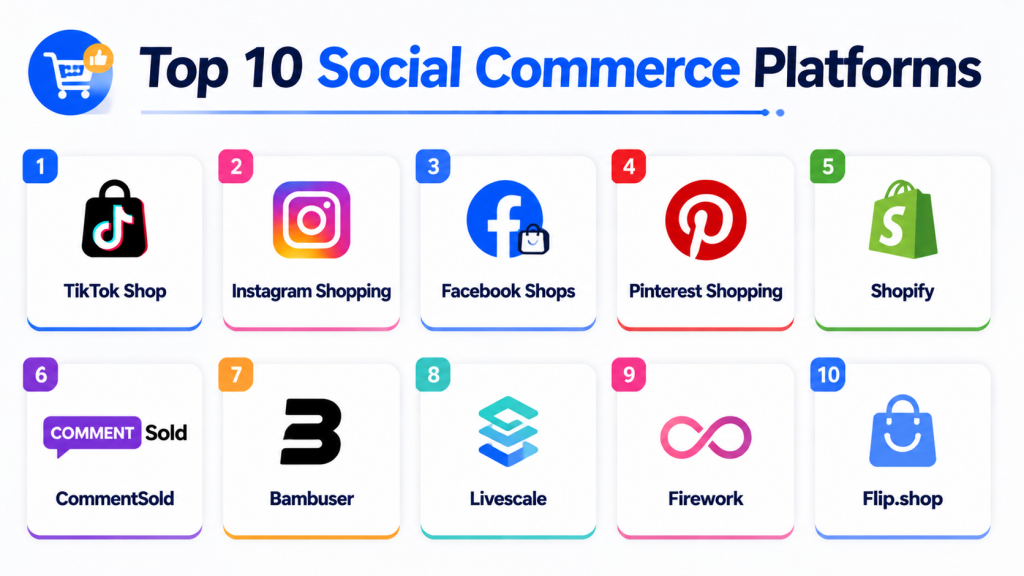
Top 10 Social Commerce Platforms Tools
#1 — TikTok Shop
Short description: TikTok Shop enables brands to sell directly within the TikTok app via short-form video content and live streaming. It is ideal for influencer-led marketing and viral product discovery.
Key Features
- In-app storefront and checkout
- Live stream commerce with interactive features
- Influencer collaboration tools
- Analytics for campaigns and product performance
- Integration with TikTok Ads Manager
- Automated promotional campaigns
Pros
- High engagement with Gen Z and Millennial audiences
- Seamless influencer integration
- Strong video-first shopping experience
Cons
- Limited to TikTok ecosystem
- Dependent on influencer content quality
- Requires continuous content creation
Platforms / Deployment
- Web / iOS / Android
- Cloud
Security & Compliance
- Not publicly stated
Integrations & Ecosystem
Supports major payment gateways and TikTok Ads integration.
- TikTok Ads Manager
- Third-party fulfillment services
- Analytics platforms
- Inventory management APIs
Support & Community
Extensive online resources and community forums; direct support varies by region
#2 — Instagram Shopping
Short description: Instagram Shopping allows brands to tag products in posts, reels, and stories, enabling direct purchase from the app. Ideal for visual-driven brands and lifestyle products.
Key Features
- Product tagging in posts, reels, and stories
- Integrated checkout and shopping cart
- Shoppable live streams
- AI-driven product recommendations
- Shopping insights and analytics
Pros
- Strong visual product showcase
- Leverages existing Instagram audience
- Supports influencer and creator campaigns
Cons
- Limited to Instagram ecosystem
- Commission fees apply for in-app checkout
- Organic reach may require paid promotion
Platforms / Deployment
- Web / iOS / Android
- Cloud
Security & Compliance
- Not publicly stated
Integrations & Ecosystem
- Facebook Shops integration
- CRM and email marketing tools
- Analytics and reporting platforms
Support & Community
Documentation available; support tiers vary by business size
#3 — Facebook Shops
Short description: Facebook Shops offers a unified shopping experience across Facebook and Messenger, supporting both direct and conversational commerce.
Key Features
- Unified catalog across Facebook and Messenger
- Live chat for customer service
- AI product recommendations
- Cross-platform analytics
- Ad integration with Facebook Ads Manager
Pros
- Broad audience reach
- Conversational commerce support
- Integration with Instagram Shops
Cons
- Complex ad ecosystem
- Limited control over checkout experience
Platforms / Deployment
- Web / iOS / Android
- Cloud
Security & Compliance
- Not publicly stated
Integrations & Ecosystem
- Facebook Ads, Messenger chatbots, CRM tools, inventory management systems
Support & Community
Extensive documentation, community forums, and enterprise account support
#4 — Pinterest Shopping
Short description: Pinterest Shopping enables users to discover and purchase products directly from pins, boards, and visual search results.
Key Features
- Shoppable pins with direct checkout
- Visual search and discovery
- Product tagging for creators
- Analytics and trend insights
- Integration with catalogs and e-commerce platforms
Pros
- Discovery-driven audience
- Visual search enhances product visibility
- Strong appeal for lifestyle brands
Cons
- Limited interactive features compared to TikTok or Instagram
- Niche audience compared to mainstream social networks
Platforms / Deployment
- Web / iOS / Android
- Cloud
Security & Compliance
- Not publicly stated
Integrations & Ecosystem
- E-commerce platform connectors
- Analytics and reporting tools
- Marketing automation systems
Support & Community
Online documentation and support tickets; community engagement forums
#5 — Shopify
Short description: Shopify provides a comprehensive commerce platform with social commerce capabilities across multiple social networks, ideal for SMBs and growing e-commerce brands.
Key Features
- Multi-channel sales integration
- Social media ad campaigns and storefronts
- AI-powered product recommendations
- Inventory and order management
- Marketing automation and analytics
Pros
- Multi-channel flexibility
- Extensive app ecosystem
- Scalable for SMB to enterprise
Cons
- Subscription fees can accumulate with add-ons
- Learning curve for advanced features
Platforms / Deployment
- Web / iOS / Android
- Cloud
Security & Compliance
- Not publicly stated
Integrations & Ecosystem
Supports hundreds of apps and APIs including:
- Social networks (Instagram, Facebook, TikTok)
- Payment gateways
- CRM platforms
- Inventory management tools
Support & Community
24/7 support, community forums, extensive tutorials
#6 — CommentSold
Short description: CommentSold enables live commerce by turning social media comments into purchases, optimizing engagement-driven sales for small and mid-sized brands.
Key Features
- Comment-to-buy functionality
- Automated invoicing and checkout
- Real-time inventory updates
- Live selling analytics
- Customer engagement tools
Pros
- Excellent for live shopping engagement
- Simplifies conversion from social comments
- Integrates with popular social platforms
Cons
- Limited global reach
- Focused on Facebook and Instagram
Platforms / Deployment
- Web / iOS / Android
- Cloud
Security & Compliance
- Not publicly stated
Integrations & Ecosystem
- Facebook and Instagram connectors
- Payment gateways
- CRM tools
- Shipping providers
Support & Community
Dedicated support and onboarding resources
#7 — Bambuser
Short description: Bambuser is a live video shopping platform enabling brands to host interactive live-stream events across social channels.
Key Features
- Live video commerce
- Real-time analytics and reporting
- Interactive chat and polls
- Multi-channel streaming
- Customizable video player
Pros
- Strong engagement through interactive video
- Supports multi-channel broadcasting
- Data-driven insights for optimization
Cons
- Requires consistent content creation
- Premium pricing for advanced features
Platforms / Deployment
- Web / iOS / Android
- Cloud
Security & Compliance
- Not publicly stated
Integrations & Ecosystem
- E-commerce platforms (Shopify, Magento)
- Payment gateways
- Analytics tools
Support & Community
Online support, tutorials, and live onboarding sessions
#8 — Livescale
Short description: Livescale offers live commerce technology with interactive features, analytics, and seamless checkout for social commerce campaigns.
Key Features
- Live streaming with clickable product links
- Chat and Q&A interactions
- Analytics dashboards
- Multi-platform streaming
- API for custom integrations
Pros
- Enhances live shopping engagement
- Customizable and flexible
- Robust analytics
Cons
- May require technical integration
- Pricing varies by scale
Platforms / Deployment
- Web / iOS / Android
- Cloud
Security & Compliance
- Not publicly stated
Integrations & Ecosystem
- Shopify, Magento, WooCommerce
- Payment and analytics integration
- CRM connectors
Support & Community
Documentation, onboarding, and customer support available
#9 — Firework
Short description: Firework is a short-form video commerce platform, ideal for brands targeting mobile-first audiences with social video shopping experiences.
Key Features
- Shoppable video creation and distribution
- AI-driven content recommendation
- Analytics for engagement and conversion
- Integration with social platforms
- Influencer collaboration tools
Pros
- Strong mobile-first experience
- Engaging video content drives discovery
- Integration with multiple social channels
Cons
- Niche audience
- Less mature than larger platforms
Platforms / Deployment
- Web / iOS / Android
- Cloud
Security & Compliance
- Not publicly stated
Integrations & Ecosystem
- Shopify, Instagram, TikTok
- Analytics tools
- Marketing platforms
Support & Community
Online documentation and support portals
#10 — Flip.shop
Short description: Flip.shop provides social commerce capabilities for SMBs, enabling integrated storefronts on multiple social networks with streamlined checkout.
Key Features
- Multi-channel social selling
- Built-in checkout and payment
- Inventory and order management
- Analytics and reporting dashboards
- Customer engagement features
Pros
- Simple setup for SMBs
- Supports multiple social platforms
- Integrated checkout reduces friction
Cons
- Limited enterprise features
- Feature set smaller than larger competitors
Platforms / Deployment
- Web / iOS / Android
- Cloud
Security & Compliance
- Not publicly stated
Integrations & Ecosystem
- Social media platforms
- Payment gateways
- Basic analytics and CRM connectors
Support & Community
Email and chat support; documentation available
Comparison Table (Top 10)
| Tool Name | Best For | Platform(s) Supported | Deployment | Standout Feature | Public Rating |
|---|---|---|---|---|---|
| TikTok Shop | Influencer & viral sales | Web, iOS, Android | Cloud | Live stream commerce | N/A |
| Instagram Shopping | Visual product marketing | Web, iOS, Android | Cloud | Shoppable posts & reels | N/A |
| Facebook Shops | Conversational commerce | Web, iOS, Android | Cloud | Messenger integration | N/A |
| Pinterest Shopping | Discovery-driven brands | Web, iOS, Android | Cloud | Visual search commerce | N/A |
| Shopify | SMB to enterprise | Web, iOS, Android | Cloud | Multi-channel sales | N/A |
| CommentSold | Small & mid-size brands | Web, iOS, Android | Cloud | Comment-to-buy | N/A |
| Bambuser | Live commerce events | Web, iOS, Android | Cloud | Interactive live video | N/A |
| Livescale | Interactive live shopping | Web, iOS, Android | Cloud | Multi-platform live streaming | N/A |
| Firework | Mobile-first video commerce | Web, iOS, Android | Cloud | Short-form shoppable video | N/A |
| Flip.shop | SMB social storefronts | Web, iOS, Android | Cloud | Multi-channel social selling | N/A |
Evaluation & Scoring of Social Commerce Platforms
| Tool Name | Core (25%) | Ease (15%) | Integrations (15%) | Security (10%) | Performance (10%) | Support (10%) | Value (15%) | Weighted Total |
|---|---|---|---|---|---|---|---|---|
| TikTok Shop | 8 | 7 | 6 | 5 | 7 | 6 | 7 | 6.8 |
| Instagram Shopping | 8 | 8 | 7 | 6 | 8 | 7 | 7 | 7.3 |
| Facebook Shops | 7 | 7 | 7 | 6 | 7 | 6 | 7 | 6.9 |
| Pinterest Shopping | 7 | 8 | 6 | 6 | 7 | 6 | 7 | 6.9 |
| Shopify | 9 | 8 | 9 | 7 | 8 | 8 | 8 | 8.3 |
| CommentSold | 7 | 7 | 6 | 5 | 7 | 6 | 7 | 6.7 |
| Bambuser | 7 | 7 | 6 | 5 | 7 | 6 | 7 | 6.7 |
| Livescale | 7 | 7 | 6 | 5 | 7 | 6 | 7 | 6.7 |
| Firework | 7 | 8 | 6 | 5 | 7 | 6 | 7 | 6.8 |
| Flip.shop | 6 | 8 | 6 | 5 | 6 | 6 | 7 | 6.5 |
Scores are comparative. A higher weighted total indicates stronger overall suitability across features, usability, integrations, and value. Choose based on your business priorities.
Which Social Commerce Platforms Tool Is Right for You?
Solo / Freelancer
TikTok Shop or Instagram Shopping are ideal for influencer-driven sales with minimal setup and low upfront cost.
SMB
Shopify, Flip.shop, and CommentSold provide multi-channel capabilities, integrated checkout, and analytics for growing businesses.
Mid-Market
Facebook Shops and Pinterest Shopping offer discovery-driven commerce, audience reach, and advanced analytics to scale campaigns.
Enterprise
Shopify Plus, Bambuser, and Livescale enable high-volume live commerce events, robust integrations, and detailed reporting.
Budget vs Premium
SMBs may start with Flip.shop or CommentSold for lower cost. Enterprise and mid-market brands benefit from premium platforms with advanced analytics and multi-channel management.
Feature Depth vs Ease of Use
Platforms like Shopify provide both feature depth and usability. TikTok Shop and Instagram Shopping are easier to deploy but less customizable.
Integrations & Scalability
Shopify and Bambuser excel in integrations across social channels, CRMs, and payment systems. Smaller platforms may require manual integration.
Security & Compliance Needs
Ensure platforms meet required data protection standards for your region. Enterprise-grade compliance may require verification.
Frequently Asked Questions (FAQs)
1. What is the pricing model for social commerce platforms?
Pricing varies by subscription, transaction fees, and add-ons. Some charge per sale, others a flat monthly fee. Evaluate total cost including marketing and transaction fees.
2. How long does onboarding typically take?
Most platforms offer online tutorials and templates. Setup can range from a few hours to a few days depending on catalog size and integrations.
3. Can these platforms handle live streaming sales?
Yes. TikTok Shop, Bambuser, and Livescale specialize in live commerce, while others may require plugins or integrations.
4. Are these platforms secure for customer data?
Most platforms have basic encryption and access controls. Enterprise users should verify compliance with GDPR, SOC 2, or local regulations.
5. Which platform is best for influencer campaigns?
TikTok Shop and Instagram Shopping are highly optimized for influencer collaboration with built-in tools for tracking and product tagging.
6. Can I integrate with my existing e-commerce store?
Yes. Shopify, Flip.shop, and Livescale provide APIs and connectors for major e-commerce platforms and CRMs.
7. What social networks are supported?
Common networks include Instagram, Facebook, TikTok, Pinterest, and Snapchat depending on the platform.
8. How scalable are these platforms?
Cloud-native deployment enables scaling from solo entrepreneurs to enterprise-level live commerce events.
9. Can I switch platforms easily?
Migration depends on data export/import capabilities. Platforms with robust API access simplify the transition, but live campaign setups may need reconfiguration.
10. Are analytics included?
Most platforms offer built-in analytics for product performance, campaign ROI, and audience engagement. Advanced reporting may require premium tiers.
Conclusion
Social Commerce Platforms have become essential for brands to sell directly through social media while engaging audiences in meaningful ways. Tools like TikTok Shop and Instagram Shopping provide influencer-driven capabilities, while Shopify, Bambuser, and Livescale offer multi-channel enterprise solutions. Choosing the right platform depends on your business size, social strategy, and campaign goals. Next steps: shortlist 2–3 platforms that align with your strategy, run a pilot to test engagement and checkout flows, and validate integrations and security before scaling. Careful evaluation ensures a seamless social commerce experience that maximizes ROI.