Introduction
Evidence Chain-of-Custody Tools help organizations securely track, document, preserve, and manage physical and digital evidence throughout investigative workflows. These platforms create verifiable records of evidence collection, handling, transfer, storage, access, and analysis to ensure integrity, accountability, and legal admissibility.
Modern investigations often involve digital forensics, cybersecurity incidents, compliance reviews, insider threat investigations, legal disputes, and law enforcement operations across distributed environments. Manual spreadsheets, paper logs, and disconnected tracking methods increase the risk of evidence tampering, loss, incomplete documentation, and audit failures. Chain-of-custody tools centralize evidence workflows while improving transparency, traceability, and compliance management.
Common real-world use cases include:
- Digital forensic evidence tracking
- Cybersecurity incident investigations
- Law enforcement evidence management
- Legal and compliance investigations
- Insider threat and fraud investigations
Buyers evaluating Evidence Chain-of-Custody Tools should focus on:
- Evidence tracking and auditability
- Chain-of-custody workflows
- Access control and permissions
- Digital evidence preservation
- Reporting and timeline reconstruction
- Compliance support
- Workflow automation
- Search and analytics
- Integration ecosystem
- Scalability and usability
Best for: DFIR teams, SOC analysts, law enforcement agencies, legal operations teams, compliance departments, healthcare organizations, financial institutions, and enterprise security operations.
Not ideal for: Small organizations with minimal investigative requirements or teams requiring only lightweight document storage without structured evidence workflows.
Key Trends in Evidence Chain-of-Custody Tools
- Digital evidence preservation is becoming increasingly cloud-native.
- AI-assisted evidence classification is improving investigative workflows.
- Automated audit trail generation is becoming standard functionality.
- Blockchain-inspired integrity verification techniques are emerging.
- Remote evidence collection is expanding for hybrid work environments.
- Unified investigation and evidence management platforms are converging.
- Mobile evidence tracking workflows are becoming more common.
- Compliance-driven evidence retention policies are increasing.
- Real-time access auditing is improving evidence accountability.
- Integration with DFIR and SIEM ecosystems is rapidly expanding.
How We Selected These Tools Methodology
The tools in this list were selected based on evidence management maturity, auditability, and operational relevance.
- Evaluated chain-of-custody workflow capabilities
- Assessed evidence tracking and audit logging
- Reviewed digital evidence preservation features
- Considered scalability across enterprise environments
- Evaluated compliance and reporting capabilities
- Reviewed integration ecosystem breadth
- Assessed workflow automation features
- Considered access controls and permissions
- Evaluated usability and operational complexity
- Reviewed enterprise adoption and ecosystem maturity
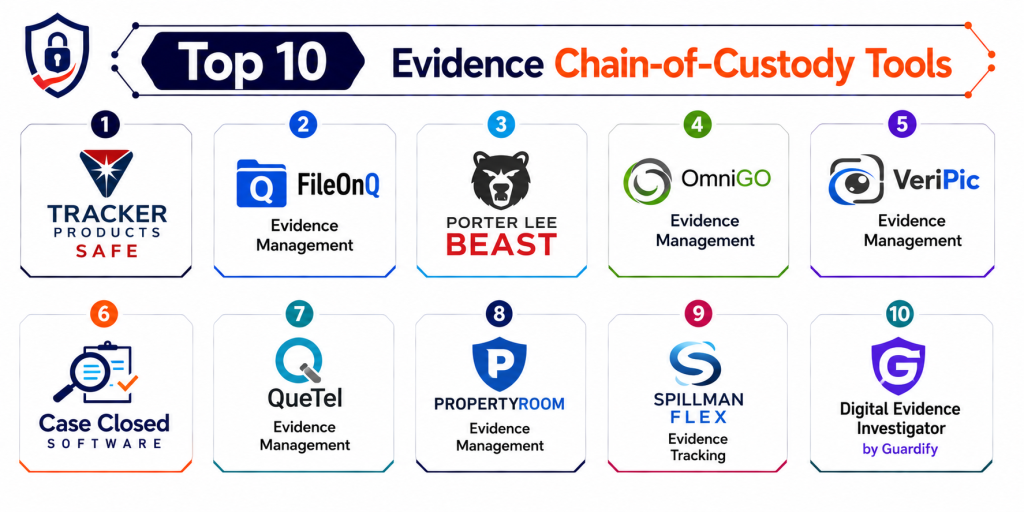
Top 10 Evidence Chain-of-Custody Tools
1- Magnet ATLAS
Short description: Magnet ATLAS is a collaborative digital investigation and evidence management platform designed for DFIR teams, law enforcement, and enterprise investigations.
Key Features
- Evidence management workflows
- Chain-of-custody tracking
- Digital evidence review
- Timeline reconstruction
- Collaboration tools
- Audit logging
- Reporting automation
Pros
- Strong forensic collaboration workflows
- Excellent digital evidence visibility
- Broad DFIR ecosystem support
Cons
- Premium enterprise pricing
- Specialized forensic focus
- Requires investigation expertise
Platforms / Deployment
- Windows
- Cloud / Self-hosted
Security & Compliance
- RBAC
- Audit logging
- Encryption support
- Evidence preservation workflows
Integrations & Ecosystem
Magnet ATLAS integrates with forensic and DFIR ecosystems.
- Magnet AXIOM
- Cellebrite
- APIs
- Evidence repositories
- Reporting systems
Support & Community
Strong DFIR training ecosystem with mature enterprise support.
2- Cellebrite Guardian
Short description: Cellebrite Guardian provides secure evidence storage, chain-of-custody management, and collaborative investigation workflows for digital forensic environments.
Key Features
- Digital evidence storage
- Secure evidence sharing
- Chain-of-custody tracking
- Audit trails
- Evidence access management
- Reporting workflows
- Cloud-native collaboration
Pros
- Excellent mobile forensic integration
- Strong evidence security workflows
- Good cloud-native accessibility
Cons
- Specialized forensic focus
- Premium licensing structure
- Enterprise scaling complexity
Platforms / Deployment
- Web / Windows
- Cloud
Security & Compliance
- RBAC
- Audit logging
- Encryption support
- Evidence integrity controls
Integrations & Ecosystem
Guardian integrates with Cellebrite forensic ecosystems and evidence workflows.
- Cellebrite UFED
- Pathfinder
- APIs
- Evidence systems
Support & Community
Strong forensic operations support and training ecosystem.
3- OpenText EnCase Evidence Processor
Short description: OpenText EnCase provides enterprise-grade digital evidence management, forensic preservation, and chain-of-custody workflows for legal and DFIR environments.
Key Features
- Evidence preservation
- Disk imaging workflows
- Audit trail management
- Chain-of-custody documentation
- Evidence reporting
- Timeline analytics
- Investigation workflows
Pros
- Mature forensic investigation capabilities
- Strong legal evidence support
- Broad enterprise adoption
Cons
- Complex interface
- Expensive enterprise licensing
- Slower cloud-native evolution
Platforms / Deployment
- Windows
- Self-hosted
Security & Compliance
- Audit trails
- Encryption support
- Evidence preservation controls
Integrations & Ecosystem
EnCase integrates with legal and forensic ecosystems.
- Evidence repositories
- SIEM exports
- APIs
- DFIR platforms
Support & Community
Long-established DFIR ecosystem with broad operational training resources.
4- Resolver Evidence Management
Short description: Resolver provides enterprise evidence management and investigation tracking designed for compliance, legal, HR, and corporate security investigations.
Key Features
- Evidence lifecycle tracking
- Investigation workflows
- Audit logging
- Collaboration tools
- Reporting dashboards
- Access controls
- Compliance visibility
Pros
- Strong compliance workflows
- User-friendly interface
- Broad enterprise use cases
Cons
- Advanced analytics depth may vary
- Enterprise customization complexity
- Specialized DFIR depth is limited
Platforms / Deployment
- Web
- Cloud
Security & Compliance
- SSO/SAML
- RBAC
- Audit logs
- Encryption support
Integrations & Ecosystem
Resolver integrates with governance and operational ecosystems.
- HR systems
- SIEM platforms
- APIs
- Compliance systems
Support & Community
Strong onboarding and compliance-focused operational support.
5- RelativityOne Legal Hold & Evidence Management
Short description: RelativityOne provides legal-grade evidence preservation, chain-of-custody tracking, and eDiscovery workflows for enterprise investigations.
Key Features
- Evidence preservation
- Legal hold management
- Chain-of-custody documentation
- Audit workflows
- Evidence review
- Reporting automation
- Collaboration tools
Pros
- Strong legal investigation capabilities
- Excellent cloud-native architecture
- Mature compliance workflows
Cons
- Legal-focused complexity
- Premium enterprise pricing
- Advanced training required
Platforms / Deployment
- Web
- Cloud
Security & Compliance
- RBAC
- Audit logging
- Encryption support
- Compliance controls
Integrations & Ecosystem
RelativityOne integrates with legal and compliance ecosystems.
- Microsoft 365
- APIs
- Evidence repositories
- eDiscovery systems
Support & Community
Strong legal operations ecosystem with extensive training resources.
6- CaseGuard Studio
Short description: CaseGuard Studio combines evidence redaction, chain-of-custody tracking, and investigative workflow management for legal and law enforcement operations.
Key Features
- Evidence redaction
- Audit logging
- Chain-of-custody tracking
- File protection workflows
- Reporting dashboards
- Investigation documentation
- Collaboration features
Pros
- Strong evidence redaction workflows
- Good compliance support
- Broad investigative applicability
Cons
- Smaller ecosystem than major vendors
- Advanced integrations may vary
- Specialized enterprise workflows require tuning
Platforms / Deployment
- Windows
- Cloud / Self-hosted
Security & Compliance
- Audit logs
- RBAC
- Encryption support
Integrations & Ecosystem
CaseGuard integrates with evidence and investigative workflows.
- Reporting systems
- APIs
- Evidence repositories
- Legal platforms
Support & Community
Growing investigation and compliance ecosystem support.
7- Tracker Products SAFE
Short description: SAFE by Tracker Products is a dedicated physical and digital evidence tracking platform widely used in law enforcement and forensic environments.
Key Features
- Physical evidence tracking
- Barcode workflows
- Chain-of-custody logging
- Evidence inventory management
- Audit reporting
- Storage tracking
- Access management
Pros
- Excellent physical evidence workflows
- Strong law enforcement adoption
- Detailed auditability
Cons
- Traditional interface design
- Less cloud-native flexibility
- Specialized investigative focus
Platforms / Deployment
- Windows / Web
- Self-hosted / Hybrid
Security & Compliance
- Audit logging
- RBAC
- Evidence preservation workflows
Integrations & Ecosystem
SAFE integrates with evidence and records management ecosystems.
- Barcode systems
- RMS platforms
- APIs
- Investigation workflows
Support & Community
Strong law enforcement operational support ecosystem.
8- Logikcull
Short description: Logikcull provides cloud-native evidence management and legal investigation workflows focused on usability and collaboration.
Key Features
- Evidence collection
- Cloud-native workflows
- Search and analytics
- Reporting automation
- Collaboration dashboards
- Legal hold support
- Audit trails
Pros
- Easy-to-use interface
- Strong collaboration workflows
- Simplified investigation management
Cons
- Advanced forensic depth is limited
- Enterprise customization may vary
- Specialized legal focus
Platforms / Deployment
- Web
- Cloud
Security & Compliance
- RBAC
- Audit logs
- Encryption support
Integrations & Ecosystem
Logikcull integrates with productivity and legal ecosystems.
- Microsoft 365
- Google Workspace
- APIs
- Legal systems
Support & Community
Strong usability-focused onboarding and support workflows.
9- Cyber Triage Evidence Workflow
Short description: Cyber Triage provides endpoint triage investigation workflows with evidence collection, forensic tracking, and incident documentation capabilities.
Key Features
- Endpoint evidence collection
- Timeline reconstruction
- Incident documentation
- Threat investigation workflows
- Evidence tagging
- Audit logging
- Reporting automation
Pros
- Fast investigation workflows
- Good endpoint triage usability
- Efficient forensic visibility
Cons
- Smaller ecosystem than enterprise XDR vendors
- Limited legal workflow depth
- Enterprise scalability varies
Platforms / Deployment
- Windows
- Self-hosted / Hybrid
Security & Compliance
- RBAC
- Audit logging
- Encryption support
Integrations & Ecosystem
Cyber Triage integrates with DFIR and investigative ecosystems.
- SIEM platforms
- APIs
- Endpoint tools
- Investigation systems
Support & Community
Strong DFIR operational support and documentation.
10- Trello Enterprise Evidence Workflow
Short description: Trello Enterprise can be adapted for lightweight evidence tracking and chain-of-custody workflows using customizable boards, automation, and audit-friendly task management.
Key Features
- Workflow tracking
- Task and evidence boards
- Timeline organization
- Collaboration tools
- Notifications and alerts
- File attachments
- Automation workflows
Pros
- Very easy to use
- Flexible customization
- Strong collaboration features
Cons
- Not purpose-built for DFIR
- Limited forensic-grade evidence controls
- Compliance workflows require customization
Platforms / Deployment
- Web / Windows / macOS / Mobile
- Cloud
Security & Compliance
- SSO/SAML
- RBAC
- Audit support varies
- Encryption support
Integrations & Ecosystem
Trello integrates broadly with productivity and collaboration ecosystems.
- Slack
- Microsoft Teams
- Google Workspace
- APIs
- Automation tools
Support & Community
Large global productivity ecosystem with extensive templates and guides.
Comparison Table
| Tool Name | Best For | Platform(s) Supported | Deployment | Standout Feature | Public Rating |
|---|---|---|---|---|---|
| Magnet ATLAS | DFIR evidence management | Windows | Cloud, Self-hosted | Collaborative forensic workflows | N/A |
| Cellebrite Guardian | Mobile forensic evidence | Web, Windows | Cloud | Secure evidence sharing | N/A |
| OpenText EnCase Evidence Processor | Legal-grade forensics | Windows | Self-hosted | Evidence preservation | N/A |
| Resolver Evidence Management | Enterprise investigations | Web | Cloud | Compliance workflows | N/A |
| RelativityOne | Legal evidence management | Web | Cloud | eDiscovery integration | N/A |
| CaseGuard Studio | Evidence redaction | Windows | Hybrid | Redaction workflows | N/A |
| Tracker Products SAFE | Physical evidence tracking | Windows, Web | Hybrid | Barcode evidence tracking | N/A |
| Logikcull | Lightweight legal evidence workflows | Web | Cloud | Simplified collaboration | N/A |
| Cyber Triage Evidence Workflow | Endpoint evidence collection | Windows | Hybrid | Fast forensic triage | N/A |
| Trello Enterprise Evidence Workflow | Lightweight evidence tracking | Multi-platform | Cloud | Workflow simplicity | N/A |
Evaluation & Scoring of Evidence Chain-of-Custody Tools
| Tool Name | Core 25% | Ease 15% | Integrations 15% | Security 10% | Performance 10% | Support 10% | Value 15% | Weighted Total |
|---|---|---|---|---|---|---|---|---|
| Magnet ATLAS | 9 | 7 | 8 | 9 | 8 | 8 | 6 | 7.95 |
| Cellebrite Guardian | 8 | 8 | 7 | 9 | 8 | 8 | 6 | 7.65 |
| OpenText EnCase Evidence Processor | 8 | 6 | 7 | 9 | 8 | 8 | 6 | 7.35 |
| Resolver Evidence Management | 8 | 8 | 7 | 8 | 8 | 8 | 7 | 7.75 |
| RelativityOne | 8 | 7 | 8 | 9 | 8 | 8 | 6 | 7.60 |
| CaseGuard Studio | 7 | 8 | 6 | 8 | 7 | 7 | 7 | 7.10 |
| Tracker Products SAFE | 8 | 7 | 6 | 8 | 8 | 8 | 7 | 7.40 |
| Logikcull | 7 | 9 | 7 | 7 | 7 | 8 | 8 | 7.55 |
| Cyber Triage Evidence Workflow | 7 | 8 | 6 | 7 | 8 | 7 | 8 | 7.30 |
| Trello Enterprise Evidence Workflow | 5 | 10 | 8 | 6 | 7 | 8 | 9 | 7.20 |
These scores are comparative rather than absolute. Higher scores generally indicate stronger auditability, evidence preservation, and workflow maturity. Lightweight and specialized tools may still provide excellent value depending on investigation complexity and organizational requirements.
Which Evidence Chain-of-Custody Tool Is Right for You?
Solo / Freelancer
Independent investigators and small teams often benefit from lightweight platforms such as Trello Enterprise or Logikcull because of their usability and lower operational cost.
SMB
Small and medium businesses should prioritize centralized evidence tracking, auditability, and collaboration workflows. Resolver and Cyber Triage provide balanced functionality with manageable complexity.
Mid-Market
Mid-market organizations often require stronger evidence management, compliance visibility, and workflow automation. Magnet ATLAS and CaseGuard Studio provide scalable operational capabilities.
Enterprise
Large enterprises typically need centralized governance, legal-grade evidence handling, auditability, and advanced forensic visibility. RelativityOne, EnCase, and Cellebrite Guardian are strong enterprise-focused choices.
Budget vs Premium
Lightweight workflow tools generally provide lower operational costs and easier onboarding. Enterprise-grade evidence management suites offer stronger compliance controls, forensic visibility, and workflow automation but usually require larger budgets.
Feature Depth vs Ease of Use
Platforms such as EnCase and RelativityOne provide deep investigative capabilities but may require experienced operators. Resolver and Logikcull emphasize usability and faster onboarding.
Integrations & Scalability
Organizations with mature investigative environments should prioritize integrations with SIEM platforms, DFIR tools, cloud providers, APIs, legal systems, and evidence repositories.
Security & Compliance Needs
Regulated industries should focus on audit logging, RBAC, encryption, chain-of-custody documentation, evidence integrity controls, and compliance reporting capabilities.
Frequently Asked Questions FAQs
1. What are Evidence Chain-of-Custody Tools?
These platforms help organizations track, preserve, document, and manage physical and digital evidence throughout investigative workflows.
2. Why is chain-of-custody important?
Chain-of-custody ensures evidence integrity, accountability, auditability, and legal admissibility during investigations and compliance reviews.
3. What types of evidence can these tools manage?
They commonly manage digital forensic artifacts, mobile evidence, logs, documents, videos, emails, cloud artifacts, and physical evidence records.
4. What is evidence preservation?
Evidence preservation ensures digital or physical evidence remains unchanged, securely stored, and properly documented throughout an investigation.
5. Are these platforms suitable for cloud-native investigations?
Yes. Many modern evidence management platforms now support cloud-native storage, collaboration, and remote investigation workflows.
6. What integrations are most important?
Important integrations include DFIR tools, SIEM platforms, legal systems, APIs, cloud providers, collaboration tools, and evidence repositories.
7. Which industries benefit most from evidence chain-of-custody tools?
Law enforcement, healthcare, legal operations, financial services, cybersecurity operations, government agencies, and enterprise compliance teams commonly benefit from these platforms.
8. What are common deployment mistakes?
Common mistakes include incomplete audit logging, weak access controls, fragmented evidence storage, insufficient retention policies, and poor workflow standardization.
9. Can AI improve evidence management workflows?
Yes. AI is increasingly used for evidence categorization, search analytics, timeline reconstruction, anomaly detection, and automated reporting.
10. Are lightweight collaboration platforms enough for enterprise evidence management?
In some cases yes, but regulated environments and complex investigations often require purpose-built evidence management systems with stronger compliance and forensic controls.
Conclusion
Evidence Chain-of-Custody Tools have become essential operational platforms for organizations managing increasingly complex digital investigations, cybersecurity incidents, compliance requirements, and legal evidence workflows. These platforms help DFIR teams, legal operations, compliance analysts, and investigators centralize evidence tracking, improve auditability, automate workflows, and strengthen evidence integrity through structured chain-of-custody management. Enterprise buyers should carefully evaluate evidence preservation capabilities, workflow automation, security controls, compliance visibility, integration flexibility, and operational scalability before selecting a platform. Magnet ATLAS, Cellebrite Guardian, and RelativityOne provide strong enterprise-grade evidence management capabilities, while Resolver and Logikcull remain valuable for organizations prioritizing usability and collaboration. Specialized forensic platforms such as EnCase and Cyber Triage continue offering strong investigative depth for DFIR workflows and digital evidence analysis. The best solution ultimately depends on investigation complexity, compliance requirements, operational maturity, collaboration needs, and budget priorities. Shortlist a few platforms, run pilot evidence workflows using realistic investigations, validate integrations with your DFIR and legal ecosystems, and evaluate auditability procedures before making a long-term evidence management platform investment decision.
This guide clearly explains evidence management tools and features. The pros and cons help choose the right chain of custody solution
I think the article could explore zero-trust access controls more deeply. In large investigations, temporary access sharing with external legal teams or contractors can easily create audit and governance gaps.
I believe integration with existing security and forensic tools is just as important as the custody process itself. Manual data movement can introduce unnecessary risks.