Introduction
Many beginners enter the stock market with excitement, but they often feel confused when prices move up and down quickly. One person says to study company profits, another says to follow charts, while social media may push fast stock tips without explaining the risk. This confusion can lead to emotional buying, panic selling, and weak financial decisions. Understanding Fundamental Analysis vs Technical Analysis helps beginners know the difference between studying a company’s real business strength and studying price movement on charts. This blog is for new investors, traders, salaried people, students, and finance learners who want practical clarity before taking action. Instead of depending on random opinions, readers will learn how both methods work, where each method is useful, what mistakes to avoid, and how to build a safer decision-making process.
Understanding Fundamental Analysis vs Technical Analysis in Simple Words
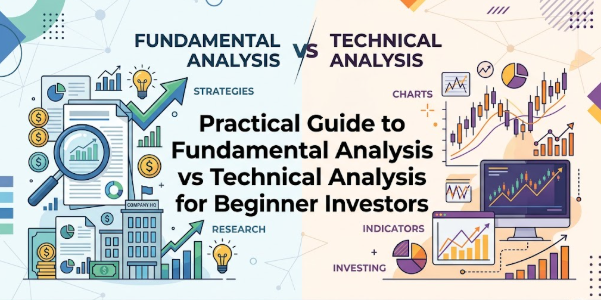
Fundamental Analysis vs Technical Analysis means comparing two different ways of studying stocks. Fundamental analysis focuses on the business behind the stock. It looks at things like revenue, profit, debt, management quality, industry position, cash flow, valuation, and long-term growth potential. Technical analysis focuses on the stock price itself. It studies price charts, volume, trends, support, resistance, momentum, and chart patterns.
In simple words, fundamental analysis asks, “Is this company strong and reasonably valued?” Technical analysis asks, “What is the price movement showing right now?” Both methods are used in the stock market, but their purpose is different. Investors often use fundamental analysis for long-term decisions, while traders often use technical analysis for short-term timing.
People search for Fundamental Analysis vs Technical Analysis because they want to know which method is better, easier, safer, or more suitable for them. The practical answer depends on the person’s goal. A beginner who wants to invest for years may need stronger fundamental understanding. A trader who wants to enter and exit positions quickly may need chart-reading skills and strict risk management.
For example, suppose a company has strong profits, low debt, and a good business model. Fundamental analysis may show that the company is financially healthy. But if the stock price is falling sharply, technical analysis may show weak momentum. A beginner who understands both will not blindly buy only because the company looks good, and will not blindly trade only because the chart looks attractive.
A common misunderstanding is that one method is always better than the other. In reality, both methods have limitations. Fundamental analysis may not show the best entry point, while technical analysis may not reveal the quality of the business. The practical takeaway is simple: understand your goal first, then use the method that supports that goal.
Why Fundamental Analysis vs Technical Analysis Is Important
Fundamental Analysis vs Technical Analysis is important because it affects how people save, invest, trade, manage risk, and make long-term financial decisions. A beginner who does not understand the difference may buy a stock only because it is trending online or sell a good investment during short-term volatility. This can damage savings, create stress, and reduce confidence.
For investing, fundamental analysis helps readers understand whether a business has long-term value. It supports decisions based on company quality, financial health, and valuation. For trading, technical analysis helps readers understand price behavior, market mood, and possible entry or exit zones. Both methods can help reduce emotional decisions when used with discipline.
This topic also connects with financial planning because money used in the stock market should not come from emergency funds, borrowed money, or essential monthly expenses. A salaried person, for example, should understand risk before investing part of savings. A trader should know that charts do not guarantee outcomes. A long-term investor should know that a strong company can still face price declines.
A practical scenario is a beginner who receives a stock tip from a friend. Without analysis, the beginner may buy quickly. With better understanding, the person checks the company’s fundamentals, studies the chart, reviews risk, decides position size, and avoids using emergency money. The better approach is not to rush, but to build a repeatable decision process.
The Real Problem Readers Face With Fundamental Analysis vs Technical Analysis
The real problem is not only lack of knowledge. The bigger problem is confusion, impatience, and too much unfiltered advice. Beginners often see different opinions on social media, videos, forums, and messaging groups. Some people say charts are everything. Others say only fundamentals matter. Some promote quick profits, while others present complicated terms that beginners cannot understand.
This creates weak comparison. A beginner may compare stocks based only on price, not business quality. Another beginner may study company numbers but ignore market timing. Some people buy during hype, sell during fear, or follow someone else’s trade without knowing the reason. Others expect quick results and feel disappointed when the market behaves differently.
Another common problem is ignoring risk. Stock market decisions involve uncertainty. Even a fundamentally strong company can fall due to market conditions. Even a strong chart pattern can fail. If readers depend only on social media advice, they may not understand position sizing, stop loss, valuation risk, or diversification.
The right next step is to slow down and build awareness. Beginners should understand what they are doing, why they are doing it, how much risk they are taking, what can go wrong, and what better action they can take. The better approach is to use analysis as a decision-support tool, not as a guarantee.
How Fundamental Analysis vs Technical Analysis Works Step by Step
Step 1: Define Your Goal
What it means: Decide whether you are investing, trading, or only learning.
Why it matters: Fundamental analysis and technical analysis serve different purposes.
How to apply it: Write your goal clearly before studying any stock.
Practical example: If your goal is long-term wealth building, focus more on business quality. If your goal is short-term trading, focus more on charts and risk control.
Common mistake: Beginners start with stock names before defining their purpose.
Better approach: Start with your goal, time horizon, and risk capacity.
Step 2: Understand the Business Behind the Stock
What it means: Learn what the company does, how it earns money, and what risks it faces.
Why it matters: A stock is not just a price. It represents ownership in a business.
How to apply it: Check the company’s products, industry, revenue sources, debt level, and management quality.
Practical example: Before buying a banking stock, understand lending quality, deposits, interest margins, and credit risk.
Common mistake: Buying only because the stock price looks low.
Better approach: Study business quality before assuming a stock is cheap.
Step 3: Review Financial Strength
What it means: Study important financial numbers like revenue, profit, debt, cash flow, and margins.
Why it matters: Strong numbers may show business stability, while weak numbers may reveal hidden problems.
How to apply it: Compare recent performance with past performance and industry peers.
Practical example: A company with rising sales but falling profit margins may need deeper review.
Common mistake: Looking at profit alone and ignoring debt or cash flow.
Better approach: Review multiple financial indicators together.
Step 4: Study the Price Chart
What it means: Observe how the stock price moves over time.
Why it matters: Charts help show trend, support, resistance, and market sentiment.
How to apply it: Look at whether the price is moving upward, downward, or sideways.
Practical example: A fundamentally strong company may still be in a downtrend, so entry timing matters.
Common mistake: Assuming every fall is a buying opportunity.
Better approach: Combine chart behavior with business understanding.
Step 5: Check Volume and Market Participation
What it means: Volume shows how many shares are being traded.
Why it matters: Price movement with strong volume may suggest higher market participation.
How to apply it: Compare current volume with normal trading activity.
Practical example: A breakout with weak volume may be less reliable than a breakout with strong participation.
Common mistake: Looking only at price movement and ignoring volume.
Better approach: Use volume as supporting evidence, not as the only signal.
Step 6: Plan Risk Before Entry
What it means: Decide how much money you can risk before buying or trading.
Why it matters: Good analysis cannot remove market uncertainty.
How to apply it: Set position size, exit rules, and review points before taking action.
Practical example: A trader may decide the maximum acceptable loss before entering a trade.
Common mistake: Investing a large amount because of confidence or excitement.
Better approach: Protect capital first and focus on controlled decisions.
Step 7: Review and Learn From Results
What it means: Track what happened after your decision and learn from it.
Why it matters: Improvement comes from reviewing both correct and incorrect decisions.
How to apply it: Maintain an investment or trading journal.
Practical example: Write why you entered, what analysis you used, what risk you accepted, and what you learned.
Common mistake: Forgetting past mistakes and repeating them.
Better approach: Build a written feedback system for continuous improvement.
Key Factors That Influence Fundamental Analysis vs Technical Analysis
Risk and Return
Every stock decision includes risk and possible return. Fundamental analysis helps estimate whether the business may create long-term value. Technical analysis helps understand short-term price behavior. The mistake is focusing only on return. The better approach is to ask, “How much can I lose if I am wrong?”
Time Horizon
Time horizon means how long you plan to hold a stock. Fundamental analysis is usually more useful for longer periods because business performance takes time to reflect. Technical analysis is often used for shorter periods because price movement changes quickly. The mistake is using a trading mindset for long-term investing or using long-term logic for short-term trades. The better approach is to match the method with the holding period.
Market Volatility
Volatility means price movement can be fast and uncertain. Technical analysis can help observe volatility through charts, while fundamental analysis helps understand whether the business remains strong despite price movement. The mistake is panicking during normal volatility. The better approach is to prepare for price movement before entering.
Research Quality
Poor research creates poor decisions. Fundamental research should include company performance, industry position, valuation, and risks. Technical research should include trend, volume, support, resistance, and risk levels. The mistake is using incomplete information. The better approach is to create a checklist before every decision.
Diversification
Diversification means spreading money across different stocks or assets instead of depending on one idea. Fundamental analysis can help choose different quality businesses. Technical analysis can help avoid entering all positions during weak market conditions. The mistake is putting too much money into one stock. The better approach is to spread risk carefully.
Emotional Control
Fear and greed are major problems in investing and trading. Fundamental analysis can give confidence in long-term quality, while technical analysis can give rules for entry and exit. The mistake is buying during hype and selling during panic. The better approach is to follow a written plan.
Portfolio Review
Reviewing your portfolio helps you know whether your decisions still make sense. Fundamentals may change due to business performance, and technical trends may change due to market behavior. The mistake is ignoring review after buying. The better approach is to review periodically without overreacting to every small movement.
Long-Term Discipline
Discipline matters more than excitement. Fundamental analysis supports patience, while technical analysis supports timing and risk control. The mistake is jumping from one strategy to another. The better approach is to follow a consistent process and improve slowly.
Detailed Breakdown of Fundamental Analysis vs Technical Analysis
Stock Market Basics
The stock market allows people to buy and sell shares of companies. When you buy a stock, you are buying a small ownership interest in that company. The price of a stock changes due to demand, supply, business performance, market mood, economic conditions, and investor expectations.
The mistake beginners make is thinking stock price alone tells the full story. A low-priced stock is not always cheap, and a high-priced stock is not always expensive. The better approach is to understand both the company and the market behavior.
How Stocks Work
Stocks move because buyers and sellers constantly react to information, expectations, and emotions. A company may perform well, but the stock price may still fall if the market expected even better results. A weak company may rise temporarily because of hype or speculation.
Fundamental analysis studies the company behind the stock. Technical analysis studies how the stock behaves in the market. The better approach is to avoid one-dimensional thinking.
Investing vs Trading
Investing usually focuses on long-term ownership. Investors often care about company quality, valuation, growth potential, and financial strength. Trading usually focuses on shorter-term price movement. Traders often care about trends, patterns, volume, support, resistance, and risk-reward.
The mistake is mixing both without clarity. A person may enter as a trader, but when the trade goes wrong, they become a long-term investor without proper research. The better approach is to decide before entry whether the position is an investment or a trade.
Risk and Return
Higher expected return usually comes with higher uncertainty. Fundamental analysis can reduce ignorance about business quality, but it cannot remove market risk. Technical analysis can improve timing, but it cannot guarantee price movement.
The better approach is to manage risk before thinking about profit. Beginners should avoid using borrowed money, emergency funds, or essential savings for risky market decisions.
Market Volatility
Volatility is normal in the stock market. Prices can move due to news, results, global markets, interest rates, sector trends, or investor sentiment. Technical analysis may help identify volatility zones, while fundamental analysis may help decide whether a fall is temporary or business-related.
The mistake is reacting to every price movement. The better approach is to separate price noise from meaningful information.
Long-Term vs Short-Term Approach
Long-term investors usually need patience, business understanding, valuation discipline, and portfolio review. Short-term traders need chart reading, entry planning, exit planning, stop loss discipline, and emotional control.
Fundamental Analysis vs Technical Analysis becomes useful when readers understand that time horizon changes the method. A long-term investor should not panic because of one bad chart pattern. A short-term trader should not ignore chart weakness only because the company is good.
Research Basics
Good research means checking facts, comparing information, and avoiding emotional shortcuts. For fundamental analysis, research may include company reports, financial statements, business model, industry outlook, debt, cash flow, and management commentary. For technical analysis, research may include price trend, volume, moving averages, support, resistance, and momentum.
The mistake is collecting too much information without knowing what matters. The better approach is to use a simple checklist and improve it over time.
Fundamental Understanding
Fundamental analysis helps answer whether a company is financially healthy and whether its stock appears reasonably valued compared with its business performance. It may include revenue growth, profit quality, debt level, cash flow, return ratios, competitive advantage, and management quality.
The mistake is assuming good companies are always good investments at any price. The better approach is to study both quality and valuation.
Technical Understanding
Technical analysis helps study price action. It does not focus on why a company is good or bad. Instead, it focuses on what buyers and sellers are doing in the market. Tools may include candlestick patterns, trendlines, moving averages, support, resistance, volume, and momentum indicators.
The mistake is treating chart patterns as guaranteed signals. The better approach is to use technical analysis with risk management.
Diversification
Diversification protects beginners from depending too much on one stock, one sector, or one idea. Even strong analysis can be wrong. A company can face unexpected problems, and a chart pattern can fail.
The better approach is to spread risk based on goals, time horizon, and financial capacity. Diversification should be planned, not random.
Portfolio Thinking
A portfolio is the complete collection of investments a person holds. Beginners often focus only on one stock at a time. But a better investor asks how each stock fits into the full portfolio.
The mistake is adding too many similar stocks without understanding overlap. The better approach is to balance sectors, risk levels, and investment goals.
Emotional Control
Emotions can damage both investing and trading. Greed may push beginners to buy at high prices. Fear may force them to sell during temporary falls. Overconfidence may make them ignore risk.
The better approach is to write down reasons for every decision. A written plan reduces impulsive action.
Beginner Mistakes
Beginners commonly follow random tips, ignore risk, chase trending stocks, overtrade, avoid research, and copy others. They may also ignore tax responsibilities, transaction costs, and portfolio review.
The better approach is to learn slowly, start small, track decisions, and consult qualified professionals when needed.
Importance of Patience and Discipline
Patience helps investors allow business value to develop over time. Discipline helps traders follow risk rules even when emotions are high. Without patience and discipline, both methods can fail.
The better approach is not to search for a perfect method. It is to build a reliable process.
Why Following Random Tips Is Risky
Random tips do not explain risk, time horizon, position size, exit plan, or suitability. A tip that works for one person may not suit another person’s financial situation.
The better approach is to treat tips as starting points for research, not as final decisions.
Common Mistakes Beginners Make With Fundamental Analysis vs Technical Analysis
Following Random Advice
This happens because beginners want simple answers. It is risky because the person giving advice may not know your goal, risk capacity, or financial condition. What can go wrong is buying unsuitable stocks. The better action is to do your own research before acting.
Ignoring Risk
Beginners often focus on possible gains and forget possible losses. This is risky because the market can move against expectations. What can go wrong is losing money needed for important expenses. The better action is to define risk before entering.
Not Comparing Options
Many beginners buy the first stock they hear about. This is risky because better opportunities or lower-risk alternatives may exist. The better action is to compare companies, sectors, valuations, and chart behavior.
Trusting Fake Profit Claims
Fake profit claims attract beginners with unrealistic expectations. This is risky because no analysis method guarantees profit. The better action is to avoid anyone promising fixed returns from stock market trading or investing.
Making Emotional Decisions
Fear, greed, excitement, and panic can lead to poor timing. What can go wrong is buying high and selling low. The better action is to use a written plan.
Using Emergency Money for Risky Activities
Emergency money should protect you during urgent needs. Using it for trading or speculative investing can create financial stress. The better action is to keep emergency funds separate.
Depending Only on Social Media Advice
Social media can be useful for awareness, but it can also spread incomplete or biased information. The better action is to verify information from reliable sources and understand the reasoning.
Ignoring Tax, Legal, or Compliance Responsibilities
Stock market gains and transactions may have tax implications depending on local rules. The mistake is thinking only about buying and selling. The better action is to maintain records and consult a qualified tax professional when needed.
Don’t Do This Checklist
- Do not buy a stock only because it is trending.
- Do not trade without knowing your exit plan.
- Do not use borrowed money without understanding risk.
- Do not treat chart patterns as guaranteed signals.
- Do not assume a good company is always a good investment.
- Do not share sensitive personal or financial information with unknown sources.
- Do not ignore transaction costs, taxes, and record keeping.
- Do not panic sell without reviewing the reason.
- Do not copy someone else’s portfolio blindly.
- Do not invest money needed for short-term essential expenses.
Practical Real-Life Examples of Fundamental Analysis vs Technical Analysis
Example 1: Salaried Beginner Managing Savings
A salaried person wants to invest part of monthly savings in stocks. The challenge is choosing stocks based on social media tips. A better action is to use fundamental analysis to check company quality and technical analysis to avoid poor entry timing. The learning is that savings should be invested with planning, not excitement.
Example 2: Beginner Investor Avoiding Random Stock Tips
A new investor hears that a stock will rise soon. The mistake is buying without checking the company’s business, debt, valuation, or chart trend. A better action is to research the fundamentals and review price behavior. The learning is that a tip is not a strategy.
Example 3: Short-Term Trader Planning Risk
A trader sees a stock breaking above resistance. The challenge is entering without a stop loss. A better action is to decide entry, exit, position size, and risk before the trade. The learning is that technical analysis needs discipline, not just chart excitement.
Example 4: Small Business Owner Investing Surplus Money
A small business owner has extra funds but may need cash for business operations. The mistake is locking too much money into volatile stocks. A better action is to separate business working capital from investment money. The learning is that liquidity matters before returns.
Example 5: Finance Blogger Explaining Stock Concepts
A finance blogger wants to explain Fundamental Analysis vs Technical Analysis to beginners. The challenge is making content useful without overpromising. A better action is to explain both methods, risks, examples, and limitations clearly. The learning is that responsible finance content builds trust.
Two Useful Tables for Better Understanding
Table 1: Fundamental Analysis vs Technical Analysis Comparison
| Factor | Fundamental Analysis | Technical Analysis |
|---|---|---|
| Main Focus | Business quality and value | Price movement and market behavior |
| Common Use | Long-term investing | Short-term trading and timing |
| Key Inputs | Revenue, profit, debt, cash flow, valuation | Price charts, volume, trends, indicators |
| Main Question | Is the company financially strong and reasonably valued? | What is the price action showing? |
| Time Horizon | Usually medium to long term | Usually short to medium term |
| Common Mistake | Ignoring price timing | Ignoring business quality |
| Better Approach | Combine business research with valuation discipline | Combine chart signals with risk management |
Table 2: Beginner Situation and Better Analysis Approach
| Beginner Situation | Useful Method | Why It Helps | Better Action |
|---|---|---|---|
| Wants to invest for years | Fundamental analysis | Helps understand company quality | Study business, financials, valuation, and risks |
| Wants short-term trades | Technical analysis | Helps plan entries and exits | Use charts, volume, stop loss, and position sizing |
| Confused by stock tips | Both methods | Helps verify claims | Check fundamentals and chart trend before deciding |
| Afraid of market falls | Fundamental analysis | Helps separate price movement from business strength | Review company performance before reacting |
| Overtrading frequently | Technical discipline | Helps control emotional decisions | Create rules for entry, exit, and maximum risk |
Tools, Methods, and Frameworks Readers Can Use
Stock Watchlist
A stock watchlist is a list of companies you want to study. It helps beginners avoid random decisions because they focus on selected stocks instead of chasing every market movement. Beginners can use it by adding companies they understand and reviewing them regularly. It helps avoid the mistake of buying unfamiliar stocks.
Fundamental Analysis Checklist
This checklist includes business model, revenue, profit, debt, cash flow, valuation, management quality, and industry risk. It helps beginners study a company step by step. The mistake it helps avoid is buying only because a stock price is rising.
Technical Analysis Checklist
This checklist includes trend, support, resistance, volume, momentum, and risk-reward. It helps traders avoid emotional entries. Beginners can use it before every trade to confirm whether the chart supports their plan. It helps avoid chasing price movement without structure.
Investment Journal
An investment journal records why you bought, what you expected, what risk you accepted, and what happened later. It helps beginners learn from experience. The mistake it helps avoid is repeating errors without noticing patterns.
Portfolio Review Method
This method involves checking your full portfolio instead of only one stock. It helps identify overexposure, weak holdings, and unnecessary duplication. Beginners can review monthly or quarterly depending on their approach. It helps avoid emotional buying and poor diversification.
Risk Allocation Method
Risk allocation means deciding how much money to put into different investments based on risk level. It helps beginners avoid putting too much money into one idea. The mistake it helps avoid is overconfidence.
Stop Loss and Exit Planning
For traders, stop loss planning helps limit damage when a trade goes wrong. It does not guarantee safety, but it creates discipline. Beginners can decide exit levels before entering. It helps avoid panic decisions.
Monthly Money Review System
This system checks income, savings, expenses, investments, and financial goals. It helps ensure that stock market activity does not disturb essential financial responsibilities. It helps avoid using emergency money for risky decisions.
Expert Tips to Make Better Decisions
1. Learn Before Taking Action
Understanding comes before decision-making. This matters because the stock market can punish careless decisions. Beginners can apply this by learning basic terms, reading company information, and practicing analysis before investing large amounts.
2. Compare Multiple Options
One stock idea is not enough. Comparison helps identify whether a stock is truly attractive or only looks interesting. Beginners can compare companies in the same industry based on business quality, valuation, and chart behavior.
3. Check Risk Before Expected Return
Return attracts attention, but risk protects capital. This matters because losses can reduce confidence and financial stability. Beginners can apply this by writing the maximum acceptable loss before entering.
4. Keep Written Records
Written records reduce emotional confusion. This matters because memory changes when money is involved. Beginners can maintain a simple journal with reasons, analysis, entry price, review date, and learning.
5. Avoid Emotional Decisions
Fear and greed are common market enemies. Emotional decisions often happen during sharp rallies or sudden falls. Beginners can apply this by waiting, reviewing facts, and avoiding instant reactions.
6. Start Small
Starting small helps beginners learn without taking excessive risk. This matters because early mistakes are common. Beginners can apply this by using limited capital while they build skill and discipline.
7. Do Not Blindly Copy Others
Another person’s strategy may not match your goal. This matters because risk capacity differs from person to person. Beginners can use others’ ideas only as research starting points.
8. Review Your Plan Regularly
Markets and companies change. Regular review helps you know whether your original reason still applies. Beginners can set a review routine instead of checking prices every few minutes.
9. Keep Emergency Money Separate
Emergency funds should not be exposed to market risk. This matters because urgent needs can force bad selling decisions. Beginners should invest only money they can keep aside without disturbing essentials.
10. Understand Time Horizon Clearly
A trade and an investment are not the same. This matters because confusion creates poor exits. Beginners should write whether a position is short-term, medium-term, or long-term before entering.
11. Protect Personal and Financial Data
Scams often target beginners. This matters because fake advisors, phishing links, and fraud schemes can cause financial loss. Beginners should avoid sharing account details, passwords, OTPs, or sensitive documents with unknown people.
12. Consult Professionals When Needed
Some decisions involve taxation, legal rules, or major financial impact. Professional advice matters because online content cannot understand every personal situation. Beginners should consult qualified experts before large or complex decisions.
Case Studies: How Better Understanding Changes Decisions
Case Study 1: Long-Term Investor Learning Business Quality
Profile: Rohan, a salaried beginner investor
Situation: He wants to invest monthly in stocks for long-term goals.
Problem: He chooses stocks based on trending discussions.
Wrong approach: He buys a stock because it has already moved up sharply.
Better approach: He studies revenue, profit, debt, valuation, industry risk, and long-term business strength. He also checks the chart to avoid entering during extreme short-term excitement.
Result or learning: Rohan learns that good investing requires business understanding and patience, not hype.
Key takeaway: Fundamental analysis helps long-term investors focus on quality, while technical analysis can support better timing.
Case Study 2: Trader Learning Risk Management
Profile: Meera, a beginner swing trader
Situation: She uses charts to find short-term opportunities.
Problem: She enters trades without deciding exit levels.
Wrong approach: She waits emotionally when a trade moves against her.
Better approach: She checks trend, support, resistance, volume, and risk-reward before entry. She decides position size and stop loss in advance.
Result or learning: Meera understands that technical analysis is incomplete without risk management.
Key takeaway: Charts can guide decisions, but discipline protects capital.
Case Study 3: Business Owner Separating Investment and Cash Needs
Profile: Arjun, a small business owner
Situation: He has surplus cash and wants to invest in stocks.
Problem: He may need money later for business expenses.
Wrong approach: He invests most of his liquid cash into volatile stocks after hearing a recommendation.
Better approach: He keeps business working capital separate, invests only surplus money, studies fundamentals, and avoids short-term speculation.
Result or learning: Arjun learns that liquidity and risk planning come before market opportunity.
Key takeaway: Financial decisions should match cash flow needs and risk capacity.
Risk Awareness: What Readers Must Check First
Market Risk
Market risk means stock prices can fall due to broad market conditions. It matters because even good companies can decline when the overall market is weak. Readers can reduce this risk through diversification, patience, and avoiding overexposure.
Business Risk
Business risk means the company may face falling sales, rising costs, debt pressure, or competition. It matters because a weak business can damage long-term investment value. Readers can reduce this risk by studying fundamentals before investing.
Valuation Risk
Valuation risk means paying too much for a stock. Even a good company can become risky if bought at an expensive price. Readers can reduce this risk by comparing valuation with growth, profits, and industry standards.
Volatility Risk
Volatility risk means prices can move quickly in either direction. It matters because beginners may panic during sudden falls. Readers can reduce this risk by using proper position sizing and avoiding money needed for essential expenses.
Liquidity Risk
Liquidity risk means you may not be able to buy or sell easily at a fair price. It matters more in thinly traded stocks. Readers can reduce this risk by checking trading volume and avoiding unknown illiquid stocks.
Emotional Risk
Emotional risk comes from fear, greed, panic, and overconfidence. It matters because emotions can break even a good plan. Readers can reduce this risk through written rules and review discipline.
Misinformation Risk
Misinformation risk comes from fake tips, incomplete analysis, and misleading claims. It matters because beginners may act without understanding. Readers can reduce this risk by verifying information and avoiding guaranteed-return claims.
Tax and Compliance Risk
Stock market activity may have tax and reporting implications depending on applicable rules. It matters because ignoring records can create problems later. Readers can reduce this risk by maintaining transaction records and consulting a qualified tax professional when required.
Data Privacy Risk
Scams may target people interested in investing and trading. It matters because sharing sensitive information can lead to fraud. Readers can reduce this risk by protecting passwords, OTPs, account details, and personal documents.
Checklist Before Taking Action
- I understand the difference between fundamental analysis and technical analysis.
- I know whether my decision is an investment or a trade.
- I have reviewed the company’s business quality, financial strength, and risks.
- I have checked price trend, support, resistance, and volume if timing matters.
- I have compared multiple options instead of depending on one idea.
- I have avoided fake profit claims and guaranteed-return promises.
- I have kept emergency funds separate from market activity.
- I have decided how much money I can risk.
- I have written an entry, exit, and review plan.
- I have considered tax, legal, and record-keeping responsibilities.
- I have protected my personal and financial data.
- I am not acting because of panic, greed, pressure, or social media hype.
- I will consult a qualified professional if the decision is large or complex.
Use this checklist before making any investment or trading decision. It is not a guarantee of success, but it helps reduce careless mistakes. A checklist creates discipline and makes beginners think before acting.
Strategic Insights for Better Decision-Making
Position Sizing
Position sizing means deciding how much money to put into one stock or trade. It matters because even a correct analysis can fail. Beginners should avoid putting too much capital into one decision.
Portfolio Review
Portfolio review helps investors understand whether their holdings still match their goals. A stock may need review if its business fundamentals weaken or if it becomes too large in the portfolio.
Diversification
Diversification reduces dependence on one company or sector. It does not remove risk, but it can reduce the damage from one wrong decision.
Risk Allocation
Risk allocation means distributing money based on risk level. Stable long-term investments, high-risk stocks, and short-term trades should not be treated equally.
Long-Term Mindset
A long-term mindset helps investors avoid reacting to daily noise. However, long-term investing still requires review. Holding blindly is not discipline; holding with understanding is discipline.
Avoiding Herd Mentality
Herd mentality means following the crowd without independent thinking. It is risky because crowds often become excited near highs and fearful near lows. Beginners should verify before following popular ideas.
Investment Discipline
Investment discipline means following a clear method even when emotions are strong. It includes research, risk control, review, patience, and learning from mistakes.
Key Terms Explained for Beginners
- Fundamental Analysis: Fundamental analysis means studying a company’s business, financial performance, management, industry, and valuation before investing.
- Technical Analysis: Technical analysis means studying price charts, trends, volume, and patterns to understand market behavior.
- Stock: A stock represents ownership in a company. When you buy a stock, you own a small part of that business.
- Revenue: Revenue is the money a company earns from selling products or services.
- Profit: Profit is the money left after a company pays its costs and expenses.
- Debt: Debt is borrowed money that a company must repay. Too much debt can increase financial risk.
- Cash Flow: Cash flow shows how money moves in and out of a business. Strong cash flow can support business stability.
- Valuation: Valuation means judging whether a stock price is reasonable compared with the company’s earnings, growth, and quality.
- Trend: A trend shows the general direction of a stock price, such as upward, downward, or sideways.
- Support: Support is a price area where buyers may become active. It is not guaranteed, but traders watch it closely.
- Resistance: Resistance is a price area where sellers may become active. A breakout above resistance may need confirmation.
- Volume: Volume shows how many shares are traded. It helps understand market participation.
- Volatility: Volatility means fast or sharp price movement. It can create opportunity but also increases risk.
- Stop Loss: Stop loss is a planned exit level used by traders to limit losses when a trade goes wrong.
- Diversification: Diversification means spreading money across different investments to reduce dependence on one stock or idea.
Who Should Read This Blog
Beginners
Beginners can use this blog to understand stock analysis without confusing jargon. It helps them avoid random tips and emotional decisions.
Students
Students learning finance or investing can use this as a simple foundation for understanding how investors and traders think differently.
Salaried Employees
Salaried people can learn how to invest savings more carefully while keeping emergency funds and monthly responsibilities separate.
Small Business Owners
Business owners can understand why investment money should be separated from working capital and business cash flow needs.
New Investors
New investors can learn how fundamental analysis supports long-term decision-making and portfolio discipline.
Traders
Traders can understand why technical analysis must be supported by risk management, stop loss planning, and emotional control.
Loan Seekers
Loan seekers can learn a broader financial lesson: never take financial action without understanding cost, risk, and repayment pressure.
Crypto Learners
Crypto learners can apply the same risk-aware thinking to volatile assets, where price movement and misinformation can be intense.
Casino Content Creators
Casino content creators can learn the importance of responsible financial language, risk awareness, and avoiding misleading claims.
Finance Bloggers
Finance bloggers can use this topic to explain investing and trading concepts clearly, responsibly, and in a beginner-friendly way.
People Improving Money Awareness
Anyone trying to improve financial discipline can learn how research, patience, and risk review support better decisions.
People Trying to Avoid Financial Mistakes
This blog helps readers slow down, compare options, and avoid acting under pressure, greed, panic, or hype.
Frequently Asked Questions
1. What is Fundamental Analysis vs Technical Analysis?
Fundamental Analysis vs Technical Analysis compares two ways of studying stocks. Fundamental analysis studies the company’s business and financial strength. Technical analysis studies price charts, trends, volume, and market behavior.
2. Which is better for beginners, fundamental analysis or technical analysis?
It depends on the beginner’s goal. Long-term investors usually need fundamental analysis, while short-term traders often use technical analysis. Many beginners benefit from understanding both at a basic level.
3. Is Fundamental Analysis vs Technical Analysis useful for long-term investing?
Yes, Fundamental Analysis vs Technical Analysis is useful because it helps investors separate business quality from price movement. Fundamental analysis supports long-term selection, while technical analysis may help with entry timing.
4. Can technical analysis guarantee profit?
No, technical analysis cannot guarantee profit. Chart patterns and indicators can fail. That is why traders need risk management, position sizing, and exit planning.
5. Can a fundamentally strong stock still fall?
Yes, a strong company’s stock can fall due to market weakness, expensive valuation, sector pressure, or temporary sentiment. Good fundamentals reduce ignorance, but they do not remove market risk.
6. Should beginners use both fundamental and technical analysis?
Beginners can learn both, but they should not complicate decisions too early. A long-term investor can focus more on fundamentals and use basic chart awareness. A trader needs stronger technical discipline.
7. What is the biggest mistake in Fundamental Analysis vs Technical Analysis?
The biggest mistake is treating either method as a guarantee. Both are decision-making tools, not profit promises. Beginners should combine analysis with risk control and patience.
8. How can beginners start safely?
Beginners can start by learning basic terms, studying a few companies, reading charts slowly, and keeping a journal. They should avoid large positions, borrowed money, and random tips.
9. Is technical analysis only for traders?
Technical analysis is commonly used by traders, but investors may also use it for basic timing. However, long-term investors should not ignore business quality only because a chart looks attractive.
10. How often should I review my investments?
Review frequency depends on your goal. Long-term investors may review periodically, while traders need more frequent tracking. The key is to review with purpose, not panic.
11. Should I take professional advice before investing?
Professional advice is useful when decisions are large, complex, tax-related, or connected to personal financial goals. Online education can guide awareness, but it cannot replace personalized advice.
12. What is the best next step after learning Fundamental Analysis vs Technical Analysis?
The best next step is to create a simple checklist, choose a few stocks to study, and practice analysis without rushing. Focus on learning, risk control, and disciplined decision-making.
Conclusion and Next Steps
Fundamental Analysis vs Technical Analysis is one of the most important concepts for beginners who want to understand the stock market with clarity instead of confusion. Fundamental analysis teaches readers to look at the real business behind a stock, including revenue, profit, debt, cash flow, valuation, management quality, and long-term strength. Technical analysis teaches readers to observe price movement, trend, volume, support, resistance, and market behavior. Both methods are useful, but neither method guarantees results. The right approach depends on your goal, time horizon, risk capacity, and discipline. Beginners should remember that stock market decisions should never be made only because of social media tips, emotional excitement, or fear of missing out. A good decision starts with awareness, continues with research, and improves with review. Before investing or trading, readers should define whether they are acting as investors or traders, keep emergency money separate, compare options properly, understand risk, protect personal data, and maintain written records. Long-term financial discipline is more valuable than quick decisions. The practical next step is to build a simple checklist, study a few companies deeply, learn basic chart reading, and avoid rushing into large positions. If a decision involves major money, tax impact, legal questions, or personal financial planning, consulting a qualified professional is a responsible choice. The goal is not to predict every market move perfectly. The goal is to make more informed, careful, and risk-aware decisions over time.