Introduction
Partner Relationship Management PRM platforms help organizations manage channel partners, distributors, resellers, affiliates, system integrators, and strategic alliances through centralized onboarding, training, deal registration, lead distribution, partner collaboration, and performance management workflows. These platforms improve channel visibility, strengthen partner engagement, accelerate sales growth, and streamline ecosystem operations across global partner networks.
As businesses increasingly rely on indirect sales channels and ecosystem-driven growth, spreadsheets, disconnected portals, and manual partner management processes are no longer sufficient. Modern PRM platforms now combine AI-driven partner analytics, partner portals, deal management, MDF tracking, workflow automation, learning management, incentive tracking, and cloud-native collaboration capabilities to support intelligent channel operations.
Real-world use cases include:
- Channel partner onboarding and enablement
- Distributor and reseller management
- Deal registration and lead distribution
- Partner performance analytics
- Co-selling and channel collaboration workflows
Buyers evaluating PRM platforms should focus on:
- Partner onboarding and portal capabilities
- Deal registration and lead management support
- CRM and ERP integration functionality
- Workflow automation and channel collaboration
- Incentive and MDF management capabilities
- Scalability for global partner ecosystems
- Security and governance controls
- Analytics and reporting visibility
- Training and certification management support
- Ease of deployment and partner usability
Best for: SaaS companies, enterprise software vendors, manufacturers, telecom providers, cybersecurity firms, technology vendors, and global channel-driven businesses.
Not ideal for: Small businesses with limited or no indirect sales channels.
Key Trends in PRM Platforms
- AI-driven partner analytics becoming standard
- Self-service partner portals expanding rapidly
- Co-selling workflows improving channel collaboration
- Channel incentive automation increasing significantly
- Real-time deal visibility improving forecasting
- Integrated LMS and partner enablement growing rapidly
- Cloud-native PRM platforms improving scalability
- API-driven CRM integrations accelerating operations
- Partner engagement analytics improving retention
- Mobile-first partner experiences improving adoption
How We Selected These Tools Methodology
- Adoption across enterprise channel ecosystems
- Partner management and portal capability depth
- CRM, ERP, and sales integration support
- Scalability for global partner operations
- Security and compliance functionality
- Workflow automation and analytics support
- Channel enablement and collaboration capabilities
- Cloud-native deployment flexibility
- Ease of deployment and operational usability
- Balance between enterprise and mid-market PRM platforms
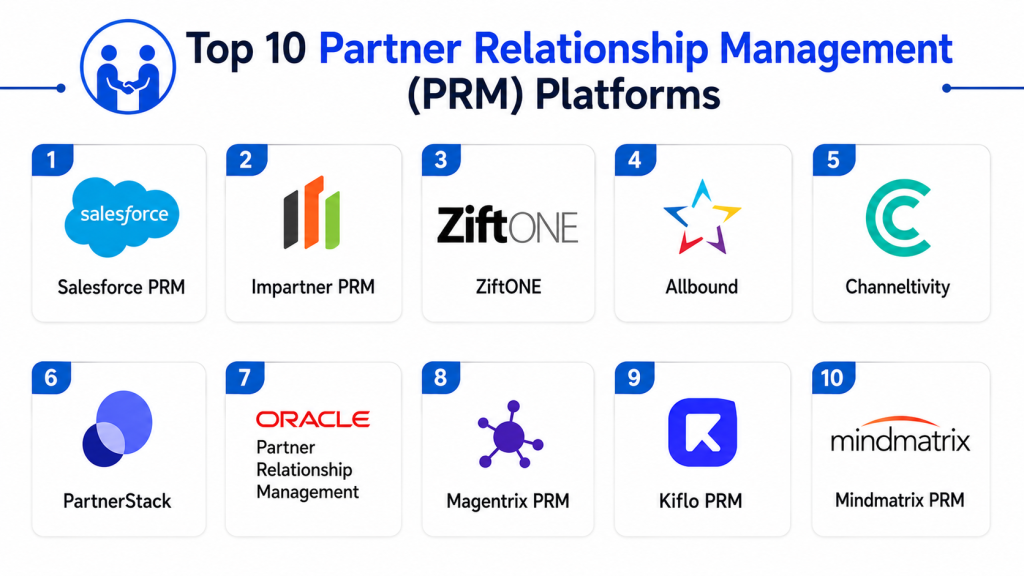
Top 10 Partner Relationship Management PRM Platforms
1- Salesforce PRM
Short description:
Salesforce PRM provides enterprise-grade partner portals, deal registration, lead distribution, onboarding, and channel collaboration workflows deeply integrated with Salesforce CRM.
Key Features
- Partner onboarding workflows
- Deal registration automation
- Lead distribution support
- Partner portal management
- Workflow automation capabilities
- Channel analytics dashboards
- Operational KPI reporting
Pros
- Strong Salesforce ecosystem integration
- Excellent enterprise scalability
- Reliable workflow automation capabilities
Cons
- Enterprise deployment complexity
- Premium licensing structure
- Advanced customization may require expertise
Platforms / Deployment
- Web / Mobile
- Cloud
Security & Compliance
Supports RBAC, MFA, encryption, audit logging, and governance workflows.
Integrations & Ecosystem
- Salesforce CRM
- ERP systems
- APIs
- Marketing platforms
- Channel environments
Support & Community
Large enterprise SaaS ecosystem.
2- Impartner PRM
Short description:
Impartner PRM provides channel automation, partner onboarding, deal registration, and partner engagement workflows supporting enterprise channel operations.
Key Features
- Partner onboarding automation
- Deal registration workflows
- MDF management support
- Workflow automation capabilities
- Partner analytics dashboards
- Lead distribution visibility
- Training management support
Pros
- Strong channel automation capabilities
- Good partner engagement workflows
- Reliable operational scalability
Cons
- Enterprise implementation complexity
- Advanced integrations may require expertise
- Premium enterprise pricing
Platforms / Deployment
- Web
- Cloud
Security & Compliance
Supports RBAC, encryption, secure APIs, and governance workflows.
Integrations & Ecosystem
- CRM systems
- APIs
- ERP platforms
- Marketing environments
Support & Community
Strong channel ecosystem.
3- Allbound
Short description:
Allbound provides partner enablement, training, onboarding, and collaboration workflows supporting partner-driven sales organizations.
Key Features
- Partner onboarding workflows
- Learning management support
- Deal registration capabilities
- Workflow automation support
- Partner collaboration portals
- Operational KPI dashboards
- Lead distribution visibility
Pros
- Strong partner enablement capabilities
- Good onboarding workflows
- Reliable operational usability
Cons
- Advanced enterprise customization varies
- Premium pricing for large deployments
- Smaller ecosystem compared to larger vendors
Platforms / Deployment
- Web
- Cloud
Security & Compliance
Supports RBAC, encryption, audit logging, and governance workflows.
Integrations & Ecosystem
- CRM systems
- APIs
- Marketing platforms
- Sales environments
Support & Community
Growing partner enablement ecosystem.
4- ZiftONE
Short description:
ZiftONE provides integrated channel marketing, partner management, lead distribution, and partner engagement workflows.
Key Features
- Channel marketing automation
- Partner onboarding workflows
- Lead distribution support
- Workflow automation capabilities
- Deal registration visibility
- Operational KPI reporting
- MDF management tools
Pros
- Strong channel marketing integration
- Good partner engagement capabilities
- Reliable operational flexibility
Cons
- Enterprise deployment complexity
- Advanced customization may require expertise
- Premium operational pricing
Platforms / Deployment
- Web
- Cloud
Security & Compliance
Supports RBAC, MFA, encryption, secure APIs, and governance workflows.
Integrations & Ecosystem
- CRM systems
- APIs
- Marketing automation platforms
- ERP environments
Support & Community
Strong channel marketing ecosystem.
5- Channeltivity
Short description:
Channeltivity provides partner relationship management workflows supporting onboarding, deal registration, collaboration, and channel sales operations.
Key Features
- Partner portal management
- Deal registration workflows
- Lead distribution support
- Workflow automation capabilities
- Partner analytics dashboards
- Training management workflows
- Operational KPI reporting
Pros
- Strong operational simplicity
- Good partner collaboration support
- Reliable mid-market usability
Cons
- Enterprise customization varies
- Advanced analytics capabilities limited compared to larger vendors
- Smaller ecosystem
Platforms / Deployment
- Web
- Cloud
Security & Compliance
Supports RBAC, encryption, audit logging, and governance workflows.
Integrations & Ecosystem
- CRM systems
- APIs
- Marketing platforms
- Sales environments
Support & Community
Growing PRM ecosystem.
6- Oracle PartnerNetwork
Short description:
Oracle PartnerNetwork provides enterprise channel management, onboarding, partner collaboration, and deal registration workflows integrated with Oracle business environments.
Key Features
- Partner onboarding support
- Deal registration workflows
- Workflow automation capabilities
- Channel analytics visibility
- Lead distribution support
- Operational KPI dashboards
- Partner engagement tracking
Pros
- Strong Oracle ecosystem integration
- Good enterprise scalability
- Reliable operational visibility
Cons
- Oracle-centric operational model
- Enterprise implementation complexity
- Premium enterprise pricing
Platforms / Deployment
- Web
- Cloud
Security & Compliance
Supports RBAC, MFA, encryption, audit logging, and governance workflows.
Integrations & Ecosystem
- Oracle CRM
- ERP systems
- APIs
- Marketing environments
Support & Community
Large Oracle enterprise ecosystem.
7- Mindmatrix
Short description:
Mindmatrix provides channel enablement, sales automation, partner onboarding, and co-selling workflows supporting distributed partner ecosystems.
Key Features
- Partner enablement workflows
- Sales automation support
- Workflow automation capabilities
- Partner collaboration visibility
- Lead distribution workflows
- Operational KPI dashboards
- Marketing enablement support
Pros
- Strong partner enablement support
- Good co-selling workflows
- Reliable operational flexibility
Cons
- Enterprise customization may require expertise
- Smaller ecosystem compared to major vendors
- Advanced integrations vary
Platforms / Deployment
- Web
- Cloud
Security & Compliance
Supports RBAC, encryption, secure APIs, and governance workflows.
Integrations & Ecosystem
- CRM systems
- APIs
- Marketing automation platforms
- Sales environments
Support & Community
Growing partner enablement ecosystem.
8- Kiflo PRM
Short description:
Kiflo PRM provides lightweight partner management workflows supporting startups and growing SaaS channel ecosystems.
Key Features
- Partner onboarding support
- Deal registration workflows
- Workflow automation capabilities
- Lead distribution visibility
- Operational KPI dashboards
- Partner portal management
- Collaboration workflows
Pros
- Strong ease-of-use capabilities
- Good startup and SMB usability
- Reliable deployment simplicity
Cons
- Advanced enterprise features limited
- Smaller integration ecosystem
- Large-scale customization capabilities limited
Platforms / Deployment
- Web
- Cloud
Security & Compliance
Supports RBAC, encryption, audit logging, and governance workflows.
Integrations & Ecosystem
- CRM systems
- APIs
- Sales platforms
- Marketing environments
Support & Community
Growing SaaS partner ecosystem.
9- PartnerStack
Short description:
PartnerStack provides ecosystem management, affiliate and reseller workflows, onboarding automation, and partner payout management capabilities.
Key Features
- Partner onboarding automation
- Affiliate and reseller workflows
- Incentive and payout management
- Workflow automation support
- Partner engagement analytics
- Operational KPI dashboards
- Lead distribution workflows
Pros
- Strong SaaS ecosystem capabilities
- Good affiliate workflow support
- Reliable operational usability
Cons
- Advanced enterprise channel workflows limited compared to larger PRM suites
- Enterprise customization varies
- Industry-specific workflows may require adjustments
Platforms / Deployment
- Web
- Cloud
Security & Compliance
Supports RBAC, secure APIs, encryption, and governance workflows.
Integrations & Ecosystem
- CRM systems
- APIs
- Billing platforms
- Marketing systems
Support & Community
Strong SaaS ecosystem ecosystem.
10- Crossbeam
Short description:
Crossbeam provides ecosystem collaboration and partner intelligence workflows supporting co-selling, account mapping, and channel growth operations.
Key Features
- Ecosystem account mapping
- Partner collaboration workflows
- Co-selling visibility support
- Workflow automation capabilities
- Operational KPI dashboards
- Partner engagement analytics
- Lead sharing support
Pros
- Strong ecosystem intelligence capabilities
- Excellent co-selling visibility
- Reliable operational scalability
Cons
- Traditional PRM functionality limited compared to full PRM suites
- Advanced onboarding workflows may require integrations
- Enterprise customization varies
Platforms / Deployment
- Web
- Cloud
Security & Compliance
Supports RBAC, MFA, encryption, secure APIs, and governance workflows.
Integrations & Ecosystem
- CRM systems
- APIs
- Sales platforms
- Partner ecosystems
Support & Community
Strong ecosystem collaboration ecosystem.
Comparison Table
| Tool Name | Best For | Platforms Supported | Deployment | Standout Feature | Public Rating |
|---|---|---|---|---|---|
| Salesforce PRM | Enterprise channel operations | Web, Mobile | Cloud | CRM-native PRM workflows | N/A |
| Impartner PRM | Channel automation | Web | Cloud | Partner onboarding automation | N/A |
| Allbound | Partner enablement | Web | Cloud | LMS and onboarding support | N/A |
| ZiftONE | Channel marketing operations | Web | Cloud | Marketing and PRM integration | N/A |
| Channeltivity | Mid-market PRM workflows | Web | Cloud | Operational simplicity | N/A |
| Oracle PartnerNetwork | Enterprise channel management | Web | Cloud | Oracle ecosystem integration | N/A |
| Mindmatrix | Partner enablement and co-selling | Web | Cloud | Sales enablement workflows | N/A |
| Kiflo PRM | Startup partner ecosystems | Web | Cloud | Lightweight PRM simplicity | N/A |
| PartnerStack | SaaS ecosystem management | Web | Cloud | Affiliate and payout workflows | N/A |
| Crossbeam | Ecosystem intelligence | Web | Cloud | Account mapping collaboration | N/A |
Evaluation & Scoring of PRM Platforms
| Tool Name | Core 25% | Ease 15% | Integrations 15% | Security 10% | Performance 10% | Support 10% | Value 15% | Weighted Total |
|---|---|---|---|---|---|---|---|---|
| Salesforce PRM | 9.7 | 8.2 | 9.6 | 9.5 | 9.5 | 9.3 | 8.2 | 9.2 |
| Impartner PRM | 9.3 | 8.4 | 9.2 | 9.2 | 9.2 | 9.0 | 8.5 | 9.0 |
| Allbound | 9.1 | 8.7 | 8.9 | 9.1 | 9.0 | 8.9 | 8.7 | 8.9 |
| ZiftONE | 9.2 | 8.3 | 9.1 | 9.2 | 9.1 | 8.9 | 8.5 | 8.9 |
| Channeltivity | 8.9 | 8.8 | 8.7 | 9.0 | 8.9 | 8.8 | 8.8 | 8.8 |
| Oracle PartnerNetwork | 9.3 | 8.0 | 9.4 | 9.4 | 9.3 | 9.1 | 8.2 | 9.0 |
| Mindmatrix | 9.0 | 8.5 | 8.8 | 9.0 | 9.0 | 8.8 | 8.6 | 8.8 |
| Kiflo PRM | 8.7 | 8.9 | 8.5 | 8.9 | 8.8 | 8.7 | 8.9 | 8.7 |
| PartnerStack | 9.0 | 8.6 | 8.8 | 9.0 | 9.0 | 8.8 | 8.7 | 8.8 |
| Crossbeam | 9.1 | 8.5 | 9.0 | 9.1 | 9.0 | 8.8 | 8.6 | 8.9 |
These scores are comparative and intended to help organizations evaluate PRM platforms based on partner management capabilities, integrations, scalability, workflow automation, channel visibility, and long-term ecosystem growth value.
Which PRM Platform Is Right for You?
Small and Mid-Sized Partner Programs
Best suited: Kiflo PRM, Channeltivity
These provide operational simplicity and strong partner onboarding workflows.
SMB SaaS and Technology Companies
Best suited: Allbound, PartnerStack
These balance partner enablement and operational flexibility.
Mid-Market Channel Operations
Best suited: Impartner PRM, Mindmatrix, ZiftONE
These provide stronger workflow automation and partner engagement capabilities.
Large Enterprise Channel Ecosystems
Best suited: Salesforce PRM, Oracle PartnerNetwork, Crossbeam
These offer enterprise scalability, advanced analytics, and deep integration capabilities.
Budget vs Premium
Budget-friendly: Kiflo PRM, Channeltivity
Premium enterprise: Salesforce PRM, Oracle PartnerNetwork
Feature Depth vs Ease of Use
Deep enterprise functionality: Salesforce PRM, Impartner PRM
Ease of use: Kiflo PRM, Allbound
Integrations & Scalability
Best integrations: Salesforce PRM, Oracle PartnerNetwork, ZiftONE
Best scalability: Salesforce PRM, Impartner PRM
Security & Compliance Needs
Organizations should prioritize systems supporting RBAC, MFA, encryption, audit logging, secure APIs, governance automation, and partner data protection controls.
Frequently Asked Questions
1. What is a PRM platform?
A PRM platform is software used to manage channel partners, distributors, resellers, affiliates, and partner ecosystems through centralized workflows.
2. Why are PRM platforms important?
They improve channel visibility, automate partner workflows, accelerate sales growth, and strengthen partner engagement operations.
3. Can PRM platforms integrate with CRM and ERP systems?
Yes, most PRM platforms integrate with CRM systems, ERP environments, APIs, marketing platforms, and sales operations tools.
4. What analytics capabilities are common?
Partner performance analytics, deal visibility, lead tracking, MDF reporting, operational KPIs, and channel dashboards are commonly supported.
5. Are cloud-native PRM platforms common?
Yes, cloud-native PRM platforms are increasingly common because they improve scalability and operational accessibility.
6. What security features are important?
RBAC, MFA, encryption, audit logging, secure APIs, governance workflows, and partner data protection controls are critical for channel operations.
7. Which industries use PRM platforms most?
Software, cybersecurity, telecom, manufacturing, cloud services, IT distribution, and enterprise technology vendors heavily rely on these systems.
8. Can PRM platforms support partner training and certifications?
Yes, many modern PRM platforms include LMS integration, onboarding workflows, training modules, and certification management capabilities.
9. What are common implementation challenges?
CRM integrations, partner onboarding alignment, workflow redesign, channel policy standardization, and partner adoption are common deployment challenges.
10. How should organizations choose a PRM platform?
Organizations should evaluate integration capabilities, workflow automation, scalability, analytics visibility, partner enablement functionality, and long-term ecosystem growth strategy.
Conclusion
Partner Relationship Management PRM platforms have become essential infrastructure for organizations managing increasingly complex channel ecosystems, reseller operations, and ecosystem-driven growth strategies. Modern platforms now combine AI-driven analytics, workflow automation, partner enablement, deal registration, incentive management, cloud-native collaboration, and CRM integrations to support intelligent channel operations and improve partner engagement. Enterprise solutions such as Salesforce PRM, Impartner PRM, and Oracle PartnerNetwork provide deep enterprise automation and advanced partner management capabilities, while platforms like Allbound and Kiflo PRM offer flexible and accessible workflows for evolving partner ecosystems. The best solution ultimately depends on channel complexity, integration priorities, operational scale, ecosystem strategy, and long-term partner growth objectives. A structured evaluation process combined with pilot deployments and workflow validation can significantly improve channel visibility, partner engagement, operational efficiency, sales collaboration, and long-term ecosystem scalability.