Introduction
Open Banking Platforms enable secure financial data sharing between banks, fintech companies, payment providers, and third-party applications through APIs and consent-driven access models. These platforms help organizations connect banking systems, customer accounts, payment services, lending workflows, personal finance applications, and embedded finance ecosystems while maintaining security and regulatory compliance.
Open banking has evolved into a major financial infrastructure layer for digital payments, lending, account aggregation, personal finance management, and embedded financial services. Modern platforms increasingly focus on API orchestration, real-time payments, identity verification, AI-driven financial analytics, consent management, and multi-bank connectivity across global markets.
Real-world use cases include:
- Bank account aggregation
- Embedded finance applications
- Payment initiation services
- Lending and credit analytics
- Personal finance management platforms
Evaluation Criteria for Buyers
Organizations evaluating Open Banking Platforms should consider:
- Bank connectivity coverage
- API reliability and scalability
- Payment initiation capabilities
- Consent and identity management
- Security and compliance features
- Real-time financial data access
- Developer tooling and SDKs
- Global banking support
- Analytics and reporting capabilities
- Integration ecosystem maturity
Best for: Fintech companies, banks, payment providers, lenders, accounting platforms, personal finance applications, and enterprises building embedded finance products.
Not ideal for: Organizations without financial data integration needs or businesses relying solely on internal banking infrastructure.
Key Trends in Open Banking Platforms
- Embedded finance ecosystems are driving rapid API adoption.
- AI-powered financial analytics and personalization are expanding.
- Real-time payment infrastructure integration is increasing.
- Open finance models are extending beyond banking into investments and insurance.
- Consent management and customer-controlled data sharing are becoming more advanced.
- Cross-border banking API connectivity is improving.
- Fraud prevention and identity verification capabilities are becoming critical differentiators.
- Banking-as-a-service ecosystems are converging with open banking infrastructure.
- Financial data portability regulations are expanding globally.
- API monetization and fintech partnership ecosystems are growing rapidly.
How We Selected These Tools
The following Open Banking Platforms were selected based on market adoption, API capabilities, financial connectivity, scalability, and enterprise readiness.
- Broad banking connectivity
- API reliability and scalability
- Payment and financial workflow support
- Security and compliance capabilities
- Developer ecosystem maturity
- Enterprise deployment readiness
- Analytics and reporting capabilities
- Global financial institution coverage
- Innovation in embedded finance support
- Customer and fintech adoption momentum
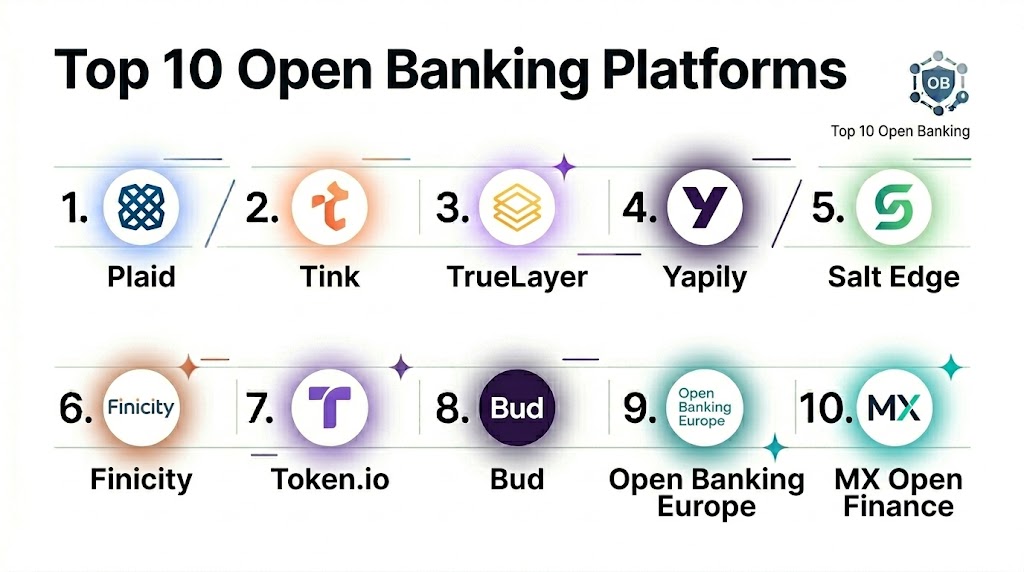
Top 10 Open Banking Platforms
1- Plaid
Short description: Plaid is one of the most widely adopted open banking and financial connectivity platforms used by fintech applications, lenders, payment systems, and personal finance tools.
Key Features
- Bank account aggregation
- Financial data APIs
- Payment connectivity
- Identity verification support
- Transaction analytics
- Multi-bank integrations
- Developer SDKs
Pros
- Broad banking ecosystem support
- Strong developer experience
- Large fintech adoption
Cons
- Premium pricing for large-scale usage
- Regional coverage varies
- Heavy reliance on external banking connectivity
Platforms / Deployment
- Cloud
Security & Compliance
Supports encryption, API authentication, consent management, and financial data protection workflows.
Integrations & Ecosystem
Plaid integrates with fintech, lending, and financial analytics ecosystems.
- Banking systems
- Payment platforms
- Accounting tools
- Lending systems
- Financial applications
Support & Community
Large fintech ecosystem with extensive developer documentation and onboarding resources.
2- Tink
Short description: Tink provides open banking infrastructure for account aggregation, payment initiation, and financial data analytics across banking ecosystems.
Key Features
- Account aggregation APIs
- Payment initiation support
- Financial analytics tools
- Bank connectivity infrastructure
- Consent management
- Multi-bank integration
- Personal finance support
Pros
- Strong European banking coverage
- Good analytics capabilities
- Flexible financial API infrastructure
Cons
- Regional focus may vary
- Enterprise integration complexity
- Advanced customization may require expertise
Platforms / Deployment
- Cloud
Security & Compliance
Supports encryption, consent-driven access, and financial API security protections.
Integrations & Ecosystem
Tink integrates with fintech, banking, and payment ecosystems.
- Banking APIs
- Payment systems
- Personal finance applications
- Lending systems
- Financial analytics tools
Support & Community
Strong fintech and banking ecosystem support with extensive API documentation.
3- TrueLayer
Short description: TrueLayer is an open banking platform focused on payment initiation, bank connectivity, and real-time financial data infrastructure for fintech applications.
Key Features
- Open banking APIs
- Payment initiation services
- Real-time bank data access
- Multi-bank connectivity
- Financial identity verification
- Consent management
- Embedded finance infrastructure
Pros
- Strong payment capabilities
- Good real-time connectivity
- Broad fintech integration support
Cons
- Regional banking availability varies
- Enterprise onboarding complexity
- Advanced payment workflows require planning
Platforms / Deployment
- Cloud
Security & Compliance
Supports consent-based access, API authentication, and operational security protections.
Integrations & Ecosystem
TrueLayer integrates with payment systems and fintech applications.
- Banking systems
- Payment gateways
- Financial applications
- Embedded finance systems
- Identity verification tools
Support & Community
Growing fintech ecosystem with strong developer onboarding capabilities.
4- Yapily
Short description: Yapily provides API-driven open banking infrastructure for payments, account aggregation, and embedded financial services.
Key Features
- Open banking APIs
- Payment initiation workflows
- Financial data aggregation
- Consent management
- Bank connectivity
- Embedded finance support
- Developer integration tools
Pros
- Strong API-first architecture
- Flexible embedded finance support
- Good banking integration capabilities
Cons
- Regional support varies
- Enterprise integrations may require customization
- Scaling costs can increase for large usage volumes
Platforms / Deployment
- Cloud
Security & Compliance
Supports secure API authentication and consent-based financial data access protections.
Integrations & Ecosystem
Yapily integrates with fintech applications and banking ecosystems.
- Payment systems
- Banking APIs
- Financial applications
- Accounting systems
- Embedded finance tools
Support & Community
Strong developer-focused onboarding and fintech ecosystem support.
5- Finicity
Short description: Finicity provides open banking and financial data aggregation infrastructure for lenders, fintech companies, and personal finance applications.
Key Features
- Financial data aggregation
- Lending workflow support
- Account verification
- Transaction analytics
- Banking API connectivity
- Risk assessment support
- Real-time financial insights
Pros
- Strong lending ecosystem support
- Good financial analytics
- Broad banking connectivity
Cons
- Primarily finance-focused deployment
- Enterprise integration complexity
- Premium pricing for advanced services
Platforms / Deployment
- Cloud
Security & Compliance
Supports secure financial data exchange and consent-driven access controls.
Integrations & Ecosystem
Finicity integrates with lending and financial analytics systems.
- Lending platforms
- Banking systems
- Credit analytics
- Financial applications
- Accounting workflows
Support & Community
Strong enterprise and lending ecosystem support capabilities.
6- MX
Short description: MX provides open banking infrastructure and financial data analytics solutions focused on digital banking and customer financial experiences.
Key Features
- Financial data aggregation
- Customer financial analytics
- Open banking APIs
- Digital banking infrastructure
- Transaction enrichment
- Identity verification support
- Financial wellness tools
Pros
- Strong digital banking focus
- Good analytics capabilities
- Customer experience optimization support
Cons
- Enterprise-oriented deployment complexity
- Premium infrastructure pricing
- Broad implementation planning required
Platforms / Deployment
- Cloud
Security & Compliance
Supports encrypted financial data workflows and API-based operational protections.
Integrations & Ecosystem
MX integrates with banking and financial engagement systems.
- Digital banking platforms
- Financial applications
- Analytics systems
- Lending infrastructure
- Customer engagement tools
Support & Community
Strong financial institution ecosystem with enterprise onboarding support.
7- Salt Edge
Short description: Salt Edge provides open banking compliance and API infrastructure for banks, fintech organizations, and financial service providers.
Key Features
- Open banking APIs
- PSD2 compliance support
- Account aggregation
- Payment initiation
- Banking API connectivity
- Consent management
- Financial data workflows
Pros
- Strong regulatory support capabilities
- Broad banking connectivity
- Good compliance-focused architecture
Cons
- Compliance-oriented deployment focus
- Advanced customization may require expertise
- Regional banking support varies
Platforms / Deployment
- Cloud
Security & Compliance
Supports secure API infrastructure, consent controls, and financial data governance protections.
Integrations & Ecosystem
Salt Edge integrates with banking and compliance ecosystems.
- Banking APIs
- Payment systems
- Fintech applications
- Financial reporting tools
- Regulatory workflows
Support & Community
Strong banking compliance ecosystem with extensive API resources.
8- Belvo
Short description: Belvo provides open finance APIs and banking connectivity infrastructure for financial applications across emerging financial ecosystems.
Key Features
- Open finance APIs
- Banking connectivity
- Financial data aggregation
- Payment workflows
- Identity verification
- Financial analytics
- Developer APIs
Pros
- Strong emerging market focus
- Flexible financial API architecture
- Good developer usability
Cons
- Geographic availability varies
- Smaller ecosystem than global leaders
- Enterprise scaling may require planning
Platforms / Deployment
- Cloud
Security & Compliance
Supports API authentication, financial data encryption, and consent-driven workflows.
Integrations & Ecosystem
Belvo integrates with fintech and embedded finance ecosystems.
- Banking systems
- Payment applications
- Financial analytics tools
- Embedded finance systems
- Identity workflows
Support & Community
Growing fintech ecosystem with developer-focused onboarding support.
9- Token.io
Short description: Token.io provides open banking payment infrastructure focused on account-to-account payment connectivity and banking APIs.
Key Features
- Open banking payment APIs
- Account-to-account payments
- Banking connectivity
- Payment orchestration
- Real-time transaction support
- Consent management
- Financial API infrastructure
Pros
- Strong payment infrastructure focus
- Good banking integration support
- Useful real-time payment capabilities
Cons
- Payment-focused deployment scope
- Enterprise integration complexity
- Regional coverage varies
Platforms / Deployment
- Cloud
Security & Compliance
Supports secure payment APIs and consent-based banking access protections.
Integrations & Ecosystem
Token.io integrates with payment and banking ecosystems.
- Banking systems
- Payment providers
- Financial applications
- Embedded finance tools
- Transaction infrastructure
Support & Community
Strong payment-focused ecosystem with enterprise onboarding resources.
10- Nordic API Gateway
Short description: Nordic API Gateway provides open banking and financial API infrastructure focused on secure bank connectivity and data aggregation services.
Key Features
- Banking connectivity APIs
- Financial data aggregation
- Open banking workflows
- Consent management
- Multi-bank integration
- Payment infrastructure support
- Financial analytics connectivity
Pros
- Strong banking connectivity focus
- Good API usability
- Flexible integration architecture
Cons
- Smaller global ecosystem
- Regional banking support focus
- Enterprise scaling requires planning
Platforms / Deployment
- Cloud
Security & Compliance
Supports encrypted financial data exchange and API access controls.
Integrations & Ecosystem
Nordic API Gateway integrates with fintech and banking ecosystems.
- Banking systems
- Financial applications
- Payment tools
- Analytics systems
- Embedded finance platforms
Support & Community
Growing open banking ecosystem with developer-oriented onboarding support.
Comparison Table
| Tool Name | Best For | Platform(s) Supported | Deployment | Standout Feature | Public Rating |
|---|---|---|---|---|---|
| Plaid | Fintech integrations | Cloud | Cloud | Broad banking ecosystem | N/A |
| Tink | Financial analytics | Cloud | Cloud | Account aggregation APIs | N/A |
| TrueLayer | Payment initiation | Cloud | Cloud | Real-time banking connectivity | N/A |
| Yapily | Embedded finance APIs | Cloud | Cloud | API-first architecture | N/A |
| Finicity | Lending workflows | Cloud | Cloud | Financial verification analytics | N/A |
| MX | Digital banking analytics | Cloud | Cloud | Customer financial insights | N/A |
| Salt Edge | Compliance-focused banking APIs | Cloud | Cloud | PSD2 compliance support | N/A |
| Belvo | Emerging market open finance | Cloud | Cloud | Flexible financial APIs | N/A |
| Token.io | Account-to-account payments | Cloud | Cloud | Payment orchestration | N/A |
| Nordic API Gateway | Banking connectivity | Cloud | Cloud | Multi-bank integration | N/A |
Evaluation & Scoring of Open Banking Platforms
| Tool Name | Core 25% | Ease 15% | Integrations 15% | Security 10% | Performance 10% | Support 10% | Value 15% | Weighted Total |
|---|---|---|---|---|---|---|---|---|
| Plaid | 10 | 9 | 10 | 9 | 9 | 9 | 7 | 9.0 |
| Tink | 9 | 8 | 8 | 9 | 8 | 8 | 8 | 8.3 |
| TrueLayer | 9 | 8 | 8 | 9 | 9 | 8 | 8 | 8.4 |
| Yapily | 8 | 8 | 8 | 8 | 8 | 8 | 8 | 8.0 |
| Finicity | 8 | 7 | 8 | 8 | 8 | 8 | 7 | 7.8 |
| MX | 8 | 7 | 8 | 8 | 8 | 8 | 7 | 7.8 |
| Salt Edge | 8 | 7 | 8 | 9 | 8 | 8 | 8 | 8.0 |
| Belvo | 7 | 8 | 7 | 8 | 7 | 7 | 8 | 7.4 |
| Token.io | 8 | 7 | 8 | 8 | 8 | 7 | 8 | 7.8 |
| Nordic API Gateway | 7 | 8 | 7 | 8 | 7 | 7 | 8 | 7.4 |
These scores are comparative evaluations designed to help organizations understand strengths across open banking ecosystems. Some platforms focus more heavily on payments and financial analytics, while others prioritize compliance, embedded finance, or developer usability.
Which Open Banking Platform Is Right for You?
Solo / Freelancer
Independent developers and small fintech startups may benefit most from Plaid, Yapily, or Belvo because of their developer-friendly APIs and onboarding simplicity.
SMB
Small and medium-sized fintech businesses should evaluate TrueLayer, Tink, or Salt Edge for scalable financial connectivity and payment workflows.
Mid-Market
Mid-market organizations building embedded finance or lending ecosystems should prioritize Finicity, MX, or Yapily depending on analytics and integration needs.
Enterprise
Large financial institutions and enterprise fintech platforms should evaluate Plaid, Tink, TrueLayer, or enterprise-grade banking infrastructure providers.
Budget vs Premium
Developer-first platforms reduce onboarding complexity but usage-based pricing can scale rapidly. Enterprise-focused banking infrastructure platforms provide stronger governance and analytics at higher operational cost.
Feature Depth vs Ease of Use
Simpler API platforms focus on rapid integration and developer productivity, while enterprise banking infrastructure providers prioritize governance, scalability, and regulatory alignment.
Integrations & Scalability
Organizations with high transaction volumes and complex financial workflows should prioritize platforms with strong banking coverage, API reliability, and embedded finance capabilities.
Security & Compliance Needs
Financial institutions should focus on encryption, consent management, auditability, API security, and regulatory workflow support before selecting a platform.
Frequently Asked Questions FAQs
1- What are Open Banking Platforms?
Open Banking Platforms provide APIs and infrastructure that allow secure financial data sharing between banks, fintech companies, and third-party applications.
2- Why is open banking important?
Open banking improves financial innovation, enables embedded finance services, and allows customers to securely share banking data with approved applications.
3- What is account aggregation?
Account aggregation combines financial data from multiple banks and financial institutions into a unified application or service.
4- What is payment initiation?
Payment initiation allows applications to trigger bank payments directly through open banking APIs without relying entirely on card networks.
5- Which industries use open banking platforms?
Fintech companies, banks, payment providers, lenders, accounting platforms, and personal finance applications are major users.
6- Are open banking APIs secure?
Leading platforms use encryption, authentication controls, consent management, and secure API workflows to protect financial data access.
7- Can open banking support embedded finance?
Yes. Open banking infrastructure is widely used to power embedded payments, lending, and financial analytics inside non-banking applications.
8- What should organizations evaluate before selecting a platform?
Organizations should evaluate bank coverage, API reliability, security controls, payment support, scalability, analytics capabilities, and integration flexibility.
9- Are open banking platforms global?
Some providers support global banking ecosystems, while others focus on specific regions and regulatory environments.
10- Which platform is best for fintech developers?
Plaid, TrueLayer, Yapily, and Tink are commonly evaluated for fintech development because of their API ecosystems and financial connectivity capabilities.
Conclusion
Open Banking Platforms are becoming foundational infrastructure for digital finance, embedded payments, financial analytics, and customer-controlled banking experiences. As financial ecosystems become increasingly API-driven, organizations require secure and scalable banking connectivity that supports payments, account aggregation, lending workflows, and real-time financial insights. Platforms such as Plaid, Tink, TrueLayer, and Yapily provide mature open banking ecosystems for fintech innovation, while solutions like Finicity, MX, and Salt Edge focus more heavily on financial analytics, compliance, and enterprise banking infrastructure. The best platform depends heavily on banking coverage, payment requirements, embedded finance goals, and operational scale. Startups and developers may prioritize onboarding simplicity and API usability, while enterprises often focus more on governance, reliability, compliance, and large-scale financial data orchestration. Before selecting a platform, organizations should benchmark API reliability, validate bank coverage, assess payment workflows, and carefully evaluate long-term scalability and compliance requirements for open banking operations.
Simple explanation, helps understand open banking platforms without too much technical complexity.