Introduction
Hospital Asset Tracking Tools help healthcare facilities, hospitals, clinics, and long‑term care centers locate, monitor, and manage critical medical equipment, devices, and supplies in real time. These systems improve operational efficiency, reduce equipment loss, optimize asset utilization, cut inventory waste, and enhance patient care by ensuring that staff can quickly locate needed resources.
As healthcare operations become more complex, manual asset logs, whiteboards, and spreadsheets are increasingly insufficient. Modern asset tracking tools now combine RFID, Bluetooth Low Energy (BLE), Wi‑Fi, GPS, and IoT sensor technologies with real‑time dashboards, mobile apps, analytics, alerts, and integration with EHR/HIS systems, enabling smarter hospital operations.
Real‑world use cases include:
- Locating mobile medical devices (e.g., infusion pumps, ventilators)
- Monitoring high‑value equipment utilization
- Tracking sterile supply inventories
- Managing beds and stretchers across units
- Ensuring compliance and maintenance scheduling
Buyers evaluating Hospital Asset Tracking Tools should focus on:
- Real‑time location tracking and accuracy
- Technology mix (RFID, BLE, Wi‑Fi, GPS) supported
- Integration with facility systems (EHR/HIS/RTLS)
- Analytics and utilization reporting capabilities
- Alerts and workflow automation
- Scalability for multi‑facility environments
- Mobile app and staff usability
- Maintenance and preventive scheduling features
- Security and compliance controls
- Total cost of ownership and deployment model
Best for: Hospitals, health systems, surgical centers, clinics, long‑term care facilities, and enterprise healthcare operations.
Not ideal for: Small clinics with limited movable assets or facilities without complex inventory needs.
Key Trends in Hospital Asset Tracking Tools
- Real‑time location systems (RTLS) improving equipment visibility
- IoT sensor integration for utilization and environmental monitoring
- AI‑driven predictive utilization and maintenance analytics
- Bluetooth and UWB expanding indoor tracking accuracy
- Cloud‑native dashboards enabling mobile access and alerts
- Integration with EHR, HIS, CMMS, and inventory systems
- Automated workflows reducing manual scanning burden
- RFID tag cost declines expanding broader adoption
- Condition monitoring for sensitive assets (e.g., cold chain equipment)
- Deployment models supporting hybrid cloud + on‑premises tracking
How We Selected These Tools Methodology
- Healthcare market adoption and operational credibility
- Real‑time tracking and accuracy levels
- RFID, BLE, UWB, Wi‑Fi, GPS technology support
- Integration with hospital systems (EHR/HIS/RTLS/CMMS)
- Scalability for multi‑facility operations
- Security, compliance, and audit capabilities
- Analytics and utilization reporting depth
- Mobile and staff usability
- Deployment flexibility (cloud / hybrid / on‑premises)
- Balance between enterprise and mid‑market healthcare solutions
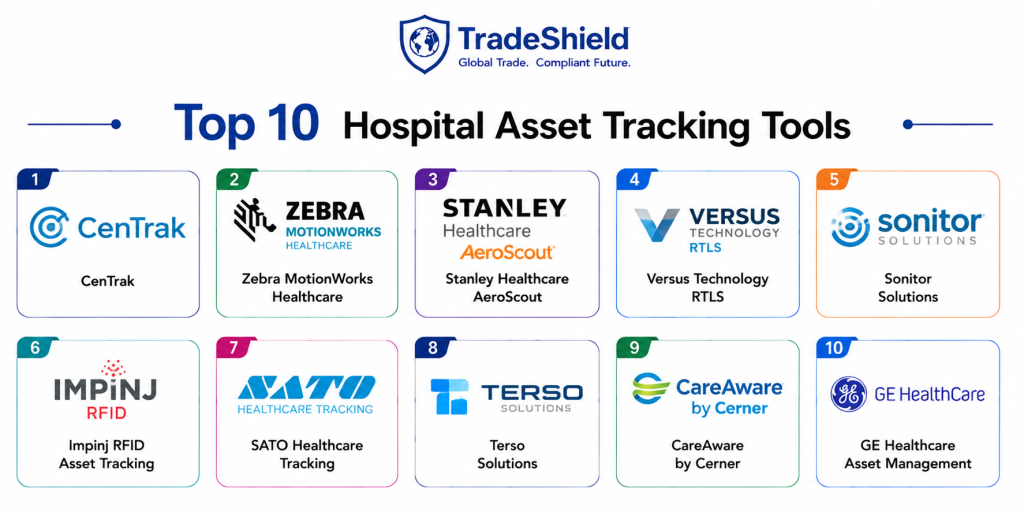
Top 10 Hospital Asset Tracking Tools
1- Stanley Healthcare (RFID & RTLS)
Short description:
Stanley Healthcare offers a comprehensive RTLS and RFID‑based asset tracking platform widely used in hospitals to locate critical equipment and monitor utilization.
Key Features
- Real‑time tracking with RFID & RTLS
- Asset utilization analytics
- Alerts for movement and zone entry/exit
- Mobile staff location apps
- Integration with HIS/EHR systems
- Inventory and status dashboards
- Workflow automation for asset workflows
Pros
- High tracking accuracy with RTLS
- Strong healthcare market adoption
- Advanced analytics and reporting
Cons
- Hardware deployment complexity
- Premium implementation cost
- Requires infrastructure planning
Platforms / Deployment
- Web / Mobile
- Cloud / On‑premises / Hybrid
Security & Compliance
Supports RBAC, encryption, secure access control, and audit logging.
Integrations & Ecosystem
- EHR/HIS systems
- CMMS systems
- APIs
- Mobile apps
- Analytics platforms
Support & Community
Large healthcare RTLS ecosystem with implementation partners.
2- Zebra Savanna & MotionWorks
Short description:
Zebra’s asset tracking solutions combine RFID, BLE, and Wi‑Fi technologies to provide real‑time hospital asset visibility, workflows, and utilization analytics.
Key Features
- Multi‑technology tracking (RFID/BLE/Wi‑Fi)
- Real‑time dashboards and alerts
- Tag mobility support
- Utilization and dwell time reports
- Mobile staff apps
- Workflow integration tools
- Analytics and operational KPIs
Pros
- Broad technology support
- Strong mobile and dashboard capabilities
- Reliable healthcare deployments
Cons
- Tag and infrastructure costs
- Integration complexity for legacy systems
- Advanced dashboards may require training
Platforms / Deployment
- Web / Mobile
- Cloud
Security & Compliance
Supports encryption, RBAC, secure APIs, and audit trails.
Integrations & Ecosystem
- HIS/EHR systems
- APIs
- CMMS platforms
- Mobile apps
Support & Community
Strong enterprise hardware + software ecosystem.
3- CenTrak Healthcare RTLS
Short description:
CenTrak provides hospital asset tracking with UWB, BLE, and infrared location technology for highly accurate real‑time tracking and patient/staff workflows.
Key Features
- UWB & BLE tracking technologies
- Real‑time location and alerts
- Asset utilization dashboards
- Condition monitoring integration
- Infrared staff/patient workflows
- Mobile tracking apps
- API integration support
Pros
- Excellent indoor tracking accuracy
- Comprehensive clinical workflow support
- Real‑time alerts and situational awareness
Cons
- Hardware deployment planning required
- Premium cost for UWB infrastructure
- Smaller ecosystem than some enterprise vendors
Platforms / Deployment
- Web / Mobile
- Cloud / Hybrid
Security & Compliance
Supports RBAC, encryption, secure APIs, and audit logging.
Integrations & Ecosystem
- EHR/HIS
- CMMS
- Analytics systems
- APIs
Support & Community
Growing clinical RTLS adoption base.
4- TruAsset (Infor/GE Healthcare)
Short description:
TruAsset provides hospital asset tracking and lifecycle management with RFID and mobile scanning workflows integrated into healthcare operations.
Key Features
- RFID‑based tracking
- Lifecycle and maintenance management
- Location and utilization dashboards
- Mobile scanning apps
- Alerts for asset movement
- Inventory reconciliation workflows
- Operational analytics
Pros
- Lifecycle and maintenance tracking
- Strong integration with hospital operations
- Reliable RFID accuracy
Cons
- RFID tag cost
- Deployment planning required
- Integration complexity
Platforms / Deployment
- Web / Mobile
- Cloud / Hybrid
Security & Compliance
Supports secure access controls, encryption, and audit trails.
Integrations & Ecosystem
- EHR/HIS
- Maintenance systems
- APIs
- Analytics environments
Support & Community
Healthcare operations ecosystem.
5- Sonitor BLUfusion
Short description:
Sonitor combines ultrasound and BLE technologies for real‑time indoor location tracking, enabling accurate asset location and workflow optimization.
Key Features
- Ultrasound + BLE tracking
- Real‑time asset location
- Workflow automation tools
- Alerts and notifications
- Mobile staff apps
- Utilization reporting
- Integration capabilities
Pros
- Accurate real‑time location
- Mobile staff visibility
- Reliable indoor positioning
Cons
- Infrastructure and hardware cost
- Deployment complexity
- Smaller ecosystem
Platforms / Deployment
- Web / Mobile
- Cloud / Hybrid
Security & Compliance
Supports encryption, RBAC, secure APIs, and audit trails.
Integrations & Ecosystem
- EHR/HIS
- APIs
- Analytics platforms
Support & Community
Growing smart hospital ecosystem.
6- Redpoint Positioning RTLS
Short description:
Redpoint Positioning offers BLE‑ and Wi‑Fi‑enabled RTLS solutions for hospital asset tracking and workflow optimization with flexible deployment options.
Key Features
- BLE & Wi‑Fi tracking support
- Real‑time dashboards
- Mobile apps for staff
- Alerts and operational KPIs
- Tag mobility and dwell analytics
- API and integration support
- Workflow automation
Pros
- Flexible deployment options
- Lower infrastructure cost than some UWB systems
- Reliable real‑time visibility
Cons
- Tracking precision varies by technology
- Advanced analytics may require add‑ons
- Enterprise support ecosystem varies
Platforms / Deployment
- Web / Mobile
- Cloud / On‑premises
Security & Compliance
Supports encryption, RBAC, secure APIs, and audit logging.
Integrations & Ecosystem
- EHR/HIS
- APIs
- Analytics environments
Support & Community
Growing RTLS healthcare adoption.
7- Sonixx Asset Tracking
Short description:
Sonixx provides cloud‑native asset tracking and inventory visibility with IoT sensor integration and mobile scanning workflows for healthcare operations.
Key Features
- IoT sensor integration
- Real‑time location dashboards
- Mobile scanning and alerts
- Inventory tracking
- Alerts and notifications
- Utilization reporting
- API integration support
Pros
- Cloud‑native simplicity
- Real‑time dashboards
- Mobile workforce support
Cons
- Sensor hardware cost
- Enterprise integrations may vary
- Tracking precision depends on deployment model
Platforms / Deployment
- Web / Mobile
- Cloud
Security & Compliance
Supports RBAC, encryption, secure APIs, and audit logs.
Integrations & Ecosystem
- EHR/HIS
- APIs
- Inventory systems
Support & Community
Cloud‑focused healthcare ecosystem.
8- GE Healthcare AssetPlus
Short description:
GE Healthcare AssetPlus provides asset tracking and utilization analytics tightly integrated with GE’s healthcare IT ecosystem.
Key Features
- Real‑time asset location
- Utilization dashboards
- Alerts and notifications
- Mobile tracking apps
- Asset lifecycle workflows
- Condition monitoring support
- Analytics tools
Pros
- Strong analytics and dashboards
- Integration with GE Healthcare systems
- Reliable real‑time tracking
Cons
- Enterprise deployment complexity
- Premium pricing
- Best optimized within GE ecosystem
Platforms / Deployment
- Web / Mobile
- Cloud / Hybrid
Security & Compliance
Supports RBAC, encryption, secure APIs, and audit trails.
Integrations & Ecosystem
- GE IT environments
- APIs
- HIS/EHR
- Analytics platforms
Support & Community
Large healthcare IT ecosystem.
9- Terso Solutions
Short description:
Terso Solutions focuses on secure RFID‑based tracking for critical medical assets, specimens, and controlled medications.
Key Features
- RFID‑enabled tracking
- Secure access and compliance workflows
- Inventory and location dashboards
- Mobile scanning and alerts
- Utilization reporting
- API integration support
- Condition monitoring
Pros
- Strong security and compliance support
- Excellent RFID specialization
- Reliable inventory and location visibility
Cons
- RFID tag and hardware cost
- Deployment planning required
- Smaller ecosystem than major enterprise vendors
Platforms / Deployment
- Web / Mobile
- Cloud / Hybrid
Security & Compliance
Supports secure access controls, encryption, audit logging, RBAC, and governance workflows.
Integrations & Ecosystem
- EHR/HIS
- APIs
- Analytics platforms
Support & Community
Healthcare compliance‑focused ecosystem.
10- TruVision Tracker
Short description:
TruVision Tracker provides BLE and Wi‑Fi asset tracking with real‑time dashboards and mobile visibility for healthcare facilities.
Key Features
- BLE & Wi‑Fi tracking
- Real‑time dashboards
- Alerts and notifications
- Mobile staff apps
- Utilization reporting
- API integrations
- Workflow automation tools
Pros
- Flexible tracking technology support
- Mobile visibility and alerts
- Reliable operational dashboards
Cons
- Tracking precision varies
- Enterprise scalability varies
- Advanced features may require add‑ons
Platforms / Deployment
- Web / Mobile
- Cloud / Hybrid
Security & Compliance
Supports RBAC, encryption, audit logging, and governance workflows.
Integrations & Ecosystem
- EHR/HIS
- APIs
- Analytics systems
Support & Community
Growing healthcare tracking ecosystem.
Comparison Table
| Tool Name | Best For | Platforms Supported | Deployment | Standout Feature | Public Rating |
|---|---|---|---|---|---|
| Stanley Healthcare | Enterprise hospital tracking | Web/Mobile | Hybrid | RTLS with high accuracy | N/A |
| Zebra Savanna & MotionWorks | Broad tracking technologies | Web/Mobile | Cloud | Multi‑tech asset tracking | N/A |
| CenTrak Healthcare RTLS | High‑precision indoor tracking | Web/Mobile | Cloud/Hybrid | UWB/BLE location accuracy | N/A |
| TruAsset | Lifecycle + maintenance tracking | Web/Mobile | Cloud/Hybrid | Lifecycle analytics | N/A |
| Sonitor BLUfusion | Indoor real‑time positioning | Web/Mobile | Cloud/Hybrid | Ultrasound + BLE tracking | N/A |
| Redpoint Positioning | Flexible RTLS deployment | Web/Mobile | Cloud/On‑prem | Flexible tech options | N/A |
| Sonixx Asset Tracking | Cloud‑native asset workflows | Web/Mobile | Cloud | Cloud simplicity | N/A |
| GE Healthcare AssetPlus | Integrated enterprise analytics | Web/Mobile | Cloud/Hybrid | Analytics + tracking | N/A |
| Terso Solutions | Secure RFID asset control | Web/Mobile | Cloud/Hybrid | RFID + compliance focus | N/A |
| TruVision Tracker | Flexible BLE/Wi‑Fi tracking | Web/Mobile | Cloud/Hybrid | Mobile visibility | N/A |
Evaluation & Scoring of Hospital Asset Tracking Tools
| Tool Name | Core 25% | Ease 15% | Integrations 15% | Security 10% | Performance 10% | Support 10% | Value 15% | Weighted Total |
|---|---|---|---|---|---|---|---|---|
| Stanley Healthcare | 9.5 | 7.9 | 9.4 | 9.2 | 9.3 | 9.2 | 8.1 | 9.0 |
| Zebra Savanna & MotionWorks | 9.3 | 8.3 | 9.2 | 9.1 | 9.2 | 9.1 | 8.2 | 8.9 |
| CenTrak Healthcare RTLS | 9.2 | 8.1 | 9.1 | 9.0 | 9.1 | 9.0 | 8.3 | 8.8 |
| TruAsset | 9.0 | 8.2 | 9.0 | 9.1 | 9.0 | 8.9 | 8.2 | 8.8 |
| Sonitor BLUfusion | 8.9 | 8.1 | 8.9 | 8.9 | 8.9 | 8.8 | 8.1 | 8.7 |
| Redpoint Positioning | 8.8 | 8.3 | 8.8 | 8.8 | 8.8 | 8.7 | 8.3 | 8.7 |
| Sonixx Asset Tracking | 8.7 | 8.4 | 8.7 | 8.8 | 8.7 | 8.6 | 8.4 | 8.6 |
| GE Healthcare AssetPlus | 8.9 | 8.2 | 8.9 | 9.0 | 8.9 | 8.8 | 8.2 | 8.7 |
| Terso Solutions | 8.8 | 8.1 | 8.8 | 9.0 | 8.8 | 8.7 | 8.1 | 8.6 |
| TruVision Tracker | 8.6 | 8.4 | 8.6 | 8.7 | 8.6 | 8.6 | 8.3 | 8.5 |
These scores are comparative and intended to help healthcare organizations evaluate Hospital Asset Tracking Tools based on tracking accuracy, integrations, scalability, analytics depth, operational visibility, and long‑term value.
Which Hospital Asset Tracking Tool Is Right for You?
Small Clinics and Outpatient Facilities
Best suited: Sonixx Asset Tracking, TruVision Tracker
These provide cloud‑native simplicity and flexible tracking workflows.
SMB Healthcare Operations
Best suited: Redpoint Positioning, Terso Solutions
These balance real‑time visibility with moderate infrastructure needs.
Mid‑Market Healthcare Networks
Best suited: TruAsset, Sonitor BLUfusion
These provide lifecycle insights and accurate indoor positioning.
Large Enterprise Health Systems
Best suited: Stanley Healthcare, Zebra Savanna & MotionWorks, CenTrak
These offer enterprise scalability, high‑precision tracking, and analytics intelligence.
Budget vs Premium
Budget‑friendly: Sonixx Asset Tracking, TruVision Tracker
Premium enterprise: Stanley Healthcare, Zebra Savanna
Feature Depth vs Ease of Use
Deep enterprise functionality: Stanley Healthcare, CenTrak
Ease of use: Redpoint Positioning, Sonixx Asset Tracking
Integrations & Scalability
Best integrations: Zebra Savanna, Stanley Healthcare, GE Healthcare AssetPlus
Best scalability: Stanley Healthcare, Zebra Savanna
Security & Compliance Needs
Healthcare organizations should prioritize systems supporting RBAC, encryption, audit logging, secure APIs, and workflow governance to meet compliance and operational standards.
Frequently Asked Questions
1. What are Hospital Asset Tracking Tools?
They are systems that use RFID, BLE, Wi‑Fi, UWB, IoT, and GPS technologies to locate, monitor, and manage hospital equipment in real time.
2. Why are asset tracking tools important for hospitals?
They reduce equipment loss, speed up clinical workflows, optimize utilization, cut inventory waste, and improve patient care readiness.
3. How do these systems track assets indoors?
Most modern tools use RTLS with BLE, UWB, Wi‑Fi, RFID, or ultrasound to provide indoor real‑time location services.
4. Can these tools integrate with EHR/HIS systems?
Yes, many asset tracking platforms integrate with EHR, HIS, CMMS, and analytics systems to provide operational context.
5. What analytics capabilities are common?
Utilization reports, dwell time analytics, alerts, occupancy dashboards, lifecycle tracking, and operational KPIs are commonly supported.
6. What security features matter?
RBAC, encryption, audit logging, secure APIs, and governance workflows are critical for healthcare asset control.
7. Which technologies are used for tracking?
RFID, BLE, UWB, Wi‑Fi, ultrasound, GPS, and IoT sensors are commonly used based on precision and environment.
8. What are common deployment challenges?
Tagging strategy, infrastructure planning, system integration, staff training, and technology costs are common deployment tasks.
9. How should hospitals choose an asset tracking tool?
Hospitals should evaluate tracking accuracy, integration needs, analytics depth, scalability, and total cost of ownership.
10. Can these systems support condition monitoring?
Yes, many tools support environmental sensors and condition monitoring for sensitive equipment.
Conclusion
Hospital Asset Tracking Tools have become essential for healthcare facilities seeking real‑time visibility, equipment utilization optimization, operational efficiency, and smarter workflows. Modern platforms now combine IoT real‑time tracking technologies, AI‑driven analytics, workflow automation, cloud dashboards, mobile staff apps, and robust integration with hospital systems to deliver actionable insights and improve clinical readiness. Enterprise solutions such as Stanley Healthcare, Zebra Savanna, and CenTrak provide deep accuracy, analytics, and governance, while tools like Redpoint Positioning and Sonixx Asset Tracking offer flexible approaches for smaller healthcare operations. The right solution depends on healthcare facility size, technology preferences, integration requirements, and long‑term operational goals. A structured evaluation and pilot deployment can significantly improve equipment utilization, staff efficiency, compliance, and overall patient care readiness.
This article explains hospital asset tracking tools in simple language and helps healthcare organizations manage equipment and resources efficiently today.