Introduction
Open Data Portals are digital platforms used by governments, municipalities, public agencies, research institutions, and enterprises to publish, manage, and share structured datasets with citizens, developers, researchers, and businesses. These platforms improve transparency, enable data-driven innovation, and support public access to information through searchable catalogs, APIs, dashboards, and analytics tools.
As digital governance and smart city initiatives continue expanding, organizations are under increasing pressure to make public information accessible, reusable, and transparent. Traditional static document repositories are no longer sufficient for modern data-sharing requirements. Today’s Open Data Portals include API management, GIS visualization, AI-powered search, metadata governance, real-time analytics, and developer ecosystems to improve accessibility and public trust.
Real-world use cases include:
- Government transparency and accountability initiatives
- Smart city and urban planning data sharing
- Public transportation and mobility datasets
- Environmental and climate monitoring data publication
- Research and academic collaboration programs
Buyers evaluating Open Data Portals should focus on:
- Dataset publishing and catalog management
- API access and developer support
- Search and metadata management capabilities
- GIS and geospatial data visualization
- Scalability for large datasets
- Security and access controls
- Analytics and reporting dashboards
- Data governance and compliance support
- Integration flexibility with enterprise systems
- Citizen accessibility and usability
Best for: Government agencies, municipalities, smart city programs, research organizations, universities, public utilities, and enterprises seeking structured public data sharing and transparency capabilities.
Not ideal for: Organizations that only require private internal data storage or simple document-sharing tools without public-facing data publishing requirements.
Key Trends in Open Data Portals
- AI-powered dataset discovery improving search accuracy and usability
- Real-time APIs becoming standard for public transportation and smart city datasets
- GIS and geospatial visualization increasingly integrated into open data platforms
- Cloud-native portals replacing legacy static government repositories
- Data governance and metadata automation improving dataset quality
- Citizen developer ecosystems growing around public APIs
- Integration with IoT and sensor networks enabling live data publishing
- Increased focus on accessibility and multilingual public access
- Open standards improving interoperability across agencies and regions
- Advanced analytics dashboards helping governments measure data usage and engagement
How We Selected These Tools (Methodology)
- Adoption across government and public-sector organizations
- Dataset publishing and API management depth
- Scalability for large public data repositories
- GIS and visualization capabilities
- Search, metadata, and governance functionality
- Integration support for enterprise and government systems
- Security and access management readiness
- Developer ecosystem and extensibility
- Reporting and analytics capabilities
- Vendor support and implementation maturity
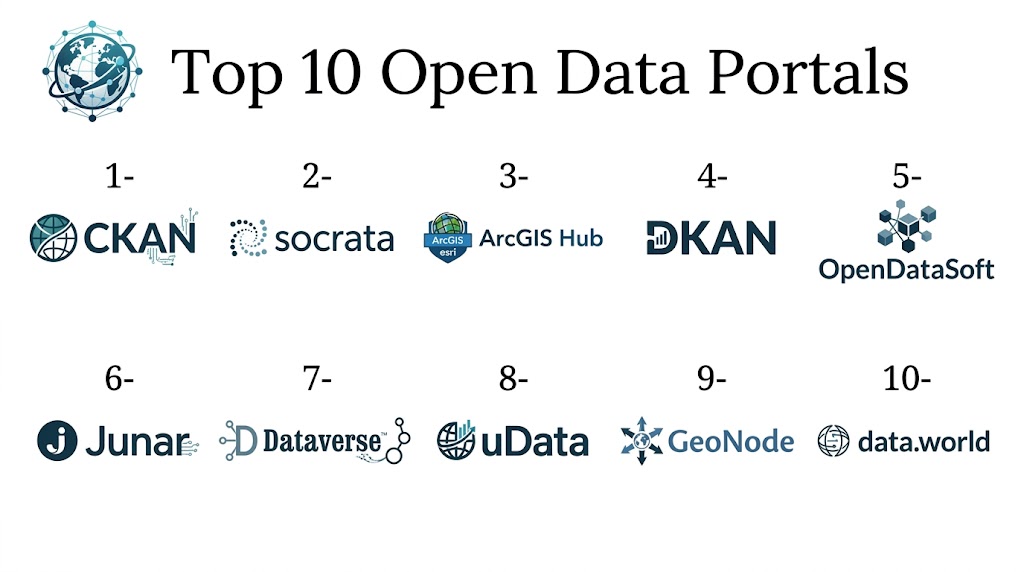
Top 10 Open Data Portals
1- CKAN
Short description:
CKAN is one of the most widely used open-source open data management platforms globally. It is commonly adopted by governments and public-sector organizations for publishing and managing large-scale open datasets.
Key Features
- Dataset publishing and catalog management
- API access and developer tools
- Metadata management
- Search and filtering capabilities
- GIS integration support
- Data preview and visualization
- Open-source extensibility
Pros
- Highly flexible open-source platform
- Large global adoption
- Strong developer ecosystem
Cons
- Requires technical expertise
- Customization can be complex
- Enterprise support varies by provider
Platforms / Deployment
- Web
- Self-hosted / Cloud
Security & Compliance
Supports RBAC, authentication controls, and secure API access depending on deployment configuration.
Integrations & Ecosystem
Integrates with GIS platforms, APIs, analytics tools, and government systems.
- APIs
- GIS systems
- Data warehouses
- Analytics platforms
- Open standards support
Support & Community
Large global open-source community with strong government adoption.
2- Socrata Open Data Platform
Short description:
Socrata is a cloud-based open data platform designed for government transparency, public analytics, and API-driven citizen access to datasets.
Key Features
- Public dataset publishing
- API management tools
- Interactive dashboards
- GIS mapping capabilities
- Metadata governance
- Real-time analytics
- Data visualization tools
Pros
- User-friendly interface
- Strong cloud scalability
- Excellent public-facing dashboards
Cons
- Premium pricing model
- Less flexibility than open-source platforms
- Custom integrations may require additional services
Platforms / Deployment
- Web
- Cloud
Security & Compliance
Supports encryption, RBAC, audit logs, and secure API access controls.
Integrations & Ecosystem
Integrates with GIS systems, analytics tools, and government databases.
- GIS integrations
- APIs
- Analytics tools
- Government databases
- Reporting systems
Support & Community
Strong enterprise support with extensive public-sector experience.
3- ArcGIS Hub
Short description:
ArcGIS Hub by Esri combines open data publishing with GIS visualization and citizen engagement capabilities for smart city and public-sector initiatives.
Key Features
- GIS-powered data publishing
- Interactive mapping dashboards
- Open data catalog management
- Community engagement tools
- API access
- Spatial analytics
- Mobile accessibility
Pros
- Industry-leading GIS capabilities
- Strong smart city alignment
- Excellent visualization tools
Cons
- Requires GIS expertise
- Premium enterprise licensing
- Complex advanced deployments
Platforms / Deployment
- Web / Mobile
- Cloud
Security & Compliance
Supports MFA, RBAC, encryption, and enterprise authentication controls.
Integrations & Ecosystem
Integrates with ArcGIS ecosystem tools, APIs, and enterprise systems.
- ArcGIS ecosystem
- APIs
- GIS databases
- Analytics platforms
- Public portals
Support & Community
Strong global GIS community and public-sector support ecosystem.
4- OpenDataSoft
Short description:
OpenDataSoft provides cloud-based open data management tools focused on data publishing, API access, and public engagement.
Key Features
- Dataset publishing workflows
- API access management
- Interactive dashboards
- Search and metadata tools
- Data visualization
- Workflow automation
- Public data portals
Pros
- Easy-to-use interface
- Strong API capabilities
- Good visualization features
Cons
- Premium pricing
- Less customization flexibility
- Advanced workflows may require configuration
Platforms / Deployment
- Web
- Cloud
Security & Compliance
Supports secure authentication, encryption, and role-based access management.
Integrations & Ecosystem
Integrates with enterprise data systems, APIs, and analytics tools.
- APIs
- BI platforms
- GIS systems
- Databases
- Reporting tools
Support & Community
Strong SaaS support with onboarding and implementation assistance.
5- Junar Open Data Platform
Short description:
Junar is an open data and API management platform designed for governments and enterprises managing public datasets and digital transparency initiatives.
Key Features
- Open data publishing
- API lifecycle management
- Dataset cataloging
- Data analytics dashboards
- Metadata management
- Workflow automation
- Developer portal support
Pros
- Strong API management focus
- Good governance capabilities
- Flexible publishing workflows
Cons
- Smaller ecosystem
- Limited GIS depth
- Lower global adoption
Platforms / Deployment
- Web
- Cloud / Hybrid
Security & Compliance
Supports secure APIs, encryption, and access control features.
Integrations & Ecosystem
- APIs
- Data platforms
- Government systems
- Reporting tools
Support & Community
Focused enterprise support for public-sector deployments.
6- Dataverse
Short description:
Dataverse is an open-source research data repository platform widely used by universities and public research organizations for sharing datasets openly.
Key Features
- Research data publishing
- Metadata management
- Dataset versioning
- Search and indexing
- API access
- Collaboration workflows
- Data citation tools
Pros
- Strong academic adoption
- Open-source flexibility
- Good dataset governance
Cons
- Less focused on government workflows
- Limited GIS capabilities
- Technical deployment requirements
Platforms / Deployment
- Web
- Self-hosted / Cloud
Security & Compliance
Supports role-based permissions and secure access management.
Integrations & Ecosystem
- APIs
- Academic repositories
- Metadata systems
- Research tools
Support & Community
Strong academic and research community support.
7- Data.world
Short description:
Data.world is a collaborative data catalog and open data platform focused on dataset sharing, governance, and analytics collaboration.
Key Features
- Collaborative data catalog
- API and query tools
- Data governance workflows
- Search and metadata management
- Analytics dashboards
- Community collaboration tools
- Data lineage tracking
Pros
- Strong collaboration capabilities
- Modern interface design
- Good governance support
Cons
- Premium enterprise pricing
- More enterprise-focused than public-sector-focused
- Advanced governance requires configuration
Platforms / Deployment
- Web
- Cloud
Security & Compliance
Supports encryption, RBAC, MFA, and governance controls.
Integrations & Ecosystem
- BI tools
- APIs
- Databases
- Analytics platforms
- Cloud services
Support & Community
Strong enterprise support and developer ecosystem.
8- DKAN
Short description:
DKAN is an open-source open data platform built on Drupal, designed for government and civic transparency initiatives.
Key Features
- Open data publishing
- Metadata management
- API access
- Drupal-based extensibility
- Search functionality
- Data visualization
- Workflow management
Pros
- Open-source flexibility
- Strong Drupal integration
- Good transparency capabilities
Cons
- Requires Drupal expertise
- Smaller ecosystem than CKAN
- Customization complexity
Platforms / Deployment
- Web
- Self-hosted
Security & Compliance
Varies depending on deployment and infrastructure configuration.
Integrations & Ecosystem
- Drupal ecosystem
- APIs
- GIS systems
- Data platforms
Support & Community
Growing civic technology and open-government community support.
9- Tableau Public Data Portals
Short description:
Tableau Public is commonly used by organizations for publishing interactive public dashboards and data visualizations.
Key Features
- Interactive public dashboards
- Data visualization tools
- Analytics reporting
- Public sharing workflows
- Search and discovery tools
- Real-time dashboards
- Mobile visualization support
Pros
- Excellent visualization quality
- Easy dashboard publishing
- Strong analytics usability
Cons
- Less focused on structured open data management
- Limited metadata governance
- Premium analytics ecosystem costs
Platforms / Deployment
- Web / Mobile
- Cloud
Security & Compliance
Supports enterprise authentication and secure sharing controls.
Integrations & Ecosystem
- BI systems
- Databases
- APIs
- Analytics tools
Support & Community
Large analytics and data visualization community.
10- OpenDataKit ODK
Short description:
OpenDataKit is an open-source data collection and publishing platform widely used for field surveys, humanitarian programs, and public-sector data collection initiatives.
Key Features
- Mobile data collection
- Offline survey support
- Open-source architecture
- API integrations
- Data publishing workflows
- Field reporting tools
- Real-time synchronization
Pros
- Excellent mobile data collection
- Open-source flexibility
- Strong humanitarian adoption
Cons
- Less advanced portal visualization
- Requires technical deployment support
- Limited enterprise governance features
Platforms / Deployment
- Android / Web
- Self-hosted / Cloud
Security & Compliance
Varies depending on deployment infrastructure and security configuration.
Integrations & Ecosystem
- APIs
- Mobile devices
- Analytics systems
- GIS platforms
Support & Community
Strong global humanitarian and research community adoption.
Comparison Table
| Tool Name | Best For | Platforms Supported | Deployment | Standout Feature | Public Rating |
|---|---|---|---|---|---|
| CKAN | Government open data | Web | Self-hosted / Cloud | Open-source flexibility | N/A |
| Socrata | Public transparency | Web | Cloud | Public dashboards | N/A |
| ArcGIS Hub | GIS open data | Web, Mobile | Cloud | Spatial analytics | N/A |
| OpenDataSoft | API-driven publishing | Web | Cloud | Easy data sharing | N/A |
| Junar | API management | Web | Cloud / Hybrid | API lifecycle tools | N/A |
| Dataverse | Academic data sharing | Web | Self-hosted | Research repositories | N/A |
| Data.world | Collaborative data catalogs | Web | Cloud | Data governance | N/A |
| DKAN | Drupal open data portals | Web | Self-hosted | Drupal integration | N/A |
| Tableau Public | Public analytics dashboards | Web, Mobile | Cloud | Data visualization | N/A |
| ODK | Mobile field data publishing | Android, Web | Self-hosted | Offline mobile collection | N/A |
Evaluation & Scoring of Open Data Portals
| Tool Name | Core 25% | Ease 15% | Integrations 15% | Security 10% | Performance 10% | Support 10% | Value 15% | Weighted Total |
|---|---|---|---|---|---|---|---|---|
| CKAN | 9.2 | 7.8 | 9.0 | 8.5 | 8.8 | 8.9 | 9.3 | 8.8 |
| Socrata | 9.0 | 9.0 | 8.8 | 9.0 | 9.1 | 9.0 | 8.2 | 8.8 |
| ArcGIS Hub | 9.3 | 8.0 | 9.4 | 9.1 | 9.2 | 9.3 | 7.8 | 8.9 |
| OpenDataSoft | 8.8 | 8.9 | 8.5 | 8.7 | 8.8 | 8.7 | 8.4 | 8.6 |
| Junar | 8.4 | 8.1 | 8.7 | 8.5 | 8.4 | 8.3 | 8.5 | 8.4 |
| Dataverse | 8.5 | 7.9 | 8.3 | 8.2 | 8.4 | 8.6 | 9.0 | 8.4 |
| Data.world | 8.8 | 8.7 | 9.1 | 8.9 | 8.8 | 8.8 | 8.0 | 8.7 |
| DKAN | 8.2 | 7.5 | 8.0 | 7.8 | 8.1 | 8.0 | 9.1 | 8.1 |
| Tableau Public | 8.4 | 9.1 | 8.3 | 8.5 | 8.7 | 8.8 | 8.1 | 8.5 |
| ODK | 8.0 | 8.2 | 7.9 | 7.8 | 8.1 | 8.5 | 9.2 | 8.2 |
These scores are comparative and designed to help organizations evaluate platforms based on dataset publishing, governance, scalability, integrations, usability, security, and long-term operational value. Open-source platforms often provide stronger flexibility and cost efficiency, while enterprise SaaS platforms excel in usability, analytics, and scalability.
Which Open Data Portal Is Right for You?
Solo / Small Research Teams
Best suited: Dataverse, ODK
These platforms are affordable, flexible, and practical for academic or field-data publishing initiatives.
SMB / Municipal Programs
Best suited: OpenDataSoft, DKAN, Tableau Public
These provide balanced usability and public-facing visualization capabilities.
Mid-Market Governments
Best suited: CKAN, Socrata, ArcGIS Hub
These offer stronger governance, integrations, and scalability for public-sector operations.
Enterprise / Smart City Programs
Best suited: ArcGIS Hub, Socrata, Data.world
These provide advanced analytics, APIs, GIS integrations, and enterprise scalability.
Budget vs Premium
Budget-friendly: CKAN, DKAN, Dataverse, ODK
Premium enterprise: ArcGIS Hub, Socrata, Data.world
Feature Depth vs Ease of Use
Deep governance: CKAN, Data.world
Ease of use: OpenDataSoft, Tableau Public
Integrations & Scalability
Best integrations: ArcGIS Hub, Socrata, Data.world
Best scalability: CKAN, ArcGIS Hub
Security & Compliance Needs
Organizations handling sensitive public datasets should prioritize platforms supporting RBAC, MFA, encryption, audit logging, and governance workflows.
Frequently Asked Questions
1. What is an Open Data Portal?
It is a platform used to publish and share structured datasets publicly for transparency, research, and innovation purposes.
2. Why are Open Data Portals important?
They improve transparency, support smart city initiatives, encourage innovation, and enable data-driven decision-making.
3. Can these platforms support APIs?
Yes, most modern open data platforms provide APIs for developers and public data access.
4. Are GIS capabilities important?
GIS integration is critical for mapping and geospatial data visualization, especially for smart city and infrastructure datasets.
5. What security features are essential?
RBAC, encryption, MFA, secure APIs, and audit logging are important for protecting data integrity and governance.
6. Are open-source platforms reliable?
Yes, platforms like CKAN and DKAN are widely used globally and provide strong flexibility and customization options.
7. What are common implementation challenges?
Metadata management, data quality governance, API standardization, and integration with legacy systems are common challenges.
8. Can these portals handle real-time data?
Many modern platforms support real-time APIs and live data publishing workflows.
9. How long does implementation take?
Implementation can range from a few weeks for simple deployments to several months for enterprise government portals.
10. How should organizations select a platform?
Organizations should evaluate scalability, API support, GIS capabilities, governance controls, usability, and long-term operational costs.
Conclusion
Open Data Portals have become essential infrastructure for governments, smart cities, research institutions, and public organizations seeking to improve transparency and enable data-driven innovation. Modern platforms now combine dataset publishing, API management, GIS visualization, analytics dashboards, and governance tools to support scalable and accessible public data sharing. Enterprise solutions such as ArcGIS Hub and Socrata provide advanced visualization and scalability capabilities, while open-source platforms like CKAN and DKAN offer strong flexibility and cost efficiency. The right platform ultimately depends on organizational size, technical expertise, integration requirements, governance priorities, and long-term digital strategy. A structured evaluation process combined with pilot deployment and developer usability testing can significantly improve adoption, public engagement, and long-term operational success.