Introduction
Insurance Underwriting Platforms are software systems that help insurers evaluate risk, determine pricing, and approve or reject insurance applications. These platforms automate underwriting decisions by combining rules, data, and analytics to improve accuracy and speed. They play a critical role in ensuring insurers maintain profitability while offering competitive pricing.
These platforms are important because underwriting is no longer a manual, document-heavy process. Insurers now rely on automation, data integration, and analytics-driven decision-making to process applications faster and reduce risk exposure. Common use cases include policy risk assessment, pricing optimization, fraud detection, automated approvals, and underwriting workflow management.
Buyers should evaluate rule engine flexibility, data integration capabilities, AI and analytics support, workflow automation, scalability, compliance features, user experience, performance, deployment flexibility, and vendor support.
Best for: Insurance carriers, underwriters, insurtech companies, and enterprises handling high-volume risk assessment across life, health, and property insurance.
Not ideal for: Small agencies with low underwriting complexity or organizations relying only on manual or simplified risk assessment methods.
Key Trends in Insurance Underwriting Platforms
- AI-driven underwriting models improving risk accuracy
- Automated decision engines enabling faster approvals
- Data enrichment using third-party sources for better insights
- Low-code rule configuration for flexible underwriting policies
- Real-time risk scoring for instant decision-making
- Cloud-native underwriting platforms replacing legacy systems
- Integration with telematics and IoT data for dynamic risk assessment
- Embedded underwriting capabilities within digital insurance ecosystems
- Predictive analytics improving pricing strategies
- API-first architecture enabling seamless integration
How We Selected These Tools
- Strong adoption in underwriting and insurance operations
- Ability to automate underwriting workflows and decisions
- Support for multi-line insurance (life, health, P&C)
- Integration with policy administration, claims, and data systems
- Availability of AI and analytics capabilities
- Scalability for enterprise-grade underwriting operations
- Ease of configuration and rule management
- Security and compliance readiness signals
- Vendor ecosystem and extensibility
- Suitability across SMB, mid-market, and enterprise segments
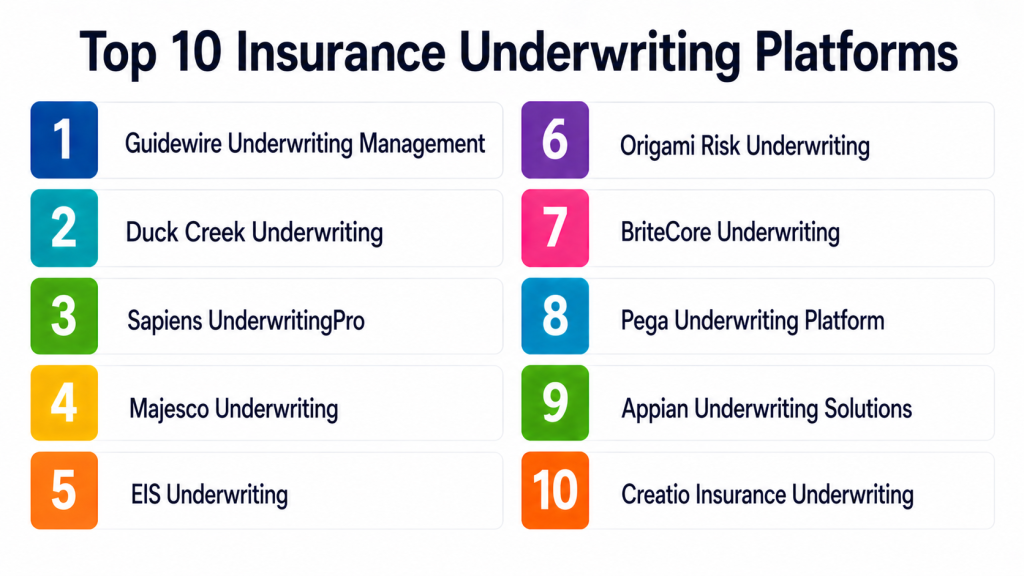
Top 10 Insurance Underwriting Platforms
#1 — Guidewire Underwriting Management
Short description: Guidewire Underwriting Management is a powerful underwriting solution integrated with its InsuranceSuite. It helps insurers manage underwriting processes, apply rules, and improve decision-making. It is best suited for enterprise insurers.
Key Features
- Underwriting workflow automation
- Risk evaluation tools
- Policy integration
- Rules-based decision engine
- Data analytics
- Multi-line support
- API integrations
Pros
- Strong enterprise capabilities
- Highly scalable
- Integrated ecosystem
- Reliable performance
Cons
- Complex implementation
- High cost
- Requires skilled teams
- Not ideal for small companies
Platforms / Deployment
Web
Cloud / Hybrid
Security & Compliance
Role-based access and audit features may be available
Certifications: Not publicly stated
Integrations & Ecosystem
Guidewire integrates underwriting with policy, claims, and billing systems.
- Policy systems
- Claims platforms
- CRM tools
- Analytics tools
- API integrations
Support & Community
Strong enterprise support with a large partner ecosystem.
#2 — Duck Creek Underwriting
Short description: Duck Creek Underwriting provides flexible and configurable underwriting workflows with strong cloud capabilities. It helps insurers quickly launch products and manage risk efficiently.
Key Features
- Rules-based underwriting
- Workflow automation
- Product configuration
- Cloud deployment
- Integration APIs
- Reporting dashboards
Pros
- Flexible architecture
- Good cloud support
- Fast product deployment
- Scalable
Cons
- Requires configuration effort
- Enterprise-focused
- Pricing varies
- Implementation complexity
Platforms / Deployment
Web
Cloud
Security & Compliance
Not publicly stated
Integrations & Ecosystem
Duck Creek integrates with insurance systems to streamline underwriting.
- Policy systems
- CRM tools
- Billing platforms
- API integrations
Support & Community
Enterprise-level support with growing ecosystem.
#3 — Sapiens UnderwritingPro
Short description: Sapiens UnderwritingPro is a solution designed to automate underwriting processes and improve decision-making using data and analytics.
Key Features
- Underwriting automation
- Risk scoring
- Workflow management
- Integration APIs
- Analytics dashboards
Pros
- Good automation capabilities
- Supports multi-line insurance
- Flexible workflows
- Scalable
Cons
- Requires implementation effort
- Pricing varies
- Enterprise-focused
- Integration complexity
Platforms / Deployment
Web
Cloud
Security & Compliance
Not publicly stated
Integrations & Ecosystem
Sapiens integrates underwriting with enterprise systems.
- CRM tools
- Policy systems
- Analytics platforms
- API integrations
Support & Community
Enterprise support and partner ecosystem.
#4 — Majesco Underwriting
Short description: Majesco offers underwriting capabilities as part of its insurance platform, focusing on digital transformation and automation.
Key Features
- Risk assessment automation
- Product configuration
- Workflow automation
- Analytics tools
- Integration APIs
Pros
- Modern cloud platform
- Strong analytics
- Flexible workflows
- Scalable
Cons
- Implementation complexity
- Pricing varies
- Requires configuration
- Enterprise-focused
Platforms / Deployment
Web
Cloud
Security & Compliance
Not publicly stated
Integrations & Ecosystem
Majesco integrates underwriting with insurance operations.
- Policy systems
- CRM tools
- Analytics platforms
- API integrations
Support & Community
Enterprise support available.
#5 — EIS Underwriting
Short description: EIS provides a modern underwriting platform built with API-first architecture, enabling digital-first insurance workflows.
Key Features
- API-first design
- Risk scoring
- Workflow automation
- Real-time analytics
- Integration capabilities
Pros
- Modern architecture
- Flexible integrations
- Digital-first approach
- Scalable
Cons
- Requires technical expertise
- Implementation complexity
- Enterprise-focused
- Pricing varies
Platforms / Deployment
Web
Cloud
Security & Compliance
Not publicly stated
Integrations & Ecosystem
EIS supports integration-heavy underwriting environments.
- API ecosystem
- Digital platforms
- CRM tools
- Analytics systems
Support & Community
Enterprise support with transformation focus.
#6 — Origami Risk Underwriting
Short description: Origami Risk provides underwriting capabilities within its broader risk and insurance platform, focusing on workflow automation and analytics.
Key Features
- Underwriting workflows
- Risk management integration
- Analytics dashboards
- Automation tools
- Reporting capabilities
Pros
- Strong risk integration
- Flexible workflows
- Good analytics
- Suitable for enterprise
Cons
- Limited specialization
- Integration complexity
- Pricing varies
- Requires setup effort
Platforms / Deployment
Web
Cloud
Security & Compliance
Not publicly stated
Integrations & Ecosystem
Origami Risk integrates underwriting with risk and insurance systems.
- Risk management tools
- CRM systems
- Analytics platforms
- API integrations
Support & Community
Support available with enterprise focus.
#7 — BriteCore Underwriting
Short description: BriteCore is a cloud-based insurance platform that includes underwriting capabilities for small to mid-sized insurers.
Key Features
- Underwriting automation
- Policy integration
- Workflow management
- Reporting dashboards
- Cloud deployment
Pros
- Easy to use
- Cloud-native
- Good for SMBs
- Quick deployment
Cons
- Limited enterprise capabilities
- Integration depth varies
- Feature limitations for large insurers
- Pricing varies
Platforms / Deployment
Web
Cloud
Security & Compliance
Not publicly stated
Integrations & Ecosystem
BriteCore integrates underwriting with policy and claims workflows.
- Policy systems
- CRM tools
- Analytics platforms
- API integrations
Support & Community
Support available with onboarding resources.
#8 — Pega Underwriting Platform
Short description: Pega offers underwriting solutions using low-code automation and AI-driven decisioning for complex workflows.
Key Features
- AI-driven decisioning
- Workflow automation
- Low-code development
- Risk scoring
- Integration capabilities
Pros
- Strong automation
- AI capabilities
- Flexible workflows
- Enterprise scalability
Cons
- Requires expertise
- Complex setup
- Pricing varies
- Enterprise-focused
Platforms / Deployment
Web
Cloud / Hybrid
Security & Compliance
Not publicly stated
Integrations & Ecosystem
Pega integrates with enterprise systems for underwriting automation.
- CRM tools
- Policy systems
- Data platforms
- API integrations
Support & Community
Strong enterprise support and ecosystem.
#9 — Appian Underwriting Solutions
Short description: Appian provides underwriting capabilities through its low-code automation platform, enabling rapid process development and workflow optimization.
Key Features
- Low-code automation
- Workflow management
- Integration APIs
- Data analytics
- Process automation
Pros
- Fast development
- Flexible workflows
- Good integration capabilities
- Scalable
Cons
- Requires platform knowledge
- Not industry-specific
- Pricing varies
- Customization needed
Platforms / Deployment
Web
Cloud
Security & Compliance
Not publicly stated
Integrations & Ecosystem
Appian integrates underwriting with enterprise systems.
- CRM tools
- Data platforms
- API integrations
- Automation workflows
Support & Community
Support available with enterprise ecosystem.
#10 — Creatio Insurance Underwriting
Short description: Creatio provides underwriting automation through its low-code platform, focusing on process management and customer-centric workflows.
Key Features
- Workflow automation
- Risk assessment
- Low-code configuration
- Integration APIs
- Analytics dashboards
Pros
- Easy to configure
- Flexible workflows
- Good user experience
- Scalable
Cons
- Requires customization
- Not fully insurance-specific
- Pricing varies
- Integration setup needed
Platforms / Deployment
Web
Cloud
Security & Compliance
Not publicly stated
Integrations & Ecosystem
Creatio supports integration across CRM and operational systems.
- CRM tools
- Data platforms
- API integrations
- Automation workflows
Support & Community
Support available with documentation and onboarding.
Comparison Table
| Tool Name | Best For | Platform(s) Supported | Deployment | Standout Feature | Public Rating |
|---|---|---|---|---|---|
| Guidewire | Enterprise insurers | Web | Cloud/Hybrid | Industry-standard underwriting | N/A |
| Duck Creek | Configurable workflows | Web | Cloud | Flexible architecture | N/A |
| Sapiens | Multi-line insurers | Web | Cloud | Automation and analytics | N/A |
| Majesco | Digital insurers | Web | Cloud | Cloud-native platform | N/A |
| EIS | Digital-first insurers | Web | Cloud | API-first architecture | N/A |
| Origami Risk | Risk-focused teams | Web | Cloud | Risk integration | N/A |
| BriteCore | SMB insurers | Web | Cloud | Easy deployment | N/A |
| Pega | Enterprise automation | Web | Cloud/Hybrid | AI-driven workflows | N/A |
| Appian | Low-code automation | Web | Cloud | Rapid development | N/A |
| Creatio | Workflow automation | Web | Cloud | Low-code configuration | N/A |
Evaluation & Scoring
| Tool | Core | Ease | Integrations | Security | Performance | Support | Value | Total |
|---|---|---|---|---|---|---|---|---|
| Guidewire | 9 | 7 | 9 | 8 | 9 | 8 | 7 | 8.3 |
| Duck Creek | 8.5 | 7.5 | 8.5 | 8 | 8.5 | 8 | 7.5 | 8.1 |
| Sapiens | 8.5 | 7.5 | 8.5 | 8 | 8.5 | 8 | 7.5 | 8.2 |
| Majesco | 8.5 | 7.5 | 8 | 8 | 8.5 | 8 | 7.5 | 8.0 |
| EIS | 8.5 | 7.5 | 9 | 8 | 8.5 | 8 | 7.5 | 8.2 |
| Origami | 8 | 7.5 | 8 | 7.5 | 8 | 7.5 | 7.5 | 7.8 |
| BriteCore | 7.5 | 8.5 | 7.5 | 7.5 | 8 | 7.5 | 8 | 7.9 |
| Pega | 8.5 | 7 | 8.5 | 8 | 8.5 | 8 | 7 | 8.1 |
| Appian | 8 | 8 | 8.5 | 7.5 | 8 | 7.5 | 8 | 8.0 |
| Creatio | 8 | 8 | 8 | 7.5 | 8 | 7.5 | 8 | 7.9 |
These scores are comparative and help identify relative strengths. Enterprise tools score higher in scalability, while low-code platforms score higher in usability and flexibility.
Which Insurance Underwriting Platform Is Right for You?
Solo / Freelancer
Not required; simple tools or spreadsheets are sufficient.
SMB
Choose BriteCore or Creatio for ease of use and quick setup.
Mid-Market
Consider Duck Creek, Sapiens, or EIS for flexibility and growth.
Enterprise
Use Guidewire, Pega, or Majesco for scalability and advanced automation.
Budget vs Premium
Budget tools focus on usability, while premium tools provide advanced analytics and automation.
Feature Depth vs Ease of Use
Simple platforms prioritize usability, while enterprise tools focus on configurability and control.
Integrations & Scalability
Ensure integration with policy, claims, CRM, and analytics systems.
Security & Compliance Needs
Verify access controls, audit logs, and compliance features before selection.
Frequently Asked Questions
1. What is an underwriting platform?
It is software that helps insurers assess risk, price policies, and automate underwriting decisions.
2. Why is underwriting important?
It ensures insurers maintain profitability while offering competitive pricing.
3. Who uses underwriting platforms?
Insurance companies, underwriters, and insurtech firms.
4. What features matter most?
Automation, analytics, integration, and rule-based decisioning.
5. Are these platforms cloud-based?
Most modern platforms are cloud-based.
6. Can they use AI?
Yes, many platforms use AI for risk scoring and fraud detection.
7. How long does implementation take?
It varies from weeks to months depending on complexity.
8. Do they integrate with other systems?
Yes, they integrate with policy, claims, CRM, and data systems.
9. Are they secure?
Security varies by vendor; verify controls before purchase.
10. What are alternatives?
Manual underwriting or legacy systems, though they lack scalability.
Conclusion
Insurance underwriting platforms are essential for modern insurers to manage risk effectively and improve decision-making. They enable faster approvals, better pricing accuracy, and enhanced operational efficiency. Enterprise solutions like Guidewire, Duck Creek, and Pega offer powerful capabilities for large insurers. Meanwhile, tools like BriteCore, Appian, and Creatio provide flexible and user-friendly options for growing organizations. The right platform depends on business size, underwriting complexity, and digital maturity. Organizations should carefully evaluate automation, integrations, and scalability before selecting a tool. A pilot implementation can help validate workflows and usability. Ultimately, the best solution aligns with your business goals and risk management strategy.