Introduction
Shadow IT Discovery Tools help organizations identify, monitor, and manage unauthorized or unmanaged applications, cloud services, devices, and SaaS platforms being used across the enterprise without formal IT approval. As organizations increasingly adopt cloud-based software and remote work environments, employees often use unsanctioned applications to improve productivity, collaboration, or workflow efficiency. While this flexibility can accelerate business operations, it also introduces serious security, compliance, governance, and operational risks.
Modern enterprises commonly face challenges such as unknown SaaS subscriptions, unmanaged file-sharing tools, weak access controls, unmonitored cloud applications, and data leakage risks caused by shadow IT usage. Shadow IT Discovery Tools provide centralized visibility into SaaS ecosystems, monitor user behavior, detect risky applications, and help IT and security teams enforce governance policies while improving operational transparency.
Common real-world use cases include:
- Discovering unauthorized SaaS applications
- Monitoring cloud application usage
- Reducing data leakage risks
- Managing SaaS governance and compliance
- Improving IT visibility across remote work environments
Buyers evaluating Shadow IT Discovery Tools should focus on:
- SaaS discovery accuracy
- Cloud application visibility
- Risk scoring and analytics
- Identity and access governance
- Workflow automation
- Compliance monitoring
- API integration capabilities
- Reporting and dashboards
- Scalability
- Ease of deployment
Best for: Enterprises, SaaS-heavy organizations, security teams, IT operations teams, compliance departments, and businesses managing distributed or remote workforces.
Not ideal for: Small organizations with very limited SaaS usage or businesses operating primarily on isolated on-premise infrastructure.
Key Trends in Shadow IT Discovery Tools
- AI-assisted SaaS risk analysis is improving threat prioritization.
- Identity-centric SaaS governance is becoming more important.
- Shadow SaaS detection is increasingly integrated into CASB and SaaS management platforms.
- Employee lifecycle automation is improving access governance.
- Real-time SaaS monitoring is replacing periodic auditing approaches.
- API-based integrations are improving SaaS visibility across ecosystems.
- Security posture scoring for SaaS applications is becoming more advanced.
- Cloud access governance and entitlement monitoring are rapidly expanding.
- Usage analytics are helping optimize SaaS costs and compliance visibility.
- Unified SaaS governance dashboards are replacing fragmented monitoring workflows.
How We Selected These Tools Methodology
The tools in this list were selected based on SaaS visibility, shadow IT detection capabilities, and enterprise operational relevance.
- Evaluated SaaS discovery and monitoring capabilities
- Assessed risk analytics and governance features
- Reviewed identity and access visibility
- Considered workflow automation functionality
- Evaluated cloud application coverage
- Reviewed reporting and compliance capabilities
- Assessed integration ecosystem breadth
- Considered scalability across enterprise environments
- Evaluated usability and onboarding simplicity
- Reviewed customer adoption and operational maturity
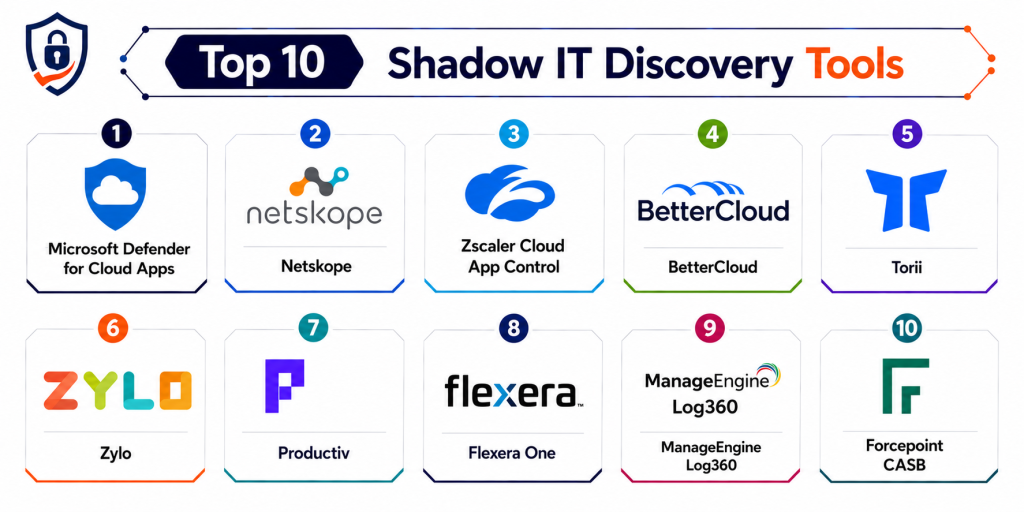
Top 10 Shadow IT Discovery Tools
1- BetterCloud
Short description: BetterCloud is one of the leading SaaS operations and shadow IT management platforms focused on SaaS discovery, workflow automation, and cloud application governance.
Key Features
- SaaS discovery and inventory
- Shadow IT visibility
- Workflow automation
- Access governance
- User lifecycle management
- SaaS activity monitoring
- Compliance reporting
Pros
- Strong workflow automation
- Broad SaaS integration ecosystem
- Excellent operational visibility
Cons
- Enterprise-focused pricing
- Large environments may require tuning
- Advanced workflows can become complex
Platforms / Deployment
- Cloud
Security & Compliance
- SSO/SAML
- RBAC
- Audit logging
- Encryption support
Integrations & Ecosystem
BetterCloud integrates deeply with major SaaS applications and identity providers.
- Google Workspace
- Microsoft 365
- Okta
- Slack
- Zoom
- APIs
Support & Community
Strong enterprise onboarding with automation-focused support resources.
2- Microsoft Defender for Cloud Apps
Short description: Microsoft Defender for Cloud Apps provides cloud application discovery, shadow IT monitoring, and SaaS security visibility as part of the broader Microsoft security ecosystem.
Key Features
- Cloud app discovery
- Shadow IT monitoring
- Risk scoring
- User activity analytics
- Threat detection
- Access governance
- Compliance visibility
Pros
- Strong Microsoft ecosystem integration
- Broad cloud application visibility
- Good security analytics capabilities
Cons
- Best suited for Microsoft-centric environments
- Advanced configuration complexity
- Some workflows require expertise
Platforms / Deployment
- Cloud
Security & Compliance
- SSO/SAML
- MFA
- RBAC
- Audit logging
- Encryption support
Integrations & Ecosystem
Microsoft Defender integrates with Microsoft cloud and enterprise security operations platforms.
- Azure
- Microsoft 365
- Microsoft Sentinel
- APIs
- SIEM platforms
- Endpoint tools
Support & Community
Extensive enterprise support with strong documentation ecosystem.
3- Netskope
Short description: Netskope provides CASB and shadow IT discovery capabilities focused on cloud application visibility, SaaS governance, and secure cloud usage monitoring.
Key Features
- Shadow IT discovery
- Cloud application risk scoring
- SaaS governance
- Data protection policies
- User behavior analytics
- API-based monitoring
- Threat protection
Pros
- Strong cloud security capabilities
- Excellent SaaS visibility
- Broad CASB functionality
Cons
- Enterprise pricing structure
- Complex deployment workflows
- Large feature set may require training
Platforms / Deployment
- Cloud
Security & Compliance
- SSO/SAML
- RBAC
- Audit logging
- Encryption support
Integrations & Ecosystem
Netskope integrates with cloud infrastructure and enterprise security operations environments.
- AWS
- Azure
- Okta
- SIEM platforms
- APIs
- Endpoint tools
Support & Community
Strong enterprise support with mature cloud security expertise.
4- Zylo
Short description: Zylo focuses on SaaS discovery, spend management, and shadow IT visibility for organizations seeking better SaaS governance and operational optimization.
Key Features
- SaaS inventory management
- Shadow IT detection
- SaaS spend analytics
- Usage monitoring
- Vendor insights
- Renewal tracking
- License optimization
Pros
- Excellent SaaS visibility
- Strong spend analytics
- Good procurement insights
Cons
- Limited deep security features
- Enterprise-focused pricing
- Automation depth may vary
Platforms / Deployment
- Cloud
Security & Compliance
- RBAC
- Audit logging
- Encryption support
Integrations & Ecosystem
Zylo integrates with financial systems, SaaS platforms, and collaboration tools.
- Salesforce
- Okta
- Slack
- Microsoft 365
- APIs
- Financial systems
Support & Community
Good operational support with finance-focused onboarding workflows.
5- Torii
Short description: Torii provides SaaS discovery, shadow IT monitoring, and automation workflows for IT operations teams managing growing SaaS ecosystems.
Key Features
- SaaS discovery
- Shadow IT visibility
- Workflow automation
- User lifecycle management
- License optimization
- Access governance
- Usage analytics
Pros
- User-friendly platform
- Fast deployment workflows
- Good automation capabilities
Cons
- Advanced governance depth may vary
- Enterprise customization may require expertise
- Integration setup can take effort
Platforms / Deployment
- Cloud
Security & Compliance
- SSO/SAML
- RBAC
- Audit logging
- Encryption support
Integrations & Ecosystem
Torii integrates with SaaS applications, identity providers, and HR systems.
- Okta
- Slack
- Google Workspace
- BambooHR
- Microsoft 365
- APIs
Support & Community
Strong onboarding experience with automation-focused documentation.
6- Zluri
Short description: Zluri combines SaaS management and shadow IT discovery capabilities to help organizations improve cloud application governance and operational visibility.
Key Features
- Shadow IT discovery
- SaaS inventory management
- Access visibility
- Workflow automation
- Usage analytics
- License optimization
- User lifecycle management
Pros
- Broad SaaS visibility
- Strong reporting capabilities
- Good workflow automation
Cons
- Enterprise governance depth may vary
- Integration depth differs by application
- Scaling complexity for large deployments
Platforms / Deployment
- Cloud
Security & Compliance
- SSO/SAML
- RBAC
- Audit logs
- Encryption support
Integrations & Ecosystem
Zluri integrates with identity providers, collaboration tools, and cloud applications.
- Okta
- Slack
- Zoom
- Google Workspace
- Microsoft 365
- APIs
Support & Community
Responsive support with modern onboarding workflows.
7- Productiv
Short description: Productiv focuses on SaaS intelligence and application usage analytics to help organizations improve software governance and reduce unmanaged SaaS usage.
Key Features
- Application engagement analytics
- Shadow IT visibility
- SaaS usage insights
- Workflow automation
- License optimization
- Productivity analytics
- SaaS governance
Pros
- Strong analytics dashboards
- Good usage visibility
- Effective operational insights
Cons
- Security-focused features may be limited
- Enterprise-focused pricing
- Governance depth varies by deployment
Platforms / Deployment
- Cloud
Security & Compliance
- RBAC
- Audit logging
- Encryption support
Integrations & Ecosystem
Productiv integrates with collaboration platforms and SaaS ecosystems.
- Slack
- Zoom
- Google Workspace
- Okta
- Microsoft 365
- APIs
Support & Community
Good operational support with analytics-focused documentation.
8- Palo Alto Networks Prisma SaaS
Short description: Prisma SaaS combines CASB functionality with shadow IT visibility and SaaS governance capabilities for enterprise cloud security environments.
Key Features
- Shadow IT monitoring
- SaaS security posture visibility
- Data protection policies
- Threat detection
- Access governance
- User activity analytics
- Compliance reporting
Pros
- Strong enterprise security ecosystem
- Broad SaaS monitoring capabilities
- Good compliance visibility
Cons
- Enterprise pricing structure
- Advanced deployment complexity
- Operational expertise recommended
Platforms / Deployment
- Cloud
Security & Compliance
- SSO/SAML
- MFA
- RBAC
- Audit logging
- Encryption support
Integrations & Ecosystem
Prisma SaaS integrates with cloud infrastructure and security operations platforms.
- AWS
- Azure
- Okta
- SIEM platforms
- APIs
- Endpoint security tools
Support & Community
Enterprise-grade support with mature cloud security resources.
9- ManageEngine SaaS Manager Plus
Short description: ManageEngine SaaS Manager Plus provides SaaS discovery, shadow IT visibility, and operational analytics for IT management environments.
Key Features
- SaaS discovery
- User activity monitoring
- License tracking
- Shadow IT visibility
- Spend analytics
- Reporting dashboards
- Compliance visibility
Pros
- Good operational visibility
- Competitive pricing
- Broad IT operations ecosystem
Cons
- Interface complexity may vary
- Advanced automation depth is limited
- Large-scale customization may require tuning
Platforms / Deployment
- Cloud
Security & Compliance
- RBAC
- Audit logging
- Encryption support
Integrations & Ecosystem
ManageEngine integrates with IT management and SaaS ecosystems.
- Microsoft 365
- Google Workspace
- Slack
- ServiceDesk Plus
- APIs
- IT operations tools
Support & Community
Strong operational support ecosystem with broad documentation.
10- Cisco Cloudlock
Short description: Cisco Cloudlock provides cloud application visibility, shadow IT detection, and SaaS security governance for enterprise cloud environments.
Key Features
- Cloud application discovery
- Shadow IT monitoring
- Threat detection
- Access governance
- Compliance monitoring
- Data protection policies
- User behavior analytics
Pros
- Strong enterprise security capabilities
- Good cloud application visibility
- Broad Cisco security ecosystem integration
Cons
- Enterprise-focused deployment complexity
- Premium licensing structure
- Some advanced workflows require expertise
Platforms / Deployment
- Cloud
Security & Compliance
- SSO/SAML
- RBAC
- Audit logging
- Encryption support
Integrations & Ecosystem
Cisco Cloudlock integrates with cloud applications and enterprise security operations platforms.
- AWS
- Google Workspace
- Microsoft 365
- Cisco Security products
- APIs
- SIEM platforms
Support & Community
Strong enterprise support with mature cloud security documentation.
Comparison Table
| Tool Name | Best For | Platform(s) Supported | Deployment | Standout Feature | Public Rating |
|---|---|---|---|---|---|
| BetterCloud | SaaS workflow governance | Multi-SaaS environments | Cloud | Workflow automation | N/A |
| Microsoft Defender for Cloud Apps | Microsoft cloud visibility | Microsoft ecosystem | Cloud | Cloud app risk analytics | N/A |
| Netskope | Enterprise CASB security | Multi-cloud environments | Cloud | SaaS risk scoring | N/A |
| Zylo | SaaS spend visibility | Multi-SaaS environments | Cloud | Spend optimization analytics | N/A |
| Torii | IT operations automation | Multi-SaaS environments | Cloud | Fast SaaS onboarding workflows | N/A |
| Zluri | SaaS governance visibility | Multi-SaaS environments | Cloud | Broad SaaS discovery | N/A |
| Productiv | SaaS usage analytics | Multi-SaaS environments | Cloud | Engagement intelligence | N/A |
| Prisma SaaS | Enterprise SaaS security | Multi-cloud environments | Cloud | SaaS security posture visibility | N/A |
| ManageEngine SaaS Manager Plus | IT operations monitoring | Multi-SaaS environments | Cloud | Operational analytics | N/A |
| Cisco Cloudlock | Cloud application governance | Enterprise cloud environments | Cloud | Cloud security integration | N/A |
Evaluation & Scoring of Shadow IT Discovery Tools
| Tool Name | Core 25% | Ease 15% | Integrations 15% | Security 10% | Performance 10% | Support 10% | Value 15% | Weighted Total |
|---|---|---|---|---|---|---|---|---|
| BetterCloud | 9 | 8 | 9 | 8 | 8 | 8 | 7 | 8.15 |
| Microsoft Defender for Cloud Apps | 9 | 7 | 9 | 9 | 8 | 9 | 7 | 8.30 |
| Netskope | 9 | 7 | 8 | 9 | 8 | 8 | 7 | 8.05 |
| Zylo | 8 | 8 | 8 | 7 | 8 | 8 | 8 | 7.95 |
| Torii | 8 | 9 | 8 | 7 | 8 | 8 | 8 | 8.00 |
| Zluri | 8 | 8 | 8 | 7 | 8 | 7 | 8 | 7.85 |
| Productiv | 8 | 8 | 8 | 7 | 8 | 8 | 7 | 7.80 |
| Prisma SaaS | 9 | 7 | 8 | 9 | 8 | 8 | 6 | 7.95 |
| ManageEngine SaaS Manager Plus | 7 | 7 | 7 | 7 | 8 | 8 | 8 | 7.25 |
| Cisco Cloudlock | 8 | 7 | 8 | 8 | 8 | 8 | 7 | 7.70 |
These scores are comparative rather than absolute. Higher scores generally indicate broader SaaS visibility, stronger governance workflows, and more mature enterprise operational capabilities. Specialized platforms may still provide excellent value depending on organizational priorities and cloud security requirements.
Which Shadow IT Discovery Tool Is Right for You?
Solo / Freelancer
Small businesses and independent teams often benefit from user-friendly SaaS visibility platforms such as Torii or ManageEngine SaaS Manager Plus because of their simpler onboarding and operational workflows.
SMB
Small and medium businesses should prioritize SaaS discovery accuracy, automation, and operational simplicity. Zluri and Zylo provide balanced visibility and governance capabilities for growing SaaS ecosystems.
Mid-Market
Mid-market organizations often require stronger analytics, governance visibility, and workflow automation. BetterCloud and Productiv provide scalable operational insights for distributed SaaS environments.
Enterprise
Large enterprises typically need centralized governance, security analytics, compliance visibility, and broad cloud application monitoring. Microsoft Defender for Cloud Apps, Netskope, and Prisma SaaS are strong enterprise-focused choices.
Budget vs Premium
Simpler SaaS discovery tools provide easier onboarding and lower operational overhead. Enterprise-grade CASB and SaaS governance platforms offer stronger analytics, security monitoring, and compliance automation but generally require larger budgets.
Feature Depth vs Ease of Use
Platforms such as Netskope and Prisma SaaS provide extensive security and governance functionality but may require more operational expertise. Torii and Zluri emphasize usability and streamlined deployment.
Integrations & Scalability
Organizations with mature SaaS ecosystems should prioritize integrations with identity providers, HR systems, SIEM platforms, collaboration tools, cloud providers, and IT service management systems.
Security & Compliance Needs
Regulated industries should focus on audit logging, SaaS risk scoring, access governance, threat analytics, and compliance reporting capabilities.
Frequently Asked Questions FAQs
1. What are Shadow IT Discovery Tools?
Shadow IT Discovery Tools help organizations identify and monitor unauthorized or unmanaged SaaS applications, cloud services, and digital tools used without formal IT approval.
2. Why is shadow IT risky?
Shadow IT can expose organizations to data leakage, compliance violations, unmanaged access risks, weak authentication controls, and increased cyberattack exposure.
3. How do these tools discover shadow IT?
Most platforms analyze network traffic, APIs, identity systems, SaaS integrations, browser activity, and usage logs to identify cloud applications being used across the organization.
4. Are Shadow IT Discovery Tools useful for remote work environments?
Yes. Remote work environments often increase SaaS adoption and unmanaged application usage, making shadow IT visibility critical for security and governance.
5. Can these platforms improve SaaS security?
Yes. Many platforms provide risk scoring, governance controls, access monitoring, compliance reporting, and threat detection capabilities.
6. What integrations are most important?
Important integrations include identity providers, HR systems, SIEM platforms, cloud providers, collaboration tools, and IT service management platforms.
7. Which industries benefit most from shadow IT discovery tools?
Financial services, healthcare, technology companies, government agencies, SaaS providers, and remote-first organizations commonly benefit from these platforms.
8. What are common deployment mistakes?
Common mistakes include incomplete SaaS discovery, weak governance policies, insufficient automation planning, and poor integration visibility.
9. Can shadow IT tools reduce SaaS spending?
Yes. By identifying redundant or unmanaged SaaS applications, organizations can optimize software spending and reduce unnecessary subscriptions.
10. Do Shadow IT Discovery Tools replace CASB platforms?
Some tools include CASB functionality, but many organizations still use dedicated CASB solutions alongside SaaS governance and shadow IT discovery platforms.
Conclusion
Shadow IT Discovery Tools have become essential for organizations managing increasingly complex SaaS ecosystems, distributed workforces, and cloud-native operational environments. These platforms help IT, security, compliance, and operations teams improve visibility into unmanaged applications, reduce governance risks, optimize SaaS usage, and strengthen cloud security posture through centralized monitoring and automation. Enterprise buyers should carefully evaluate SaaS discovery accuracy, governance workflows, analytics capabilities, security integrations, compliance visibility, and operational scalability before selecting a platform. BetterCloud, Microsoft Defender for Cloud Apps, and Netskope provide strong enterprise-grade visibility and governance capabilities, while Zylo, Torii, and Zluri offer practical operational visibility for growing SaaS environments. Security-focused platforms such as Prisma SaaS and Cisco Cloudlock remain valuable for organizations prioritizing cloud application risk management and compliance monitoring. The best solution ultimately depends on SaaS ecosystem complexity, organizational maturity, operational priorities, and security requirements. Shortlist a few platforms, run pilot deployments across your cloud application environment, validate integrations with identity and IT systems, and evaluate governance workflows before making a long-term SaaS visibility and security investment decision.
Very helpful article explaining shadow IT discovery tools in simple language. The comparison makes identifying unauthorized apps and risks much easier.