Introduction
SaaS Management Platforms help organizations discover, monitor, manage, optimize, and secure Software-as-a-Service applications across distributed business environments. As companies increasingly rely on SaaS tools for collaboration, productivity, finance, HR, development, and customer operations, managing hundreds of cloud applications has become a major operational and security challenge.
Modern organizations often struggle with shadow IT, SaaS sprawl, redundant subscriptions, unmanaged licenses, weak integrations, and security misconfigurations. SaaS Management Platforms provide centralized visibility into SaaS usage, automate license management, monitor user activity, improve compliance, and reduce operational costs. Many platforms also include security and identity governance capabilities to reduce risks associated with unauthorized applications and overprivileged access.
Common real-world use cases include:
- SaaS discovery and inventory management
- License optimization and cost reduction
- Shadow IT monitoring
- User onboarding and offboarding automation
- SaaS security and compliance monitoring
Buyers evaluating SaaS Management Platforms should focus on:
- SaaS discovery accuracy
- Integration ecosystem
- License management capabilities
- Workflow automation
- Identity and access governance
- Security monitoring
- Analytics and reporting
- Multi-department collaboration support
- Scalability
- Ease of deployment
Best for: Enterprises, SaaS-heavy organizations, remote workforce environments, IT operations teams, finance departments, security teams, and organizations managing large SaaS ecosystems.
Not ideal for: Small organizations using only a few SaaS applications or businesses with primarily on-premise software environments.
Key Trends in SaaS Management Platforms
- AI-assisted SaaS usage analytics are improving cost optimization and application governance.
- Shadow IT detection is becoming a major enterprise priority.
- Identity governance integration is expanding rapidly.
- Automated employee onboarding and offboarding workflows are becoming standard.
- SaaS security posture management capabilities are growing.
- API-based integrations are improving cross-platform automation.
- Finance and procurement teams are increasingly using SaaS analytics for budget optimization.
- Usage-based SaaS optimization is replacing manual license audits.
- Unified IT asset visibility across SaaS and cloud platforms is improving.
- Compliance monitoring for SaaS ecosystems is becoming more advanced.
How We Selected These Tools Methodology
The platforms in this list were selected based on SaaS ecosystem visibility, automation capabilities, and enterprise operational relevance.
- Evaluated SaaS discovery and inventory management capabilities
- Assessed workflow automation and orchestration features
- Reviewed identity governance and access management support
- Considered license optimization functionality
- Evaluated security monitoring capabilities
- Reviewed reporting and analytics depth
- Assessed integration ecosystem breadth
- Considered scalability across enterprise environments
- Evaluated usability and onboarding simplicity
- Reviewed customer adoption and operational maturity
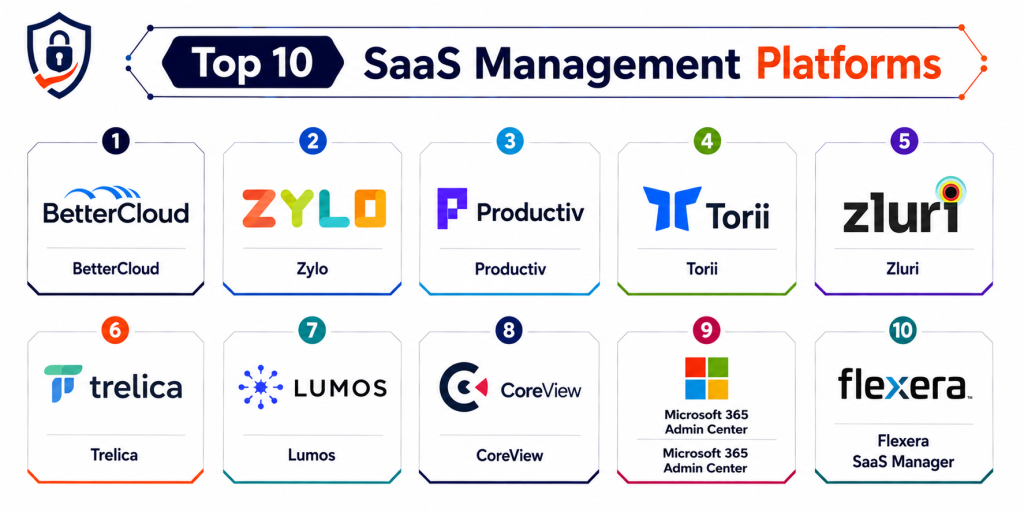
Top 10 SaaS Management Platforms
1- BetterCloud
Short description: BetterCloud is one of the most recognized SaaS management platforms focused on SaaS operations automation, application governance, user lifecycle management, and SaaS security visibility.
Key Features
- SaaS discovery and inventory
- Automated onboarding and offboarding
- Workflow automation
- SaaS security monitoring
- License management
- Access governance
- Activity monitoring
Pros
- Strong workflow automation capabilities
- Broad SaaS integration ecosystem
- Good operational visibility
Cons
- Enterprise pricing structure
- Advanced workflows may require customization
- Large environments can become complex
Platforms / Deployment
- Cloud
Security & Compliance
- SSO/SAML
- RBAC
- Audit logging
- Encryption support
Integrations & Ecosystem
BetterCloud integrates with major SaaS applications, identity providers, and collaboration platforms.
- Google Workspace
- Microsoft 365
- Okta
- Slack
- Zoom
- APIs
Support & Community
Strong enterprise onboarding and automation-focused documentation.
2- Zylo
Short description: Zylo focuses heavily on SaaS spend management, application visibility, and license optimization for enterprises seeking better control over SaaS costs and usage.
Key Features
- SaaS spend analytics
- License optimization
- SaaS inventory management
- Shadow IT visibility
- Renewal management
- Usage analytics
- Vendor insights
Pros
- Excellent SaaS spend visibility
- Strong cost optimization workflows
- Good finance and procurement reporting
Cons
- Limited deep security capabilities
- Automation depth may vary
- Enterprise-focused pricing
Platforms / Deployment
- Cloud
Security & Compliance
- RBAC
- Audit logs
- Encryption support
Integrations & Ecosystem
Zylo integrates with finance systems, SaaS applications, and procurement workflows.
- Salesforce
- Okta
- Microsoft 365
- Slack
- APIs
- Financial systems
Support & Community
Good operational support with finance-focused onboarding guidance.
3- Productiv
Short description: Productiv provides SaaS intelligence, application usage analytics, and workflow automation designed to improve software adoption and optimize SaaS investments.
Key Features
- SaaS usage analytics
- Application engagement insights
- Workflow automation
- Shadow IT visibility
- License optimization
- Employee productivity analytics
- Integration management
Pros
- Strong application usage visibility
- Good analytics dashboards
- Effective SaaS optimization insights
Cons
- Security-focused features may be limited
- Enterprise complexity for large deployments
- Premium pricing model
Platforms / Deployment
- Cloud
Security & Compliance
- RBAC
- Audit logging
- Encryption support
Integrations & Ecosystem
Productiv integrates with collaboration platforms, SaaS applications, and identity providers.
- Slack
- Zoom
- Google Workspace
- Okta
- Microsoft 365
- APIs
Support & Community
Responsive support with practical SaaS analytics documentation.
4- Torii
Short description: Torii is a SaaS management platform designed to provide centralized SaaS visibility, automation workflows, and employee lifecycle management for modern IT teams.
Key Features
- SaaS discovery
- Workflow automation
- Employee onboarding workflows
- License management
- Shadow IT monitoring
- Access governance
- Usage analytics
Pros
- User-friendly interface
- Good workflow automation
- Fast deployment experience
Cons
- Advanced governance depth may vary
- Enterprise scalability may require tuning
- Some integrations require configuration effort
Platforms / Deployment
- Cloud
Security & Compliance
- SSO/SAML
- RBAC
- Audit logging
- Encryption support
Integrations & Ecosystem
Torii integrates with identity providers, collaboration platforms, and HR systems.
- Okta
- Slack
- Google Workspace
- BambooHR
- Microsoft 365
- APIs
Support & Community
Strong onboarding experience with automation-focused implementation support.
5- Zluri
Short description: Zluri combines SaaS management, application governance, and identity visibility to help organizations manage SaaS sprawl and automate IT workflows.
Key Features
- SaaS discovery
- Application governance
- Workflow automation
- License optimization
- Access visibility
- Shadow IT monitoring
- User lifecycle management
Pros
- Broad SaaS visibility
- Good automation capabilities
- Strong operational reporting
Cons
- Enterprise governance features may vary
- Large-scale deployments may require expertise
- Integration depth varies by application
Platforms / Deployment
- Cloud
Security & Compliance
- SSO/SAML
- RBAC
- Audit logs
- Encryption support
Integrations & Ecosystem
Zluri integrates with cloud identity providers, collaboration tools, and business SaaS applications.
- Okta
- Slack
- Zoom
- Google Workspace
- Microsoft 365
- APIs
Support & Community
Modern onboarding workflows with responsive customer support.
6- Lumos
Short description: Lumos focuses on identity-centric SaaS management with emphasis on access governance, automated provisioning, and employee lifecycle security workflows.
Key Features
- SaaS access governance
- Automated provisioning
- Identity visibility
- Workflow automation
- Access request management
- Shadow IT detection
- Compliance reporting
Pros
- Strong identity-focused workflows
- Good access governance visibility
- Modern automation capabilities
Cons
- Smaller ecosystem than larger vendors
- Operational customization may require expertise
- Enterprise pricing structure
Platforms / Deployment
- Cloud
Security & Compliance
- SSO/SAML
- RBAC
- Audit logging
- Encryption support
Integrations & Ecosystem
Lumos integrates with identity platforms and enterprise SaaS ecosystems.
- Okta
- Microsoft Entra ID
- Google Workspace
- Slack
- HR systems
- APIs
Support & Community
Good identity-focused onboarding and operational support.
7- Trelica by 1Password
Short description: Trelica provides SaaS discovery, employee lifecycle automation, and license management capabilities with growing integration into identity security workflows.
Key Features
- SaaS inventory management
- User lifecycle automation
- License optimization
- SaaS usage analytics
- Access monitoring
- Workflow automation
- Compliance visibility
Pros
- Easy-to-use interface
- Strong onboarding workflows
- Good SaaS visibility
Cons
- Advanced enterprise analytics may vary
- Security feature depth is growing
- Smaller ecosystem than major vendors
Platforms / Deployment
- Cloud
Security & Compliance
- SSO/SAML
- RBAC
- Audit logs
- Encryption support
Integrations & Ecosystem
Trelica integrates with collaboration platforms, identity providers, and HR systems.
- Okta
- Google Workspace
- Slack
- Microsoft 365
- BambooHR
- APIs
Support & Community
Responsive support with user-friendly implementation resources.
8- Intello by SailPoint
Short description: Intello combines SaaS management with identity governance capabilities to help enterprises improve application visibility, access governance, and operational efficiency.
Key Features
- SaaS discovery
- Identity governance
- License optimization
- Shadow IT monitoring
- Compliance reporting
- Workflow automation
- User lifecycle management
Pros
- Strong governance capabilities
- Good identity integration support
- Broad enterprise visibility
Cons
- Enterprise-focused deployment complexity
- Premium pricing model
- Advanced workflows may require customization
Platforms / Deployment
- Cloud
Security & Compliance
- SSO/SAML
- RBAC
- Audit logging
- Encryption support
Integrations & Ecosystem
Intello integrates with identity governance platforms and enterprise SaaS ecosystems.
- SailPoint
- Okta
- Slack
- Google Workspace
- APIs
- HR systems
Support & Community
Strong enterprise onboarding and governance-focused documentation.
9- Josys
Short description: Josys provides SaaS and device management capabilities focused on simplifying IT operations and improving visibility across cloud applications and endpoints.
Key Features
- SaaS inventory management
- Device visibility
- Workflow automation
- Employee lifecycle management
- Access governance
- Usage analytics
- License tracking
Pros
- Unified SaaS and device visibility
- Simple operational workflows
- Good onboarding capabilities
Cons
- Smaller enterprise footprint
- Advanced governance depth may vary
- Integration ecosystem still expanding
Platforms / Deployment
- Cloud
Security & Compliance
- RBAC
- Audit logging
- Encryption support
Integrations & Ecosystem
Josys integrates with collaboration tools, identity systems, and HR platforms.
- Okta
- Google Workspace
- Slack
- Microsoft 365
- APIs
- HR systems
Support & Community
Responsive support with practical deployment guidance.
10- ManageEngine SaaS Manager Plus
Short description: ManageEngine SaaS Manager Plus provides SaaS discovery, spend management, and application governance capabilities designed for IT operations and compliance-focused environments.
Key Features
- SaaS discovery
- License management
- Spend analytics
- User activity monitoring
- Compliance visibility
- Shadow IT detection
- Reporting dashboards
Pros
- Good cost management visibility
- Broad IT operations ecosystem
- Competitive pricing
Cons
- Interface complexity may vary
- Advanced automation depth can be limited
- Enterprise scalability may require tuning
Platforms / Deployment
- Cloud
Security & Compliance
- RBAC
- Audit logging
- Encryption support
Integrations & Ecosystem
ManageEngine integrates with IT management platforms and cloud application ecosystems.
- Microsoft 365
- Google Workspace
- Slack
- ServiceDesk Plus
- APIs
- IT management tools
Support & Community
Strong IT operations support ecosystem with broad documentation resources.
Comparison Table
| Tool Name | Best For | Platform(s) Supported | Deployment | Standout Feature | Public Rating |
|---|---|---|---|---|---|
| BetterCloud | SaaS operations automation | Multi-SaaS environments | Cloud | Workflow automation | N/A |
| Zylo | SaaS spend optimization | Multi-SaaS environments | Cloud | Cost visibility analytics | N/A |
| Productiv | SaaS usage intelligence | Multi-SaaS environments | Cloud | Application engagement analytics | N/A |
| Torii | IT workflow automation | Multi-SaaS environments | Cloud | Fast SaaS onboarding workflows | N/A |
| Zluri | SaaS governance visibility | Multi-SaaS environments | Cloud | Broad SaaS discovery | N/A |
| Lumos | Identity-centric SaaS management | Multi-SaaS environments | Cloud | Access governance automation | N/A |
| Trelica | Employee lifecycle automation | Multi-SaaS environments | Cloud | User-friendly SaaS management | N/A |
| Intello | SaaS governance and identity visibility | Multi-SaaS environments | Cloud | Identity governance integration | N/A |
| Josys | SaaS and device visibility | Multi-SaaS environments | Cloud | Unified SaaS and device management | N/A |
| ManageEngine SaaS Manager Plus | IT operations management | Multi-SaaS environments | Cloud | SaaS spend analytics | N/A |
Evaluation & Scoring of SaaS Management Platforms
| Tool Name | Core 25% | Ease 15% | Integrations 15% | Security 10% | Performance 10% | Support 10% | Value 15% | Weighted Total |
|---|---|---|---|---|---|---|---|---|
| BetterCloud | 9 | 8 | 9 | 8 | 8 | 8 | 7 | 8.15 |
| Zylo | 8 | 8 | 8 | 7 | 8 | 8 | 8 | 7.95 |
| Productiv | 8 | 8 | 8 | 7 | 8 | 8 | 7 | 7.80 |
| Torii | 8 | 9 | 8 | 7 | 8 | 8 | 8 | 8.00 |
| Zluri | 8 | 8 | 8 | 7 | 8 | 7 | 8 | 7.85 |
| Lumos | 8 | 8 | 7 | 8 | 8 | 7 | 7 | 7.70 |
| Trelica | 7 | 9 | 7 | 7 | 8 | 8 | 8 | 7.75 |
| Intello | 8 | 7 | 8 | 8 | 8 | 8 | 7 | 7.75 |
| Josys | 7 | 8 | 7 | 7 | 7 | 7 | 8 | 7.30 |
| ManageEngine SaaS Manager Plus | 7 | 7 | 7 | 7 | 8 | 8 | 8 | 7.25 |
These scores are comparative rather than absolute. Higher scores generally indicate broader SaaS visibility, stronger automation, and more mature enterprise management capabilities. Smaller or identity-focused platforms may still provide excellent value depending on organizational priorities.
Which SaaS Management Platform Is Right for You?
Solo / Freelancer
Small teams and independent businesses often benefit from simple SaaS visibility and license management tools such as Trelica or Josys because of their easy onboarding and operational simplicity.
SMB
Small and medium businesses should prioritize automation, SaaS visibility, and manageable deployment workflows. Torii and Zluri provide balanced functionality with relatively fast implementation.
Mid-Market
Mid-market organizations often require stronger governance, workflow automation, and SaaS optimization analytics. BetterCloud and Productiv provide scalable operational visibility for growing environments.
Enterprise
Large enterprises typically need centralized governance, identity integrations, compliance monitoring, and advanced workflow automation. BetterCloud, Zylo, and Intello are strong enterprise-focused options.
Budget vs Premium
Simpler SaaS management tools generally provide lower operational complexity and easier deployment. Enterprise-grade platforms offer stronger automation, governance, and analytics but often require larger budgets.
Feature Depth vs Ease of Use
Platforms such as BetterCloud and Intello provide extensive operational workflows and governance capabilities but may require more configuration effort. Torii and Trelica emphasize usability and streamlined onboarding.
Integrations & Scalability
Organizations with mature SaaS ecosystems should prioritize integrations with identity providers, HR systems, collaboration platforms, procurement tools, and IT service management platforms.
Security & Compliance Needs
Regulated industries should focus on audit logging, SaaS access governance, identity integrations, shadow IT visibility, and compliance reporting capabilities.
Frequently Asked Questions FAQs
1. What is a SaaS Management Platform?
A SaaS Management Platform helps organizations discover, monitor, optimize, secure, and automate the management of Software-as-a-Service applications across the enterprise.
2. Why are SaaS Management Platforms important?
Organizations often use hundreds of SaaS applications across departments. Without centralized visibility, businesses can face security risks, wasted spending, unmanaged licenses, and compliance issues.
3. What is shadow IT in SaaS environments?
Shadow IT refers to unauthorized or unmanaged SaaS applications used by employees without formal IT approval or oversight.
4. Can SaaS Management Platforms reduce software costs?
Yes. These platforms help identify unused licenses, redundant subscriptions, and underutilized applications to improve SaaS spending efficiency.
5. Do these platforms support onboarding and offboarding workflows?
Yes. Many platforms automate employee onboarding and offboarding tasks such as account provisioning, access removal, and application assignment.
6. What integrations are most important for SaaS management?
Important integrations include identity providers, HR systems, collaboration platforms, cloud applications, procurement systems, and IT service management tools.
7. Are SaaS Management Platforms useful for security teams?
Yes. Many platforms provide shadow IT detection, access governance, activity monitoring, and compliance visibility that help improve SaaS security posture.
8. Which industries benefit most from SaaS management platforms?
SaaS-heavy businesses, remote workforce environments, financial services, healthcare organizations, technology companies, and enterprises with distributed teams benefit significantly.
9. What are common SaaS management deployment mistakes?
Common mistakes include incomplete SaaS inventory discovery, poor integration planning, weak governance policies, and insufficient access lifecycle automation.
10. Can SaaS Management Platforms replace IT asset management tools?
They complement rather than fully replace traditional IT asset management systems by focusing specifically on cloud application visibility, governance, and SaaS optimization.
Conclusion
SaaS Management Platforms have become essential for organizations managing increasingly complex cloud application ecosystems, remote workforce environments, and distributed business operations. These platforms help IT, finance, security, and operations teams improve SaaS visibility, optimize software spending, automate employee lifecycle workflows, and reduce risks associated with shadow IT and unmanaged access. Enterprise buyers should carefully evaluate SaaS discovery accuracy, workflow automation capabilities, identity governance support, integration flexibility, analytics depth, and operational simplicity before selecting a platform. BetterCloud, Zylo, and Productiv provide strong enterprise-grade visibility and automation capabilities, while Torii and Zluri offer practical and user-friendly options for growing organizations. Identity-focused platforms such as Lumos and Intello remain highly valuable for organizations prioritizing governance and access management. The best platform ultimately depends on SaaS ecosystem complexity, organizational maturity, compliance requirements, operational expertise, and budget priorities. Shortlist a few platforms, run pilot deployments across major SaaS applications, validate integrations with your identity and HR systems, and evaluate operational workflows before making a long-term SaaS management investment decision.