Introduction
Cloud Identity Security Tools help organizations secure user identities, access permissions, authentication workflows, and privileged accounts across cloud-native and hybrid environments. These platforms focus on protecting identities from unauthorized access, credential misuse, privilege escalation, insider threats, and identity-based cyberattacks.
As organizations continue adopting multi-cloud environments, SaaS applications, remote work, APIs, and cloud-native infrastructure, identity has become one of the most critical security layers. Attackers increasingly target identity systems through phishing, credential theft, token hijacking, weak permissions, and compromised privileged accounts. Cloud identity security tools provide visibility into identity risks, enforce least-privilege access, monitor suspicious authentication behavior, and improve governance across cloud platforms.
Common real-world use cases include:
- Identity and access governance
- Multi-cloud identity protection
- Privileged access monitoring
- Zero Trust access enforcement
- Compliance and audit management
Buyers evaluating cloud identity security tools should focus on:
- Identity visibility and analytics
- Privileged access management
- Multi-cloud compatibility
- Identity threat detection
- AI-assisted risk analysis
- Compliance automation
- Integration flexibility
- Zero Trust support
- Scalability
- Ease of deployment
Best for: Enterprises, SaaS providers, financial institutions, healthcare organizations, remote workforce environments, cloud-native businesses, and organizations operating multi-cloud infrastructures.
Not ideal for: Organizations with minimal cloud usage, very small IT environments, or businesses relying only on simple local authentication systems.
Key Trends in Cloud Identity Security Tools
- Identity-centric security is becoming the foundation of Zero Trust strategies.
- AI-assisted identity risk analytics are improving anomaly detection.
- Cloud entitlement management is becoming a major enterprise priority.
- Multi-cloud identity governance is rapidly expanding.
- Just-in-time privileged access workflows are becoming more common.
- Identity threat detection and response capabilities are improving significantly.
- Passwordless authentication adoption is increasing.
- Identity posture management is becoming integrated into CNAPP platforms.
- API and machine identity protection are growing focus areas.
- Continuous authentication and behavioral monitoring are improving access security.
How We Selected These Tools Methodology
The tools in this list were selected based on enterprise relevance, identity governance maturity, and cloud-native security capabilities.
- Evaluated identity visibility and analytics capabilities
- Assessed privileged access management features
- Reviewed multi-cloud compatibility
- Considered identity threat detection functionality
- Evaluated Zero Trust and MFA support
- Reviewed compliance automation capabilities
- Assessed scalability across enterprise environments
- Evaluated ecosystem integrations and APIs
- Considered usability and operational simplicity
- Reviewed enterprise adoption and support quality
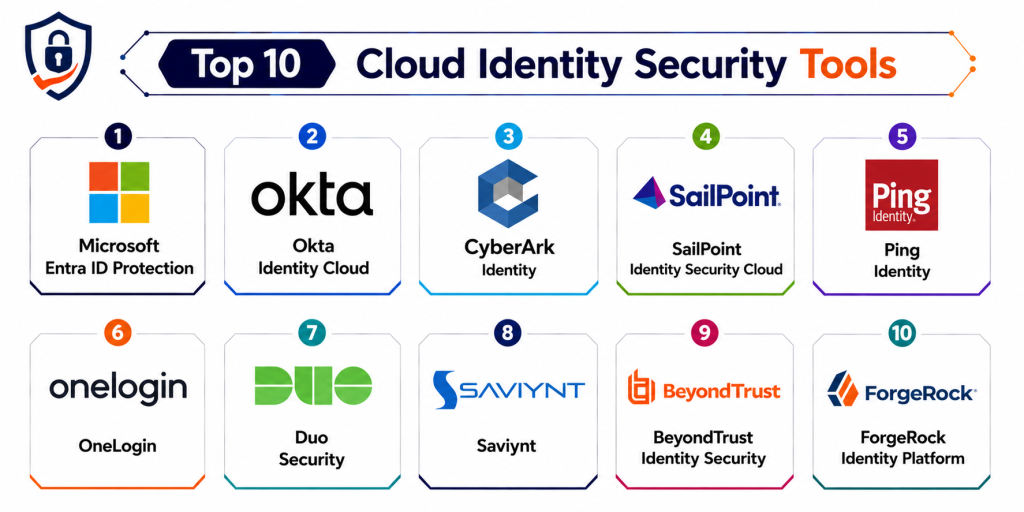
Top 10 Cloud Identity Security Tools
1- Microsoft Entra ID
Short description: Microsoft Entra ID is one of the most widely adopted cloud identity platforms, providing identity governance, authentication, privileged access controls, and Zero Trust security across cloud and hybrid environments.
Key Features
- Identity and access management
- Multi-factor authentication
- Conditional access policies
- Privileged Identity Management
- Identity governance workflows
- Risk-based authentication
- Single sign-on support
Pros
- Deep Microsoft ecosystem integration
- Strong enterprise scalability
- Broad Zero Trust capabilities
Cons
- Best suited for Microsoft-centric environments
- Advanced licensing can increase costs
- Complex policy management for large deployments
Platforms / Deployment
- Cloud / Hybrid
Security & Compliance
- SSO/SAML
- MFA
- RBAC
- Audit logging
- Encryption support
- Compliance reporting
Integrations & Ecosystem
Microsoft Entra integrates deeply with Microsoft cloud services and enterprise SaaS applications.
- Azure
- Microsoft 365
- AWS
- Google Cloud
- ServiceNow
- APIs
Support & Community
Large enterprise ecosystem with extensive documentation and global support resources.
2- Okta Workforce Identity Cloud
Short description: Okta is a leading cloud identity and access management platform focused on workforce authentication, Zero Trust security, and identity governance for enterprises and SaaS environments.
Key Features
- Single sign-on
- Multi-factor authentication
- Identity governance
- Lifecycle management
- Adaptive authentication
- API access management
- ThreatInsight analytics
Pros
- Strong SaaS integration ecosystem
- Easy deployment workflows
- Broad identity management capabilities
Cons
- Premium enterprise pricing
- Complex governance configurations
- Some advanced features require higher-tier plans
Platforms / Deployment
- Cloud
Security & Compliance
- SSO/SAML
- MFA
- RBAC
- Audit logging
- Encryption support
Integrations & Ecosystem
Okta supports one of the largest SaaS integration ecosystems in the identity security market.
- AWS
- Google Workspace
- Salesforce
- Slack
- Zoom
- APIs
Support & Community
Strong enterprise support with extensive developer and administrator documentation.
3- CyberArk Identity Security Platform
Short description: CyberArk is a leader in privileged access management and identity security, focusing on securing high-risk accounts, credentials, and privileged cloud access workflows.
Key Features
- Privileged access management
- Credential vaulting
- Just-in-time access
- Session monitoring
- Identity governance
- MFA support
- Threat analytics
Pros
- Strong privileged account security
- Mature enterprise security controls
- Excellent compliance support
Cons
- Complex enterprise deployment
- Premium licensing model
- Operational expertise recommended
Platforms / Deployment
- Cloud / Hybrid
Security & Compliance
- MFA
- RBAC
- Audit logging
- Encryption support
- Compliance automation
Integrations & Ecosystem
CyberArk integrates with enterprise identity systems, cloud providers, and security operations platforms.
- AWS
- Azure
- Kubernetes
- SIEM platforms
- ServiceNow
- APIs
Support & Community
Strong enterprise onboarding and security-focused implementation support.
4- Ping Identity
Short description: Ping Identity provides enterprise identity security with strong support for authentication, federation, access governance, and Zero Trust security architectures.
Key Features
- Identity federation
- Multi-factor authentication
- Single sign-on
- API access security
- Adaptive authentication
- Identity governance
- Zero Trust access controls
Pros
- Strong federation capabilities
- Flexible deployment models
- Good enterprise scalability
Cons
- Advanced configuration complexity
- Enterprise-focused pricing
- Some workflows require customization
Platforms / Deployment
- Cloud / Hybrid
Security & Compliance
- SSO/SAML
- MFA
- RBAC
- Audit logging
- Encryption support
Integrations & Ecosystem
Ping Identity integrates with enterprise cloud infrastructure and application ecosystems.
- AWS
- Azure
- Salesforce
- Kubernetes
- APIs
- DevOps tools
Support & Community
Comprehensive enterprise documentation and technical support resources.
5- SailPoint Identity Security Cloud
Short description: SailPoint focuses heavily on identity governance, access management, and cloud identity lifecycle automation for large enterprise environments.
Key Features
- Identity governance
- Access certification workflows
- Role management
- Lifecycle automation
- Compliance reporting
- Identity analytics
- Privileged access integrations
Pros
- Strong governance capabilities
- Excellent compliance workflows
- Mature enterprise identity management
Cons
- Complex deployment and configuration
- Premium enterprise pricing
- Requires operational expertise
Platforms / Deployment
- Cloud / Hybrid
Security & Compliance
- SSO/SAML
- RBAC
- Audit logging
- Encryption support
- Compliance automation
Integrations & Ecosystem
SailPoint integrates broadly across enterprise cloud, HR, and security ecosystems.
- AWS
- Azure
- Workday
- ServiceNow
- APIs
- SIEM platforms
Support & Community
Strong enterprise support with extensive governance and compliance documentation.
6- BeyondTrust Privileged Access Management
Short description: BeyondTrust provides privileged access management and identity security capabilities designed to reduce insider threats and secure administrative access across hybrid environments.
Key Features
- Privileged account management
- Session monitoring
- Password vaulting
- Least privilege enforcement
- Remote access security
- Threat analytics
- Compliance reporting
Pros
- Strong privileged access controls
- Good remote access security
- Mature enterprise capabilities
Cons
- Complex enterprise deployment
- Learning curve for large environments
- Premium pricing structure
Platforms / Deployment
- Cloud / Hybrid
Security & Compliance
- MFA
- RBAC
- Audit logging
- Encryption support
Integrations & Ecosystem
BeyondTrust integrates with cloud infrastructure, identity systems, and enterprise security operations.
- AWS
- Azure
- SIEM platforms
- ServiceNow
- APIs
- Endpoint tools
Support & Community
Enterprise-grade support with strong implementation guidance.
7- One Identity
Short description: One Identity delivers identity governance, privileged access management, and Active Directory security solutions for enterprise and hybrid cloud environments.
Key Features
- Identity governance
- Privileged access management
- Active Directory security
- Access certification
- Password management
- Compliance reporting
- Threat monitoring
Pros
- Broad identity governance capabilities
- Strong hybrid environment support
- Good compliance functionality
Cons
- Complex deployment architecture
- Enterprise-focused licensing
- Advanced workflows may require customization
Platforms / Deployment
- Cloud / Hybrid
Security & Compliance
- RBAC
- MFA
- Audit logging
- Encryption support
Integrations & Ecosystem
One Identity integrates with enterprise identity systems and cloud platforms.
- Azure
- AWS
- Active Directory
- ServiceNow
- APIs
- SIEM tools
Support & Community
Comprehensive enterprise support with governance-focused documentation.
8- CrowdStrike Falcon Identity Protection
Short description: CrowdStrike Falcon Identity Protection combines identity threat detection with endpoint and cloud-native security analytics for modern enterprise environments.
Key Features
- Identity threat detection
- Behavioral analytics
- Privileged account monitoring
- Risk-based access monitoring
- Active Directory visibility
- Threat intelligence
- Cloud identity analytics
Pros
- Strong threat detection capabilities
- Unified security analytics
- Effective behavioral monitoring
Cons
- Best suited for CrowdStrike-centric ecosystems
- Enterprise pricing model
- Governance depth may vary
Platforms / Deployment
- Cloud
Security & Compliance
- MFA support
- RBAC
- Audit logs
- Encryption support
Integrations & Ecosystem
CrowdStrike integrates with cloud infrastructure and enterprise security operations environments.
- AWS
- Azure
- SIEM platforms
- APIs
- Endpoint security tools
Support & Community
Strong enterprise support and active cybersecurity community presence.
9- Delinea
Short description: Delinea provides cloud identity security and privileged access management focused on securing administrative accounts and reducing identity-related risks.
Key Features
- Privileged access management
- Credential vaulting
- MFA support
- Session auditing
- Cloud access security
- Threat monitoring
- Least privilege enforcement
Pros
- Strong PAM functionality
- Good cloud access visibility
- Simplified deployment workflows
Cons
- Smaller ecosystem than major vendors
- Enterprise governance depth may vary
- Premium security pricing
Platforms / Deployment
- Cloud / Hybrid
Security & Compliance
- MFA
- RBAC
- Audit logging
- Encryption support
Integrations & Ecosystem
Delinea integrates with enterprise cloud infrastructure and security operations workflows.
- AWS
- Azure
- SIEM platforms
- APIs
- ServiceNow
Support & Community
Responsive enterprise support with modern implementation resources.
10- Google Cloud Identity
Short description: Google Cloud Identity provides identity and access management capabilities for organizations operating within Google Workspace and Google Cloud environments.
Key Features
- Identity and access management
- Single sign-on
- Multi-factor authentication
- Endpoint visibility
- User lifecycle management
- Context-aware access
- Security policy enforcement
Pros
- Strong Google ecosystem integration
- Simplified cloud identity management
- Good remote workforce support
Cons
- Best suited for Google-centric environments
- Enterprise governance features may vary
- Multi-cloud depth can be limited
Platforms / Deployment
- Cloud
Security & Compliance
- SSO/SAML
- MFA
- RBAC
- Audit logging
- Encryption support
Integrations & Ecosystem
Google Cloud Identity integrates tightly with Google Workspace and cloud services.
- Google Workspace
- Google Cloud
- APIs
- SaaS platforms
- Endpoint tools
Support & Community
Broad Google documentation ecosystem with enterprise support options.
Comparison Table
| Tool Name | Best For | Platform(s) Supported | Deployment | Standout Feature | Public Rating |
|---|---|---|---|---|---|
| Microsoft Entra ID | Enterprise identity governance | Azure, Multi-cloud | Cloud, Hybrid | Deep Microsoft integration | N/A |
| Okta Workforce Identity Cloud | SaaS identity management | Multi-cloud | Cloud | Large SaaS integration ecosystem | N/A |
| CyberArk Identity Security Platform | Privileged access management | Multi-cloud | Cloud, Hybrid | Privileged account security | N/A |
| Ping Identity | Enterprise federation | Multi-cloud | Cloud, Hybrid | Identity federation | N/A |
| SailPoint Identity Security Cloud | Identity governance | Multi-cloud | Cloud, Hybrid | Governance automation | N/A |
| BeyondTrust PAM | Administrative access security | Multi-cloud | Cloud, Hybrid | Privileged session control | N/A |
| One Identity | Hybrid identity governance | Multi-cloud | Cloud, Hybrid | Active Directory security | N/A |
| CrowdStrike Falcon Identity Protection | Identity threat detection | Multi-cloud | Cloud | Behavioral analytics | N/A |
| Delinea | Cloud privileged access | Multi-cloud | Cloud, Hybrid | Simplified PAM workflows | N/A |
| Google Cloud Identity | Google cloud identity management | Google Cloud | Cloud | Google Workspace integration | N/A |
Evaluation & Scoring of Cloud Identity Security Tools
| Tool Name | Core 25% | Ease 15% | Integrations 15% | Security 10% | Performance 10% | Support 10% | Value 15% | Weighted Total |
|---|---|---|---|---|---|---|---|---|
| Microsoft Entra ID | 9 | 8 | 9 | 9 | 8 | 9 | 8 | 8.55 |
| Okta Workforce Identity Cloud | 9 | 9 | 9 | 8 | 8 | 8 | 7 | 8.40 |
| CyberArk Identity Security Platform | 9 | 7 | 8 | 9 | 8 | 9 | 6 | 8.00 |
| Ping Identity | 8 | 7 | 8 | 8 | 8 | 8 | 7 | 7.70 |
| SailPoint Identity Security Cloud | 9 | 7 | 8 | 9 | 8 | 8 | 6 | 7.95 |
| BeyondTrust PAM | 8 | 7 | 8 | 8 | 8 | 8 | 7 | 7.70 |
| One Identity | 8 | 7 | 7 | 8 | 8 | 8 | 7 | 7.55 |
| CrowdStrike Falcon Identity Protection | 8 | 8 | 8 | 8 | 8 | 8 | 7 | 7.85 |
| Delinea | 8 | 8 | 7 | 8 | 8 | 7 | 7 | 7.60 |
| Google Cloud Identity | 7 | 9 | 7 | 8 | 8 | 8 | 8 | 7.80 |
These scores are comparative rather than absolute. Higher scores generally indicate broader enterprise identity governance, stronger integrations, and more mature cloud identity protection capabilities. Specialized tools may still provide exceptional value for privileged access management or cloud-native identity security use cases.
Which Cloud Identity Security Tool Is Right for You?
Solo / Freelancer
Independent professionals and small teams often benefit from simpler cloud identity platforms such as Google Cloud Identity or Okta because of their easier onboarding and user-friendly management workflows.
SMB
Small and medium businesses should prioritize simplified deployment, MFA enforcement, and centralized identity visibility. Okta and Microsoft Entra ID provide balanced functionality with manageable operational complexity.
Mid-Market
Mid-market organizations often require stronger governance, compliance visibility, and privileged access management. SailPoint and Ping Identity offer scalable identity security capabilities for growing enterprises.
Enterprise
Large enterprises typically need centralized governance, advanced privileged access management, hybrid environment support, and compliance automation. Microsoft Entra ID, CyberArk, and SailPoint are strong enterprise-focused choices.
Budget vs Premium
Cloud-native identity providers generally offer easier onboarding and lower operational complexity. Enterprise governance and PAM platforms provide deeper controls and analytics but often require larger budgets and specialized expertise.
Feature Depth vs Ease of Use
Platforms like CyberArk and SailPoint provide extensive governance and privileged access capabilities but may require more operational expertise. Okta and Google Cloud Identity emphasize usability and deployment simplicity.
Integrations & Scalability
Organizations with mature cloud operations should prioritize integrations with SaaS platforms, cloud providers, SIEM systems, endpoint security tools, and DevSecOps workflows.
Security & Compliance Needs
Regulated industries should focus on MFA enforcement, RBAC, audit logging, identity governance, privileged session monitoring, and compliance automation capabilities.
Frequently Asked Questions FAQs
1. What are Cloud Identity Security Tools?
Cloud Identity Security Tools help organizations manage and secure user identities, authentication workflows, privileged accounts, and access permissions across cloud and hybrid environments.
2. Why is identity security important?
Identity has become a major attack target for cybercriminals. Compromised credentials, weak permissions, and stolen tokens can lead to unauthorized access and large-scale security breaches.
3. What is the difference between IAM and PAM?
IAM Identity and Access Management focuses on managing user identities and access rights, while PAM Privileged Access Management focuses specifically on securing high-risk administrative accounts and privileged access.
4. What is Zero Trust identity security?
Zero Trust identity security continuously verifies users, devices, and authentication context before granting access rather than assuming trust based on network location.
5. Do cloud identity tools support multi-cloud environments?
Yes. Most enterprise identity platforms support integrations across AWS, Azure, Google Cloud, SaaS applications, and hybrid infrastructure.
6. What integrations are most important for identity security?
Important integrations include cloud providers, SaaS applications, SIEM platforms, endpoint security tools, HR systems, and DevOps pipelines.
7. Are passwordless authentication methods becoming common?
Yes. Many organizations are increasingly adopting passwordless authentication using biometrics, hardware keys, and adaptive authentication technologies.
8. What are common identity security deployment mistakes?
Common mistakes include excessive permissions, weak MFA enforcement, poor identity governance, insufficient monitoring, and unmanaged privileged accounts.
9. Which industries benefit most from cloud identity security?
Financial services, healthcare, government agencies, SaaS providers, and organizations with large remote workforces commonly benefit from advanced cloud identity security tools.
10. Can cloud identity tools replace traditional security controls?
No. Identity security tools complement endpoint security, SIEM, network security, and cloud security platforms as part of a layered cybersecurity strategy.
Conclusion
Cloud Identity Security Tools have become essential components of modern cybersecurity architectures as organizations continue expanding cloud-native infrastructure, SaaS ecosystems, remote workforce environments, and multi-cloud operations. These platforms help security teams improve authentication security, enforce least-privilege access, monitor privileged accounts, and reduce identity-based attack risks through centralized governance and advanced analytics. Enterprise buyers should carefully evaluate identity visibility, privileged access management, compliance automation, integration flexibility, Zero Trust capabilities, and operational simplicity before selecting a solution. Microsoft Entra ID, Okta, and CyberArk provide strong enterprise-grade identity security capabilities, while Ping Identity and SailPoint offer mature governance and federation workflows for large organizations. Specialized platforms such as BeyondTrust and Delinea remain highly valuable for privileged access management and administrative account protection. The best solution ultimately depends on cloud maturity, identity complexity, compliance requirements, operational expertise, and organizational scale. Shortlist a few platforms, run pilot deployments across cloud and SaaS environments, validate integrations with your security operations stack, and evaluate governance workflows before making a long-term identity security investment decision.