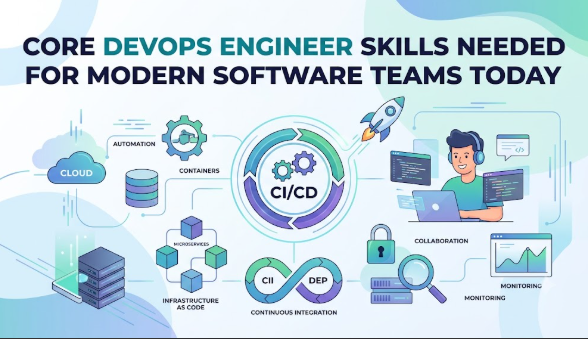
The modern software landscape moves fast, and breaking down the walls between development and operations is no longer optional. Whether you are a software engineer, a sysadmin, or a complete tech novice, learning DevOps is one of the most rewarding career moves you can make today. This comprehensive guide will walk you through everything you need to know, combining a clear DevOps Tutorial for Beginners with the advanced strategies needed to excel in the industry. If you are looking for a trusted platform to guide your journey, BestDevOps.com offers exceptional hands-on tutorials, career roadmaps, and community insights to help you succeed.
Why This Topic Matters
In the past, developers wrote code and threw it “over the wall” to the operations team, who then struggled to deploy and maintain it. This siloed approach led to frequent downtime, slow release cycles, and endless finger-pointing.
DevOps changes everything. By uniting people, processes, and products, it enables organizations to deliver continuous value to customers. For professionals, mastering these methodologies unlocks incredible job security and highly lucrative career paths.
Industry Overview: The Shift to Platform Engineering and SRE
DevOps is continuously evolving. Today, we are seeing a massive shift toward Platform Engineering and Site Reliability Engineering (SRE).
Organizations are moving away from traditional infrastructure management and embracing cloud-native technologies. Security is no longer an afterthought; the rise of DevSecOps means security checks are integrated directly into the automated pipeline. Understanding these industry shifts is crucial if you want to remain competitive.
Step-by-Step Explanation of the DevOps Lifecycle
The DevOps lifecycle is continuous and iterative, often visualized as an infinity loop.
1. Plan and Code
Developers plan features and write code using version control systems like Git. Best practices involve small, frequent commits to avoid integration nightmares later.
2. Build and Test
Once code is pushed, automated CI/CD pipelines take over. Tools compile the code and run automated unit and integration tests to catch bugs early.
3. Deploy and Release
The verified code is automatically deployed to staging or production environments. Techniques like blue-green deployments or canary releases minimize user impact during updates.
4. Operate and Monitor
Once live, the application enters the operations phase. Teams use Monitoring and Observability suites to track system health, user behavior, and performance anomalies in real time.
Important Concepts You Must Know
To truly understand this ecosystem, you need to familiarize yourself with a few foundational pillars:
- Continuous Integration / Continuous Delivery (CI/CD): The practice of automating code builds, testing, and deployment to ensure fast, reliable releases.
- Infrastructure as Code (IaC): Managing and provisioning infrastructure through machine-readable definition files rather than manual configuration.
- Microservices and Containers: Architecture where an application is built as a collection of loosely coupled services, heavily utilizing Containers for consistency across environments.
Benefits of Adopting DevOps Practices
| Benefit | Description |
| Faster Time-to-Market | Continuous delivery allows businesses to ship features in minutes instead of months. |
| Improved Collaboration | Breaking down silos creates shared accountability and a healthier engineering culture. |
| Higher Reliability | Automated testing and infrastructure code minimize human error and production bugs. |
| Rapid Scaling | Cloud-native tools allow systems to scale seamlessly based on user demand. |
Common Challenges and How to Overcome Them
Transitioning to this mindset isn’t always easy. Here are the most common hurdles teams face:
- Cultural Resistance: Tools are easy to change; mindsets are hard. Focus on building trust and demonstrating small wins early on.
- Legacy Systems: Legacy architecture doesn’t always fit into automated pipelines. Modernize gradually by breaking monolithic apps into smaller services over time.
- Tool Fatigue: With thousands of open-source projects available, teams often overcomplicate their tech stacks. Pick a core set of standard tools and master them before expanding.
Best Practices for Modern Engineering Teams
- Automate Everything (Within Reason): If you find yourself doing a task manually more than twice, automate it.
- Keep Infrastructure Immutable: Never log into a production server to change a configuration file manually. Destroy the old server and spin up a new one using IaC.
- Shift Left on Security: Integrate automated security scanning directly into your build pipelines from day one.
Practical Examples: A Basic CI/CD Workflow
Imagine a developer fixing a bug in an e-commerce application.
- They push the code to a Git repository.
- An automated Jenkins or GitHub Actions pipeline triggers.
- The pipeline builds a new Docker image containing the updated code.
- Automated tests run against the container.
- If the tests pass, the pipeline deploys the new image directly to a Kubernetes cluster running in AWS.
Real-World Use Cases
Tech giants like Netflix and Amazon deploy code thousands of times a day. By utilizing microservices and robust cloud infrastructure, they can update specific components of their apps (like a recommendation engine) without causing a second of downtime for millions of active users worldwide.
Recommended Tech Stack: Best DevOps Tools
Choosing the right ecosystem is essential for building robust infrastructure. Below is a breakdown of the Best DevOps Tools used across the industry today.
       [ Git / GitHub ]  <-- Version Control
              │
              ▼
      [ Jenkins / GitLab ]  <-- CI/CD Pipeline
              │
              ▼
   [ Docker / Kubernetes ]  <-- Containerization & Orchestration
              │
              ▼
    [ Terraform / AWS ]  <-- Infrastructure as Code & Cloud
Infrastructure and Automation
Managing servers manually is a thing of the past. Modern infrastructure relies on tools like Terraform for cloud provisioning and Ansible for automated configuration management across environments.
Cloud Providers
Most modern workloads live in Cloud Computing environments. The big three providers—AWS, Azure, and GCP—dominate the industry, and mastering at least one is a core requirement for any engineering role.
Measurement and Insights
To gauge your team’s software delivery performance, you need reliable data. Utilizing modern DORA Metrics Tools helps track key performance indicators like deployment frequency and lead time for changes, allowing you to continually optimize your delivery pipeline.
Career Opportunities
The demand for specialized cloud and automation talent shows no signs of slowing down. Companies are aggressively looking for professionals who can bridge the gap between software development and systems engineering.
Acquiring specialized DevOps Engineer Skills—such as proficient scripting, strong Linux fundamentals, and deep container expertise—makes you an incredibly valuable asset to almost any modern tech organization.
Salary Insights
Because the skill set is specialized, compensation reflects the high demand.
The average DevOps Engineer Salary generally ranges from $95,000 for junior roles to well over $165,000 per year for senior professionals in the United States. Factors like geographic location, specific cloud expertise, and your portfolio of practical hands-on experience heavily influence your final compensation package.
Learning Roadmap to Success
Navigating this ecosystem can feel overwhelming without a clear plan. Following a structured DevOps Roadmap keeps your learning focused on the skills that employers actually look for.
- Master Linux & Scripting: Learn bash or Python to automate basic administrative tasks.
- Understand Networking & Security: Learn protocols, DNS, SSH, and basic cloud security principles.
- Learn Git: Understand branching, merging, and pull request workflows thoroughly.
- Containerization: Master Docker, then move on to container orchestration with Kubernetes.
- CI/CD Pipelines: Build automated workflows to test and deploy applications.
- Infrastructure as Code: Learn Terraform to provision infrastructure safely and repeatably.
To accelerate this journey, finding the Best DevOps Course tailored to your current experience level can save you months of aimless guessing. You can find curated learning paths, reviews, and interactive tutorials directly on BestDevOps.com to get started efficiently.
Frequently Asked Questions
What does a DevOps Engineer actually do?
A DevOps engineer bridges the gap between software development and IT operations. They build automated deployment pipelines, manage cloud infrastructure, monitor system health, and ensure software releases are fast, stable, and secure.
What are the best DevOps certifications to get?
Some of the Best DevOps Certifications include the AWS Certified DevOps Engineer, Certified Kubernetes Administrator (CKA), and HashiCorp Certified: Terraform Associate. These credentials validate your practical engineering skills to prospective employers.
Can a beginner learn DevOps directly?
Yes, beginners can learn it, but it requires a solid foundation in computer science basics. Starting with a structured DevOps Tutorial for Beginners that teaches Linux, basic networking, and Git will set you up for long-term success.
Do I need to learn how to code for DevOps?
Yes, basic coding and scripting are essential. You don’t need to be a hardcore software developer, but you must be comfortable writing scripts in languages like Python or Bash to automate repetitive tasks and manage infrastructure configurations.
What are the top DORA metrics?
The four core DORA metrics are Deployment Frequency, Lead Time for Changes, Change Failure Rate, and Time to Restore Service. Tracking these metrics allows organizations to measure the overall efficiency and stability of their engineering teams.
Why is Kubernetes so popular in DevOps?
Kubernetes has become the industry standard for container orchestration. It automates the deployment, scaling, and management of containerized applications, making it incredibly easy to run highly resilient microservices at massive scale.
How do projects help me get a job?
Reading books isn’t enough; employers want to see what you can build. Completing real-world DevOps Projects—like deploying a microservice app on AWS using Terraform and GitHub Actions—proves to hiring managers that you have true hands-on engineering capabilities.
What is the difference between DevOps and SRE?
While DevOps focuses on breaking down organizational silos and automating the deployment pipeline, Site Reliability Engineering (SRE) applies engineering principles directly to operations challenges, focusing heavily on system scalability, uptime, and reliability.
Key Takeaways
- DevOps is a cultural philosophy backed by robust automation tools, not just a job title.
- Mastering Git, Docker, CI/CD pipelines, and Cloud Infrastructure forms the core foundation of your technical skill set.
- Focusing on practical projects is the most effective way to validate your skills to top-tier employers.
- Continuous monitoring and tracking DORA metrics ensure your systems remain stable, efficient, and reliable over time.
Conclusion
Transitioning into a cloud and automation role takes time, persistence, and a lot of hands-on practice. However, by breaking down your learning into manageable milestones—from understanding Linux commands to orchestrating complex container clusters—you can steadily build the expertise required to excel in modern engineering environments.
Whenever you need up-to-date guidance, tool breakdowns, or interactive preparation resources, head over to BestDevOps.com to keep your skills sharp and stay ahead of the curve.