Introduction
Compliance Automation Platforms help organizations streamline regulatory compliance workflows, automate evidence collection, manage security controls, monitor risks, and simplify audit preparation across frameworks such as SOC 2, ISO 27001, HIPAA, GDPR, PCI DSS, NIST, and more. These platforms reduce manual compliance work while improving visibility, governance, and operational efficiency.
Modern organizations operate across cloud environments, SaaS applications, remote workforces, APIs, and hybrid infrastructures that generate complex compliance requirements. Manual spreadsheets, disconnected policies, and fragmented audit processes often create operational inefficiencies and increase compliance risks. Compliance automation platforms centralize governance workflows while automating monitoring, reporting, risk assessments, and evidence gathering.
Common real-world use cases include:
- SOC 2 audit preparation
- ISO 27001 compliance management
- Continuous cloud compliance monitoring
- Vendor risk assessments
- Security control automation
Buyers evaluating Compliance Automation Platforms should focus on:
- Framework coverage
- Automated evidence collection
- Continuous monitoring capabilities
- Policy management workflows
- Risk assessment functionality
- Integration ecosystem breadth
- Reporting and audit readiness
- Cloud security visibility
- Workflow automation
- Ease of deployment and usability
Best for: SaaS providers, cloud-native companies, enterprise compliance teams, healthcare organizations, fintech companies, MSSPs, legal teams, and regulated industries.
Not ideal for: Small businesses with minimal compliance obligations or organizations requiring only lightweight document management without continuous compliance monitoring.
Key Trends in Compliance Automation Platforms
- AI-assisted compliance analysis is becoming increasingly common.
- Continuous compliance monitoring is replacing periodic manual audits.
- Cloud-native compliance platforms are expanding rapidly.
- Multi-framework automation is becoming a standard capability.
- Vendor risk management is increasingly integrated into compliance workflows.
- Generative AI is helping automate policy drafting and audit summaries.
- Security posture management and compliance workflows are converging.
- API-first compliance integrations are becoming more important.
- Real-time compliance dashboards are improving operational visibility.
- Compliance evidence automation is reducing audit preparation time.
How We Selected These Tools Methodology
The tools in this list were selected based on automation maturity, framework coverage, and enterprise operational relevance.
- Evaluated compliance framework support
- Assessed automation and evidence collection capabilities
- Reviewed cloud-native architecture maturity
- Considered reporting and audit readiness functionality
- Evaluated integration ecosystem breadth
- Reviewed continuous monitoring capabilities
- Assessed usability and onboarding complexity
- Considered scalability across enterprise environments
- Evaluated policy and risk management workflows
- Reviewed enterprise adoption and ecosystem maturity
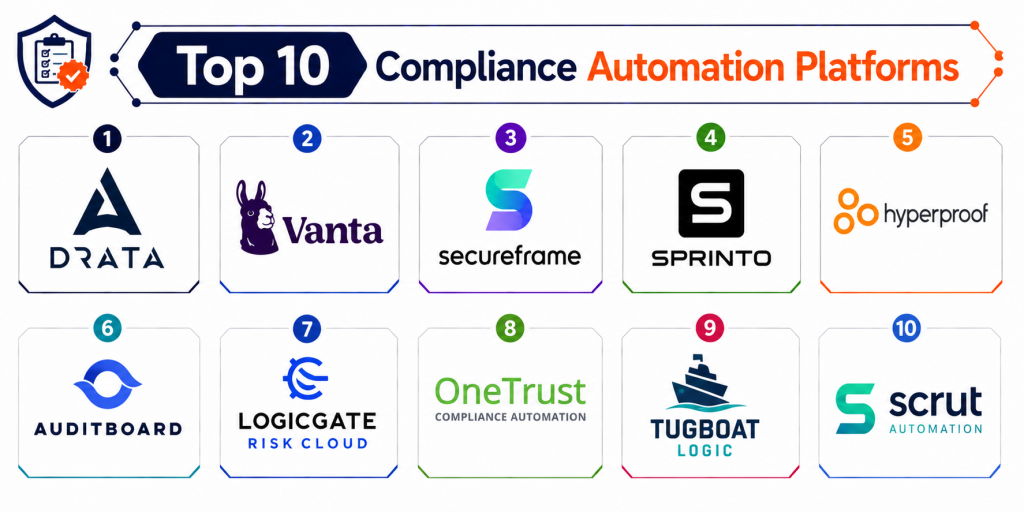
Top 10 Compliance Automation Platforms
1- Drata
Short description: Drata is a cloud-native compliance automation platform focused on continuous monitoring, evidence collection, and audit readiness for modern SaaS and cloud-native organizations.
Key Features
- Automated evidence collection
- Continuous compliance monitoring
- SOC 2 and ISO 27001 workflows
- Risk management dashboards
- Vendor compliance tracking
- Policy management
- Real-time compliance visibility
Pros
- Excellent usability
- Strong automation workflows
- Fast onboarding for SaaS companies
Cons
- Enterprise customization may vary
- Advanced workflows require tuning
- Premium pricing for large deployments
Platforms / Deployment
- Web
- Cloud
Security & Compliance
- SSO/SAML
- MFA
- RBAC
- Audit logging
- Encryption support
Integrations & Ecosystem
Drata integrates broadly across SaaS and cloud ecosystems.
- AWS
- Azure
- Google Cloud
- Okta
- APIs
- HR platforms
Support & Community
Strong SaaS-focused onboarding and operational support ecosystem.
2- Vanta
Short description: Vanta automates compliance monitoring, evidence collection, and security governance workflows for cloud-native businesses and SaaS environments.
Key Features
- Compliance automation
- Continuous monitoring
- Automated evidence collection
- Vendor risk management
- Policy workflows
- Audit readiness tracking
- Security control monitoring
Pros
- Easy deployment workflows
- Strong SaaS ecosystem integrations
- Good audit preparation support
Cons
- Enterprise customization complexity
- Advanced compliance workflows may vary
- Pricing scales with environment size
Platforms / Deployment
- Web
- Cloud
Security & Compliance
- SSO/SAML
- MFA
- RBAC
- Audit logging
- Encryption support
Integrations & Ecosystem
Vanta integrates broadly with cloud-native operational ecosystems.
- AWS
- Google Workspace
- Okta
- APIs
- HR systems
- Ticketing platforms
Support & Community
Large SaaS compliance ecosystem with strong onboarding resources.
3- Secureframe
Short description: Secureframe provides compliance automation, risk management, and continuous monitoring workflows for SaaS providers and regulated organizations.
Key Features
- Continuous compliance monitoring
- Automated evidence collection
- Security awareness workflows
- Vendor risk management
- Policy management
- Risk assessments
- Audit reporting
Pros
- Strong automation capabilities
- Good multi-framework support
- Cloud-native architecture
Cons
- Advanced enterprise workflows may vary
- Integration depth differs by deployment
- Premium pricing structure
Platforms / Deployment
- Web
- Cloud
Security & Compliance
- SSO/SAML
- RBAC
- MFA
- Audit logs
- Encryption support
Integrations & Ecosystem
Secureframe integrates with cloud and SaaS ecosystems.
- AWS
- Azure
- Google Cloud
- APIs
- HR systems
- Ticketing tools
Support & Community
Strong compliance onboarding and customer success support.
4- OneTrust
Short description: OneTrust provides privacy, governance, risk management, and compliance automation workflows for enterprise regulatory operations.
Key Features
- Privacy compliance management
- Risk assessments
- Policy automation
- Vendor risk management
- Compliance reporting
- Audit workflows
- Data governance visibility
Pros
- Broad regulatory framework support
- Strong governance workflows
- Enterprise operational maturity
Cons
- Complex deployment requirements
- Large enterprise pricing model
- Advanced customization complexity
Platforms / Deployment
- Web
- Cloud / Hybrid
Security & Compliance
- SSO/SAML
- RBAC
- Audit logging
- Encryption support
Integrations & Ecosystem
OneTrust integrates broadly across enterprise governance ecosystems.
- Cloud providers
- APIs
- GRC platforms
- Identity systems
- Vendor management tools
Support & Community
Large enterprise governance and compliance ecosystem.
5- Hyperproof
Short description: Hyperproof combines compliance automation, risk tracking, evidence collection, and audit workflows for enterprise compliance operations.
Key Features
- Evidence collection automation
- Compliance tracking
- Risk management workflows
- Audit management
- Policy workflows
- Continuous monitoring
- Reporting dashboards
Pros
- Strong audit management capabilities
- Good collaboration workflows
- Broad framework support
Cons
- Advanced analytics depth may vary
- Enterprise scaling requires tuning
- Smaller ecosystem than larger vendors
Platforms / Deployment
- Web
- Cloud
Security & Compliance
- RBAC
- Audit logging
- Encryption support
- SSO support
Integrations & Ecosystem
Hyperproof integrates with cloud-native and operational ecosystems.
- AWS
- Azure
- APIs
- Ticketing systems
- Identity providers
Support & Community
Strong compliance-focused onboarding and operational guidance.
6- AuditBoard
Short description: AuditBoard provides enterprise audit, compliance, and risk management workflows focused on operational governance and internal controls.
Key Features
- Audit management
- Risk assessments
- Compliance workflows
- Internal control monitoring
- Reporting automation
- Evidence tracking
- Governance dashboards
Pros
- Strong enterprise governance support
- Broad audit workflow capabilities
- Mature operational visibility
Cons
- Enterprise-focused complexity
- Advanced onboarding requirements
- Premium pricing structure
Platforms / Deployment
- Web
- Cloud
Security & Compliance
- RBAC
- Audit logging
- Encryption support
- SSO support
Integrations & Ecosystem
AuditBoard integrates with governance and operational ecosystems.
- ERP systems
- APIs
- Cloud providers
- Risk platforms
- Audit systems
Support & Community
Strong enterprise governance ecosystem with mature training resources.
7- Sprinto
Short description: Sprinto automates security compliance workflows, evidence collection, and continuous monitoring for SaaS startups and growing cloud-native organizations.
Key Features
- Continuous monitoring
- Automated evidence collection
- Security control automation
- Audit readiness workflows
- Vendor risk tracking
- Policy management
- Risk assessments
Pros
- Excellent startup usability
- Fast deployment workflows
- Strong automation focus
Cons
- Enterprise governance depth may vary
- Smaller ecosystem than larger vendors
- Advanced customization is limited
Platforms / Deployment
- Web
- Cloud
Security & Compliance
- RBAC
- Audit logging
- Encryption support
- MFA support
Integrations & Ecosystem
Sprinto integrates broadly with startup and SaaS ecosystems.
- AWS
- Google Workspace
- APIs
- HR platforms
- Identity providers
Support & Community
Growing SaaS compliance automation ecosystem.
8- Thoropass
Short description: Thoropass formerly Laika combines compliance automation, audit support, and continuous monitoring workflows for cloud-native businesses.
Key Features
- Audit preparation automation
- Continuous monitoring
- Risk assessments
- Evidence collection
- Compliance tracking
- Vendor risk management
- Policy workflows
Pros
- Strong audit support
- Simplified onboarding workflows
- Good compliance visibility
Cons
- Advanced customization varies
- Enterprise scaling complexity
- Framework coverage differs by deployment
Platforms / Deployment
- Web
- Cloud
Security & Compliance
- RBAC
- Audit logs
- Encryption support
- SSO support
Integrations & Ecosystem
Thoropass integrates with cloud-native compliance ecosystems.
- AWS
- APIs
- Ticketing systems
- Identity platforms
- HR systems
Support & Community
Strong compliance-focused customer support ecosystem.
9- LogicGate Risk Cloud
Short description: LogicGate Risk Cloud provides customizable governance, risk, and compliance automation workflows for enterprise risk management teams.
Key Features
- Risk workflow automation
- Compliance management
- Vendor risk tracking
- Policy management
- Audit workflows
- Reporting dashboards
- Governance automation
Pros
- Strong workflow customization
- Broad GRC capabilities
- Flexible enterprise architecture
Cons
- Requires configuration expertise
- Advanced onboarding complexity
- Premium enterprise pricing
Platforms / Deployment
- Web
- Cloud
Security & Compliance
- RBAC
- Audit logging
- Encryption support
- SSO/SAML
Integrations & Ecosystem
LogicGate integrates broadly across enterprise GRC ecosystems.
- APIs
- Cloud providers
- ERP systems
- Risk platforms
- Identity systems
Support & Community
Strong enterprise governance and risk management ecosystem.
10- Scrut Automation
Short description: Scrut Automation provides cloud-native compliance automation, risk management, and security monitoring workflows for growing organizations.
Key Features
- Continuous compliance monitoring
- Automated evidence collection
- Risk management workflows
- Policy tracking
- Audit dashboards
- Vendor management
- Security control visibility
Pros
- Strong usability
- Good automation workflows
- Cost-effective for growing companies
Cons
- Enterprise feature depth varies
- Smaller ecosystem maturity
- Advanced governance customization may vary
Platforms / Deployment
- Web
- Cloud
Security & Compliance
- RBAC
- Audit logging
- Encryption support
- MFA support
Integrations & Ecosystem
Scrut integrates with cloud-native and SaaS ecosystems.
- AWS
- Azure
- APIs
- HR systems
- Ticketing platforms
Support & Community
Growing compliance automation ecosystem with startup-friendly onboarding.
Comparison Table
| Tool Name | Best For | Platform(s) Supported | Deployment | Standout Feature | Public Rating |
|---|---|---|---|---|---|
| Drata | SaaS compliance automation | Web | Cloud | Continuous monitoring | N/A |
| Vanta | Startup audit readiness | Web | Cloud | Fast compliance onboarding | N/A |
| Secureframe | Multi-framework compliance | Web | Cloud | Automated evidence collection | N/A |
| OneTrust | Enterprise governance | Web | Hybrid | Privacy and compliance workflows | N/A |
| Hyperproof | Audit management | Web | Cloud | Compliance collaboration | N/A |
| AuditBoard | Enterprise audit operations | Web | Cloud | Internal control monitoring | N/A |
| Sprinto | Startup compliance workflows | Web | Cloud | Fast deployment automation | N/A |
| Thoropass | Audit support workflows | Web | Cloud | Compliance and audit assistance | N/A |
| LogicGate Risk Cloud | Customizable GRC workflows | Web | Cloud | Flexible risk automation | N/A |
| Scrut Automation | Cost-effective compliance automation | Web | Cloud | Startup-focused automation | N/A |
Evaluation & Scoring of Compliance Automation Platforms
| Tool Name | Core 25% | Ease 15% | Integrations 15% | Security 10% | Performance 10% | Support 10% | Value 15% | Weighted Total |
|---|---|---|---|---|---|---|---|---|
| Drata | 9 | 9 | 8 | 8 | 8 | 8 | 7 | 8.20 |
| Vanta | 8 | 9 | 8 | 8 | 8 | 8 | 7 | 7.95 |
| Secureframe | 8 | 8 | 8 | 8 | 8 | 8 | 7 | 7.85 |
| OneTrust | 9 | 6 | 9 | 9 | 8 | 8 | 6 | 7.80 |
| Hyperproof | 8 | 8 | 7 | 8 | 8 | 8 | 7 | 7.70 |
| AuditBoard | 8 | 7 | 8 | 8 | 8 | 8 | 6 | 7.50 |
| Sprinto | 7 | 9 | 7 | 7 | 7 | 7 | 8 | 7.45 |
| Thoropass | 7 | 8 | 7 | 7 | 7 | 8 | 7 | 7.25 |
| LogicGate Risk Cloud | 8 | 6 | 8 | 8 | 8 | 8 | 6 | 7.30 |
| Scrut Automation | 7 | 8 | 7 | 7 | 7 | 7 | 8 | 7.30 |
These scores are comparative rather than absolute. Higher scores generally indicate broader automation depth, stronger framework support, and mature enterprise governance workflows. Lightweight startup-focused platforms may still provide excellent value depending on operational maturity and compliance complexity.
Which Compliance Automation Platform Is Right for You?
Solo / Freelancer
Independent consultants and smaller organizations often benefit from lightweight and affordable platforms such as Sprinto or Scrut Automation because of their simplified onboarding and usability.
SMB
Small and medium businesses should prioritize fast deployment, evidence automation, and usability. Drata and Vanta provide strong SaaS-focused compliance automation workflows.
Mid-Market
Mid-market organizations often require broader framework support, continuous monitoring, and operational reporting. Secureframe and Hyperproof provide scalable compliance workflows.
Enterprise
Large enterprises typically need centralized governance, complex workflow customization, audit management, and broad framework support. OneTrust, AuditBoard, and LogicGate Risk Cloud are strong enterprise-focused choices.
Budget vs Premium
Startup-focused platforms generally provide lower operational costs and faster deployment. Enterprise-grade governance and compliance suites offer broader customization, advanced workflows, and stronger reporting capabilities but usually require larger budgets.
Feature Depth vs Ease of Use
Platforms such as OneTrust and LogicGate provide deep governance capabilities but may require experienced compliance teams. Drata and Vanta emphasize usability and rapid deployment.
Integrations & Scalability
Organizations with mature operational environments should prioritize integrations with cloud providers, APIs, HR systems, ticketing platforms, identity providers, and security tools.
Security & Compliance Needs
Regulated industries should focus on audit logging, RBAC, encryption, evidence preservation, continuous monitoring, policy management, and compliance reporting capabilities.
Frequently Asked Questions FAQs
1. What are Compliance Automation Platforms?
Compliance Automation Platforms help organizations automate compliance workflows, evidence collection, monitoring, risk assessments, and audit preparation activities.
2. Why are compliance automation tools important?
They reduce manual work, improve audit readiness, streamline evidence collection, strengthen governance, and improve operational efficiency.
3. Which compliance frameworks do these platforms support?
Most platforms support SOC 2, ISO 27001, HIPAA, GDPR, PCI DSS, NIST, CIS Controls, and other regulatory frameworks.
4. What is continuous compliance monitoring?
Continuous monitoring automatically checks systems and controls for compliance issues in real time instead of relying only on periodic audits.
5. Are compliance automation platforms suitable for startups?
Yes. Many platforms specifically target SaaS startups and growing cloud-native companies needing faster audit preparation and compliance workflows.
6. What integrations are most important?
Important integrations include cloud providers, APIs, HR systems, identity providers, ticketing systems, and security monitoring tools.
7. Which industries benefit most from compliance automation platforms?
Healthcare, fintech, SaaS providers, financial services, telecom, government agencies, and enterprise cloud-native organizations commonly benefit from these platforms.
8. What are common deployment mistakes?
Common mistakes include incomplete evidence automation, weak policy governance, fragmented integrations, poor ownership tracking, and insufficient monitoring workflows.
9. Can AI improve compliance workflows?
Yes. AI is increasingly used for policy generation, audit summaries, risk analysis, evidence categorization, and compliance monitoring automation.
10. Are compliance automation platforms replacing auditors?
No. These platforms assist organizations in preparing for audits and improving governance workflows, but independent auditors still validate compliance certifications.
Conclusion
Compliance Automation Platforms have become essential operational technologies for organizations managing increasingly complex regulatory requirements, cloud-native infrastructures, and distributed operational environments. These platforms help compliance teams, security operations teams, legal departments, and cloud-native organizations automate evidence collection, improve audit readiness, streamline governance workflows, and strengthen continuous compliance monitoring through centralized automation and reporting. Enterprise buyers should carefully evaluate framework coverage, workflow automation depth, cloud-native architecture, integration flexibility, reporting capabilities, governance controls, and operational usability before selecting a platform. Drata, Vanta, and Secureframe provide strong SaaS-focused compliance automation capabilities, while OneTrust, AuditBoard, and LogicGate Risk Cloud remain valuable for enterprises requiring broader governance and risk management functionality. Sprinto, Thoropass, and Scrut Automation continue offering simplified onboarding and cost-effective workflows for growing organizations. The best solution ultimately depends on compliance complexity, organizational maturity, operational scale, regulatory requirements, and budget priorities. Shortlist a few platforms, run pilot compliance workflows using realistic audit scenarios, validate integrations with your operational systems, and evaluate automation accuracy before making a long-term compliance automation platform investment decision.
This guide explains compliance tools in very easy language. The features and pros help businesses choose suitable automation platforms confidently.
I liked the simple explanation of compliance monitoring tools. The pros and cons section makes platform selection much easier.
I’d be curious how these platforms handle alert fatigue at scale. Too many false positives in continuous monitoring can make teams start ignoring real compliance risks.
I’d be curious how these platforms handle alert fatigue at scale. Too many false positives in continuous monitoring can make teams start ignoring real compliance risks.
One thing I’ve learned is that compliance is rarely a one-time activity. The real value of automation comes from continuously tracking changes and keeping evidence ready throughout the year