Introduction
Medication Adherence Apps are digital tools designed to help patients take their medications correctly and consistently. These apps provide reminders, tracking features, health insights, and sometimes caregiver integration to ensure that prescriptions are followed as directed. In simple terms, they act like a smart assistant that reminds you when and how to take your medicine.
With rising chronic diseases and complex treatment plans, medication non-adherence has become a major healthcare challenge. Modern apps now incorporate AI-driven reminders, behavioral nudges, cloud syncing, and strong security controls to improve adherence rates and patient outcomes. They also integrate with wearable devices, pharmacies, and healthcare providers to create a connected health ecosystem.
Common use cases include:
- Daily medication reminders and alerts
- Chronic disease management (diabetes, hypertension, etc.)
- Caregiver monitoring for elderly patients
- Tracking side effects and adherence history
- Integration with fitness and health apps
Key evaluation criteria:
- Reminder accuracy and customization
- Ease of use and user interface
- Medication tracking and reporting
- Integration with health systems or devices
- Data privacy and security features
- Offline and mobile functionality
- Caregiver and family support features
- Cost and value
Best for: Patients managing chronic conditions, elderly users, caregivers, and individuals with multiple prescriptions.
Not ideal for: Users with very simple medication routines or those who prefer manual tracking methods.
Key Trends in Medication Adherence Apps
- AI-powered reminders: Personalized alerts based on behavior patterns
- Gamification: Rewards and streaks to improve adherence
- Caregiver connectivity: Real-time updates for family members
- Integration with wearables: Sync with smartwatches and health devices
- Voice assistants: Medication reminders via smart speakers
- Telehealth integration: Linking adherence data with doctors
- Cloud synchronization: Access across multiple devices
- Data analytics: Insights into adherence patterns
- Multi-language support: Accessibility for global users
- Privacy-first design: Encryption and secure data storage
How We Evaluated Medication Adherence Apps (Methodology)
- Assessed user adoption and popularity
- Evaluated reminder accuracy and customization
- Reviewed tracking and reporting capabilities
- Analyzed security and privacy features
- Measured performance and reliability
- Compared integration with devices and apps
- Evaluated ease of use for different age groups
- Considered cost and accessibility
- Reviewed support and community feedback
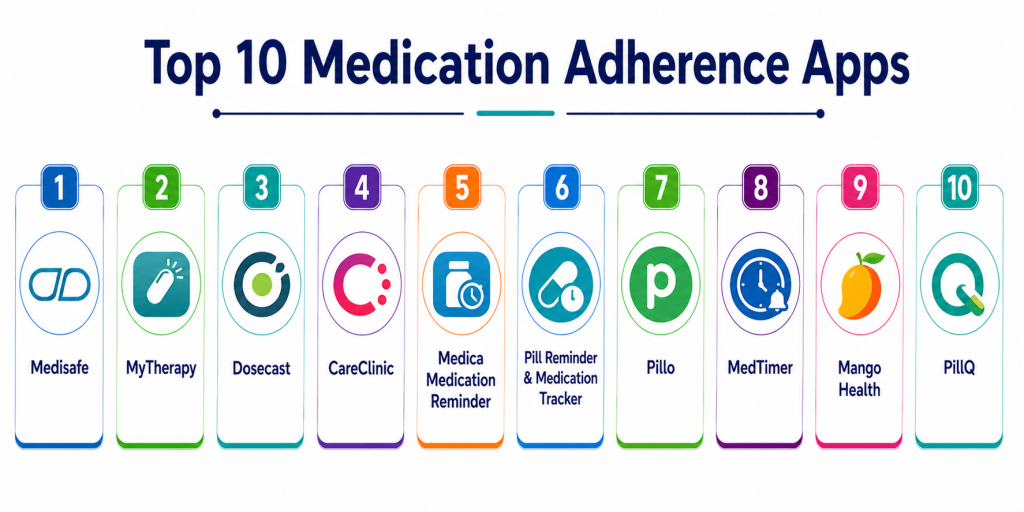
Top 10 Medication Adherence Apps
#1 — Medisafe
Short description: Medisafe is one of the most popular medication adherence apps globally. It provides personalized reminders, drug interaction warnings, and health tracking features. The app includes caregiver notifications and detailed adherence reports. Known for its intuitive interface and strong feature set. Suitable for patients with complex medication schedules. It also integrates with wearable devices and health apps.
Key Features
- Smart medication reminders
- Drug interaction warnings
- Caregiver alerts
- Adherence reports
- Health tracking
- Wearable integration
Pros
- User-friendly interface
- Comprehensive feature set
Cons
- Premium features require subscription
- Notifications may feel frequent
Platforms / Deployment
iOS / Android
Cloud
Security & Compliance
Encryption, secure data storage
Not publicly stated certifications
Integrations & Ecosystem
Integrates with health apps and devices.
- Apple Health
- Wearables
- APIs
Support & Community
Strong global user base and support.
#2 — MyTherapy
Short description: MyTherapy combines medication reminders with health tracking and journaling features. It supports tracking symptoms, measurements, and adherence patterns. Known for its holistic approach to health management.
Key Features
- Medication reminders
- Health tracking
- Symptom journaling
- Adherence reports
- Offline support
- Data export
Pros
- Free to use
- Comprehensive tracking
Cons
- UI could improve
- Limited advanced integrations
Platforms / Deployment
iOS / Android
Cloud
Security & Compliance
Encryption
Not publicly stated certifications
Integrations & Ecosystem
Supports integration with health apps.
- APIs
- Health tracking tools
Support & Community
Good community support.
#3 — Dosecast
Short description: Dosecast is a reliable medication reminder app known for its flexible scheduling options. It supports complex dosing schedules and works offline. Suitable for users with varied medication routines.
Key Features
- Flexible reminders
- Offline functionality
- Multiple medication tracking
- Custom schedules
- Sync across devices
Pros
- Works offline
- Highly customizable
Cons
- Basic interface
- Limited analytics
Platforms / Deployment
iOS / Android
Cloud / Offline
Security & Compliance
Encryption
Not publicly stated certifications
Integrations & Ecosystem
Limited integrations.
Support & Community
Moderate support.
#4 — CareClinic
Short description: CareClinic is a comprehensive health management app that includes medication adherence features. It offers symptom tracking, wellness planning, and reporting tools. Suitable for chronic disease management.
Key Features
- Medication reminders
- Symptom tracking
- Health journaling
- Reports and analytics
- Wellness plans
Pros
- Multi-purpose health app
- Strong reporting
Cons
- Learning curve
- Premium features locked
Platforms / Deployment
iOS / Android
Cloud
Security & Compliance
Encryption
Supports compliance frameworks
Integrations & Ecosystem
Integrates with health apps.
Support & Community
Good support.
#5 — Medica Medication Reminder
Short description: Medica is a simple medication reminder app focused on ease of use. It provides basic reminder and tracking features. Suitable for users needing straightforward functionality.
Key Features
- Medication reminders
- Tracking
- Notifications
- Simple interface
Pros
- Easy to use
- Lightweight
Cons
- Limited features
- No advanced analytics
Platforms / Deployment
Android
Cloud
Security & Compliance
Varies / N/A
Integrations & Ecosystem
Limited integrations.
Support & Community
Basic support.
#6 — Pill Reminder & Medication Tracker
Short description: This app offers essential medication reminder features with a focus on simplicity. It helps users track adherence and receive timely alerts. Suitable for basic needs.
Key Features
- Reminder alerts
- Tracking
- Simple UI
- Notifications
Pros
- Easy setup
- Lightweight
Cons
- Limited advanced features
- Minimal integrations
Platforms / Deployment
Android / iOS
Cloud
Security & Compliance
Varies / N/A
Integrations & Ecosystem
Limited ecosystem.
Support & Community
Basic support.
#7 — Pillo
Short description: Pillo combines a smart pill dispenser with a digital app to improve adherence. It provides reminders and automates dispensing. Suitable for elderly users.
Key Features
- Smart dispensing
- Reminders
- Caregiver alerts
- Tracking
- Automation
Pros
- Hardware integration
- Improves adherence for elderly
Cons
- Requires device purchase
- Higher cost
Platforms / Deployment
Mobile + Device
Hybrid
Security & Compliance
Encryption
Not publicly stated certifications
Integrations & Ecosystem
Integrates with hardware devices.
Support & Community
Moderate support.
#8 — MedTimer
Short description: MedTimer is a simple medication reminder app with customizable alerts. It focuses on ease of use and reliability. Suitable for basic adherence needs.
Key Features
- Custom reminders
- Tracking
- Notifications
- Simple UI
Pros
- Easy to use
- Lightweight
Cons
- Limited features
- No analytics
Platforms / Deployment
Android
Cloud
Security & Compliance
Varies / N/A
Integrations & Ecosystem
Limited integrations.
Support & Community
Basic support.
#9 — Mango Health
Short description: Mango Health uses gamification to improve medication adherence. It rewards users for taking medications on time. Suitable for users who benefit from motivational tools.
Key Features
- Medication reminders
- Gamification rewards
- Tracking
- Notifications
- Health tips
Pros
- Engaging design
- Motivational features
Cons
- Limited advanced tools
- Availability may vary
Platforms / Deployment
iOS / Android
Cloud
Security & Compliance
Encryption
Not publicly stated certifications
Integrations & Ecosystem
Limited integrations.
Support & Community
Moderate support.
#10 — PillQ
Short description: PillQ is a modern medication tracking app offering reminders and adherence tracking. It focuses on simplicity and usability. Suitable for everyday users.
Key Features
- Medication reminders
- Tracking
- Notifications
- Simple UI
Pros
- User-friendly
- Lightweight
Cons
- Limited advanced features
- Smaller ecosystem
Platforms / Deployment
iOS / Android
Cloud
Security & Compliance
Encryption
Not publicly stated certifications
Integrations & Ecosystem
Limited integrations.
Support & Community
Growing support.
Comparison Table
| Tool Name | Best For | Platform(s) Supported | Deployment | Standout Feature | Public Rating |
|---|---|---|---|---|---|
| Medisafe | Advanced users | iOS, Android | Cloud | Smart reminders | N/A |
| MyTherapy | Health tracking | iOS, Android | Cloud | All-in-one health | N/A |
| Dosecast | Flexible schedules | iOS, Android | Hybrid | Offline support | N/A |
| CareClinic | Chronic care | iOS, Android | Cloud | Health analytics | N/A |
| Medica | Simple use | Android | Cloud | Ease of use | N/A |
| Pill Reminder | Basic needs | iOS, Android | Cloud | Simplicity | N/A |
| Pillo | Elderly users | Mobile + Device | Hybrid | Smart dispenser | N/A |
| MedTimer | Basic reminders | Android | Cloud | Custom alerts | N/A |
| Mango Health | Engagement | iOS, Android | Cloud | Gamification | N/A |
| PillQ | Everyday users | iOS, Android | Cloud | Simplicity | N/A |
Evaluation & Scoring of Medication Adherence Apps
| Tool Name | Core (25%) | Ease (15%) | Integrations (15%) | Security (10%) | Performance (10%) | Support (10%) | Value (15%) | Weighted Total |
|---|---|---|---|---|---|---|---|---|
| Medisafe | 9 | 9 | 8 | 8 | 9 | 8 | 8 | 8.5 |
| MyTherapy | 8 | 9 | 7 | 8 | 8 | 8 | 9 | 8.3 |
| Dosecast | 8 | 8 | 6 | 8 | 8 | 7 | 9 | 7.9 |
| CareClinic | 9 | 7 | 7 | 8 | 8 | 7 | 8 | 8.0 |
| Medica | 6 | 9 | 5 | 6 | 7 | 6 | 9 | 7.2 |
| Pill Reminder | 6 | 9 | 5 | 6 | 7 | 6 | 9 | 7.2 |
| Pillo | 8 | 7 | 7 | 8 | 8 | 7 | 7 | 7.8 |
| MedTimer | 6 | 9 | 5 | 6 | 7 | 6 | 9 | 7.2 |
| Mango Health | 7 | 8 | 6 | 7 | 7 | 6 | 8 | 7.4 |
| PillQ | 6 | 9 | 5 | 6 | 7 | 6 | 9 | 7.2 |
How to interpret scores:
- Apps with higher scores offer better overall functionality
- Advanced apps excel in features and integrations
- Simple apps score high in ease of use and value
- Choose based on your personal needs rather than total score
Which Medication Adherence App Is Right for You?
Solo Users
Medisafe or MyTherapy for comprehensive features.
Elderly Users
Pillo for automation and caregiver support.
Budget Users
MyTherapy or Dosecast for free or affordable options.
Advanced Users
CareClinic for detailed tracking and analytics.
Feature Depth vs Ease of Use
Feature-rich: Medisafe, CareClinic
User-friendly: Pill Reminder, Medica
Integrations & Scalability
Best: Medisafe
Moderate: MyTherapy
Security & Compliance Needs
High security: Medisafe
Moderate: Basic apps
Frequently Asked Questions (FAQs)
1. What are medication adherence apps?
Medication adherence apps are tools that help users take medications on time. They provide reminders and tracking features. They improve consistency. They reduce missed doses. They enhance health outcomes.
2. Why are these apps important?
They help prevent missed doses and improve treatment effectiveness. They are useful for chronic conditions. They support caregivers. They improve patient safety. They enhance overall health management.
3. Are these apps secure?
Most apps include encryption and basic security features. Security varies by app. Always check privacy policies. Choose apps with strong data protection. Data security is important.
4. Are medication apps free?
Many apps offer free versions. Premium features may require payment. Pricing varies by app. Free apps often provide basic functionality. Evaluate features before choosing.
5. Can these apps integrate with devices?
Some apps integrate with wearables and health devices. This improves tracking. It enables real-time updates. Integration varies by app. Choose based on your needs.
6. What are the benefits of using these apps?
They improve adherence, reduce errors, and enhance health outcomes. They automate reminders. They track progress. They support caregivers. They improve overall health management.
7. How easy are these apps to use?
Most apps are designed for simplicity. They offer intuitive interfaces. Setup is quick. Advanced features may require learning. Choose based on comfort level.
8. Can caregivers use these apps?
Yes, many apps allow caregiver access. They provide notifications and updates. This improves monitoring. It helps elderly patients. It enhances support systems.
9. What should you consider when choosing an app?
Consider features, ease of use, security, and cost. Check compatibility with devices. Evaluate reminder customization. Choose based on your needs.
10. Do these apps improve health outcomes?
Yes, they improve adherence and consistency. This leads to better treatment results. They reduce missed doses. They enhance patient safety. They support better health management.
Conclusion
Medication Adherence Apps have become essential tools for improving patient outcomes in a world where managing multiple prescriptions is increasingly common. By combining reminders, tracking, and integration with health ecosystems, these apps help users stay consistent with their treatment plans. Solutions like Medisafe and MyTherapy offer comprehensive capabilities, while simpler apps such as Pill Reminder and MedTimer provide easy-to-use options for basic needs. The best app depends on individual requirements, including complexity of medication schedules, need for caregiver support, and desired level of tracking. Instead of choosing purely based on features, users should test a few apps and evaluate usability, reliability, and comfort. A well-chosen medication adherence app can significantly improve consistency, reduce health risks, and support better long-term wellness.
Very informative guide for people looking for reliable apps to manage prescriptions, reminders, and medication schedules effectively.
Very informative comparison showing how medication reminder apps improve treatment consistency and daily health management efficiently.