Introduction
Car Rental Management Software helps businesses manage vehicle rentals, bookings, fleet operations, customer data, and billing from a centralized platform. Instead of handling reservations manually, these systems automate scheduling, vehicle tracking, pricing, and reporting, making operations more efficient and scalable.
As mobility services grow and customer expectations increase, rental businesses need real-time visibility, automation, and seamless digital experiences. Modern platforms include features like dynamic pricing, fleet tracking, mobile access, and integrations with payment and accounting systems, making them essential for both small rental agencies and large fleet operators.
Common use cases include:
- Managing vehicle bookings and reservations
- Tracking fleet availability and maintenance
- Automating billing, invoicing, and payments
- Monitoring driver and customer data
- Running multi-location rental operations
What buyers should evaluate:
- Ease of use and booking workflow
- Fleet and inventory management features
- Pricing flexibility and automation
- Integration with accounting and payment systems
- Reporting and analytics capabilities
- Mobile access and real-time tracking
- Scalability across locations
- Customer management tools
- Security and data protection
Best for: Car rental agencies, fleet operators, travel companies, and mobility startups managing multiple vehicles and bookings.
Not ideal for: Individuals or very small operators with limited vehicles who can manage bookings manually.
Key Trends in Car Rental Management Software
- Dynamic pricing for rentals based on demand
- GPS-based real-time vehicle tracking
- Contactless rentals using mobile apps
- Integrated payment and billing systems
- Subscription-based rental models
- Predictive maintenance using analytics
- Multi-location fleet management
- API-based integrations for scalability
- Automated invoicing and compliance workflows
- Sustainability tracking for fleet efficiency
How We Selected These Tools (Methodology)
- Evaluated market adoption and industry presence
- Assessed fleet management and booking capabilities
- Compared ease of use and onboarding experience
- Reviewed scalability for multi-location businesses
- Considered integration ecosystem and APIs
- Evaluated automation and reporting features
- Checked mobile accessibility and real-time tracking
- Considered customer support and reliability
- Balanced tools for SMBs and enterprise users
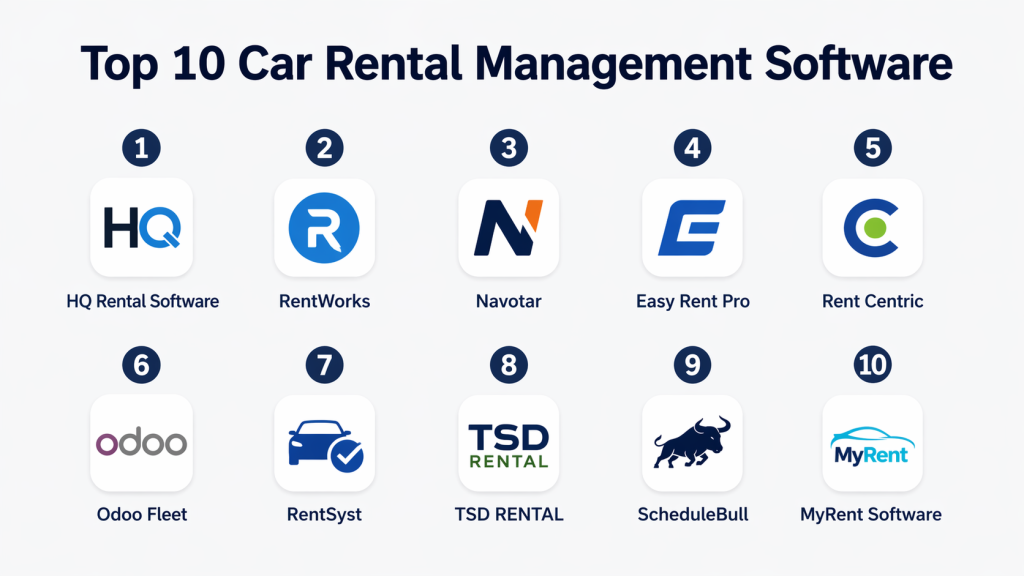
Top 10 Car Rental Management Software
#1 — HQ Rental Software
Short description: HQ Rental Software is a cloud-based platform designed for car rental businesses of all sizes. It helps manage bookings, fleet operations, and customer data efficiently. The platform focuses on automation and ease of use for daily operations.
Key Features
- Reservation and booking management
- Fleet tracking and availability
- Online booking engine
- Pricing and invoicing automation
- Multi-location support
- Reporting dashboards
Pros
- Easy to use interface
- Strong automation features
Cons
- Limited advanced analytics
- Customization options may be limited
Platforms / Deployment
Web
Cloud
Security & Compliance
Not publicly stated
Integrations & Ecosystem
Supports integrations with business tools.
- Payment gateways
- Accounting systems
- APIs
Support & Community
Standard support with onboarding assistance.
#2 — RentWorks
Short description: RentWorks is an enterprise-grade rental management system built for large fleet operations. It offers advanced tools for reservations, accounting, and fleet control. It is best suited for organizations with complex workflows.
Key Features
- Advanced reservation system
- Fleet and asset management
- Accounting integration
- Reporting tools
- Multi-location operations
Pros
- Suitable for large enterprises
- Robust feature set
Cons
- Complex setup
- Requires training
Platforms / Deployment
Web / Windows
Cloud / On-premise
Security & Compliance
Not publicly stated
Integrations & Ecosystem
Supports enterprise integrations.
- Accounting tools
- APIs
Support & Community
Enterprise-level support available.
#3 — Navotar
Short description: Navotar is a cloud-based rental management solution designed for small to mid-sized businesses. It simplifies booking processes, fleet tracking, and customer management. The platform is known for its affordability and quick setup.
Key Features
- Online booking system
- Fleet management
- Customer database
- Billing and invoicing
- Reporting tools
Pros
- Affordable pricing
- Easy setup
Cons
- Limited scalability
- Basic reporting features
Platforms / Deployment
Web
Cloud
Security & Compliance
Not publicly stated
Integrations & Ecosystem
Supports integrations with essential tools.
- Payment systems
- APIs
Support & Community
Good documentation and support.
#4 — Easy Rent Pro
Short description: Easy Rent Pro is a feature-rich software designed for rental businesses needing detailed fleet and booking management. It supports both small and large operations. The platform offers flexibility in deployment and customization.
Key Features
- Reservation management
- Fleet tracking
- Customer management
- Pricing control
- Reporting tools
Pros
- Feature-rich capabilities
- Flexible deployment
Cons
- Interface may feel outdated
- Learning curve for new users
Platforms / Deployment
Web / Windows
Cloud / On-premise
Security & Compliance
Not publicly stated
Integrations & Ecosystem
Supports business integrations.
- Accounting tools
- APIs
Support & Community
Standard support with training resources.
#5 — Rent Centric
Short description: Rent Centric is a modern cloud-based solution offering real-time fleet tracking and booking management. It is designed for growing businesses that need automation and visibility. The platform emphasizes ease of use and efficiency.
Key Features
- Real-time fleet tracking
- Online booking engine
- Automated billing
- Mobile access
- Reporting dashboards
Pros
- Modern and clean interface
- Strong tracking capabilities
Cons
- Limited advanced customization
- Pricing varies
Platforms / Deployment
Web / Mobile
Cloud
Security & Compliance
Not publicly stated
Integrations & Ecosystem
Supports integrations with core systems.
- Payment gateways
- APIs
Support & Community
Responsive support and onboarding.
#6 — Odoo Fleet (with Rental module)
Short description: Odoo provides a modular business platform with fleet and rental management capabilities. It allows businesses to manage operations from a single system. It is ideal for those seeking an all-in-one solution.
Key Features
- Fleet management
- Rental booking
- Accounting integration
- CRM integration
- Reporting tools
Pros
- All-in-one platform
- Highly customizable
Cons
- Requires setup effort
- Can be complex for beginners
Platforms / Deployment
Web / Mobile
Cloud / Self-hosted
Security & Compliance
Role-based access, encryption
Compliance: Not publicly stated
Integrations & Ecosystem
Extensive ecosystem.
- CRM
- Accounting
- APIs
Support & Community
Strong community and documentation.
#7 — RentSyst
Short description: RentSyst is a cloud-based rental management system focused on simplicity and automation. It helps small businesses manage bookings and fleet operations efficiently. The platform is designed for quick adoption.
Key Features
- Booking management
- Fleet tracking
- Pricing automation
- Reporting tools
- Customer management
Pros
- Easy to use
- Cost-effective
Cons
- Limited enterprise features
- Basic integrations
Platforms / Deployment
Web
Cloud
Security & Compliance
Not publicly stated
Integrations & Ecosystem
Basic integrations available.
- Payment tools
- APIs
Support & Community
Standard support and documentation.
#8 — TSD RENTAL
Short description: TSD RENTAL is an enterprise-level rental management solution designed for large-scale operations. It supports complex workflows and integrations. The platform is suitable for businesses with advanced needs.
Key Features
- Reservation system
- Fleet management
- Accounting integration
- Analytics tools
- Multi-location support
Pros
- Enterprise-grade features
- Strong reporting capabilities
Cons
- Complex implementation
- Higher cost
Platforms / Deployment
Web / Windows
Cloud / On-premise
Security & Compliance
Not publicly stated
Integrations & Ecosystem
Supports enterprise integrations.
- Accounting systems
- APIs
Support & Community
Dedicated enterprise support.
#9 — ScheduleBull
Short description: ScheduleBull is a cloud-based platform designed for small rental businesses. It offers simple tools for managing bookings and fleet operations. The platform is best for teams looking for quick setup and ease of use.
Key Features
- Booking calendar
- Fleet tracking
- Customer management
- Reporting tools
- Billing features
Pros
- Simple and clean interface
- Fast setup
Cons
- Limited advanced features
- Not suitable for large fleets
Platforms / Deployment
Web
Cloud
Security & Compliance
Not publicly stated
Integrations & Ecosystem
Limited integrations.
- Payment tools
Support & Community
Basic support and documentation.
#10 — MyRent Software
Short description: MyRent Software is a cloud-based rental management platform that helps businesses manage bookings, fleet, and billing. It supports multi-location operations and automation. The platform is suitable for growing businesses.
Key Features
- Reservation management
- Fleet tracking
- Automated billing
- Reporting tools
- Multi-location support
Pros
- Scalable for growing businesses
- Good automation features
Cons
- Interface improvements needed
- Integration depth varies
Platforms / Deployment
Web
Cloud
Security & Compliance
Not publicly stated
Integrations & Ecosystem
Supports integrations.
- Payment systems
- APIs
Support & Community
Standard support with onboarding help.
Frequently Asked Questions (FAQs)
Q1: What is car rental management software?
It is a system that helps manage bookings, fleet operations, and billing for rental businesses.
Q2: How much does it cost?
Pricing varies depending on features, users, and business size.
Q3: Can small businesses use it?
Yes, many tools are designed specifically for small rental agencies.
Q4: Does it support online bookings?
Most modern tools include online booking systems.
Q5: Can it track vehicles?
Yes, many platforms offer fleet tracking features.
Q6: Is it secure?
Security features vary; most include basic protections.
Q7: Does it integrate with accounting tools?
Yes, many tools support integrations with finance systems.
Q8: How long does setup take?
It can range from a few hours to several weeks.
Q9: Can it scale with my business?
Yes, many platforms support multi-location expansion.
Q10: What are common mistakes when choosing software?
Ignoring scalability and integration needs.
Conclusion
Car rental management software has become essential for businesses aiming to streamline operations and improve customer experience. These platforms bring together booking management, fleet tracking, billing, and reporting into a single system, reducing manual work and increasing efficiency. The right solution depends on your business size and operational complexity. Smaller teams often benefit from simple and affordable tools, while larger enterprises require advanced features and integrations. Modern platforms continue to evolve with automation, real-time tracking, and improved user experiences. These capabilities help businesses stay competitive and responsive to customer needs.