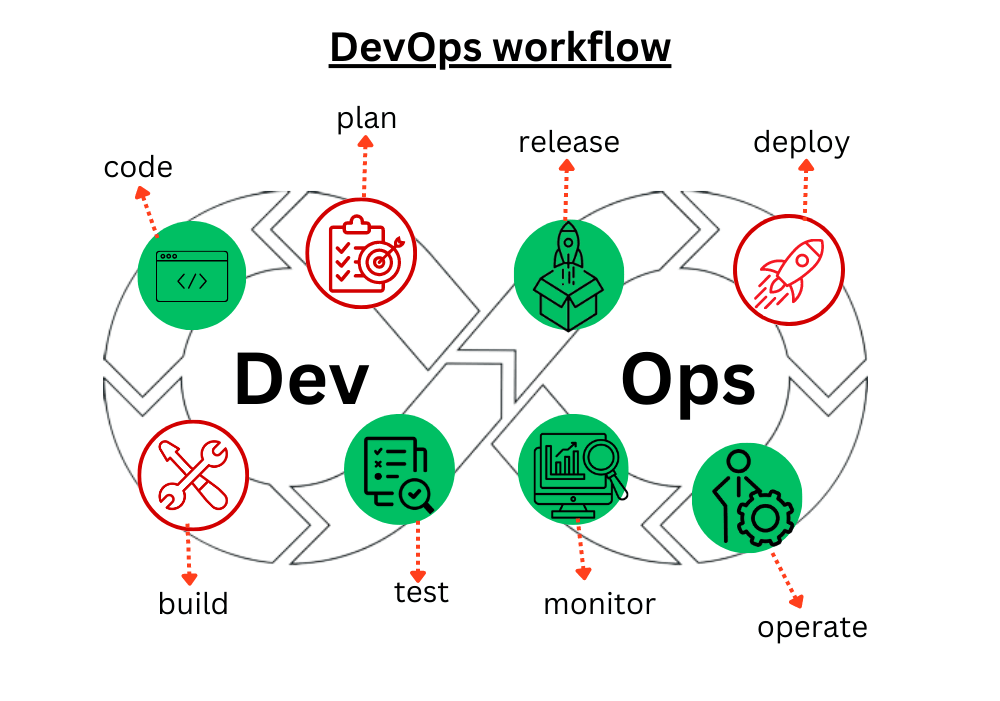
Introduction
In the world of modern finance and stock market analysis, we often look at a company’s revenue, debt, and market share. However, in the 21st century, a company’s true value is increasingly found in its “Digital Velocity”—how fast it can turn an idea into a profitable digital product. Companies that move slowly lose market value; companies that automate win. This is why the Certified DevOps Professional (CDP) has become a critical metric not just for engineering teams, but for the financial health of the organizations they support.
When you earn a CDP, you are mastering the art of “Operational Efficiency.” From an investor’s perspective, a team of CDP-certified engineers represents a lower risk. It means the company can release features faster than its competitors, recover from outages in minutes rather than hours, and manage cloud costs with precision. For the individual engineer, this certification is a high-yield investment in your own “Human Capital,” ensuring your skills remain in demand regardless of how the market fluctuates.
Strategic Certification Matrix
What are the core pillars of the Certified DevOps Professional (CDP) investment?
The CDP is a structured roadmap designed to maximize the “Output-per-Engineer.” It covers the entire technical supply chain, ensuring that there are no bottlenecks between the development of an application and its delivery to the end consumer. It is the gold standard for those who want to be the most valuable assets in a tech-driven economy.
| Track | Level | Who it’s for | Prerequisites | Skills Covered | Recommended Order | Official Link |
| DevOps | Strategic Professional | Market-Driven Engineers, Tech Leads | IT & Infrastructure Basics | CI/CD, K8s, Cloud Economics, Automation | Core Investment | Certified DevOps Professional |
Why DevOpsSchool is the Premium Choice for Your Training?
Why do serious professionals choose DevOpsSchool for their certification?
In a market saturated with “cheap” learning options, DevOpsSchool represents the “Premium Grade.” They understand that professional time is a limited resource. Their curriculum is designed to provide the highest return on your time (ROT). They don’t just teach tools; they teach the business logic of DevOps. This ensures that when you finish the program, you don’t just know how to run a command, but you know how to improve a company’s bottom line using technology.
How does the DevOpsSchool ecosystem provide long-term dividends?
Investing in a CDP at DevOpsSchool gives you access to a “Life-Time Asset.” Through their library and community, you receive continuous updates on industry trends. As the “Market” for technology changes, your access to their updated resources ensures your skills don’t depreciate. Their cloud labs provide a safe place to practice “High-Stakes” engineering scenarios, so you are fully prepared when the pressure is on in a real production environment.
Deep-Dive into the CDP: Maximizing Technical Value
What makes the Certified DevOps Professional (CDP) a high-value asset?
The CDP is built on the principle of “Eliminating Waste.” In manufacturing, waste is a physical product; in software, waste is time. This certification teaches you how to identify and remove every manual step in the software delivery process. By mastering the “Full Stack” of automation, you become a one-person engineering powerhouse capable of managing systems that used to require entire departments.
Who is the target demographic for this professional upgrade?
This is for the “Growth-Oriented” professional. If you are a Software Engineer looking to double your market value, or a System Administrator looking to pivot into the high-paying world of Site Reliability Engineering, this is your path. It is also essential for Technical Project Managers and FinOps practitioners who need to understand the technical “Moving Parts” to accurately forecast budgets and timelines.
What specific technical competencies will you master?
- Cloud Economics & Resource Optimization: Learning how to design systems that use the minimum amount of cloud resources to achieve the maximum output.
- Continuous Delivery Architecture: Building the automated “Conveyor Belt” that carries code from the developer’s laptop to the global market safely.
- Elastic Container Orchestration: Mastering Kubernetes to ensure that your application can handle 100 users or 100 million users with the same level of stability.
- Data-Driven Observability: Using logs and metrics as “Market Data” to make informed decisions about system performance and user experience.
- Immutable Infrastructure: Learning how to treat servers like “Assets” that are easily replaced and upgraded, rather than “Fixed Assets” that require manual maintenance.
What real-world “Business Wins” can you achieve after certification?
- Accelerated Time-to-Revenue: You will have the skills to get new products to market faster, allowing your company to capture market share before its competitors.
- Significant Cost Reduction: By implementing automated scaling and efficient resource management, you can help your organization slash its cloud bill by 30% or more.
- Mitigated Operational Risk: Through automated testing and “Shift-Left” security, you reduce the chance of a catastrophic system failure that could damage the company’s reputation and stock price.
What is the “7–14 Days” High-Intensity Sprint for the CDP?
How can an expert validate their skills in a short timeframe?
This plan is designed for the “Senior Architect.” Spend the first 5 days mapping your existing “Tribal Knowledge” to the formal CDP standards. Focus the next 5 days on the “Cloud-Native” stack (Docker & K8s) and the final 4 days on simulating production failures in the lab to test your recovery speed. This is about turning your “Experience” into a “Documented Credibility.”
What is the “30-Day Professional” growth roadmap?
How do you manage a “Career Portfolio” while working full-time?
This plan is about “Compound Interest.” By dedicating 90 minutes a day, you build a massive amount of knowledge over 30 days. Spend Week 1 on Git and CI/CD logic. Week 2 on Containerization. Week 3 on Infrastructure as Code. Week 4 on Monitoring and the Final Exam. This steady investment ensures that the knowledge “Sticks” and becomes part of your professional DNA.
What is the “60-Day Mastery” plan for career transitioners?
How do you build “Wealth” in a new technical field from scratch?
In the first 30 days, you must master the “Commodity Skills”—Linux, Networking, and Scripting. These are the bedrock of the entire industry. In the second 30 days, move into the “Value-Add Skills”—Kubernetes, Terraform, and Jenkins. By Day 60, you will have moved from “Newcomer” to “Certified Professional,” ready to compete for high-paying roles in the global market.
What are the common “Investment Mistakes” to avoid in your CDP journey?
Why do some engineers fail to see a return on their certification?
The biggest mistake is “Tool Speculation”—trying to learn every new tool that appears on Twitter. Stick to the “Blue Chip” tools taught in the CDP (K8s, Docker, Terraform). Another mistake is “Passive Learning”—watching videos without getting your hands dirty in the labs. Finally, don’t ignore the “FinOps” side; an engineer who doesn’t care about the cloud bill is a liability to the company.
What is the logical career trajectory after earning your CDP?
How do you move from “Technical Expert” to “Strategic Leader”?
- Technical Growth: Move into SRE (Site Reliability Engineering) to manage the “Big Data” of infrastructure.
- Strategic Growth: Move into DevSecOps to manage the “Risk Portfolio” of the company’s software.
- Managerial Growth: Move into Director of Infrastructure or CTO roles, where you use your CDP knowledge to drive the company’s entire digital strategy.
Choosing Your Specialization Path
How do you diversify your technical skill set for maximum marketability?
- DevOps: The “Standard Portfolio” for those who want to be versatile and valuable in any tech company.
- DevSecOps: The “High-Security Bond” for those who want to work in finance, government, or healthcare.
- SRE: The “Quant” of the engineering world, focusing on data, reliability, and extreme scale.
- AIOps: The “Growth Stock” of the future, using machine learning to manage infrastructure.
- DataOps: For those who want to be at the center of the “Big Data” revolution.
- FinOps: The “Controller” path, focusing on the financial optimization of the cloud.
Role-to-Certification Mapping
Which credentials will give you the best “Return on Education” for your role?
- Senior Developer: CDP + Kubernetes Application Developer (CKAD).
- Systems Engineer: CDP + Terraform Associate + AWS/Azure SysOps.
- DevOps Manager: CDP + Certified DevOps Leader + FinOps Practitioner.
- Security Architect: DevSecOps Professional + Cloud Security Expert.
- VP of Technology: Certified DevOps Leader + Engineering Management Professional.
Your Growth Roadmap Beyond the CDP
How do you stay “Ahead of the Market” as an engineer?
Once you have the CDP foundation, you must continue to diversify. I recommend a “Layered” approach to your professional development:
- Core Asset: Master the CDP.
- Growth Asset: Deep-dive into Advanced Kubernetes Operations.
- Hedge Asset: Master Certified DevSecOps Engineer to protect your career against security-driven market shifts.
- Leadership Asset: Earn the Engineering Management Professional to move into the “Boardroom” of technology.
Premium Institutions for Your Training
Who are the best “Investment Advisors” for your technical career?
- DevOpsSchool: The market leader in providing practical, hands-on DevOps education that translates directly into career growth.
- Cotocus: A specialized boutique training provider focused on the high-end niches of Cloud and Platform Engineering.
- ScmGalaxy: The “Public Exchange” of DevOps knowledge, offering a massive community and wealth of open-source resources.
- BestDevOps: Focuses on the “Intangible Assets” of DevOps—the culture and people skills that make automation work.
- devsecopsschool.com: The gold standard for those who want to specialize in the high-stakes world of automated security.
Essential FAQs for the Career Investor
Is the CDP certification recognized by global recruitment agencies?
Answer: Yes. Recruiters in major tech hubs (Silicon Valley, Bangalore, London) recognize the CDP as a mark of a professional who understands the full software lifecycle, not just a single tool.
Does the CDP focus on cost optimization?
Answer: Yes. A significant portion of the CDP curriculum focuses on building efficient systems, which is the foundation of FinOps.
How much coding is actually required?
Answer: You don’t need to be a software developer, but you should be comfortable with “Logical Scripting.” If you can understand the logic of an “If-Then” statement, you can succeed in the CDP.
Can I take the CDP if I have a “Non-Traditional” background?
Answer: Absolutely. In fact, people with diverse backgrounds often make the best DevOps professionals because they bring a different perspective to problem-solving.
Is there a focus on the “ROI” of tools?
Answer: Yes. We teach you how to choose the right tool for the job based on the company’s needs and budget, not just because a tool is “popular.”
What is the difference between a “Junior” and a “CDP Certified” pro?
Answer: A Junior knows how to use a tool. A CDP Certified pro knows when and why to use it to achieve a business goal.
How does DevOpsSchool handle lab failures?
Answer: We view failures as “Market Lessons.” Our mentors help you understand why a lab failed so you can avoid the same mistake in a real production environment.
Is the exam harder than a standard cloud cert?
Answer: It is “Different.” It is more practical. It tests your ability to think like an engineer, not just your ability to memorize a multiple-choice answer.
Will this help me with “Freelancing”?
Answer: Yes! DevOps is one of the highest-paid consulting niches. The CDP provides the credibility you need to win high-value contracts.
Does the course cover the latest versions of Kubernetes?
Answer: Yes. We track the “Market Updates” of every major tool and update our labs and videos accordingly.
Is there a community for networking?
Answer: Yes, the ScmGalaxy community is full of CDP professionals who share job leads and technical advice every day.
What is the “First Step” to take?
Answer: Sign up for the CDP foundation and commit to the “30-Day Professional” plan. Consistency is the key to wealth and knowledge.
Voices of Success
Siddharth
“I used to feel stuck in a ‘Dead-End’ sysadmin job. The CDP was my ‘IPO’—it launched my career into a whole new bracket. I’m now a Lead DevOps Engineer at a global fintech firm.”
Nisha
“As a developer, I was always worried about the ‘Market Value’ of my coding skills. The CDP gave me the ‘Cloud Diversification’ I needed. I’m now much more confident about my long-term career.”
Abhishek
“DevOpsSchool didn’t just teach me tools; they taught me how to save my company money. That’s what helped me get my latest promotion. I’m now seen as a strategic asset, not just a technician.”
Kavya
“The focus on security and reliability in the CDP made me a better architect. I now build systems that stay online and stay safe, which is exactly what my clients are looking for.”
Rohan
“If you’re looking for the best ‘Return on Education,’ the CDP is it. It’s practical, it’s fast-paced, and it pays for itself almost immediately. It’s the best investment I’ve ever made.”
Conclusion
In the fluctuating market of technology, the Certified DevOps Professional (CDP) is your “Blue Chip” asset. It is a certification that provides immediate value, long-term stability, and the flexibility to move into any sector of the economy. By mastering the art of automation and the science of delivery, you are ensuring that your career remains profitable and impactful for decades to come. Don’t just work in the cloud—own your place in it.