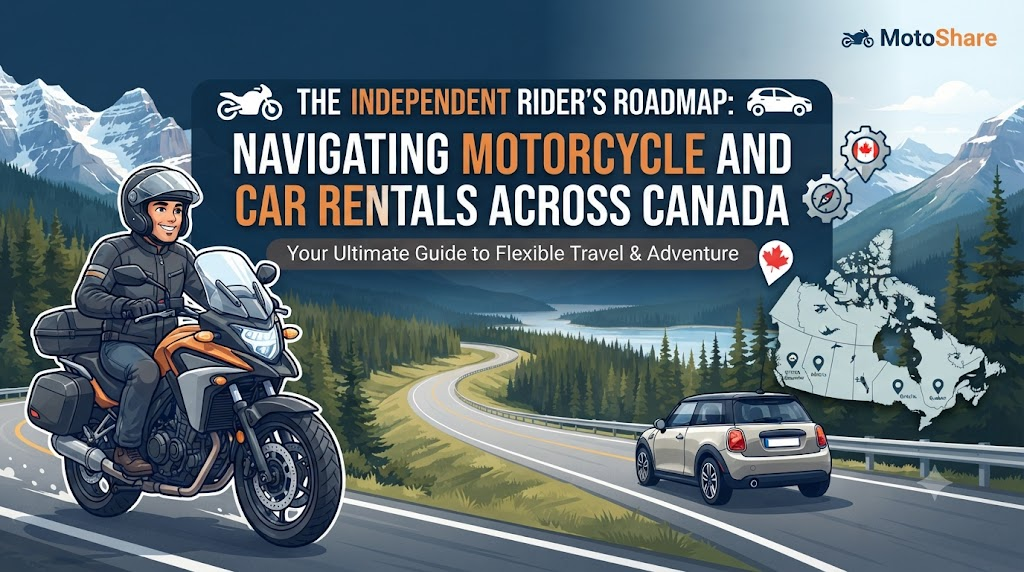
Renting a vehicle gives travellers freedom that scheduled flights, trains, and tour buses cannot match. Across Canada, vast distances connect vibrant metropolitan areas with rugged mountain ranges, coastal highways, and quiet prairie routes. Whether you are an experienced rider seeking weekend mountain curves, a newcomer navigating a major city, or a family organizing a cross-country vacation, temporary wheels offer flexible, point-to-point independence.
Platforms such as MotoShare simplify this journey. Operating as a dedicated vehicle-rental marketplace in Canada, the service connects travellers with local vehicle providers. By bringing options together in one central place, riders and drivers can browse listings by location, select their travel dates, and compare distinct models. Having clear options upfront helps anyone plan realistic budgets, understand regional driving rules, and match the right vehicle to their intended route.
Understanding the MotoShare Marketplace
Traditional rental counters often limit choice to standard passenger sedans or SUVs. In contrast, MotoShare operates as an open marketplace connecting independent renters directly with local providers across Canadian communities.
Users can search available inventory based on specific dates and pick-up spots. Instead of guessing what might be parked on a rental lot, travellers can review detailed vehicle profiles before committing. The platform focuses heavily on two-wheeled transportation—ranging from lightweight city runabouts to long-distance touring models—while also providing car hire options. Alongside individual listings, users can review essential details such as local provider requirements, estimated costs, coverage rules, and regional destination ideas.
Why People Choose Rental Vehicles
Travellers book temporary vehicles for many reasons:
- Flexible Sightseeing: Public transit works well within downtown cores, but natural landmarks, national parks, and remote trailheads require private transportation.
- Specialized Riding Experiences: Many motorcycle enthusiasts own commuter bikes at home but prefer a specialized model—such as a heavy cruiser or off-road adventure bike—when tackling new terrain.
- Cost-Effective Short-Term Travel: Owning, registering, insuring, and maintaining a vehicle year-round in Canada carries high fixed costs. Renting lets residents and seasonal visitors pay only for the exact days they spend on the road.
- Business and Relocation Trips: Professionals visiting another province for project work often need private wheels for client meetings outside transit corridors.
Every trip demands a balance between budget, driving distance, terrain, and weather conditions. Understanding these factors makes choosing between a motorcycle and a passenger car much simpler.
Touring Canada: Bikes, Cars, and Regional Routes
Canada’s provinces differ significantly in road conditions, elevation, and seasonal weather patterns. Selecting the right vehicle requires matching your travel goals to the territory you plan to visit.
Finding a Two-Wheeled Machine Across Canadian Provinces
When looking to secure a motorcycle rental Canada offers diverse opportunities depending on geography and population density. Major urban hubs feature the largest pool of listings, while regional outfitters cater to seasonal tourist corridors during late spring, summer, and early autumn.
Bike availability shifts dramatically through the year. While southern regions enjoy comfortable riding from May through October, northern and mountain areas have much shorter riding windows due to unexpected snowfall and cold snaps.
Regional Travel: From Ontario Highways to the Pacific and the Rockies
Different Canadian cities serve as gateways to distinct types of journeys:
- Southern Ontario: If you are arranging a motorcycle rental Toronto offers access to busy commuter belts, scenic rides along Lake Ontario, and winding country routes through the Kawarthas or Prince Edward County.
- The Pacific Northwest: For riders booking a motorcycle rental Vancouver serves as the starting point for coastal rainforest routes, the Sea-to-Sky corridor up to Whistler, and ferry-linked trips across Vancouver Island.
- The Prairies and Foothills: Securing a motorcycle rental Calgary provides a natural launching pad for the sweeping foothills, the badlands of Drumheller, and the iconic mountain corridors passing through Canmore and Banff.
Selecting the Right Motorcycle Category
Rental platforms generally categorize two-wheelers by their engineering and riding style:
- Commuter Motorcycles: Lightweight, fuel-efficient bikes with upright seating. Best for city streets, daily errands, and casual local exploring.
- Sports Bikes: High-performance machines built with forward-leaning ergonomics. Designed for crisp handling on paved, twisty highways, though less comfortable for full-day touring.
- Touring Motorcycles: Large-displacement engines paired with comfortable seats, broad fairings, wind protection, and built-in hard luggage. Ideal for long-haul highway travel across provinces.
- Premium Models: High-end cruisers and luxury machines featuring advanced electronic riding aids, premium finishes, and extra passenger comfort.
- Adventure Motorcycles: Built with long-travel suspension, dual-sport tires, and rugged frames. Choosing an adventure motorcycle rental Canada allows travellers to comfortably transition from smooth pavement to hard-packed gravel forestry roads.
How to Find Available Bikes in Your Area
Rather than visiting physical storefronts across town, travellers searching for a motorcycle rental near me can enter their postal code or municipal area into MotoShare to view nearby listings. Comparing multiple providers side by side reveals differences in deposit requirements, included accessories (such as saddlebags or phone mounts), and pickup points.
Reviewing Essential Rental Terms Before Reserving
Before confirming any reservation, review the rental terms carefully:
- Total Pricing and Security Deposits: Understand the base day rate plus mandatory local fees. High-performance motorcycles often require a substantial refundable security deposit on a major credit card.
- Insurance and Protection Plans: Confirm what third-party liability is provided and what deductible applies in case of accidental damage or theft.
- Mileage Limits: Some providers grant unlimited daily kilometres, while others establish daily caps (e.g., 200–300 km) with per-kilometre charges thereafter.
- Fuel Policies: Standard terms require returning the vehicle with a full tank of specified fuel (many performance motorcycles require premium 91+ octane gasoline).
- Licensing Requirements: To legally rent a motorcycle in Canada, drivers must present a valid, full motorcycle licence (such as an Ontario Class M, British Columbia Class 6, or equivalent recognized foreign licence). Graduated or learner permits are rarely accepted by rental providers.
Organizing a Memorable Canadian Road Trip
A successful motorcycle road trip Canada requires thorough pre-trip preparation. Distances between fuel stations in northern Ontario, the Canadian Shield, and Rocky Mountain passes can stretch well beyond 100 kilometres.
Riders must monitor fluctuating mountain temperatures, plan for sudden rainstorms, watch for wildlife on rural highways at dawn and dusk, and book overnight accommodation early during peak summer months. Carrying emergency tire repair kits, rain gear, and portable communication devices is strongly recommended.
Evaluating Passenger Cars for Everyday and Group Travel
While two wheels provide open-air excitement, a standard car rental Canada remains the practical choice for many itineraries. Passenger cars offer enclosed comfort during inclement weather, secure trunk space for luggage, and seating for families with young children.
When arranging a car rental Toronto visitors can easily navigate long highway stretches along the Highway 401 corridor, visit Niagara wine country, or move small groups with luggage between Toronto Pearson Airport and downtown hotels.
A Simple Vehicle-Rental Planning Process
Securing a rental through a multi-provider marketplace involves five straightforward steps:
- Select Your Destination and Vehicle Class: Decide whether your route demands a commuter car, a long-distance touring bike, or an adventure motorcycle.
- Input Dates and Local Pick-up Zones: Search by city, neighbourhood, or airport area to see active inventory during your travel window.
- Compare Listings, Costs, and Rules: Review daily rates, security deposits, mileage allowances, and host guidelines side by side.
- Confirm Licensing and Protection Details: Ensure your provincial or international driver’s licence is valid for the vehicle class, and verify insurance coverages and deductibles.
- Finalize Booking and Inspect the Vehicle: Complete the reservation, inspect the vehicle thoroughly for pre-existing scratches or tire wear at pickup, document any marks with photos, and collect the keys.
Common Rental Mistakes to Avoid
- Overlooking Insurance Fine Print: Assuming personal credit card auto policies cover two-wheeled rentals. Most standard credit card auto coverage plans explicitly exclude motorcycles and commercial vans.
- Selecting More Bike Than You Can Handle: Booking a heavy, 900-pound touring machine or a sharp, aggressive sports bike without recent riding experience can cause handling difficulties in stop-and-go traffic or tight parking spots.
- Ignoring Daily Distance Caps: Failing to track daily travel distance against contract mileage limits, leading to surprise fees at drop-off.
- Neglecting Seasonal Gear: Riding through Canadian mountain passes in July can still bring near-freezing temperatures and sudden rain; inadequate riding apparel makes long trips exhausting and unsafe.
- Missing Return Deadlines: Returning a vehicle late can trigger steep hourly penalties or invalidate agreed insurance periods.
Practical Rental Scenario: Comparing Options for an Alberta Journey
Consider a traveller planning a five-day journey starting in Calgary, heading west through Kananaskis Country, into Banff, and returning along rural secondary highways.
The rider compares a 650cc adventure motorcycle with an 1800cc heavyweight highway cruiser. Looking at the route, the traveller notes mountain elevations where high winds and sudden rain showers are common, along with some unpaved viewpoints along Smith-Dorrien Trail.
While the heavyweight cruiser offers exceptional comfort on straight four-lane highways, its weight makes low-speed gravel turnarounds difficult. The lighter adventure bike offers upright ergonomics, manageable handling on unpaved lookout roads, and sufficient windscreen protection. By verifying that the adventure bike includes lockable side panniers and a 300 km daily mileage allowance, the traveller selects the machine best suited for the varied terrain of the Canadian Rockies.
Frequently Asked Questions
Can international visitors rent a motorcycle or car in Canada?
Yes. Visitors holding a valid national driver’s licence with motorcycle endorsement can generally rent vehicles. If the domestic licence is not printed in English or French, an International Driving Permit (IDP) is usually recommended or required alongside the original licence.
What is the minimum age to rent vehicles through Canadian marketplaces?
Most vehicle providers require drivers to be at least 21 years old. For high-performance, specialty, or premium motorcycles, many rental hosts and insurance partners require drivers to be 25 years or older with several years of riding experience.
Are helmets mandatory across all Canadian provinces?
Yes. Canadian federal and provincial traffic laws require all motorcycle operators and passengers to wear an approved, certified motorcycle safety helmet (such as DOT, ECE, or Snell certified) at all times on public roads.
Can rented vehicles be driven across provincial borders?
In most cases, yes. Canadian vehicle rentals can generally be operated across provincial borders. However, you should always check the provider’s specific terms, particularly regarding roadside assistance boundaries and interprovincial mileage policies.
What happens if bad weather interrupts a motorcycle trip?
Riders must stay aware of regional weather forecasts. Because spring and autumn conditions in Canada can change rapidly, planning flexible daily distances and reserving accommodations with reasonable cancellation terms helps keep journeys safe.
Conclusion
Planning a journey across Canada requires balancing personal travel style, route conditions, and rental rules. Taking time to compare vehicle types, understand deposit and insurance terms, and check provincial licensing guidelines ensures you get the most out of your trip. By using MotoShare to review available cars and motorcycles from local providers, travellers can easily find reliable transportation and explore Canada’s highways, cities, and scenic backroads with complete peace of mind.