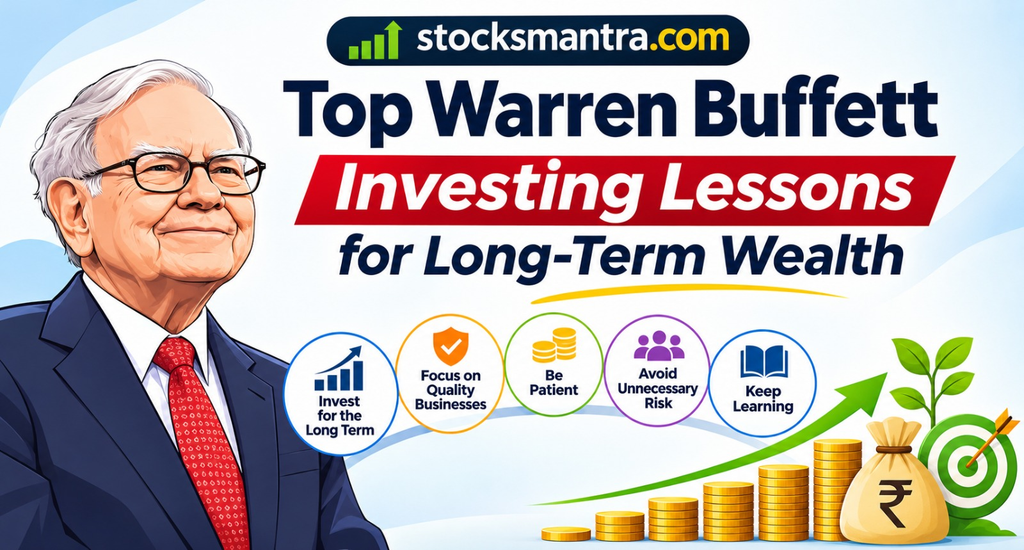
Introduction
People often look at the stock market and see a confusing maze of charts, numbers, and daily price swings. It can feel like a casino where only experts win. Because of this, many beginners stay away from investing or lose money by making emotional trades.
Warren Buffett takes a completely different approach. He treats buying a stock the same way a local entrepreneur treats buying a neighborhood grocery store. He does not care what the stock price does tomorrow. He cares whether the business will make more money ten years from now.
This guide breaks down the core lessons from Warren Buffett’s decades of investing experience. You will learn how to evaluate a business, avoid common financial traps, and build a calm, disciplined mindset for long-term growth.
What Is Value Investing?
At the heart of Warren Buffett’s success is a philosophy called value investing.
- Professional Term: Value investing.
- Simple Meaning: Buying an asset for less than its actual intrinsic worth.
- Why It Matters: If you buy a dollar’s worth of business for fifty cents, you build a margin of safety that protects your money if things go wrong.
- Example: Imagine a smartphone worth $1,000 is being sold in a clear-out sale for $600. You buy it immediately because you know its true value is much higher. Value investing applies this same logic to buying shares of public companies.
Buffett learned this approach from his mentor, Benjamin Graham. While Graham liked to buy any cheap stock regardless of quality, Buffett added a crucial twist: quality matters more than a bargain price. He famously stated that it is far better to buy a wonderful company at a fair price than a fair company at a wonderful price.
How Buffett Evaluates a Business
When Buffett looks at a company, he does not look at stock tickers or moving averages. He studies the underlying business fundamentals.
1. Understanding the Business Model
Buffett only invests in businesses he can easily understand. If a company operates in an industry too complex for him to figure out in a short time, he skips it. This is often called staying within your circle of competence.
- Simple Meaning: Knowing what you understand and sticking to it.
- Why It Matters: If you do not understand how a company makes money, you cannot predict whether it will survive a crisis.
- Example: Buffett easily understands companies that sell sugary drinks, insurance, or household goods, but he historically avoided complex technology firms he could not evaluate.
2. Searching for an Economic Moat
An economic moat is a term Buffett uses to describe a company’s competitive advantage.
- Professional Term: Economic moat.
- Simple Meaning: A unique strength that protects a business from competitors, much like a medieval castle moat protects a fortress from invaders.
- Why It Matters: Without a moat, a profitable company will soon attract rivals who will drive prices down and steal customers.
- Example: Think of a brand like Coca-Cola. Even if a new company makes a similar soda, people still buy Coke because of the powerful brand loyalty. That brand loyalty is the moat.
Key Lessons from Warren Buffett
Rule Number One: Never Lose Money
Buffett’s most famous rule has two parts:
- Rule No. 1: Never lose money.
- Rule No. 2: Never forget rule number one.
This does not mean you will never have a stock drop in price. It means you must protect your principal—your original investment capital—by avoiding high-risk speculations, excessive debt, and businesses prone to sudden bankruptcy. When you avoid big losses, your money compounds much faster over time.
The Magic of Compounding
Buffett often compares wealth building to a snowball rolling down a long hill. Compound interest is the engine behind this snowball.
- Professional Term: Compounding.
- Simple Meaning: Earning returns not just on your original money, but also on the profits your money has already generated.
- Why It Matters: Compounding starts slow, but over many years, it creates massive wealth growth. Time in the market is much more important than timing the market.
Emotional Discipline Over Intelligence
You do not need a genius IQ to succeed in the stock market. In fact, Buffett believes emotional control is far more important than high intelligence.
Markets swing wildly between extreme optimism and extreme fear. When other investors panic and sell great companies for cheap, the disciplined investor stays calm and buys. When everyone else is greedy and buying overpriced hype, the disciplined investor stays patient and holds cash.
Practical Examples: How to Apply Buffett’s Lessons Today
Let us look at how an everyday investor can apply these principles in the real world.
| Traditional Mistake | Warren Buffett Approach | Why It Works |
| Chasing Hot Tips: Buying a volatile stock because everyone on social media is talking about it today. | Researching Fundamentals: Studying a stable company’s debt levels, earnings, and competitive strength. | Focuses on actual business performance rather than temporary hype. |
| Trading Frequently: Buying and selling stocks every week to capture short-term price movements. | Buy and Hold: Purchasing shares with the intention of holding them for five, ten, or twenty years. | Lowers transaction costs and lets compound interest work undisturbed. |
| Using Margin (Borrowed Money): Borrowing funds from a broker to buy more stocks for higher potential gains. | Zero Leverage: Investing only the money you actually own and can afford to lock away. | Prevents forced selling during market downturns. |
Common Mistakes Beginners Make
- Treating Stocks Like Lottery Tickets: Buying shares purely for quick capital gains rather than viewing yourself as a part-owner of a real business.
- Checking Portfolio Prices Daily: Constantly monitoring price fluctuations creates emotional anxiety and leads to impulsive selling.
- Ignoring Management Quality: Failing to check whether the company leaders are honest, capable, and act in the best interest of shareholders.
- Failing to Diversify Wisely: Putting all your money into a single speculative stock instead of spreading risk across multiple strong businesses or low-cost index funds.
Risks and Limitations of Value Investing
While Buffett’s strategy is proven, it is not without challenges:
- Patience Required: Value investing can take years to pay off. If you need money in the short term, the stock market is the wrong place for it.
- Missing Out on Hype: You will often watch trendy, unprofitable technology stocks soar in price while your stable value stocks move slowly. This requires immense patience.
- Value Traps: Sometimes a stock looks cheap for a valid reason—the underlying business is dying. Beginners can mistake a dying company for a bargain value buy.
Decision-Making Framework for Investors
Before you invest your hard-earned money into any company, run through this simple checklist:
- Can I explain this business in one simple sentence? If no, skip it.
- Does the company have a strong competitive advantage? Look for strong brands, patents, or low production costs.
- Is the company drowning in debt? Look for manageable debt loads that can survive an economic downturn.
- Are the leaders honest and competent? Check how management allocates earnings and treats shareholders.
- Is the price reasonable? Never overpay, even for a great business.
Key Terms
- Asset: Anything of value that you own that has the potential to produce income or appreciate in value.
- Dividend: A portion of a company’s profits paid out regularly to its shareholders.
- Intrinsic Value: The true, calculated worth of a company based on its future cash flows, independent of its stock market price.
- Margin of Safety: Buying an investment at a significant discount to its estimated value to reduce the risk of financial loss.
- Principal: The original sum of money lent or invested, separate from any profit or interest earned.
- Shareholder: An owner of shares in a company.
- Volatility: The rate and degree at which the price of a stock increases or decreases over time.
Frequently Asked Questions
What is the most important lesson from Warren Buffett?
The most important lesson is to view stocks as pieces of real businesses. When you focus on the long-term earning power of a company rather than daily stock price charts, investing becomes much simpler and less stressful.
Do I need a lot of money to start investing like Buffett?
No. Thanks to fractional shares and low-cost index funds, you can start investing with very small amounts of money. The most important asset you have is time, not initial capital.
How does Warren Buffett pick stocks?
He looks for simple businesses with predictable earnings, low debt, strong competitive moats, honest management, and fair valuations.
Is value investing still relevant today?
Yes. While market trends change and new technologies emerge, human psychology remains the same. Buying good assets for less than they are worth is a timeless principle.
Should beginners buy individual stocks or index funds?
Buffett frequently recommends that everyday investors buy low-cost index funds that track the entire stock market. Picking individual stocks successfully requires time, research, and emotional discipline that many beginners lack.
What is a “moat” in investing?
An economic moat is a durable competitive advantage that allows a company to protect its market share and profit margins from competitors over many years.
How long should I hold an investment?
Buffett’s favorite holding period is “forever.” When you buy a wonderful business, you should be happy to own it through all market cycles, provided the fundamental business health remains strong.
Can value investing lead to losses?
Yes. All investing carries risk. If you miscalculate a company’s intrinsic value or if the business model is disrupted by new technology, you can lose money. That is why diversification and a margin of safety are essential.
Conclusion
Warren Buffett’s investing success is built on simplicity, patience, and strict discipline. He does not chase market fads, use complicated math formulas, or try to predict short-term economic headlines. Instead, he focuses on buying great businesses, holding them for the long haul, and keeping his emotions in check.
By following these fundamental lessons, you can avoid emotional mistakes, protect your capital, and build steady wealth over time. Start small, focus on businesses you understand, and let the power of compounding work for you.