Introduction
Directory Services platforms help organizations centrally manage users, devices, authentication, permissions, and network resources across enterprise environments. Technologies such as Lightweight Directory Access Protocol LDAP and Active Directory AD are foundational components of modern identity and access management infrastructure. These platforms provide centralized identity repositories that support authentication, authorization, group policies, user lifecycle management, and enterprise security controls.
As organizations continue adopting hybrid cloud infrastructure, remote work environments, SaaS ecosystems, and Zero Trust security models, directory services remain critical for maintaining secure and scalable identity management. Modern directory platforms now support cloud-native integrations, identity federation, multi-factor authentication, and cross-platform access governance across Windows, Linux, macOS, cloud applications, and mobile devices.
Common real-world use cases include:
- Centralized user authentication
- Enterprise identity management
- Access control and group policy management
- Hybrid cloud identity synchronization
- Device and endpoint management
Buyers evaluating Directory Services platforms should focus on:
- Authentication protocol support
- Identity governance capabilities
- Hybrid cloud compatibility
- Group policy management
- Multi-factor authentication support
- Scalability
- Security monitoring
- API and SaaS integrations
- Compliance visibility
- Ease of administration
Best for: Enterprises, educational institutions, healthcare organizations, financial services, government agencies, remote workforce environments, and businesses operating hybrid cloud infrastructure.
Not ideal for: Very small businesses with minimal IT infrastructure or organizations relying exclusively on cloud-native identity providers without centralized directory requirements.
Key Trends in Directory Services LDAP AD
- Hybrid identity architectures are becoming standard across enterprises.
- Cloud directory synchronization is expanding rapidly.
- Passwordless authentication adoption is increasing.
- Identity-centric Zero Trust security models are becoming mainstream.
- Multi-factor authentication is now expected by default.
- Linux and macOS identity integration support is improving.
- AI-assisted identity analytics are improving threat detection.
- Directory services are integrating more deeply with SaaS ecosystems.
- Identity governance and lifecycle automation are becoming more advanced.
- Browser-native and API-based authentication workflows are growing rapidly.
How We Selected These Tools Methodology
The platforms in this list were selected based on enterprise adoption, authentication capabilities, and directory management maturity.
- Evaluated LDAP and Active Directory compatibility
- Assessed hybrid cloud identity capabilities
- Reviewed authentication and federation support
- Considered scalability across enterprise environments
- Evaluated identity governance and lifecycle management
- Reviewed API and SaaS integration breadth
- Assessed security monitoring and compliance features
- Considered operational usability and administration simplicity
- Evaluated ecosystem maturity and community adoption
- Reviewed support quality and enterprise readiness
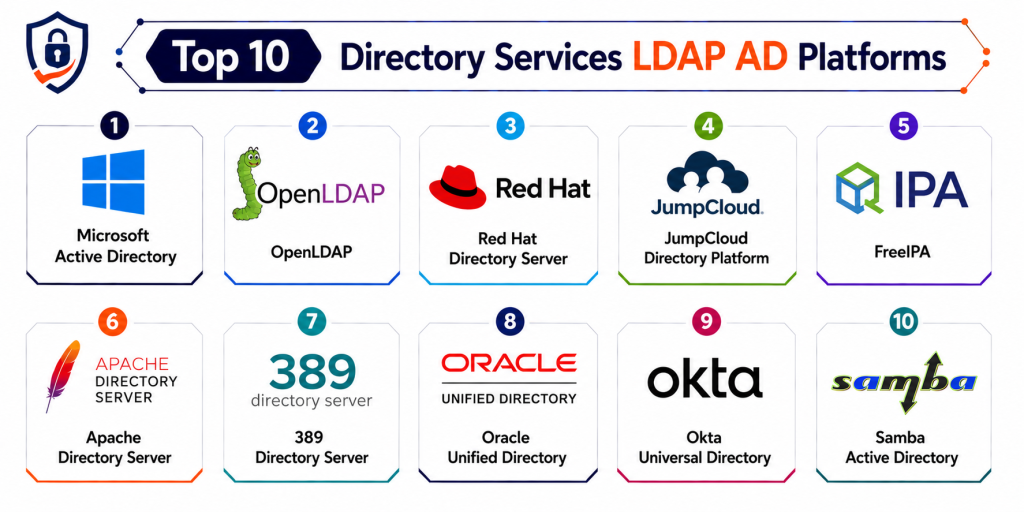
Top 10 Directory Services LDAP AD Platforms
1- Microsoft Active Directory
Short description: Microsoft Active Directory remains one of the most widely adopted enterprise directory services platforms for centralized authentication, group policy management, and Windows-based identity administration.
Key Features
- LDAP directory services
- Group Policy management
- Kerberos authentication
- Domain management
- Centralized user administration
- Hybrid cloud synchronization
- Role-based access controls
Pros
- Industry-standard enterprise identity platform
- Strong Windows ecosystem integration
- Mature enterprise governance capabilities
Cons
- Complex infrastructure management
- Windows-centric architecture
- Hybrid deployments may require expertise
Platforms / Deployment
- Windows
- On-premise / Hybrid
Security & Compliance
- LDAP
- Kerberos
- RBAC
- Audit logging
- MFA support through integrations
Integrations & Ecosystem
Active Directory integrates broadly across enterprise infrastructure and security ecosystems.
- Microsoft Entra ID
- Microsoft 365
- VMware
- SIEM platforms
- SaaS applications
- APIs
Support & Community
Massive enterprise ecosystem with extensive documentation and global community adoption.
2- Microsoft Entra Domain Services
Short description: Microsoft Entra Domain Services provides managed LDAP, Kerberos, and domain services capabilities for cloud and hybrid environments without requiring traditional domain controller infrastructure.
Key Features
- Managed LDAP services
- Kerberos authentication
- Group Policy support
- Hybrid identity synchronization
- Cloud-native domain management
- Secure authentication
- Identity governance integration
Pros
- Simplified cloud deployment
- Strong Azure integration
- Reduced infrastructure management
Cons
- Best suited for Microsoft ecosystems
- Less flexible than full Active Directory
- Advanced configurations may vary
Platforms / Deployment
- Cloud / Hybrid
Security & Compliance
- LDAP
- Kerberos
- MFA support
- RBAC
- Audit logs
Integrations & Ecosystem
Entra Domain Services integrates tightly with Azure and Microsoft cloud environments.
- Azure
- Microsoft 365
- SaaS platforms
- APIs
- Hybrid identity systems
Support & Community
Strong enterprise documentation and Microsoft cloud support ecosystem.
3- OpenLDAP
Short description: OpenLDAP is one of the most widely used open-source LDAP directory services platforms, offering flexible identity management for Linux and Unix-based environments.
Key Features
- LDAP directory services
- Open-source customization
- Authentication services
- Replication support
- Access control policies
- Cross-platform compatibility
- Flexible schema management
Pros
- Free and open-source
- Highly customizable
- Broad Linux ecosystem compatibility
Cons
- Requires technical expertise
- No default enterprise support
- Operational management complexity
Platforms / Deployment
- Linux / Unix
- Self-hosted
Security & Compliance
- LDAP
- TLS encryption
- RBAC support
- Audit logging through integrations
Integrations & Ecosystem
OpenLDAP integrates with Linux infrastructure and open-source authentication ecosystems.
- Linux systems
- PAM
- Kerberos
- Docker
- Kubernetes
- APIs
Support & Community
Large open-source community with extensive technical documentation.
4- Red Hat Identity Management
Short description: Red Hat Identity Management IdM provides centralized identity, authentication, and policy management for Linux-based enterprise environments.
Key Features
- LDAP directory services
- Kerberos authentication
- Centralized policy management
- Linux identity integration
- Certificate management
- DNS integration
- User lifecycle administration
Pros
- Strong Linux enterprise integration
- Good hybrid identity support
- Mature Red Hat ecosystem
Cons
- Linux-focused architecture
- Enterprise complexity for large deployments
- Requires Linux administration expertise
Platforms / Deployment
- Linux
- Self-hosted / Hybrid
Security & Compliance
- LDAP
- Kerberos
- RBAC
- Audit logging
- Certificate services
Integrations & Ecosystem
Red Hat IdM integrates with Linux infrastructure and hybrid identity systems.
- Red Hat Enterprise Linux
- Active Directory
- Ansible
- Kubernetes
- APIs
- DevOps platforms
Support & Community
Strong enterprise Linux support with mature operational documentation.
5- JumpCloud Directory Platform
Short description: JumpCloud provides cloud-based directory services and identity management designed for cross-platform environments including Windows, macOS, Linux, and cloud applications.
Key Features
- Cloud directory services
- Cross-platform device management
- Browser-based authentication
- LDAP-as-a-Service
- MFA support
- User lifecycle management
- SaaS application integrations
Pros
- Strong cross-platform compatibility
- Simplified cloud deployment
- Good SMB and mid-market value
Cons
- Enterprise governance depth may vary
- Smaller ecosystem than Microsoft AD
- Complex enterprise customization may be limited
Platforms / Deployment
- Windows / Linux / macOS
- Cloud
Security & Compliance
- LDAP
- MFA
- RBAC
- Audit logging
- Encryption support
Integrations & Ecosystem
JumpCloud integrates with SaaS applications and device management ecosystems.
- Google Workspace
- Microsoft 365
- AWS
- Okta
- APIs
- Endpoint tools
Support & Community
Strong cloud identity community with practical onboarding documentation.
6- FreeIPA
Short description: FreeIPA is an open-source identity management platform combining LDAP, Kerberos, DNS, and certificate management for Linux-based enterprise environments.
Key Features
- LDAP directory services
- Kerberos authentication
- Certificate management
- DNS integration
- Identity governance
- Access control policies
- User administration
Pros
- Free and open-source
- Strong Linux integration
- Broad authentication capabilities
Cons
- Requires technical expertise
- Limited enterprise support by default
- Complex operational administration
Platforms / Deployment
- Linux
- Self-hosted
Security & Compliance
- LDAP
- Kerberos
- TLS encryption
- RBAC
Integrations & Ecosystem
FreeIPA integrates with Linux infrastructure and authentication ecosystems.
- Linux systems
- Kerberos
- OpenLDAP
- APIs
- DevOps tools
Support & Community
Active open-source community with strong Linux administration adoption.
7- Samba Active Directory
Short description: Samba Active Directory provides open-source Active Directory-compatible domain services for Linux and hybrid enterprise environments.
Key Features
- Active Directory compatibility
- LDAP services
- Kerberos authentication
- Domain controller support
- Group policy support
- Cross-platform authentication
- File sharing services
Pros
- Open-source AD compatibility
- Strong Linux interoperability
- Lower infrastructure cost
Cons
- Complex deployment workflows
- Requires Linux expertise
- Advanced enterprise features may vary
Platforms / Deployment
- Linux
- Self-hosted / Hybrid
Security & Compliance
- LDAP
- Kerberos
- RBAC
- TLS encryption
Integrations & Ecosystem
Samba integrates with Windows and Linux authentication ecosystems.
- Windows systems
- Linux infrastructure
- File services
- APIs
- Hybrid identity systems
Support & Community
Large open-source infrastructure community with broad Linux adoption.
8- Okta Universal Directory
Short description: Okta Universal Directory provides cloud-native identity management and centralized user administration for SaaS-heavy and hybrid enterprise environments.
Key Features
- Cloud directory services
- Universal user profiles
- Identity lifecycle management
- Browser-based authentication
- MFA support
- SaaS integrations
- API-driven identity workflows
Pros
- Excellent SaaS integration ecosystem
- Strong cloud-native identity capabilities
- Easy deployment workflows
Cons
- Premium pricing structure
- Less infrastructure-level control than traditional AD
- Complex enterprise governance workflows
Platforms / Deployment
- Cloud
Security & Compliance
- LDAP support
- MFA
- RBAC
- Audit logging
- Encryption support
Integrations & Ecosystem
Okta integrates with thousands of SaaS applications and cloud services.
- AWS
- Salesforce
- Slack
- Microsoft 365
- APIs
- DevOps tools
Support & Community
Extensive enterprise identity documentation with large SaaS ecosystem adoption.
9- Apache Directory Server
Short description: Apache Directory Server is an open-source LDAP and Kerberos server designed for directory service deployments and identity management environments.
Key Features
- LDAP server
- Kerberos integration
- Schema management
- Authentication services
- Directory replication
- Access control management
- Open-source extensibility
Pros
- Free and open-source
- Flexible deployment options
- Good LDAP standards support
Cons
- Smaller ecosystem compared to OpenLDAP
- Requires technical expertise
- Enterprise support varies
Platforms / Deployment
- Linux / Windows
- Self-hosted
Security & Compliance
- LDAP
- Kerberos
- TLS encryption
- Access controls
Integrations & Ecosystem
Apache Directory integrates with Java ecosystems and authentication workflows.
- Java applications
- Linux systems
- APIs
- Authentication services
Support & Community
Smaller but active open-source directory services community.
10- Oracle Unified Directory
Short description: Oracle Unified Directory provides enterprise LDAP services and identity infrastructure management for large-scale enterprise authentication environments.
Key Features
- Enterprise LDAP services
- High availability support
- Replication and synchronization
- Access management integrations
- Directory virtualization
- Authentication services
- Scalability optimization
Pros
- Strong enterprise scalability
- Good high-availability capabilities
- Mature enterprise identity support
Cons
- Enterprise pricing structure
- Complex deployment architecture
- Oracle ecosystem dependency
Platforms / Deployment
- Linux / Unix
- Self-hosted / Hybrid
Security & Compliance
- LDAP
- RBAC
- Audit logging
- Encryption support
Integrations & Ecosystem
Oracle Unified Directory integrates with enterprise identity and Oracle infrastructure ecosystems.
- Oracle Identity Management
- Hybrid identity systems
- APIs
- Enterprise applications
Support & Community
Enterprise-grade Oracle support with mature operational documentation.
Comparison Table
| Tool Name | Best For | Platform(s) Supported | Deployment | Standout Feature | Public Rating |
|---|---|---|---|---|---|
| Microsoft Active Directory | Enterprise Windows environments | Windows | On-premise, Hybrid | Group Policy management | N/A |
| Microsoft Entra Domain Services | Managed cloud directory services | Cloud, Hybrid | Cloud | Managed LDAP services | N/A |
| OpenLDAP | Open-source LDAP infrastructure | Linux, Unix | Self-hosted | Open-source flexibility | N/A |
| Red Hat Identity Management | Linux enterprise identity | Linux | Self-hosted, Hybrid | Linux policy management | N/A |
| JumpCloud Directory Platform | Cross-platform identity management | Windows, Linux, macOS | Cloud | Unified cloud directory | N/A |
| FreeIPA | Linux identity management | Linux | Self-hosted | Integrated certificate management | N/A |
| Samba Active Directory | Open-source AD compatibility | Linux | Self-hosted, Hybrid | AD-compatible domain services | N/A |
| Okta Universal Directory | SaaS-heavy organizations | Cloud | Cloud | SaaS integration ecosystem | N/A |
| Apache Directory Server | Open-source LDAP services | Linux, Windows | Self-hosted | Lightweight LDAP deployments | N/A |
| Oracle Unified Directory | Enterprise LDAP infrastructure | Linux, Unix | Self-hosted, Hybrid | High availability directory services | N/A |
Evaluation & Scoring of Directory Services LDAP AD
| Tool Name | Core 25% | Ease 15% | Integrations 15% | Security 10% | Performance 10% | Support 10% | Value 15% | Weighted Total |
|---|---|---|---|---|---|---|---|---|
| Microsoft Active Directory | 10 | 7 | 9 | 9 | 9 | 10 | 8 | 8.95 |
| Microsoft Entra Domain Services | 8 | 8 | 8 | 8 | 8 | 9 | 8 | 8.10 |
| OpenLDAP | 8 | 5 | 7 | 7 | 8 | 6 | 10 | 7.35 |
| Red Hat Identity Management | 8 | 6 | 7 | 8 | 8 | 8 | 8 | 7.65 |
| JumpCloud Directory Platform | 8 | 9 | 8 | 8 | 8 | 8 | 8 | 8.10 |
| FreeIPA | 8 | 5 | 7 | 7 | 8 | 6 | 10 | 7.35 |
| Samba Active Directory | 7 | 5 | 7 | 7 | 7 | 6 | 9 | 7.00 |
| Okta Universal Directory | 8 | 9 | 10 | 8 | 8 | 8 | 7 | 8.30 |
| Apache Directory Server | 6 | 5 | 6 | 6 | 7 | 6 | 9 | 6.40 |
| Oracle Unified Directory | 8 | 6 | 7 | 8 | 9 | 8 | 6 | 7.45 |
These scores are comparative rather than absolute. Higher scores generally indicate stronger enterprise readiness, broader integration support, and more mature identity management capabilities. Open-source platforms may still provide excellent value for technically skilled teams requiring customization and infrastructure flexibility.
Which Directory Services LDAP AD Platform Is Right for You?
Solo / Freelancer
Small organizations and technical users often benefit from lightweight cloud-based identity platforms such as JumpCloud or open-source options like OpenLDAP for cost efficiency and flexibility.
SMB
Small and medium businesses should prioritize simplified deployment, SaaS integrations, and centralized authentication. JumpCloud and Microsoft Entra Domain Services provide balanced functionality with manageable operational overhead.
Mid-Market
Mid-market organizations often require hybrid identity support, policy management, and identity governance. Red Hat Identity Management and Okta Universal Directory provide scalable identity administration capabilities.
Enterprise
Large enterprises typically need centralized governance, advanced authentication controls, hybrid cloud support, and large-scale identity management. Microsoft Active Directory, Oracle Unified Directory, and Microsoft Entra Domain Services are strong enterprise-focused choices.
Budget vs Premium
Open-source directory services platforms generally provide lower licensing costs and greater customization flexibility. Enterprise-grade platforms deliver stronger governance, scalability, and support but often require larger budgets.
Feature Depth vs Ease of Use
Platforms such as Active Directory and Oracle Unified Directory provide deep enterprise capabilities but may require experienced administrators. JumpCloud and Entra Domain Services emphasize easier deployment and cloud-native simplicity.
Integrations & Scalability
Organizations with mature cloud and SaaS ecosystems should prioritize integrations with identity providers, SIEM platforms, APIs, cloud providers, and endpoint management systems.
Security & Compliance Needs
Regulated industries should focus on MFA support, audit logging, RBAC, identity governance, certificate management, and hybrid authentication controls.
Frequently Asked Questions FAQs
1. What are Directory Services platforms?
Directory Services platforms centrally manage user identities, authentication, permissions, devices, and access policies across enterprise environments.
2. What is LDAP?
LDAP Lightweight Directory Access Protocol is a protocol used to access and manage directory information services across networks.
3. What is Active Directory?
Active Directory is Microsoft’s enterprise directory services platform used for centralized identity management, authentication, and policy administration.
4. Why are directory services important?
Directory services simplify identity management, strengthen authentication security, improve governance, and centralize access control across organizations.
5. Are LDAP and Active Directory the same?
No. LDAP is a protocol, while Active Directory is a directory services implementation that supports LDAP along with additional enterprise features.
6. Can directory services support cloud environments?
Yes. Modern directory services platforms support hybrid cloud identity synchronization and SaaS integrations across distributed environments.
7. What integrations are important for directory services?
Important integrations include cloud providers, SaaS applications, endpoint management tools, SIEM systems, APIs, and identity governance platforms.
8. What are common directory services deployment mistakes?
Common mistakes include weak password policies, excessive permissions, poor backup planning, weak MFA enforcement, and incomplete identity governance.
9. Are open-source directory services reliable?
Yes. Open-source platforms such as OpenLDAP and FreeIPA are widely used and highly reliable when managed by skilled administrators.
10. Can cloud identity providers replace traditional Active Directory?
In some environments yes, but many enterprises still rely on hybrid identity architectures combining traditional directory services with cloud identity platforms.
Conclusion
Directory Services LDAP AD platforms remain foundational technologies for enterprise identity management, authentication, and access governance across modern IT environments. As organizations continue adopting hybrid cloud infrastructure, SaaS ecosystems, remote work environments, and Zero Trust security strategies, centralized directory services continue evolving to support cloud-native integrations, identity federation, and modern authentication workflows. Enterprise buyers should carefully evaluate authentication capabilities, hybrid cloud compatibility, governance controls, scalability, security monitoring, and operational simplicity before selecting a platform. Microsoft Active Directory and Microsoft Entra Domain Services remain dominant enterprise choices for hybrid environments, while JumpCloud and Okta Universal Directory provide strong cloud-native alternatives for SaaS-heavy organizations. Open-source platforms such as OpenLDAP and FreeIPA continue offering highly flexible identity infrastructure options for technically skilled teams. The best solution ultimately depends on infrastructure complexity, cloud maturity, security requirements, operational expertise, and long-term identity management strategy. Shortlist a few platforms, validate integrations with your cloud and SaaS ecosystems, test authentication workflows, and evaluate governance controls before making a long-term directory services investment decision.
Very helpful article explaining directory services like LDAP and AD in simple language. The comparison makes identity management easier to understand.
I liked the simple explanation of identity management features. The article is useful for beginners learning directory service tools.