Introduction
Student Information Systems (SIS) are centralized platforms that help educational institutions manage student data, academic records, enrollment, attendance, grades, scheduling, and administrative workflows. They act as the backbone of digital campus operations, connecting students, faculty, and administrators through a unified system.
These platforms are essential because modern education environments require real-time data access, automation, and seamless integration across systems like LMS, finance, and HR. SIS platforms support use cases such as admissions management, student lifecycle tracking, grading and transcripts, financial aid processing, and compliance reporting.
Buyers should evaluate data management capabilities, ease of use, scalability, integration with LMS and ERP systems, reporting tools, automation features, security and compliance, customization, mobile access, and vendor support.
Best for: Schools, colleges, universities, and training institutions managing large student populations.
Not ideal for: Small coaching centers or organizations with minimal administrative complexity.
Key Trends in Student Information Systems (SIS)
- Cloud-based SIS platforms replacing legacy on-prem systems
- Integration with LMS and EdTech ecosystems
- AI-driven analytics for student performance insights
- Mobile-first access for students and faculty
- Automation of admissions and enrollment workflows
- Self-service portals for students and parents
- Data-driven decision-making dashboards
- Compliance and reporting automation
- Expansion into student lifecycle management platforms
- API-first architectures for system interoperability
How We Selected These Tools (Methodology)
- Adoption across K-12 and higher education institutions
- Coverage of student data management and administrative workflows
- Integration with LMS, ERP, and finance systems
- Scalability for large student populations
- Reporting and analytics capabilities
- Automation of academic and administrative processes
- Security and compliance readiness
- Vendor ecosystem and innovation
- Ease of use for administrators and students
- Fit across SMB, mid-market, and enterprise institutions
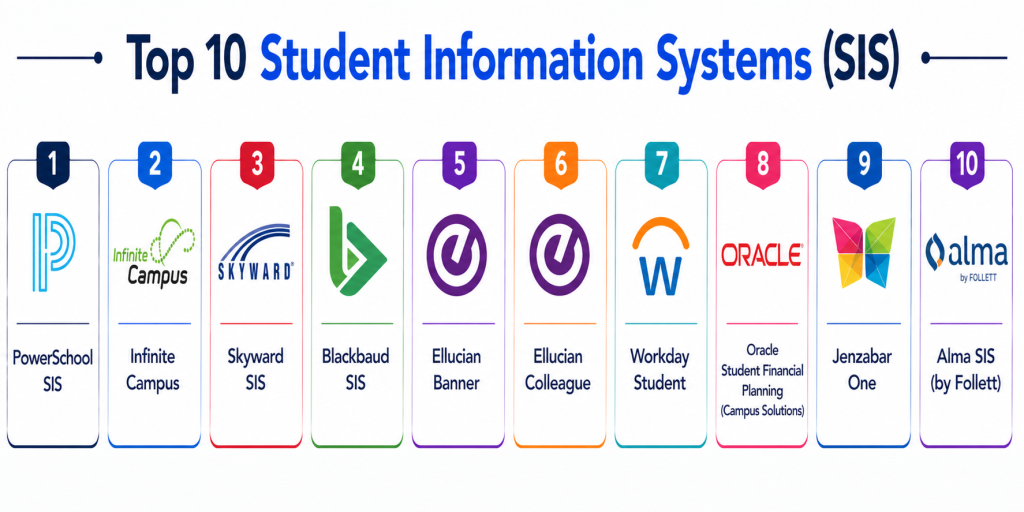
Top 10 Student Information Systems (SIS)
#1 — PowerSchool SIS
Short description: PowerSchool is one of the most widely used SIS platforms for K-12 institutions, offering comprehensive student data management and reporting.
Key Features
- Student data management
- Attendance tracking
- Gradebook and reporting
- Parent and student portals
- Compliance reporting
Pros
- Widely adopted
- Scalable
- Strong reporting
- Comprehensive features
Cons
- Complex setup
- Pricing varies
- Customization limitations
- Requires training
Platforms / Deployment
Web
Cloud
Security & Compliance
Not publicly stated
Integrations & Ecosystem
Integrates with LMS, assessment tools, and education platforms
- LMS platforms
- Analytics tools
- APIs
Support & Community
Strong education community support
#2 — Infinite Campus
Short description: Infinite Campus provides a unified SIS for K-12 institutions with strong data management and reporting capabilities.
Key Features
- Student information management
- Attendance tracking
- Scheduling
- Gradebook
- Reporting dashboards
Pros
- Comprehensive features
- Scalable
- Strong reporting
- User-friendly
Cons
- Pricing varies
- Setup complexity
- Limited customization
- Training required
Platforms / Deployment
Web
Cloud
Security & Compliance
Not publicly stated
Integrations & Ecosystem
- LMS systems
- State reporting systems
- APIs
Support & Community
Education-focused support
#3 — Skyward SIS
Short description: Skyward offers SIS solutions for K-12 schools with strong administrative and financial management integration.
Key Features
- Student data management
- Attendance tracking
- Gradebook
- Financial management
- Reporting tools
Pros
- Easy to use
- Scalable
- Integrated finance features
- Reliable
Cons
- Limited advanced analytics
- Pricing varies
- Customization limits
- Setup required
Platforms / Deployment
Web
Cloud
Security & Compliance
Not publicly stated
Integrations & Ecosystem
- Finance systems
- LMS platforms
- APIs
Support & Community
Support available
#4 — Blackbaud SIS
Short description: Blackbaud SIS is designed for private schools and higher education institutions with integrated learning and administrative tools.
Key Features
- Student lifecycle management
- Enrollment and admissions
- Gradebook
- Communication tools
- Reporting dashboards
Pros
- Strong private school focus
- Integrated ecosystem
- Scalable
- User-friendly
Cons
- Pricing varies
- Enterprise focus
- Setup complexity
- Limited flexibility
Platforms / Deployment
Web
Cloud
Security & Compliance
Not publicly stated
Integrations & Ecosystem
- LMS systems
- Fundraising tools
- APIs
Support & Community
Professional support available
#5 — Ellucian Banner
Short description: Ellucian Banner is a widely used SIS for higher education institutions with comprehensive administrative and academic features.
Key Features
- Student records management
- Enrollment and scheduling
- Financial aid management
- Reporting tools
- Analytics dashboards
Pros
- Enterprise-grade
- Scalable
- Comprehensive features
- Strong reporting
Cons
- Complex implementation
- Pricing varies
- Requires expertise
- Legacy UI in some areas
Platforms / Deployment
Web
Cloud / On-prem
Security & Compliance
Not publicly stated
Integrations & Ecosystem
- ERP systems
- LMS platforms
- APIs
Support & Community
Enterprise support available
#6 — Ellucian Colleague
Short description: Ellucian Colleague provides SIS functionality for higher education institutions with strong integration capabilities.
Key Features
- Student data management
- Enrollment tracking
- Financial aid
- Reporting dashboards
- Workflow automation
Pros
- Scalable
- Strong integration
- Reliable
- Comprehensive
Cons
- Complex setup
- Pricing varies
- Enterprise focus
- Training required
Platforms / Deployment
Web
Cloud / On-prem
Security & Compliance
Not publicly stated
Integrations & Ecosystem
- ERP systems
- LMS platforms
- APIs
Support & Community
Enterprise support available
#7 — Workday Student
Short description: Workday Student provides a modern SIS with integrated finance and HR capabilities for higher education institutions.
Key Features
- Student lifecycle management
- Financial and HR integration
- Analytics dashboards
- Workflow automation
- Reporting tools
Pros
- Modern UI
- Integrated platform
- Scalable
- Strong analytics
Cons
- High cost
- Complex implementation
- Enterprise focus
- Requires expertise
Platforms / Deployment
Web
Cloud
Security & Compliance
Not publicly stated
Integrations & Ecosystem
- Workday ecosystem
- HR systems
- APIs
Support & Community
Enterprise support available
#8 — Oracle Campus Solutions
Short description: Oracle Campus Solutions offers a comprehensive SIS for higher education institutions with strong enterprise capabilities.
Key Features
- Student data management
- Enrollment tracking
- Financial aid
- Reporting tools
- Workflow automation
Pros
- Enterprise-grade
- Scalable
- Strong reporting
- Reliable
Cons
- Complex implementation
- Pricing varies
- Legacy UI
- Requires training
Platforms / Deployment
Web
Cloud / On-prem
Security & Compliance
Not publicly stated
Integrations & Ecosystem
- Oracle ERP
- LMS platforms
- APIs
Support & Community
Enterprise support available
#9 — Jenzabar One
Short description: Jenzabar One provides SIS capabilities for higher education with integrated administrative tools.
Key Features
- Student records management
- Enrollment tracking
- Financial management
- Reporting dashboards
- Workflow automation
Pros
- Integrated platform
- Scalable
- Reliable
- Strong reporting
Cons
- Pricing varies
- Setup complexity
- Enterprise focus
- Limited flexibility
Platforms / Deployment
Web
Cloud
Security & Compliance
Not publicly stated
Integrations & Ecosystem
- ERP systems
- LMS platforms
- APIs
Support & Community
Support available
#10 — Alma SIS (Follett)
Short description: Alma SIS is a modern cloud-based SIS designed for K-12 schools with strong usability and integration.
Key Features
- Student data management
- Attendance tracking
- Gradebook
- Scheduling
- Reporting dashboards
Pros
- User-friendly
- Modern interface
- Scalable
- Cloud-native
Cons
- Limited enterprise features
- Pricing varies
- Customization limits
- Integration required
Platforms / Deployment
Web
Cloud
Security & Compliance
Not publicly stated
Integrations & Ecosystem
- LMS platforms
- Education tools
- APIs
Support & Community
Support available
Comparison Table
| Tool Name | Best For | Platform(s) Supported | Deployment | Standout Feature | Public Rating |
|---|---|---|---|---|---|
| PowerSchool | K-12 | Web | Cloud | Comprehensive SIS | N/A |
| Infinite Campus | K-12 | Web | Cloud | Unified data system | N/A |
| Skyward | K-12 | Web | Cloud | Finance integration | N/A |
| Blackbaud | Private schools | Web | Cloud | Integrated ecosystem | N/A |
| Banner | Higher ed | Web | Cloud/On-prem | Enterprise features | N/A |
| Colleague | Higher ed | Web | Cloud/On-prem | Strong integration | N/A |
| Workday | Higher ed | Web | Cloud | Modern platform | N/A |
| Oracle | Higher ed | Web | Cloud/On-prem | Enterprise scalability | N/A |
| Jenzabar | Higher ed | Web | Cloud | Integrated tools | N/A |
| Alma | K-12 | Web | Cloud | User-friendly | N/A |
Evaluation & Scoring of Student Information Systems
| Tool | Core | Ease | Integrations | Security | Performance | Support | Value | Weighted Total |
|---|---|---|---|---|---|---|---|---|
| PowerSchool | 9 | 8 | 9 | 8 | 9 | 8 | 8 | 8.6 |
| Infinite Campus | 8.5 | 8.5 | 8.5 | 8 | 8.5 | 8 | 8 | 8.4 |
| Skyward | 8 | 8.5 | 8 | 8 | 8 | 7.5 | 8 | 8.1 |
| Blackbaud | 8.5 | 8 | 8 | 8 | 8.5 | 8 | 7.5 | 8.2 |
| Banner | 9 | 7 | 8.5 | 8 | 9 | 8 | 7 | 8.2 |
| Colleague | 8.5 | 7 | 8.5 | 8 | 8.5 | 8 | 7 | 8.1 |
| Workday | 9 | 8 | 8.5 | 8 | 9 | 8 | 7 | 8.4 |
| Oracle | 8.5 | 7 | 8.5 | 8 | 8.5 | 8 | 7 | 8.1 |
| Jenzabar | 8 | 7.5 | 8 | 8 | 8 | 7.5 | 7.5 | 7.9 |
| Alma | 8 | 9 | 8 | 8 | 8 | 7.5 | 8.5 | 8.2 |
How to interpret:
- Enterprise platforms score higher on scalability and integration
- Cloud-native tools score higher on usability
- K-12 systems prioritize ease of use
- Scores are comparative, not absolute
Which Student Information System Is Right for You?
Solo / Small Institutions
Use Alma SIS for simplicity and ease of use.
SMB Schools
Choose Skyward or Infinite Campus for balanced features and cost.
Mid-Market Institutions
Consider PowerSchool or Blackbaud for scalability and automation.
Enterprise Universities
Use Ellucian Banner, Workday, or Oracle for full-scale operations.
Budget vs Premium
Budget tools focus on core features; premium platforms offer analytics and integration.
Feature Depth vs Ease of Use
Enterprise tools offer depth; SMB tools prioritize usability.
Integrations & Scalability
Ensure compatibility with LMS, ERP, and finance systems.
Security & Compliance Needs
Critical—ensure data protection and compliance readiness.
Frequently Asked Questions (numbring)
1. What is an SIS?
A Student Information System manages student data and academic processes.
2. Why is SIS important?
It centralizes operations and improves efficiency in education institutions.
3. Who uses SIS platforms?
Schools, colleges, universities, and training providers.
4. What features are essential?
Enrollment, attendance, grading, reporting, and integration.
5. Are SIS platforms cloud-based?
Most modern systems are cloud-native or hybrid.
6. Do they integrate with LMS?
Yes, most SIS platforms integrate with LMS systems.
7. Are they secure?
They include data protection and compliance features.
8. How long does implementation take?
It varies from weeks to months.
9. What are alternatives?
Manual systems or spreadsheets.
10. Can SIS handle large institutions?
Yes, enterprise systems are designed for scalability.
Conclusion
Student Information Systems are essential for managing modern educational institutions efficiently.
They centralize student data, automate workflows, and improve decision-making.
Enterprise platforms like Banner, Workday, and Oracle provide scalability and integration.
K-12 solutions like PowerSchool and Infinite Campus offer ease of use and reliability.
Cloud-native tools like Alma improve accessibility and user experience.
The right SIS depends on institution size, complexity, and integration needs.
Organizations should prioritize scalability, usability, and security.
Pilot implementations can validate system fit and performance.
Ultimately, the best SIS aligns with institutional goals and digital transformation strategy.
Easy to understand guide explaining features, pros, and limitations of popular Student Information Systems clearly for educators.
Nice guide. These systems are really important for improving communication between students, teachers, and parents.