Introduction
If you turn on the financial news, you will often hear two animals thrown around: the bull and the bear. People talk about being in a “bull run” or bracing for a “bear market” as if the stock exchange were a literal wildlife park. For a beginner, this terminology can feel confusing and exclusive.
Understanding these two market cycles is vital because they dictate how your investments grow, shrink, and behave over time. Misunderstanding them can lead to panic selling during a downturn or reckless buying at the absolute peak.
This guide breaks down what bull and bear markets are, why they happen, how they impact your money, and how smart investors navigate both environments without losing their composure.
What Is a Bull Market?
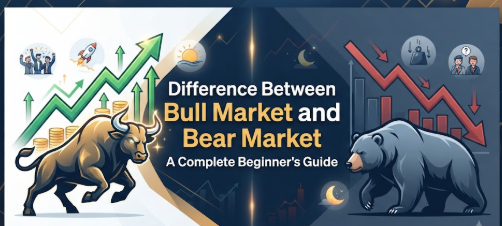
A bull market is a prolonged period where stock prices rise across the board, usually accompanied by widespread investor optimism and a strong economy.
Why Is It Called a Bull Market?
Financial folklore says the name comes from the way a bull attacks: it thrusts its horns upward into the air. This upward motion symbolizes rising prices and growing market confidence.
How It Works
During a bull market, corporate profits climb, unemployment falls, and consumer spending increases. Because businesses are making more money, investors want a piece of those profits. They buy stocks, which pushes prices even higher. This creates a positive feedback loop: rising prices attract more buyers, which drives prices up further.
Example of a Bull Market
Imagine a local bakery that starts selling amazing cakes. Word spreads, lines form outside the door, and the owner opens three new locations. Investors notice the bakery’s massive success and rush to buy shares of the company. Because everyone wants a share, the price of the company’s stock climbs steadily month after month.
What Is a Bear Market?
A bear market is a prolonged period where stock prices fall significantly—traditionally defined as a decline of 20% or more from recent all-time highs across major market indexes.
Why Is It Called a Bear Market?
The name comes from the way a bear attacks: it swipes its paws downward. This downward motion symbolizes falling prices and declining market confidence.
How It Works
Bear markets usually happen when economic growth slows down, inflation rises, or unexpected crises hit the global economy (such as a recession or a health emergency). Fear replaces optimism. Investors rush to sell their stocks to protect whatever cash they have left. As selling pressure mounts, stock prices drop sharply.
Example of a Bear Market
Continuing with our bakery example: a sudden economic downturn hits the town. People lose their jobs and stop buying expensive cakes. The bakery’s sales plummet, and it reports a loss for the quarter. Panicked investors assume the bakery is in permanent trouble and dump their shares quickly, causing the stock price to crash by 30%.
Key Differences Between Bull and Bear Markets
To clearly see how these two cycles contrast, look at how they affect different parts of the financial ecosystem:
| Feature | Bull Market | Bear Market |
| Market Direction | Consistently rising (prices go up) | Falling by 20% or more from peaks |
| Investor Sentiment | Optimistic, confident, eager to buy | Pessimistic, fearful, eager to sell |
| Economic Health | Growing, low unemployment, high spending | Slowing down, potential recession, job losses |
| Duration | Usually lasts longer (several years on average) | Usually shorter (months to a couple of years) |
| Investment Strategy | Buy and hold, growth-focused stocks | Defensive investing, cash reserves, value stocks |
Why Do Market Cycles Happen?
Markets do not move in a straight line. They are driven by human psychology, corporate performance, and macroeconomic forces.
1. Economic Fundamentals
Interest rates, inflation, and employment numbers play a massive role. When central banks lower interest rates, borrowing becomes cheap. Businesses expand, consumers spend, and a bull market is born. When central banks raise interest rates to fight inflation, borrowing becomes expensive, businesses slow down, and a bear market can follow.
2. Investor Psychology (Greed and Fear)
Markets are ultimately made of people. In a bull market, greed takes over. People see their neighbors making easy money and jump in, sometimes ignoring financial risks. In a bear market, fear takes over. People watch their portfolio values shrink and panic, selling assets at a loss just to make the bleeding stop.
Practical Examples: How Investors React
The Optimistic Beginner in a Bull Market
- Situation: A beginner investor named Ravi starts investing during a bull market. Every stock he buys goes up within a week.
- The Mistake: Ravi thinks investing is effortless and puts all his savings into risky tech startups, believing prices will never go down.
- The Reality Check: When the market cycle eventually turns, Ravi’s speculative stocks lose 60% of their value because he ignored the underlying business quality.
The Panicked Investor in a Bear Market
- Situation: A bear market begins, and stock prices tumble across the board. Priya logs into her account and sees her portfolio value drop by 25%.
- The Mistake: Overcome by panic, Priya sells all her solid, long-term index funds at the absolute bottom to “stop the pain.”
- The Reality Check: By selling at the bottom, Priya locks in her losses and misses out on the eventual recovery when the market rebounds.
Common Mistakes to Avoid
- Trying to Time the Market: Waiting for the exact bottom of a bear market or the exact peak of a bull market is nearly impossible, even for professional traders. Regular, consistent investing usually beats trying to time the swings.
- Panic Selling: Selling good investments just because the market is dropping guarantees your paper loss becomes a permanent real loss.
- Chasing Hype: Buying a stock simply because its price is rocketing upward during a late-stage bull market often leaves you holding the bag when the bubble bursts.
- Ignoring Your Risk Tolerance: If a 20% drop in your portfolio causes you to lose sleep, your asset allocation is too aggressive for your comfort level.
Risks and Limitations
Navigating market cycles comes with inherent uncertainties:
- Unpredictability: No one can predict the exact day a bull market will turn into a bear market, or vice versa.
- Opportunity Cost: Keeping all your money in safe cash during a roaring bull market means missing out on potential wealth generation.
- Emotional Exhaustion: Watching your portfolio drop during a bear market tests your psychological resilience.
Decision-Making Framework: How to Navigate Both Markets
Use this simple step-by-step framework to keep your investments on track regardless of market conditions:
- Define Your Timeline: Are you investing for next month or ten years from now? If your goals are long-term, short-term market drops matter very little.
- Maintain an Emergency Fund: Keep 3 to 6 months of living expenses in safe, liquid savings so you never have to sell stocks during a bear market.
- Automate Your Investments: Set up regular, fixed contributions (Dollar-Cost Averaging). This automatically buys fewer shares when prices are high in a bull market and more shares on discount during a bear market.
- Diversify Wisely: Spread your money across different sectors, asset classes, and geographies so a downturn in one area doesn’t wipe you out.
- Review Your Portfolio Annually: Rebalance your holdings once a year to ensure your risk exposure matches your original plan.
Key Terms
- Bull Market: A market condition where stock prices are rising or are expected to rise.
- Bear Market: A market condition in which securities prices fall 20% or more from recent highs amidst widespread pessimism.
- Correction: A decline of 10% to 20% in a stock index, which is smaller and usually shorter than a bear market.
- Volatility: The frequency and magnitude of price movements in a market or security; high volatility means prices swing wildly up and down.
- Diversification: Spreading investments across various assets to reduce overall risk.
- Dollar-Cost Averaging: Investing a fixed amount of money at regular intervals regardless of whether the market is up or down.
- Recession: A significant decline in economic activity spread across the economy, lasting more than a few months.
- Portfolio: A collection of financial investments like stocks, bonds, and cash.
FAQs
Can a bear market happen inside a bull market?
No, a bear market is defined by a sustained drop of 20% or more from a peak. Temporary drops of 10% are called “corrections.” However, minor pullbacks frequently happen during a larger, multi-year bull market.
How long do bull and bear markets usually last?
Historically, bull markets last much longer than bear markets. Bull markets have often run for several years, while bear markets are typically shorter, lasting anywhere from a few months to a couple of years.
Should I stop investing when a bear market starts?
For long-term investors, a bear market is often considered a “sale” because high-quality stocks and funds are available at lower prices. Stopping your investments means missing out on discounted assets that will likely recover when the next bull market arrives.
What is the difference between a correction and a bear market?
A market correction is a drop of 10% to 15% that usually resolves relatively quickly. A bear market is much more severe, involving a drop of 20% or more accompanied by broader economic slowdowns.
Is cash safe during a bear market?
Holding cash protects you from further stock declines, but high inflation can erode the purchasing power of that cash over time. A balanced approach keeps emergency cash secure while keeping long-term funds invested.
Conclusion
Market cycles are a normal, healthy part of the financial ecosystem. Bull markets build wealth and confidence, while bear markets test our discipline and weed out excessive speculation.
The most important takeaway is that neither market lasts forever. By keeping a long-term perspective, maintaining an emergency fund, and avoiding emotional panic, you can build a resilient portfolio capable of weathering any economic season.