Introduction
HR Analytics Platforms are workforce intelligence solutions designed to help organizations analyze employee data, improve decision-making, and optimize workforce performance. These platforms combine reporting, predictive analytics, employee engagement metrics, retention analysis, workforce planning, and people intelligence into centralized dashboards that support HR leaders and business executives.
Modern HR analytics platforms have evolved far beyond traditional reporting systems. Organizations now use these solutions to monitor employee engagement, predict turnover risks, measure productivity trends, analyze workforce diversity, optimize hiring strategies, and improve organizational planning. AI-powered analytics, real-time dashboards, automation, and predictive workforce modeling are becoming standard capabilities as businesses increasingly rely on data-driven HR strategies.
Real-world use cases include:
- Workforce planning and forecasting
- Employee retention analysis
- Diversity and inclusion reporting
- Performance and productivity tracking
- Hiring and recruitment analytics
Buyers should evaluate:
- Workforce analytics depth
- Predictive analytics capabilities
- Dashboard customization
- HR system integrations
- AI-powered insights
- Security and compliance controls
- Reporting flexibility
- Scalability across global organizations
- Ease of use for HR teams
- Automation and workflow support
Best for: enterprises, HR departments, people operations teams, workforce planning teams, global organizations, and businesses seeking data-driven employee management.
Not ideal for: very small businesses with limited HR data, organizations without centralized HR systems, or teams requiring only basic employee reporting tools.
Key Trends in HR Analytics Platforms
- AI-powered workforce predictions are becoming increasingly advanced.
- Predictive retention and attrition analysis are growing rapidly.
- Real-time workforce dashboards are improving leadership visibility.
- Employee wellbeing analytics are becoming more important.
- Skills intelligence and workforce planning capabilities are expanding.
- Organizations are prioritizing diversity and inclusion analytics.
- Integration with collaboration and productivity systems is increasing.
- Automated reporting and workforce benchmarking are becoming standard.
- Privacy and governance controls are receiving greater attention.
- People analytics platforms are evolving into strategic business intelligence systems.
How We Selected These Tools
The platforms in this list were selected based on workforce analytics capabilities, enterprise adoption, scalability, and overall people intelligence functionality.
- Market adoption and vendor reputation
- Workforce analytics and reporting depth
- Predictive analytics capabilities
- Integration ecosystem maturity
- Security and governance controls
- Scalability across organization sizes
- AI and automation readiness
- Dashboard and visualization quality
- User experience and onboarding
- Vendor support and implementation quality
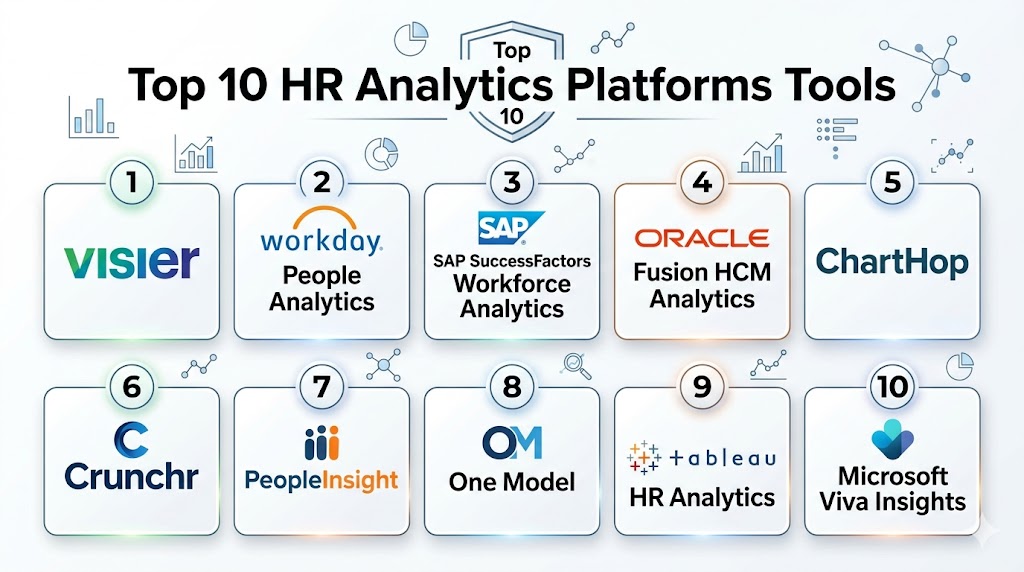
Top 10 HR Analytics Platforms Tools
#1 — Visier
Short description: Visier is one of the leading workforce analytics platforms focused on people intelligence, predictive workforce planning, and advanced HR analytics for enterprises.
Key Features
- Workforce analytics dashboards
- Predictive attrition analysis
- AI-powered workforce insights
- Diversity and inclusion reporting
- Workforce planning tools
- Benchmarking and trend analysis
- Executive reporting dashboards
Pros
- Strong enterprise analytics capabilities
- Advanced predictive workforce insights
- Comprehensive workforce visualization
Cons
- Enterprise-focused pricing
- Requires strong HR data governance
- Complex setup for smaller organizations
Platforms / Deployment
- Web / iOS / Android
- Cloud
Security & Compliance
Supports SSO/SAML, MFA, encryption, RBAC, audit controls, and enterprise governance capabilities.
Integrations & Ecosystem
Visier integrates deeply with enterprise HR and workforce management systems.
- Workday
- SAP SuccessFactors
- Oracle HCM
- Microsoft Teams
- HR systems
- APIs
Support & Community
Strong enterprise onboarding, implementation guidance, and customer success support.
#2 — Workday People Analytics
Short description: Workday People Analytics is a workforce intelligence solution integrated into the Workday ecosystem, helping organizations analyze employee data, engagement, and workforce performance.
Key Features
- Workforce planning analytics
- Employee retention insights
- AI-powered people analytics
- Real-time workforce dashboards
- Diversity and inclusion reporting
- Skills intelligence tracking
- Executive HR reporting
Pros
- Deep Workday ecosystem integration
- Strong enterprise scalability
- Unified workforce visibility
Cons
- Best suited for Workday customers
- Premium enterprise pricing
- Requires structured HR data management
Platforms / Deployment
- Web / iOS / Android
- Cloud
Security & Compliance
Supports MFA, SSO/SAML, encryption, RBAC, audit logs, and enterprise governance controls.
Integrations & Ecosystem
Workday People Analytics integrates tightly into Workday’s broader workforce management ecosystem.
- Workday HCM
- Payroll systems
- HR systems
- Collaboration tools
- ERP systems
- APIs
Support & Community
Comprehensive enterprise support and large implementation ecosystem.
#3 — SAP SuccessFactors Workforce Analytics
Short description: SAP SuccessFactors Workforce Analytics is an enterprise workforce intelligence platform designed for employee reporting, strategic workforce planning, and organizational analytics.
Key Features
- Workforce reporting dashboards
- Predictive workforce analytics
- Employee lifecycle analysis
- Organizational benchmarking
- Diversity and inclusion insights
- Workforce planning capabilities
- Executive reporting tools
Pros
- Strong enterprise reporting capabilities
- Broad HR ecosystem integration
- Good global workforce support
Cons
- Complex implementation requirements
- Enterprise-focused pricing structure
- Requires experienced administration
Platforms / Deployment
- Web / Mobile
- Cloud
Security & Compliance
Supports MFA, SSO, encryption, RBAC, audit logs, and governance administration controls.
Integrations & Ecosystem
SuccessFactors integrates deeply into SAP enterprise and HR ecosystems.
- SAP ERP
- SAP HCM
- Work management systems
- Collaboration tools
- Payroll systems
- APIs
Support & Community
Strong enterprise support and global implementation network.
#4 — Tableau HR Analytics
Short description: Tableau is a business intelligence platform widely used for HR analytics, workforce visualization, and employee reporting through highly customizable dashboards and analytics environments.
Key Features
- Workforce analytics visualization
- Custom HR dashboards
- Interactive reporting tools
- Predictive workforce analytics
- Real-time data visualization
- Data blending and analysis
- Executive workforce reporting
Pros
- Excellent dashboard customization
- Strong visualization capabilities
- Broad business intelligence flexibility
Cons
- Requires analytics expertise
- Not HR-specific by default
- Advanced analytics setup may require technical support
Platforms / Deployment
- Web / Windows / macOS / Mobile
- Cloud / Hybrid
Security & Compliance
Supports MFA, SSO, encryption, RBAC, and governance administration controls.
Integrations & Ecosystem
Tableau integrates with workforce systems, databases, and enterprise business intelligence environments.
- Workday
- SAP
- Oracle
- Salesforce
- Databases
- APIs
Support & Community
Large analytics community and extensive training resources.
#5 — Microsoft Power BI HR Analytics
Short description: Microsoft Power BI is a business analytics platform commonly used for workforce intelligence, HR reporting, and employee analytics through customizable dashboards and reporting environments.
Key Features
- HR analytics dashboards
- Workforce reporting automation
- AI-powered analytics
- Data visualization tools
- Employee trend analysis
- Executive workforce reporting
- Real-time workforce monitoring
Pros
- Strong Microsoft ecosystem integration
- Flexible reporting capabilities
- Competitive pricing for existing Microsoft customers
Cons
- Requires dashboard configuration expertise
- Not HR-specific by default
- Advanced workforce analytics may require customization
Platforms / Deployment
- Web / Windows / iOS / Android
- Cloud / Hybrid
Security & Compliance
Supports SSO/SAML, MFA, encryption, RBAC, audit controls, and governance administration.
Integrations & Ecosystem
Power BI integrates deeply into Microsoft and enterprise productivity ecosystems.
- Microsoft 365
- Azure
- Workday
- SAP
- Databases
- APIs
Support & Community
Strong Microsoft documentation and large analytics community support.
#6 — Crunchr
Short description: Crunchr is a people analytics platform focused on workforce reporting, HR dashboards, and predictive workforce intelligence for HR and business leaders.
Key Features
- Workforce analytics dashboards
- Predictive employee insights
- Diversity reporting
- Workforce planning tools
- Automated HR reporting
- Benchmarking support
- Executive analytics dashboards
Pros
- HR-focused analytics design
- Strong workforce planning capabilities
- Good dashboard usability
Cons
- Smaller ecosystem than larger vendors
- Enterprise-focused pricing
- Limited broader business intelligence functionality
Platforms / Deployment
- Web / Mobile
- Cloud
Security & Compliance
Supports SSO, MFA, encryption, RBAC, and administrative governance controls.
Integrations & Ecosystem
Crunchr integrates with HR systems and workforce management platforms.
- Workday
- SAP SuccessFactors
- Oracle HCM
- HR systems
- Payroll systems
- APIs
Support & Community
Strong onboarding guidance and practical customer support.
#7 — Oracle Fusion HCM Analytics
Short description: Oracle Fusion HCM Analytics is a workforce intelligence solution designed for enterprises using Oracle HCM environments for workforce planning and HR reporting.
Key Features
- Workforce intelligence dashboards
- Employee lifecycle reporting
- AI-powered workforce insights
- Attrition and retention analysis
- Organizational analytics
- Executive workforce dashboards
- HR benchmarking support
Pros
- Strong Oracle ecosystem integration
- Enterprise scalability
- Comprehensive workforce reporting
Cons
- Best suited for Oracle customers
- Complex enterprise deployment
- Premium implementation costs
Platforms / Deployment
- Web / Mobile
- Cloud
Security & Compliance
Supports MFA, SSO, encryption, RBAC, audit logs, and enterprise governance controls.
Integrations & Ecosystem
Oracle Fusion HCM Analytics integrates deeply into Oracle enterprise environments.
- Oracle HCM
- Oracle ERP
- Payroll systems
- Collaboration platforms
- Databases
- APIs
Support & Community
Strong enterprise implementation support and Oracle partner ecosystem.
#8 — ChartHop
Short description: ChartHop is a people operations and HR analytics platform designed to provide workforce visibility, organizational planning, and employee data visualization.
Key Features
- Organizational chart visualization
- Workforce analytics dashboards
- Compensation and headcount tracking
- Employee planning tools
- Diversity reporting
- Engagement insights
- Workforce scenario planning
Pros
- Excellent workforce visualization
- Modern and intuitive interface
- Good organizational planning support
Cons
- Smaller enterprise analytics depth
- Limited advanced predictive capabilities
- Growing ecosystem compared to larger vendors
Platforms / Deployment
- Web / iOS / Android
- Cloud
Security & Compliance
Supports MFA, SSO, encryption, and administrative controls.
Integrations & Ecosystem
ChartHop integrates with HR and workforce management systems for centralized people operations visibility.
- Workday
- BambooHR
- Greenhouse
- Slack
- Payroll systems
- APIs
Support & Community
Strong onboarding support and responsive customer service.
#9 — One Model
Short description: One Model is a people analytics platform focused on workforce intelligence, predictive analytics, and centralized HR data management for enterprises.
Key Features
- Workforce analytics automation
- Predictive people analytics
- Centralized HR data management
- Custom workforce dashboards
- AI-powered insights
- Executive reporting tools
- Workforce benchmarking
Pros
- Strong predictive analytics functionality
- Flexible HR data modeling
- Good enterprise scalability
Cons
- Requires analytics expertise
- Enterprise-focused deployment complexity
- Premium pricing structure
Platforms / Deployment
- Web / Mobile
- Cloud
Security & Compliance
Supports MFA, SSO, encryption, RBAC, audit logs, and governance controls.
Integrations & Ecosystem
One Model integrates with workforce systems, HR environments, and enterprise data platforms.
- Workday
- SAP
- Oracle HCM
- Payroll systems
- Business intelligence tools
- APIs
Support & Community
Strong enterprise onboarding and implementation assistance.
#10 — Sisense HR Analytics
Short description: Sisense is a business intelligence and analytics platform commonly used for HR reporting, workforce dashboards, and employee data visualization across organizations.
Key Features
- Workforce reporting dashboards
- HR data visualization
- Predictive analytics support
- Automated workforce reporting
- Interactive workforce analytics
- Executive reporting tools
- Data integration capabilities
Pros
- Strong visualization flexibility
- Broad analytics functionality
- Good customization capabilities
Cons
- Not HR-specific by default
- Requires analytics expertise
- Advanced workforce analytics may require customization
Platforms / Deployment
- Web / Windows / Mobile
- Cloud / Hybrid
Security & Compliance
Supports MFA, SSO, encryption, RBAC, and governance administration capabilities.
Integrations & Ecosystem
Sisense integrates with HR systems, databases, and enterprise analytics environments.
- Workday
- SAP
- Oracle
- Databases
- Salesforce
- APIs
Support & Community
Strong technical documentation and analytics support resources.
Comparison Table
| Tool Name | Best For | Platforms Supported | Deployment | Standout Feature | Public Rating |
|---|---|---|---|---|---|
| Visier | Enterprise workforce intelligence | Web, Mobile | Cloud | Predictive workforce analytics | N/A |
| Workday People Analytics | Workday-based enterprises | Web, Mobile | Cloud | Unified workforce visibility | N/A |
| SAP SuccessFactors Workforce Analytics | Global enterprise HR reporting | Web, Mobile | Cloud | Workforce benchmarking | N/A |
| Tableau HR Analytics | Workforce data visualization | Web, Desktop, Mobile | Cloud / Hybrid | Interactive HR dashboards | N/A |
| Microsoft Power BI HR Analytics | Microsoft-centric analytics | Web, Desktop, Mobile | Cloud / Hybrid | Flexible workforce reporting | N/A |
| Crunchr | HR-focused workforce planning | Web, Mobile | Cloud | Workforce planning analytics | N/A |
| Oracle Fusion HCM Analytics | Oracle HCM enterprises | Web, Mobile | Cloud | Enterprise workforce reporting | N/A |
| ChartHop | Organizational planning visibility | Web, Mobile | Cloud | Organizational visualization | N/A |
| One Model | Predictive people analytics | Web, Mobile | Cloud | Centralized HR data modeling | N/A |
| Sisense HR Analytics | Workforce business intelligence | Web, Desktop, Mobile | Cloud / Hybrid | Flexible analytics customization | N/A |
Evaluation & Scoring of HR Analytics Platforms
| Tool Name | Core 25% | Ease 15% | Integrations 15% | Security 10% | Performance 10% | Support 10% | Value 15% | Weighted Total |
|---|---|---|---|---|---|---|---|---|
| Visier | 9.5 | 8.0 | 9.0 | 9.0 | 9.0 | 9.0 | 7.5 | 8.9 |
| Workday People Analytics | 9.0 | 8.0 | 9.0 | 9.0 | 9.0 | 9.0 | 7.5 | 8.7 |
| SAP SuccessFactors Workforce Analytics | 9.0 | 7.5 | 9.0 | 9.0 | 8.5 | 8.5 | 7.0 | 8.5 |
| Tableau HR Analytics | 8.5 | 7.5 | 9.0 | 8.5 | 8.5 | 8.0 | 8.0 | 8.3 |
| Microsoft Power BI HR Analytics | 8.5 | 8.0 | 9.0 | 8.5 | 8.5 | 8.5 | 8.5 | 8.5 |
| Crunchr | 8.0 | 8.0 | 8.0 | 8.0 | 8.0 | 8.0 | 8.0 | 8.0 |
| Oracle Fusion HCM Analytics | 8.5 | 7.5 | 8.5 | 9.0 | 8.5 | 8.5 | 7.0 | 8.2 |
| ChartHop | 7.5 | 8.5 | 7.5 | 8.0 | 8.0 | 8.0 | 8.5 | 7.9 |
| One Model | 8.5 | 7.5 | 8.5 | 8.5 | 8.5 | 8.5 | 7.0 | 8.2 |
| Sisense HR Analytics | 8.0 | 7.5 | 8.5 | 8.5 | 8.0 | 8.0 | 8.0 | 8.1 |
These scores are comparative and designed to help organizations evaluate HR analytics platforms based on operational priorities. Enterprise-focused platforms generally score higher in predictive analytics, governance, and scalability, while visualization-focused tools often perform strongly in flexibility and customization. Organizations should align platform selection with workforce planning maturity, analytics expertise, and HR data strategy requirements.
Which HR Analytics Platform Is Right for You?
Solo / Freelancer
Solo professionals generally do not require full HR analytics platforms, but lightweight workforce reporting tools may still help small distributed teams and contractor management environments.
SMB
Small and medium businesses often prioritize usability, affordability, and straightforward reporting. ChartHop and Power BI can provide practical workforce visibility for growing organizations.
Mid-Market
Mid-market organizations usually require scalable workforce reporting, engagement analytics, and planning capabilities. Crunchr, Tableau, and One Model are strong choices.
Enterprise
Large enterprises typically prioritize predictive analytics, governance, integrations, and workforce intelligence depth. Visier, Workday People Analytics, and SAP SuccessFactors Workforce Analytics are strong enterprise-focused solutions.
Budget vs Premium
Budget-conscious organizations may prefer Power BI or Tableau-based workforce analytics environments, while enterprises requiring advanced predictive insights may benefit more from Visier or Qualtrics-style workforce intelligence platforms.
Feature Depth vs Ease of Use
ChartHop and Power BI focus on usability and visualization flexibility, while Visier and One Model provide broader enterprise workforce intelligence functionality.
Integrations & Scalability
Workday, SAP, and Oracle analytics platforms perform strongly within their own ecosystems, while Tableau and Power BI offer broader business intelligence flexibility across environments.
Security & Compliance Needs
Organizations with stronger governance and compliance requirements should prioritize Visier, SAP SuccessFactors Workforce Analytics, Workday People Analytics, and Oracle Fusion HCM Analytics because of stronger enterprise administrative controls.
Frequently Asked Questions FAQs
1. What are HR Analytics Platforms?
HR Analytics Platforms are workforce intelligence solutions designed to help organizations analyze employee data, improve decision-making, and optimize workforce management strategies.
2. Why are HR analytics important?
HR analytics help organizations improve retention, workforce planning, employee engagement, hiring efficiency, and overall people management through data-driven insights.
3. What is predictive workforce analytics?
Predictive workforce analytics uses historical and real-time employee data to forecast trends such as attrition risks, hiring needs, and workforce performance outcomes.
4. Are HR analytics platforms suitable for small businesses?
Some platforms are suitable for SMBs, especially those focused on reporting and workforce visibility. However, advanced enterprise analytics solutions may be excessive for smaller organizations.
5. What features should buyers prioritize?
Organizations should evaluate predictive analytics, reporting flexibility, integrations, AI-powered insights, workforce planning tools, and governance controls.
6. Why are integrations important in HR analytics platforms?
Integrations connect workforce analytics with HR systems, payroll platforms, collaboration tools, and business intelligence environments for centralized workforce visibility.
7. Are AI capabilities becoming important in this category?
Yes. AI-powered workforce predictions, sentiment analysis, retention forecasting, and workforce recommendations are becoming major differentiators.
8. What are common implementation mistakes?
Common mistakes include poor data quality management, unclear workforce metrics, weak governance planning, and insufficient stakeholder adoption.
9. Can HR analytics improve employee retention?
Strong analytics platforms can identify turnover risks, engagement problems, and workforce trends early, helping organizations improve retention strategies proactively.
10. How long does implementation usually take?
Implementation timelines depend on data complexity, integrations, reporting requirements, and organizational scale. Enterprise deployments often require phased rollout strategies.
Conclusion
HR Analytics Platforms have become essential for organizations seeking data-driven workforce planning, employee engagement insights, and predictive people intelligence. The right solution depends on operational priorities such as analytics depth, ecosystem integration, scalability, governance requirements, and reporting flexibility. Visier and Workday People Analytics remain strong enterprise choices because of their predictive workforce intelligence capabilities, while Tableau and Power BI provide flexible analytics environments for organizations prioritizing visualization and customization. Businesses looking for specialized workforce planning may benefit from Crunchr or One Model, while organizations deeply invested in enterprise ecosystems may prefer SAP SuccessFactors or Oracle Fusion HCM Analytics. Rather than selecting platforms solely based on dashboard functionality, organizations should evaluate workforce data maturity, integration compatibility, governance readiness, and long-term analytics strategy alignment. A practical next step is to shortlist a few platforms, run pilot workforce reporting projects, validate data integrations and analytics workflows, and measure business impact before full-scale deployment.