Introduction
Remote Sensing & Satellite Image Analysis platforms are specialized systems used to capture, process, analyze, and visualize geospatial imagery collected from satellites, drones, aircraft, and sensors. These platforms help governments, defense organizations, environmental agencies, agricultural companies, researchers, and enterprises monitor land, infrastructure, weather, climate, and environmental conditions using advanced spatial intelligence.
Modern organizations increasingly rely on remote sensing technologies for real-time monitoring, predictive analytics, environmental planning, infrastructure assessment, and disaster response. Traditional manual image interpretation methods are no longer sufficient for handling massive volumes of geospatial data. Today’s platforms integrate AI-driven analytics, machine learning, cloud computing, hyperspectral imaging, IoT data, and GIS systems to improve automation and operational insights.
Real-world use cases include:
- Environmental and climate monitoring
- Precision agriculture and crop analysis
- Defense and intelligence operations
- Urban planning and land-use monitoring
- Disaster management and infrastructure assessment
Buyers evaluating Remote Sensing & Satellite Image Analysis platforms should focus on:
- Image processing and analysis capabilities
- AI and machine learning support
- GIS integration flexibility
- Satellite imagery compatibility
- Real-time monitoring and analytics
- Cloud scalability for large datasets
- Data visualization and reporting tools
- Security and compliance readiness
- API and developer ecosystem support
- Industry-specific workflows and automation
Best for: Government agencies, defense organizations, environmental monitoring programs, agricultural enterprises, telecom providers, infrastructure operators, research institutions, and smart city initiatives requiring advanced geospatial intelligence capabilities.
Not ideal for: Organizations that only require basic mapping or lightweight GIS visualization without advanced imagery analysis or remote sensing workflows.
Key Trends in Remote Sensing & Satellite Image Analysis
- AI-assisted image recognition improving automated object detection
- Cloud-native geospatial processing reducing infrastructure complexity
- Real-time satellite imagery access supporting live monitoring use cases
- Drone and UAV integration expanding data collection capabilities
- Hyperspectral imaging improving environmental and agricultural analysis
- Integration with IoT sensors enabling multi-source geospatial intelligence
- Predictive analytics supporting climate and disaster forecasting
- Increased adoption of digital twins for infrastructure monitoring
- Geospatial AI accelerating anomaly detection and change analysis
- Stronger cybersecurity requirements for defense and critical infrastructure imagery platforms
How We Selected These Tools (Methodology)
- Adoption across government, defense, agriculture, and environmental sectors
- Depth of image processing and analytics capabilities
- AI and machine learning integration support
- GIS interoperability and geospatial compatibility
- Scalability for large satellite imagery datasets
- Real-time monitoring and visualization capabilities
- Security and governance readiness
- Cloud and hybrid deployment flexibility
- Vendor support and developer ecosystem maturity
- Balance between enterprise, cloud-native, and open-source solutions
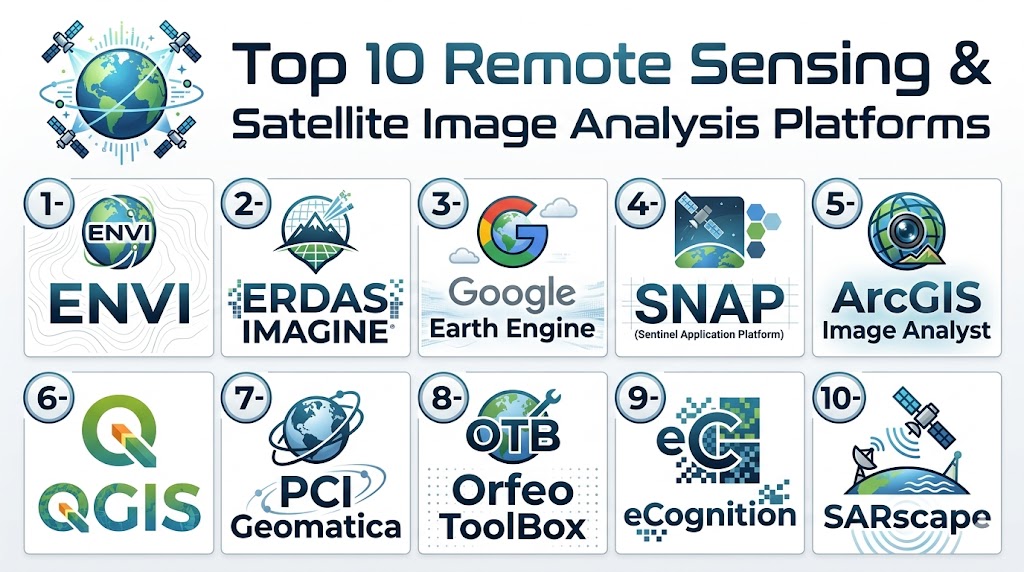
Top 10 Remote Sensing & Satellite Image Analysis Platforms
1- Google Earth Engine
Short description:
Google Earth Engine is one of the most powerful cloud-based geospatial analysis platforms available today. It enables large-scale satellite imagery processing, environmental monitoring, and AI-driven geospatial analytics.
Key Features
- Massive satellite imagery datasets
- Cloud-native geospatial processing
- AI and machine learning support
- Time-series environmental analysis
- Real-time geospatial analytics
- API and scripting support
- Large-scale raster processing
Pros
- Extremely scalable platform
- Strong environmental analytics capabilities
- Excellent cloud processing performance
Cons
- Requires coding expertise
- Limited traditional GIS workflows
- Dependent on cloud infrastructure
Platforms / Deployment
- Web
- Cloud
Security & Compliance
Supports secure authentication and enterprise-grade cloud security controls.
Integrations & Ecosystem
Integrates with Google Cloud, AI platforms, GIS tools, and satellite imagery services.
- Google Cloud
- GIS systems
- APIs
- AI tools
- Satellite datasets
Support & Community
Strong research, environmental science, and developer community adoption.
2- Esri ArcGIS Image Analyst
Short description:
ArcGIS Image Analyst provides advanced remote sensing and raster analytics capabilities within the ArcGIS ecosystem for enterprise geospatial intelligence operations.
Key Features
- Advanced raster analytics
- AI-assisted image classification
- 3D visualization capabilities
- Real-time imagery analysis
- GIS integration workflows
- Change detection tools
- Satellite and drone imagery support
Pros
- Strong enterprise GIS ecosystem
- Excellent visualization capabilities
- Advanced geospatial analytics
Cons
- Premium licensing costs
- Requires GIS expertise
- Complex enterprise deployment
Platforms / Deployment
- Web / Windows
- Cloud / Hybrid
Security & Compliance
Supports MFA, RBAC, encryption, and enterprise authentication controls.
Integrations & Ecosystem
Integrates deeply with ArcGIS tools, GIS databases, and IoT systems.
- ArcGIS ecosystem
- APIs
- GIS databases
- Drone systems
- IoT platforms
Support & Community
Massive global GIS community with strong enterprise support resources.
3- ENVI
Short description:
ENVI is a specialized remote sensing and image analysis platform widely used for satellite imagery processing, defense intelligence, and scientific geospatial research.
Key Features
- Spectral image analysis
- Hyperspectral data processing
- AI-based classification tools
- Change detection workflows
- Terrain analysis
- Object extraction capabilities
- Remote sensing automation
Pros
- Excellent scientific analysis capabilities
- Strong hyperspectral processing
- Advanced remote sensing workflows
Cons
- Steep learning curve
- Premium pricing model
- Requires technical expertise
Platforms / Deployment
- Windows
- Self-hosted
Security & Compliance
Supports enterprise authentication and secure data management features.
Integrations & Ecosystem
- GIS systems
- APIs
- Defense intelligence workflows
- Drone imagery tools
Support & Community
Strong academic, research, and defense-sector adoption.
4- ERDAS IMAGINE
Short description:
ERDAS IMAGINE is an enterprise geospatial processing platform focused on remote sensing, photogrammetry, and advanced imagery analysis.
Key Features
- Raster image processing
- Photogrammetry workflows
- Terrain modeling
- Geospatial analytics
- AI-assisted classification
- Drone imagery processing
- Large-scale imagery management
Pros
- Strong enterprise scalability
- Excellent photogrammetry support
- Advanced imagery analytics
Cons
- Complex user interface
- High operational costs
- Requires specialized expertise
Platforms / Deployment
- Windows
- Self-hosted / Hybrid
Security & Compliance
Supports enterprise authentication, encryption, and secure access controls.
Integrations & Ecosystem
- GIS platforms
- CAD systems
- APIs
- Drone imaging tools
Support & Community
Established geospatial enterprise ecosystem with strong training resources.
5- PCI Geomatica
Short description:
PCI Geomatica provides remote sensing and geospatial analytics tools for satellite imagery processing, environmental monitoring, and infrastructure mapping.
Key Features
- Automated image correction
- Satellite imagery analytics
- Geospatial data processing
- AI-assisted classification
- Terrain analysis
- Change detection
- Workflow automation
Pros
- Strong automation capabilities
- Good satellite imagery support
- Reliable enterprise workflows
Cons
- Smaller market ecosystem
- Less modern UI design
- Requires remote sensing expertise
Platforms / Deployment
- Windows
- Self-hosted
Security & Compliance
Supports secure authentication and enterprise access controls.
Integrations & Ecosystem
- GIS systems
- APIs
- Remote sensing tools
- Data processing workflows
Support & Community
Strong geospatial support with scientific and government adoption.
6- Sentinel Hub
Short description:
Sentinel Hub is a cloud-based remote sensing platform focused on satellite imagery access, processing, and analytics APIs.
Key Features
- Real-time satellite imagery access
- Cloud-based processing APIs
- AI image analysis support
- Raster analytics
- Geospatial visualization
- Data fusion capabilities
- Time-series monitoring
Pros
- Excellent API ecosystem
- Strong cloud scalability
- Fast imagery access workflows
Cons
- Requires API and scripting knowledge
- Limited traditional GIS workflows
- Premium enterprise usage costs
Platforms / Deployment
- Web
- Cloud
Security & Compliance
Supports secure APIs, encryption, and enterprise access management.
Integrations & Ecosystem
- GIS systems
- APIs
- Cloud platforms
- AI tools
Support & Community
Strong geospatial developer and analytics ecosystem.
7- SNAP ESA Platform
Short description:
SNAP is an open-source remote sensing platform developed for processing Sentinel satellite imagery and Earth observation datasets.
Key Features
- Sentinel imagery processing
- Open-source remote sensing workflows
- Raster analytics
- Image correction tools
- Spectral analysis
- Geospatial processing
- Plugin extensibility
Pros
- Free and open-source
- Strong Earth observation support
- Good scientific workflows
Cons
- Requires technical expertise
- Less enterprise-focused
- Limited UI modernization
Platforms / Deployment
- Windows / Linux / macOS
- Self-hosted
Security & Compliance
Varies depending on deployment infrastructure.
Integrations & Ecosystem
- ESA datasets
- GIS systems
- APIs
- Scientific tools
Support & Community
Strong scientific and Earth observation research community.
8- Planet Platform
Short description:
Planet provides high-frequency satellite imagery and analytics tools for agriculture, defense, environmental monitoring, and infrastructure analysis.
Key Features
- Daily satellite imagery
- AI-powered change detection
- Geospatial analytics APIs
- Environmental monitoring
- Infrastructure tracking
- Time-series analysis
- Cloud-based visualization
Pros
- High-frequency imagery updates
- Excellent monitoring capabilities
- Strong API access
Cons
- Premium subscription costs
- Cloud dependency
- Limited offline processing flexibility
Platforms / Deployment
- Web
- Cloud
Security & Compliance
Supports enterprise-grade cloud security and secure APIs.
Integrations & Ecosystem
- APIs
- GIS systems
- AI platforms
- Cloud infrastructure
Support & Community
Strong enterprise and government customer support ecosystem.
9- Orfeo ToolBox
Short description:
Orfeo ToolBox is an open-source remote sensing library focused on satellite image processing and machine learning workflows.
Key Features
- Image classification tools
- Machine learning support
- Raster processing
- Object detection workflows
- Remote sensing analytics
- Open-source extensibility
- Scientific geospatial processing
Pros
- Free and open-source
- Strong machine learning support
- Flexible scientific workflows
Cons
- Technical deployment complexity
- Limited enterprise support
- Requires scripting expertise
Platforms / Deployment
- Windows / Linux / macOS
- Self-hosted
Security & Compliance
Varies based on infrastructure deployment.
Integrations & Ecosystem
- QGIS
- APIs
- Scientific tools
- GIS systems
Support & Community
Growing open-source geospatial analytics community.
10- Trimble eCognition
Short description:
Trimble eCognition specializes in AI-powered object-based image analysis for remote sensing, infrastructure monitoring, and environmental intelligence.
Key Features
- Object-based image analysis
- AI-assisted feature extraction
- Remote sensing automation
- Change detection workflows
- Geospatial AI capabilities
- Infrastructure monitoring
- Classification modeling
Pros
- Strong AI-driven analytics
- Excellent object recognition capabilities
- Advanced automation workflows
Cons
- Premium enterprise pricing
- Requires technical expertise
- Complex advanced configurations
Platforms / Deployment
- Windows
- Self-hosted / Hybrid
Security & Compliance
Supports enterprise authentication and secure access management.
Integrations & Ecosystem
- GIS systems
- APIs
- Drone imaging platforms
- AI tools
Support & Community
Strong enterprise geospatial and infrastructure analytics ecosystem.
Comparison Table
| Tool Name | Best For | Platforms Supported | Deployment | Standout Feature | Public Rating |
|---|---|---|---|---|---|
| Google Earth Engine | Environmental analytics | Web | Cloud | Massive cloud geospatial processing | N/A |
| ArcGIS Image Analyst | Enterprise GIS analysis | Web, Windows | Cloud / Hybrid | GIS-integrated raster analytics | N/A |
| ENVI | Scientific remote sensing | Windows | Self-hosted | Hyperspectral analysis | N/A |
| ERDAS IMAGINE | Enterprise imagery processing | Windows | Hybrid | Photogrammetry workflows | N/A |
| PCI Geomatica | Satellite imagery automation | Windows | Self-hosted | Automated corrections | N/A |
| Sentinel Hub | API-driven satellite access | Web | Cloud | Real-time imagery APIs | N/A |
| SNAP ESA | Earth observation workflows | Windows, Linux | Self-hosted | Sentinel imagery processing | N/A |
| Planet Platform | Daily satellite imagery | Web | Cloud | High-frequency monitoring | N/A |
| Orfeo ToolBox | Open-source analytics | Windows, Linux | Self-hosted | Machine learning workflows | N/A |
| Trimble eCognition | AI image analysis | Windows | Hybrid | Object-based recognition | N/A |
Evaluation & Scoring of Remote Sensing & Satellite Image Analysis Platforms
| Tool Name | Core 25% | Ease 15% | Integrations 15% | Security 10% | Performance 10% | Support 10% | Value 15% | Weighted Total |
|---|---|---|---|---|---|---|---|---|
| Google Earth Engine | 9.8 | 7.9 | 9.5 | 9.0 | 9.8 | 9.2 | 8.7 | 9.2 |
| ArcGIS Image Analyst | 9.5 | 8.0 | 9.6 | 9.2 | 9.4 | 9.5 | 7.9 | 9.0 |
| ENVI | 9.2 | 7.2 | 8.8 | 8.7 | 9.1 | 8.9 | 7.8 | 8.7 |
| ERDAS IMAGINE | 9.1 | 7.0 | 8.9 | 8.8 | 9.0 | 8.8 | 7.7 | 8.6 |
| PCI Geomatica | 8.8 | 7.5 | 8.4 | 8.5 | 8.7 | 8.4 | 8.3 | 8.5 |
| Sentinel Hub | 8.9 | 8.0 | 9.1 | 8.8 | 9.2 | 8.7 | 8.5 | 8.8 |
| SNAP ESA | 8.5 | 7.4 | 8.0 | 7.9 | 8.6 | 8.5 | 9.3 | 8.4 |
| Planet Platform | 9.0 | 8.3 | 9.0 | 8.9 | 9.3 | 8.8 | 7.9 | 8.8 |
| Orfeo ToolBox | 8.4 | 7.1 | 8.2 | 7.8 | 8.5 | 8.3 | 9.2 | 8.3 |
| Trimble eCognition | 9.0 | 7.5 | 8.8 | 8.8 | 9.0 | 8.7 | 7.8 | 8.6 |
These scores are comparative and intended to help organizations evaluate remote sensing platforms based on analytics depth, AI capabilities, scalability, integrations, usability, security, and long-term operational value. Enterprise cloud platforms generally lead in scalability and automation, while open-source solutions provide strong flexibility and cost efficiency.
Which Remote Sensing & Satellite Image Analysis Platform Is Right for You?
Solo / Research Teams
Best suited: SNAP ESA, Orfeo ToolBox
These open-source tools provide powerful scientific analysis capabilities for academic and research-focused projects.
SMB / Regional Organizations
Best suited: Sentinel Hub, PCI Geomatica
These offer manageable deployment complexity and strong geospatial processing capabilities.
Mid-Market Enterprises
Best suited: ArcGIS Image Analyst, ENVI, Planet Platform
These provide stronger automation, visualization, and analytics ecosystems.
Enterprise / Government Programs
Best suited: Google Earth Engine, ArcGIS, ERDAS IMAGINE
These offer large-scale scalability, advanced analytics, and strong enterprise integrations.
Budget vs Premium
Budget-friendly: SNAP ESA, Orfeo ToolBox
Premium enterprise: ArcGIS, Google Earth Engine, ENVI
Feature Depth vs Ease of Use
Deep analytics: Google Earth Engine, ENVI, ERDAS
Ease of use: Sentinel Hub, Planet Platform
Integrations & Scalability
Best integrations: ArcGIS, Google Earth Engine, Planet
Best scalability: Google Earth Engine, ArcGIS
Security & Compliance Needs
Organizations handling defense, environmental, or critical infrastructure imagery should prioritize platforms supporting RBAC, MFA, encryption, audit logging, and secure API management.
Frequently Asked Questions
1. What is remote sensing?
Remote sensing is the process of collecting and analyzing information about the Earth using satellites, drones, aircraft, and sensors without direct physical contact.
2. Why are satellite image analysis platforms important?
They help organizations monitor environmental changes, infrastructure conditions, disasters, agriculture, and security operations using geospatial intelligence.
3. Can these platforms integrate with GIS systems?
Yes, most modern remote sensing platforms integrate with GIS systems for mapping, spatial analysis, and visualization workflows.
4. Are cloud-based remote sensing platforms common?
Yes, cloud-native platforms are increasingly popular because they improve scalability and processing speed for large imagery datasets.
5. What security features are essential?
Encryption, RBAC, MFA, secure APIs, and audit logging are important for protecting sensitive geospatial and satellite data.
6. Are open-source remote sensing tools reliable?
Yes, platforms like SNAP ESA and Orfeo ToolBox are widely used in scientific and research environments.
7. What industries use remote sensing the most?
Government, defense, agriculture, environmental science, telecom, utilities, mining, and smart city programs heavily rely on remote sensing technologies.
8. What are common implementation challenges?
Managing large imagery datasets, integration complexity, staff training, and processing performance optimization are common challenges.
9. Can these systems support AI-based image analysis?
Yes, many modern platforms include AI and machine learning capabilities for object detection, classification, and predictive analytics.
10. How should organizations choose a platform?
Organizations should evaluate analytics depth, scalability, integration support, AI capabilities, operational costs, and deployment flexibility.
Conclusion
Remote Sensing & Satellite Image Analysis platforms have become essential tools for governments, enterprises, environmental organizations, and defense agencies seeking advanced geospatial intelligence capabilities. Modern platforms now combine AI-driven analytics, cloud-native processing, GIS integration, drone imagery, predictive modeling, and real-time monitoring to support increasingly complex operational and scientific workflows. Enterprise solutions such as Google Earth Engine, ArcGIS Image Analyst, and ERDAS IMAGINE provide deep scalability and advanced analytics capabilities, while open-source tools like SNAP ESA and Orfeo ToolBox offer flexibility and cost efficiency for research-focused deployments. The best solution ultimately depends on organizational scale, technical expertise, integration requirements, and operational priorities. A structured evaluation process combined with pilot deployments and interoperability testing can significantly improve long-term implementation success and analytical value.