Introduction
Construction Estimating Software helps contractors, estimators, project managers, builders, and construction firms calculate project costs, material quantities, labor expenses, bids, budgets, and profitability more accurately. These platforms streamline takeoffs, bid preparation, cost forecasting, subcontractor coordination, and financial planning across residential, commercial, industrial, and infrastructure construction projects.
As construction projects become more data-driven and cost-sensitive, estimating platforms have become essential for improving bid accuracy, reducing budget overruns, accelerating proposal generation, and increasing operational efficiency. Modern construction estimating tools now include AI-assisted cost forecasting, digital takeoffs, BIM integrations, cloud collaboration, mobile workflows, supplier pricing databases, real-time analytics, and automated proposal generation.
Real-world use cases include:
- Project cost estimation
- Quantity takeoffs
- Bid and proposal management
- Labor and material forecasting
- Budget and profitability analysis
Buyers should evaluate:
- Estimating accuracy and automation
- Digital takeoff functionality
- Cost database management
- BIM and CAD integrations
- Proposal and bid generation
- Reporting and analytics capabilities
- Cloud collaboration features
- Mobile accessibility
- Integration ecosystem maturity
- Scalability across construction operations
Best for: general contractors, subcontractors, engineering firms, construction companies, infrastructure developers, residential builders, and enterprises managing complex construction bidding workflows.
Not ideal for: organizations with minimal construction planning requirements or businesses managing only small projects using basic spreadsheet workflows.
Key Trends in Construction Estimating Software
- AI-assisted cost forecasting is improving rapidly.
- BIM-integrated estimating workflows are expanding.
- Cloud-based collaborative estimating is becoming standard.
- Automated quantity takeoffs are evolving rapidly.
- Supplier pricing integrations are increasing.
- Predictive budget risk analysis is growing.
- Mobile-first estimation workflows are improving.
- Real-time proposal generation is expanding.
- Construction analytics and profitability forecasting are advancing.
- Low-code workflow customization is becoming more common.
How We Selected These Tools
The platforms in this list were selected based on estimating depth, takeoff accuracy, integrations, operational scalability, and industry adoption.
- Market adoption and operational reputation
- Cost estimation functionality
- Digital takeoff capabilities
- BIM and CAD integration support
- Reporting and proposal management
- Workflow automation capabilities
- Security and compliance readiness
- Cloud collaboration functionality
- Scalability across construction projects
- Vendor support and implementation ecosystem
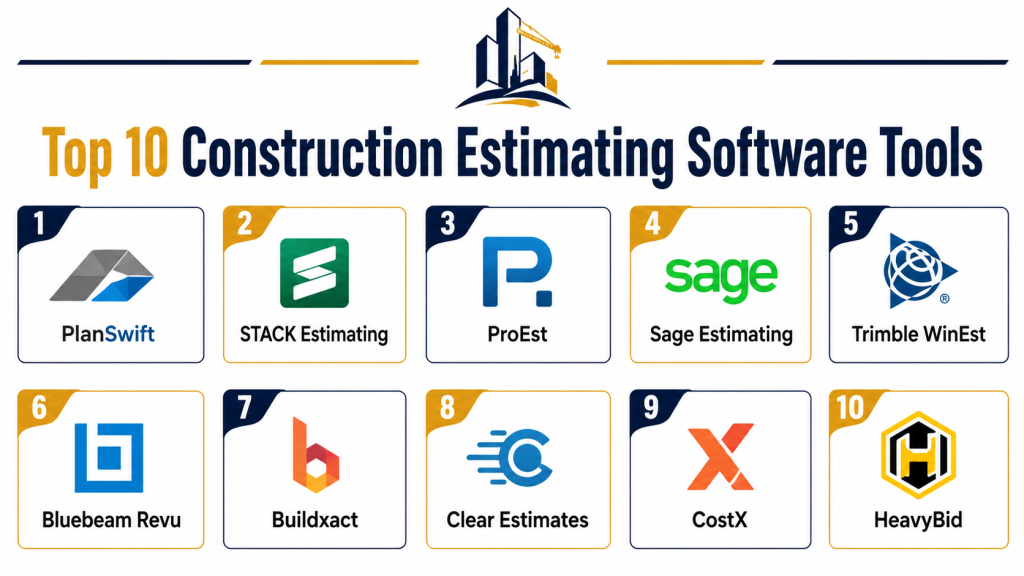
Top 10 Construction Estimating Software Tools
#1 — ProEst
Short description: ProEst is a cloud-based construction estimating platform focused on digital takeoffs, bid management, cost forecasting, and collaborative estimating workflows.
Key Features
- Digital takeoffs
- Cost estimation workflows
- Bid management
- Proposal generation
- Cloud collaboration
- Cost database management
- Reporting dashboards
Pros
- Strong estimating automation
- Good cloud collaboration support
- Broad operational flexibility
Cons
- Premium pricing for advanced features
- Enterprise customization requires setup
- Advanced integrations may require planning
Platforms / Deployment
- Web
- Cloud
Security & Compliance
Supports MFA, RBAC, encryption, audit logging, and governance administration controls.
Integrations & Ecosystem
ProEst integrates with construction and financial ecosystems.
- ERP systems
- Accounting platforms
- BIM tools
- Project management systems
- CRM environments
- APIs
Support & Community
Strong estimating onboarding and construction support ecosystem.
#2 — STACK
Short description: STACK is a cloud-based construction takeoff and estimating platform designed for contractors managing bids, quantity takeoffs, and project forecasting.
Key Features
- Digital takeoffs
- Bid management
- Quantity estimation
- Cloud collaboration
- Proposal workflows
- Cost tracking
- Operational analytics
Pros
- Excellent usability
- Strong cloud collaboration
- Good SMB construction support
Cons
- Enterprise operational depth is lighter
- Advanced BIM workflows limited
- Large-scale customization may require integrations
Platforms / Deployment
- Web
- Cloud
Security & Compliance
Supports MFA, encryption, RBAC, and governance administration controls.
Integrations & Ecosystem
STACK integrates with construction productivity environments.
- QuickBooks
- Procore
- Accounting systems
- Cloud storage platforms
- Project management tools
- APIs
Support & Community
Strong SMB onboarding and estimating support.
#3 — PlanSwift
Short description: PlanSwift is a digital takeoff and estimating platform focused on quantity calculations, blueprint analysis, and construction cost estimation workflows.
Key Features
- Digital takeoffs
- Blueprint measurements
- Material calculations
- Labor cost estimation
- Custom assemblies
- Bid preparation
- Workflow automation
Pros
- Strong takeoff functionality
- Good customization flexibility
- Broad estimating usability
Cons
- Interface modernization could improve
- Cloud collaboration lighter than SaaS competitors
- Advanced integrations may require setup
Platforms / Deployment
- Windows
- Desktop
Security & Compliance
Supports encryption and governance administration controls.
Integrations & Ecosystem
PlanSwift integrates with construction estimating environments.
- Excel
- Accounting systems
- ERP platforms
- Construction management tools
- Proposal systems
- APIs
Support & Community
Strong estimating-focused community and onboarding resources.
#4 — Sage Estimating
Short description: Sage Estimating is an enterprise construction estimating platform designed for detailed cost calculations, bid management, and operational forecasting.
Key Features
- Detailed cost estimation
- Bid management
- Cost database management
- Proposal generation
- Reporting dashboards
- Labor forecasting
- Workflow automation
Pros
- Strong enterprise estimating depth
- Broad financial integration support
- Good operational forecasting capabilities
Cons
- Complex enterprise setup
- Requires estimating expertise
- Premium enterprise pricing
Platforms / Deployment
- Windows / Web
- Cloud / Hybrid
Security & Compliance
Supports MFA, RBAC, encryption, audit logging, and governance administration controls.
Integrations & Ecosystem
Sage integrates with construction financial ecosystems.
- Sage accounting platforms
- ERP systems
- Project management tools
- Payroll systems
- CRM platforms
- APIs
Support & Community
Strong enterprise construction and accounting support ecosystem.
#5 — Autodesk Takeoff
Short description: Autodesk Takeoff combines digital quantity takeoffs, BIM workflows, and cloud-based estimating collaboration for modern construction operations.
Key Features
- Digital quantity takeoffs
- BIM integration
- 2D and 3D measurements
- Cloud collaboration
- Cost forecasting
- Document management
- Operational reporting
Pros
- Excellent BIM workflow support
- Strong design-to-estimation integration
- Broad cloud collaboration capabilities
Cons
- Requires Autodesk ecosystem familiarity
- Premium infrastructure pricing
- Complex enterprise workflows require planning
Platforms / Deployment
- Web
- Cloud
Security & Compliance
Supports MFA, RBAC, encryption, audit controls, and governance administration.
Integrations & Ecosystem
Autodesk integrates deeply into construction design ecosystems.
- Revit
- AutoCAD
- BIM platforms
- Project management tools
- ERP systems
- APIs
Support & Community
Large construction and design ecosystem support.
#6 — CostX
Short description: CostX is an advanced estimating and takeoff platform focused on BIM-enabled cost estimation, quantity surveying, and project forecasting.
Key Features
- BIM quantity takeoffs
- Cost estimation workflows
- 2D and 3D measurements
- Bid preparation
- Cost forecasting
- Reporting analytics
- Workflow automation
Pros
- Strong BIM estimating support
- Excellent quantity surveying capabilities
- Broad operational forecasting functionality
Cons
- Advanced learning curve
- Premium enterprise pricing
- Smaller ecosystem than larger enterprise vendors
Platforms / Deployment
- Windows
- Desktop / Cloud
Security & Compliance
Supports encryption, RBAC, audit controls, and governance administration.
Integrations & Ecosystem
CostX integrates with construction estimating ecosystems.
- BIM systems
- Accounting platforms
- ERP tools
- CAD environments
- Operational reporting systems
- APIs
Support & Community
Strong quantity surveying and estimating support ecosystem.
#7 — Buildertrend Estimating
Short description: Buildertrend Estimating helps residential contractors manage project estimates, budgets, proposals, and customer-facing cost workflows.
Key Features
- Residential estimating workflows
- Budget tracking
- Proposal generation
- Customer portals
- Cost forecasting
- Mobile collaboration
- Reporting dashboards
Pros
- Excellent residential construction usability
- Strong customer communication workflows
- Good SMB operational support
Cons
- Enterprise infrastructure workflows limited
- Advanced BIM integrations lighter
- Large-scale customization requires planning
Platforms / Deployment
- Web / iOS / Android
- Cloud
Security & Compliance
Supports MFA, encryption, RBAC, and governance administration controls.
Integrations & Ecosystem
Buildertrend integrates with residential construction ecosystems.
- QuickBooks
- CRM platforms
- Payment systems
- Scheduling tools
- Cloud storage systems
- APIs
Support & Community
Strong residential construction onboarding and support.
#8 — Trimble WinEst
Short description: Trimble WinEst is an enterprise estimating platform designed for infrastructure, industrial construction, and large-scale operational forecasting.
Key Features
- Enterprise cost estimation
- Digital takeoffs
- Proposal management
- Cost databases
- Resource forecasting
- BIM integrations
- Operational analytics
Pros
- Strong enterprise estimating depth
- Excellent infrastructure project support
- Broad integration capabilities
Cons
- Complex implementation workflows
- Requires operational expertise
- Premium enterprise pricing
Platforms / Deployment
- Windows / Web
- Cloud / Hybrid
Security & Compliance
Supports MFA, RBAC, encryption, audit logging, and governance administration controls.
Integrations & Ecosystem
Trimble integrates with enterprise construction ecosystems.
- BIM systems
- ERP platforms
- Financial systems
- CAD environments
- Operational tools
- APIs
Support & Community
Strong infrastructure and enterprise support ecosystem.
#9 — Clear Estimates
Short description: Clear Estimates is a residential construction estimating platform focused on simple proposal creation, cost calculations, and contractor-friendly workflows.
Key Features
- Residential cost estimation
- Proposal generation
- Material pricing databases
- Labor forecasting
- Budget management
- Reporting workflows
- Cloud collaboration
Pros
- Easy SMB usability
- Affordable pricing structure
- Strong residential estimating workflows
Cons
- Enterprise operational depth limited
- Advanced BIM workflows unavailable
- Large-scale customization lighter
Platforms / Deployment
- Web
- Cloud
Security & Compliance
Supports encryption, RBAC, and governance administration controls.
Integrations & Ecosystem
Clear Estimates integrates with SMB construction environments.
- QuickBooks
- Accounting tools
- Proposal systems
- Cloud storage platforms
- CRM systems
- APIs
Support & Community
Strong SMB onboarding and estimating support.
#10 — Contractor Foreman Estimating
Short description: Contractor Foreman Estimating is a construction project and estimating platform designed for SMB contractors managing bids, budgets, and operational workflows.
Key Features
- Construction estimating
- Bid tracking
- Budget management
- Proposal workflows
- Workforce coordination
- Reporting dashboards
- Workflow automation
Pros
- Affordable SMB pricing
- Broad construction workflow support
- Good operational usability
Cons
- Enterprise operational scalability lighter
- Advanced BIM integrations limited
- Reporting customization requires setup
Platforms / Deployment
- Web / iOS / Android
- Cloud
Security & Compliance
Supports MFA, encryption, RBAC, and governance administration controls.
Integrations & Ecosystem
Contractor Foreman integrates with construction operational ecosystems.
- QuickBooks
- Scheduling systems
- Cloud storage tools
- CRM platforms
- Workforce systems
- APIs
Support & Community
Strong SMB construction onboarding and support.
Comparison Table
| Tool Name | Best For | Platforms Supported | Deployment | Standout Feature | Public Rating |
|---|---|---|---|---|---|
| ProEst | Cloud-based estimating workflows | Web | Cloud | Collaborative estimating | N/A |
| STACK | SMB takeoffs and bids | Web | Cloud | Easy digital takeoffs | N/A |
| PlanSwift | Desktop quantity takeoffs | Windows | Desktop | Blueprint measurements | N/A |
| Sage Estimating | Enterprise cost forecasting | Windows, Web | Cloud / Hybrid | Enterprise financial estimation | N/A |
| Autodesk Takeoff | BIM-driven estimating | Web | Cloud | 2D and 3D takeoffs | N/A |
| CostX | Quantity surveying workflows | Windows | Desktop / Cloud | BIM quantity estimation | N/A |
| Buildertrend Estimating | Residential estimating | Web, Mobile | Cloud | Customer-facing proposals | N/A |
| Trimble WinEst | Infrastructure project estimating | Windows, Web | Cloud / Hybrid | Enterprise infrastructure estimation | N/A |
| Clear Estimates | Residential SMB contractors | Web | Cloud | Simple estimating workflows | N/A |
| Contractor Foreman Estimating | SMB operational estimating | Web, Mobile | Cloud | Affordable estimating tools | N/A |
Evaluation & Scoring of Construction Estimating Software
| Tool Name | Core 25% | Ease 15% | Integrations 15% | Security 10% | Performance 10% | Support 10% | Value 15% | Weighted Total |
|---|---|---|---|---|---|---|---|---|
| ProEst | 9.0 | 8.5 | 8.5 | 8.5 | 8.5 | 8.5 | 8.0 | 8.5 |
| STACK | 8.5 | 9.0 | 7.5 | 8.0 | 8.5 | 8.5 | 8.5 | 8.4 |
| PlanSwift | 8.5 | 8.0 | 7.5 | 7.5 | 8.5 | 8.0 | 8.5 | 8.1 |
| Sage Estimating | 9.0 | 7.0 | 8.5 | 9.0 | 8.5 | 8.5 | 7.0 | 8.2 |
| Autodesk Takeoff | 9.0 | 8.0 | 9.0 | 8.5 | 8.5 | 8.5 | 7.5 | 8.5 |
| CostX | 9.0 | 7.0 | 8.5 | 8.5 | 8.5 | 8.0 | 7.0 | 8.1 |
| Buildertrend Estimating | 8.0 | 9.0 | 7.5 | 8.0 | 8.0 | 8.5 | 8.5 | 8.2 |
| Trimble WinEst | 9.0 | 7.0 | 8.5 | 9.0 | 8.5 | 8.5 | 7.0 | 8.2 |
| Clear Estimates | 8.0 | 8.5 | 7.0 | 8.0 | 8.0 | 8.0 | 9.0 | 8.0 |
| Contractor Foreman Estimating | 8.0 | 8.5 | 7.5 | 8.0 | 8.0 | 8.0 | 8.5 | 8.1 |
These scores are comparative and intended to help organizations evaluate construction estimating platforms based on operational priorities. Enterprise-focused solutions generally score higher in integrations, BIM support, and forecasting depth, while SMB-focused tools often perform strongly in usability and affordability.
Which Construction Estimating Software Is Right for You?
Solo / Freelancer
Freelancers and small contractors often prioritize affordability and simplicity. Clear Estimates and Contractor Foreman Estimating are practical lightweight choices.
SMB
Small and medium construction companies usually require digital takeoffs, proposals, budgeting, and operational visibility. STACK, Buildertrend Estimating, and ProEst are strong SMB-friendly options.
Mid-Market
Mid-market organizations typically need scalable cost forecasting, collaboration, and integrations. Autodesk Takeoff, Sage Estimating, and CostX are strong choices.
Enterprise
Large enterprises generally prioritize BIM integrations, forecasting accuracy, governance, and infrastructure project management. Oracle-scale estimating systems, Trimble WinEst, and Sage Estimating are strong enterprise-focused platforms.
Budget vs Premium
Budget-conscious organizations may prefer Clear Estimates or STACK, while enterprises requiring advanced forecasting and BIM workflows may benefit more from Autodesk Takeoff or Trimble WinEst.
Feature Depth vs Ease of Use
STACK and Buildertrend emphasize usability and operational simplicity, while CostX and Sage provide deeper enterprise estimating and forecasting capabilities.
Integrations & Scalability
Autodesk, Trimble, Sage, and ProEst integrate strongly into enterprise construction ecosystems, while Contractor Foreman focuses heavily on SMB operational workflows.
Security & Compliance Needs
Organizations with stronger governance requirements should prioritize Sage Estimating, Autodesk Takeoff, Trimble WinEst, and ProEst because of their stronger enterprise administration and operational controls.
Frequently Asked Questions FAQs
1. What is Construction Estimating Software?
Construction Estimating Software helps contractors and construction firms calculate project costs, labor requirements, material quantities, and bid pricing.
2. Why are estimating platforms important?
These systems improve bid accuracy, reduce budgeting errors, streamline proposal generation, and increase operational visibility across projects.
3. How do estimating platforms work?
Most platforms combine digital takeoffs, cost databases, workflow automation, proposal generation, analytics, and reporting into centralized operational systems.
4. Are these tools suitable for enterprise construction projects?
Yes. Many estimating platforms support enterprise forecasting, BIM integrations, infrastructure project planning, and large-scale operational coordination.
5. What features should buyers prioritize?
Organizations should evaluate takeoff functionality, estimating accuracy, BIM support, proposal workflows, analytics, integrations, and scalability.
6. Why are integrations important in estimating systems?
Integrations connect estimating workflows with ERP systems, BIM platforms, accounting software, workforce tools, and operational reporting environments.
7. Are AI capabilities becoming important in this category?
Yes. AI-assisted cost forecasting, predictive budget analysis, and automated proposal generation are becoming increasingly valuable capabilities.
8. What are common implementation mistakes?
Common mistakes include outdated cost databases, weak workflow standardization, poor integration planning, and insufficient estimator onboarding.
9. Can estimating platforms improve operational efficiency?
Yes. Estimating platforms reduce manual calculations, improve bid consistency, accelerate proposal generation, and increase project visibility.
10. How long does implementation usually take?
SMB cloud deployments can often be implemented quickly, while enterprise operational environments may require broader integration and workflow planning.
Conclusion
Construction Estimating Software has become essential for organizations managing project bids, quantity takeoffs, forecasting, budgeting, and operational planning across construction environments. The right solution depends on operational priorities such as estimating complexity, BIM requirements, governance needs, integrations, and scalability goals. ProEst and Autodesk Takeoff remain strong enterprise-grade estimating platforms because of their collaborative workflows and BIM integration capabilities, while Oracle- and Trimble-focused ecosystems provide advanced infrastructure forecasting and enterprise operational management. Organizations focused on SMB construction workflows may benefit from STACK or Buildertrend Estimating because of their usability and simplified estimating experiences, while quantity surveying teams may prefer CostX for deeper BIM-enabled cost analysis. Rather than selecting platforms solely based on takeoff functionality, organizations should evaluate long-term operational forecasting goals, integration requirements, reporting needs, and workflow scalability. A practical next step is to shortlist a few platforms, run pilot estimating workflows with operational teams, validate takeoff accuracy and reporting capabilities, and measure efficiency improvements before broader deployment.