Introduction
Telecom OSS/BSS Systems are integrated operational and business support platforms that help telecommunications providers manage network operations, service delivery, customer management, billing, provisioning, inventory, and revenue operations. OSS Operational Support Systems primarily focus on network infrastructure and service operations, while BSS Business Support Systems handle customer-facing and financial workflows.
Modern telecom environments are evolving rapidly with 5G, fiber broadband, IoT, cloud-native infrastructure, edge computing, AI-driven operations, and digital customer experiences. Telecom operators must manage increasingly complex networks while maintaining service reliability, billing accuracy, customer satisfaction, and operational efficiency. OSS/BSS platforms centralize operational workflows and automate network management, service assurance, charging, order management, and customer engagement.
Common real-world use cases include:
- Telecom billing and charging
- Network inventory management
- Service provisioning and activation
- Customer lifecycle management
- 5G and IoT service orchestration
Buyers evaluating Telecom OSS/BSS Systems should focus on:
- Network orchestration capabilities
- Billing and charging flexibility
- Customer experience management
- Cloud-native architecture
- 5G readiness
- Automation and AI capabilities
- API and integration support
- Scalability across telecom environments
- Service assurance workflows
- Operational usability and deployment flexibility
Best for: Telecom operators, internet service providers, MVNOs, cable providers, 5G operators, enterprise telecom environments, and digital service providers.
Not ideal for: Small organizations without telecom infrastructure requirements or businesses needing only lightweight CRM or billing software.
Key Trends in Telecom OSS/BSS Systems
- Cloud-native OSS/BSS architectures are replacing legacy monolithic telecom systems.
- AI-assisted network automation is improving operational efficiency.
- 5G service orchestration and slicing management are becoming core requirements.
- API-first and microservices-based telecom platforms are expanding rapidly.
- Real-time charging and billing analytics are becoming more advanced.
- Telecom operators are adopting unified digital customer experience platforms.
- AI-driven predictive maintenance and assurance workflows are increasing.
- Open RAN and virtualized network environments are influencing OSS modernization.
- IoT device management and connectivity billing are growing rapidly.
- Telecom analytics and observability platforms are increasingly integrated.
How We Selected These Tools Methodology
The tools in this list were selected based on telecom operational maturity, scalability, and enterprise relevance.
- Evaluated OSS and BSS feature completeness
- Assessed billing and charging flexibility
- Reviewed cloud-native architecture maturity
- Considered 5G and IoT readiness
- Evaluated integration ecosystem breadth
- Reviewed network orchestration capabilities
- Assessed AI and automation functionality
- Considered operational scalability and reliability
- Evaluated customer experience management workflows
- Reviewed enterprise adoption and telecom ecosystem maturity
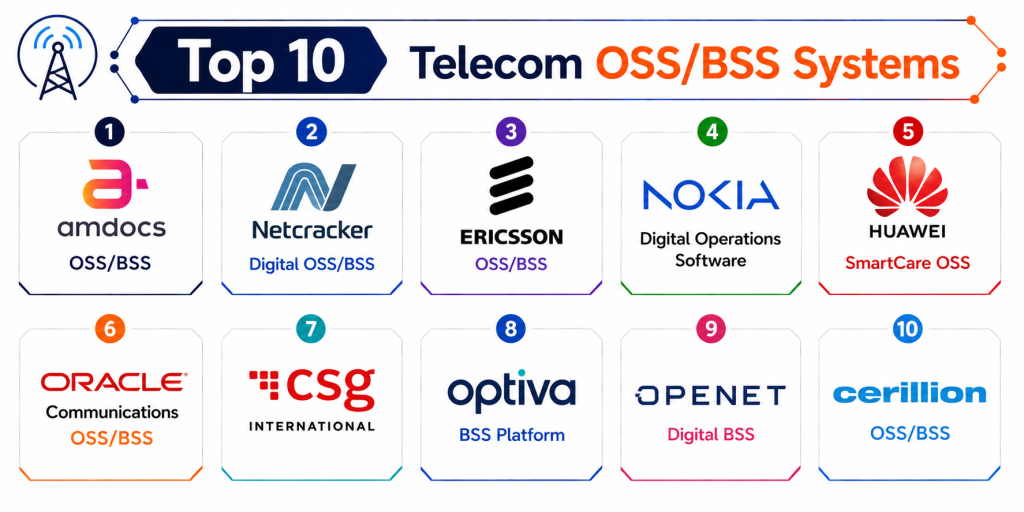
Top 10 Telecom OSS/BSS Systems
1- Amdocs OSS/BSS Suite
Short description: Amdocs provides enterprise-grade OSS/BSS solutions for telecom operators, offering customer management, billing, network orchestration, and digital service automation capabilities.
Key Features
- Telecom billing and charging
- Customer lifecycle management
- Service orchestration
- Network inventory management
- 5G service support
- AI-assisted automation
- Revenue management
Pros
- Broad telecom feature coverage
- Strong enterprise scalability
- Mature global telecom ecosystem
Cons
- Complex enterprise deployments
- Premium pricing structure
- Advanced customization requires expertise
Platforms / Deployment
- Linux / Web
- Cloud / Hybrid
Security & Compliance
- RBAC
- Audit logging
- Encryption support
- SSO/SAML
Integrations & Ecosystem
Amdocs integrates broadly across telecom ecosystems.
- CRM systems
- ERP platforms
- APIs
- Cloud providers
- Telecom network platforms
Support & Community
Large global telecom operations ecosystem with enterprise-grade support.
2- Netcracker Digital OSS
Short description: Netcracker Digital OSS provides cloud-native telecom operations management, service orchestration, network automation, and assurance workflows.
Key Features
- Network orchestration
- Service lifecycle management
- 5G automation
- AI-driven assurance
- Inventory management
- Workflow automation
- Telecom analytics
Pros
- Strong cloud-native architecture
- Broad network automation support
- Good 5G readiness
Cons
- Enterprise deployment complexity
- Requires telecom operational expertise
- Premium licensing costs
Platforms / Deployment
- Linux / Web
- Cloud / Hybrid
Security & Compliance
- RBAC
- Audit logs
- Encryption support
Integrations & Ecosystem
Netcracker integrates with telecom and cloud ecosystems.
- Network platforms
- APIs
- Cloud providers
- OSS ecosystems
- Analytics tools
Support & Community
Strong enterprise telecom support ecosystem.
3- Ericsson OSS/BSS
Short description: Ericsson OSS/BSS platforms support telecom operations, network management, service orchestration, customer experience, and monetization workflows.
Key Features
- Telecom network orchestration
- Customer management
- Service assurance
- Billing and charging
- 5G service management
- AI-assisted operations
- Analytics dashboards
Pros
- Strong telecom operational maturity
- Broad 5G ecosystem support
- Good network assurance capabilities
Cons
- Complex enterprise integration workflows
- Premium telecom pricing
- Advanced deployment expertise required
Platforms / Deployment
- Linux / Web
- Cloud / Hybrid
Security & Compliance
- RBAC
- Encryption support
- Audit logging
Integrations & Ecosystem
Ericsson integrates broadly across telecom network ecosystems.
- 5G platforms
- APIs
- Network infrastructure tools
- Analytics platforms
Support & Community
Large global telecom support ecosystem.
4- Nokia Digital Operations Software
Short description: Nokia Digital Operations Software provides OSS/BSS workflows focused on service automation, network assurance, charging, and customer experience management.
Key Features
- Telecom automation
- Network assurance
- Service orchestration
- Billing workflows
- Customer experience analytics
- AI-assisted operations
- 5G management
Pros
- Strong telecom automation capabilities
- Broad network ecosystem support
- Good AI-assisted assurance features
Cons
- Enterprise deployment complexity
- Premium operational costs
- Requires telecom expertise
Platforms / Deployment
- Linux / Web
- Cloud / Hybrid
Security & Compliance
- RBAC
- Audit logs
- Encryption support
Integrations & Ecosystem
Nokia integrates broadly across telecom ecosystems.
- Network infrastructure
- APIs
- Cloud platforms
- Analytics systems
Support & Community
Strong telecom operations ecosystem and enterprise support.
5- Oracle Communications OSS/BSS
Short description: Oracle Communications provides telecom billing, policy management, revenue management, and service orchestration workflows for global telecom operators.
Key Features
- Telecom charging and billing
- Revenue management
- Policy orchestration
- Customer management
- Telecom analytics
- Service provisioning
- Cloud-native architecture
Pros
- Strong telecom billing flexibility
- Broad enterprise integration support
- Mature revenue management capabilities
Cons
- Complex onboarding workflows
- Premium enterprise licensing
- Advanced customization complexity
Platforms / Deployment
- Linux / Web
- Cloud / Hybrid
Security & Compliance
- RBAC
- Audit logging
- Encryption support
- SSO support
Integrations & Ecosystem
Oracle integrates with telecom and enterprise ecosystems.
- ERP systems
- CRM platforms
- APIs
- Cloud providers
- Telecom network tools
Support & Community
Strong enterprise telecom and database ecosystem.
6- Huawei SmartCare OSS
Short description: Huawei SmartCare OSS provides telecom service assurance, customer experience analytics, and operational management workflows for telecom operators.
Key Features
- Service assurance
- Customer experience analytics
- Telecom monitoring
- AI-driven operations
- Network visibility
- Fault management
- Performance analytics
Pros
- Strong network visibility
- Good telecom analytics capabilities
- Broad operational monitoring support
Cons
- Regional availability considerations
- Enterprise deployment complexity
- Integration depth varies by environment
Platforms / Deployment
- Linux / Web
- Cloud / Hybrid
Security & Compliance
- RBAC
- Audit logging
- Encryption support
Integrations & Ecosystem
Huawei SmartCare integrates with telecom operational ecosystems.
- Network platforms
- APIs
- Analytics tools
- Telecom infrastructure
Support & Community
Strong telecom operational ecosystem in supported regions.
7- CSG Ascendon
Short description: CSG Ascendon is a cloud-native telecom monetization and customer engagement platform designed for digital services and subscription-based telecom operations.
Key Features
- Subscription billing
- Revenue management
- Customer lifecycle workflows
- Real-time charging
- Digital monetization
- Telecom analytics
- API-driven architecture
Pros
- Strong digital monetization support
- Good subscription billing workflows
- Cloud-native flexibility
Cons
- Advanced telecom orchestration may vary
- Enterprise scaling complexity
- Specialized telecom use cases
Platforms / Deployment
- Web
- Cloud
Security & Compliance
- RBAC
- Audit logging
- Encryption support
Integrations & Ecosystem
CSG Ascendon integrates with telecom and subscription ecosystems.
- APIs
- CRM systems
- Cloud providers
- Payment platforms
Support & Community
Strong digital monetization and telecom operations ecosystem.
8- Optiva BSS Platform
Short description: Optiva provides cloud-native telecom charging, policy management, and customer monetization workflows for mobile and digital service providers.
Key Features
- Real-time charging
- Policy management
- Telecom monetization
- 5G billing support
- Customer lifecycle workflows
- Cloud-native operations
- Telecom analytics
Pros
- Strong telecom charging flexibility
- Good cloud-native architecture
- Broad 5G billing support
Cons
- Specialized telecom focus
- Enterprise onboarding complexity
- Smaller ecosystem than larger vendors
Platforms / Deployment
- Linux / Web
- Cloud
Security & Compliance
- RBAC
- Audit logs
- Encryption support
Integrations & Ecosystem
Optiva integrates with telecom and monetization ecosystems.
- APIs
- Telecom infrastructure
- Billing systems
- CRM platforms
Support & Community
Growing telecom monetization ecosystem.
9- Mavenir Digital BSS
Short description: Mavenir Digital BSS provides cloud-native telecom monetization, customer engagement, and service management workflows optimized for modern telecom environments.
Key Features
- Cloud-native BSS workflows
- Digital monetization
- Customer engagement
- Telecom charging
- 5G service support
- API-first architecture
- Real-time analytics
Pros
- Strong cloud-native design
- Good API flexibility
- Modern telecom architecture support
Cons
- Smaller ecosystem maturity
- Enterprise deployment complexity
- Advanced customization may vary
Platforms / Deployment
- Linux / Web
- Cloud
Security & Compliance
- RBAC
- Encryption support
- Audit logging
Integrations & Ecosystem
Mavenir integrates with telecom and cloud-native ecosystems.
- APIs
- Cloud providers
- Telecom platforms
- Analytics systems
Support & Community
Growing telecom cloud-native operations ecosystem.
10- Sigma Systems OSS/BSS
Short description: Sigma Systems provides telecom service fulfillment, subscriber management, and product catalog automation for digital telecom operations.
Key Features
- Service fulfillment workflows
- Subscriber management
- Product catalog automation
- Telecom provisioning
- API-based integrations
- Workflow automation
- Customer lifecycle support
Pros
- Strong service provisioning workflows
- Good telecom product automation
- Flexible API architecture
Cons
- Specialized operational focus
- Enterprise deployment complexity
- Smaller ecosystem compared to larger vendors
Platforms / Deployment
- Linux / Web
- Cloud / Hybrid
Security & Compliance
- RBAC
- Audit logging
- Encryption support
Integrations & Ecosystem
Sigma Systems integrates with telecom and operational ecosystems.
- APIs
- CRM platforms
- Telecom infrastructure
- Billing systems
Support & Community
Growing telecom digital operations ecosystem.
Comparison Table
| Tool Name | Best For | Platform(s) Supported | Deployment | Standout Feature | Public Rating |
|---|---|---|---|---|---|
| Amdocs OSS/BSS Suite | Enterprise telecom operations | Linux, Web | Hybrid | Telecom lifecycle management | N/A |
| Netcracker Digital OSS | Cloud-native network automation | Linux, Web | Hybrid | 5G orchestration | N/A |
| Ericsson OSS/BSS | Large telecom operators | Linux, Web | Hybrid | Service assurance workflows | N/A |
| Nokia Digital Operations Software | Telecom automation | Linux, Web | Hybrid | AI-assisted operations | N/A |
| Oracle Communications OSS/BSS | Telecom billing | Linux, Web | Hybrid | Revenue management | N/A |
| Huawei SmartCare OSS | Telecom analytics | Linux, Web | Hybrid | Customer experience monitoring | N/A |
| CSG Ascendon | Digital monetization | Web | Cloud | Subscription billing | N/A |
| Optiva BSS Platform | Telecom charging | Linux, Web | Cloud | Real-time charging | N/A |
| Mavenir Digital BSS | Cloud-native telecom monetization | Linux, Web | Cloud | API-first telecom architecture | N/A |
| Sigma Systems OSS/BSS | Service fulfillment | Linux, Web | Hybrid | Product catalog automation | N/A |
Evaluation & Scoring of Telecom OSS/BSS Systems
| Tool Name | Core 25% | Ease 15% | Integrations 15% | Security 10% | Performance 10% | Support 10% | Value 15% | Weighted Total |
|---|---|---|---|---|---|---|---|---|
| Amdocs OSS/BSS Suite | 9 | 6 | 9 | 8 | 9 | 9 | 6 | 8.00 |
| Netcracker Digital OSS | 9 | 6 | 8 | 8 | 8 | 8 | 6 | 7.55 |
| Ericsson OSS/BSS | 9 | 6 | 8 | 8 | 8 | 8 | 6 | 7.55 |
| Nokia Digital Operations Software | 8 | 6 | 8 | 8 | 8 | 8 | 6 | 7.30 |
| Oracle Communications OSS/BSS | 9 | 6 | 9 | 8 | 8 | 8 | 6 | 7.75 |
| Huawei SmartCare OSS | 8 | 6 | 7 | 7 | 8 | 7 | 7 | 7.10 |
| CSG Ascendon | 8 | 8 | 7 | 7 | 8 | 8 | 7 | 7.60 |
| Optiva BSS Platform | 8 | 7 | 7 | 7 | 8 | 7 | 7 | 7.30 |
| Mavenir Digital BSS | 7 | 7 | 7 | 7 | 8 | 7 | 8 | 7.20 |
| Sigma Systems OSS/BSS | 7 | 7 | 7 | 7 | 7 | 7 | 7 | 7.00 |
These scores are comparative rather than absolute. Higher scores generally indicate stronger telecom operational maturity, broader integration ecosystems, and scalable network orchestration capabilities. Cloud-native and monetization-focused platforms may still provide exceptional value depending on telecom operational complexity and deployment scale.
Which Telecom OSS/BSS System Is Right for You?
Solo / Freelancer
Independent telecom consultants and smaller service providers often benefit from lightweight cloud-native monetization platforms such as CSG Ascendon or Mavenir Digital BSS because of their deployment simplicity and API flexibility.
SMB
Small and medium telecom operators should prioritize usability, billing flexibility, and cloud-native scalability. Optiva and Sigma Systems provide manageable onboarding and service automation capabilities.
Mid-Market
Mid-market telecom providers often require stronger service orchestration, analytics, and monetization capabilities. Netcracker and Nokia Digital Operations Software provide scalable telecom workflows.
Enterprise
Large telecom operators typically need centralized network orchestration, AI-assisted automation, large-scale billing, and advanced service assurance. Amdocs, Ericsson, and Oracle Communications OSS/BSS are strong enterprise-focused choices.
Budget vs Premium
Cloud-native telecom monetization platforms generally provide lower infrastructure complexity and faster deployment. Enterprise-grade OSS/BSS suites offer broader telecom operational coverage, 5G readiness, and advanced orchestration but often require larger budgets.
Feature Depth vs Ease of Use
Platforms such as Amdocs and Oracle provide deep telecom operational capabilities but may require experienced telecom engineering teams. CSG Ascendon and Mavenir emphasize modern cloud-native flexibility and easier deployment.
Integrations & Scalability
Organizations with mature telecom operations should prioritize integrations with network infrastructure, CRM systems, ERP platforms, APIs, cloud providers, analytics tools, and telecom charging systems.
Security & Compliance Needs
Telecom operators should focus on audit logging, RBAC, encryption, billing integrity, operational governance, customer privacy controls, and service assurance visibility.
Frequently Asked Questions FAQs
1. What are Telecom OSS/BSS Systems?
Telecom OSS/BSS Systems help telecom providers manage network operations, customer services, billing, provisioning, inventory, and revenue management workflows.
2. What is the difference between OSS and BSS?
OSS focuses on operational workflows such as network management and service provisioning, while BSS handles customer-facing workflows such as billing and CRM.
3. Why are OSS/BSS platforms important?
They improve telecom operational efficiency, automate service management, simplify billing workflows, and support customer experience management.
4. Are OSS/BSS platforms suitable for 5G environments?
Yes. Modern telecom platforms increasingly support 5G orchestration, network slicing, IoT connectivity, and cloud-native telecom services.
5. What integrations are most important?
Important integrations include CRM systems, ERP platforms, network infrastructure, APIs, analytics platforms, charging systems, and cloud providers.
6. Which industries use Telecom OSS/BSS platforms?
Telecom operators, ISPs, cable providers, MVNOs, satellite providers, IoT service providers, and digital communications companies commonly use these systems.
7. What are common deployment mistakes?
Common mistakes include weak integration planning, fragmented billing workflows, incomplete automation, poor customer data governance, and insufficient scalability planning.
8. Can AI improve telecom operations?
Yes. AI is increasingly used for predictive maintenance, network optimization, customer analytics, fraud detection, and service assurance workflows.
9. Are cloud-native OSS/BSS platforms replacing legacy telecom systems?
In many cases yes. Telecom operators are modernizing legacy infrastructures with API-first and microservices-based cloud-native architectures.
10. Are OSS/BSS platforms only for large telecom providers?
No. Many modern cloud-native telecom platforms now support startups, MVNOs, and smaller digital service providers with scalable deployment models.
Conclusion
Telecom OSS/BSS Systems have become essential operational platforms for organizations managing increasingly complex telecom infrastructures, digital services, 5G environments, and customer engagement workflows. These platforms help telecom operators centralize network operations, automate service provisioning, improve billing accuracy, strengthen customer experience management, and scale digital services through integrated operational and business support systems. Enterprise buyers should carefully evaluate telecom workflow coverage, cloud-native architecture, 5G readiness, integration flexibility, AI-assisted automation, analytics visibility, and operational scalability before selecting a platform. Amdocs, Ericsson, and Oracle Communications OSS/BSS provide strong enterprise-grade telecom operational capabilities, while Netcracker and Nokia continue offering scalable automation and service assurance workflows for modern telecom operations. CSG Ascendon, Mavenir, and Optiva remain valuable for organizations prioritizing cloud-native monetization and digital telecom flexibility. The best solution ultimately depends on telecom operational complexity, network scale, monetization requirements, service delivery models, and budget priorities. Shortlist a few platforms, run pilot telecom workflows using realistic provisioning and billing scenarios, validate integrations with your operational systems, and evaluate scalability and automation performance before making a long-term OSS/BSS platform investment decision.
Very helpful comparison of telecom OSS/BSS systems. The pros and cons section makes platform selection much easier for telecom businesses
Very clear and simple explanation of telecom OSS/BSS systems. The comparison helps understand network operations and billing platforms easily.
I think future OSS/BSS comparisons should evaluate observability maturity more deeply. Telecom teams increasingly need real-time visibility into failed provisioning flows, API latency, charging errors, and orchestration bottlenecks across distributed systems.
As telecom networks become more complex, integrating legacy infrastructure with modern digital services remains a major challenge. I’d be interested in seeing more discussion around this topic.